Portuguese Customs, Etiquette, and Social Life
Disclosure: This article contains affiliate links. If you buy through them, we may earn a commission at no extra cost to you. Read our full disclosure.
Your first week in Portugal can bring a string of small social puzzles. A waiter brings bread you never ordered. A shopkeeper looks cool when you skip “bom dia.” A new acquaintance leans in for two kisses while you reach for a handshake. This guide covers the unwritten rules of Portuguese customs, etiquette, and social life, so you can relax and actually enjoy the place.
Greetings and First Impressions in Portugal
I still remember my first neighborhood bakery in Lisbon. I walked in, pointed at a pastry, said “one of those, please” in English, and got served with polite but noticeable coolness. The next morning I opened with a cheerful “Bom dia!” and the same woman smiled, asked where I was from, and slipped me the freshest bread roll from the back. Nothing about the transaction changed except the greeting. In Portugal, the greeting is the transaction’s entry fee.
The Two-Kiss Greeting and When a Handshake Is Better
The standard social greeting between women, and between a man and a woman, is two light kisses, one on each cheek. You start by leaning to your right, so your right cheek meets theirs first. These are air kisses with a light touch of cheeks, not actual lips on skin. Men greeting other men usually shake hands, and close male friends or relatives may add a pat on the shoulder or a quick hug.
The confusion comes in mixed situations. At a dinner party, you might kiss every woman in the room and shake every man’s hand, which feels exhausting the first few times. That is normal. Portuguese people often greet each person individually when arriving and again when leaving. A general wave to the whole room can come across as slightly cold, especially in smaller towns or family settings.
In business or formal settings, a firm handshake with eye contact is the safe default for everyone. If a Portuguese colleague leans in for the cheek kiss, follow their lead, but never initiate it in a first professional meeting. When in doubt, extend your hand and let the other person decide. For more scenarios, from village festivals to office introductions, see Portuguese Social Etiquette for Visitors: Greetings and Warmth.
Titles, Formality, and the Pronoun Puzzle
European Portuguese is more formal than many visitors expect. Addressing someone as “o senhor” (sir) or “a senhora” (madam) is completely normal with strangers, older people, and anyone in a service role. You will hear older women called “Dona” followed by their first name, as in “Dona Fátima,” which is respectful and warm at the same time.
Professional titles matter more than in the English-speaking world. University graduates are often addressed as “Doutor” or “Doutora,” even without a PhD or medical degree, and engineers may be called “Engenheiro.” Using these titles in a bank, a lawyer’s office, or a hospital shows awareness rather than flattery.
Then there is the pronoun problem. “Tu” is informal and reserved for friends, family, children, and peers who invite it. “Você” is technically the polite “you,” but in many parts of Portugal it can sound distant or even slightly condescending when used directly to someone’s face. The elegant workaround is to drop the pronoun entirely and use the third-person verb form, or to say “o senhor” or “a senhora.” It feels awkward at first, but it marks you as someone who has paid attention.
Small Talk That Opens Doors
Portuguese small talk tends to circle around food, family, weather, and where you are from. Asking someone about the best local dish, or which tasca in the neighborhood they recommend, is almost guaranteed to start a warm conversation. People are proud of their regional food, and a question about it is taken as genuine interest.
Personal finances are generally off the table early on. Asking what someone earns, how much they paid for their apartment, or directly comparing living costs with your home country can feel intrusive, particularly given that many Portuguese earn far less than visiting foreigners. Complaining about prices being “so cheap” is a classic misstep that lands badly with locals who struggle with rising rents.
Football is a fascinating middle ground. Asking whether someone supports Benfica, Sporting, or FC Porto is a great icebreaker, but tread lightly once you know. These loyalties run through families and neighborhoods. Making fun of someone’s club is fine once you are friends, and a fast way to cool a conversation before then.
Dining Etiquette and Restaurant Customs
Food is at the center of Portuguese social life, and most cultural lessons happen at the table. Meals are rarely rushed, waiters rarely hover, and the rhythm can feel strangely slow if you come from a country where the bill arrives with dessert. Once you adjust, that slowness becomes one of the best parts of living here.
The Couvert and the Unordered Bread
You sit down, and within a minute a basket of bread, a small dish of olives, butter portions, and perhaps a tin of sardine pâté or a slice of cheese appear on your table. You did not order any of it. This is the couvert, and it is not free. If you eat it, it will appear on your bill.
The good news is that you are under no obligation to accept it. You can politely say “não, obrigado” or “obrigada” when it arrives, or simply ask the waiter to take it away. Items you have not touched should not be charged. Many locals happily eat the bread and olives, while others wave away the pricier cheese and keep the bread. Nobody is offended either way.
The frustration usually comes when travelers discover the charge on the bill and feel tricked. It is better to think of the couvert as an optional starter that happens to be served by default. Full details on what is normally included, and how to decline gracefully, are in The Couvert Explained: Bread and Starters in Portuguese Restaurants.
Meal Rhythm and Lingering at the Table
Lunch is a serious affair in Portugal. Many workers still take a proper sit-down lunch, and you will see restaurants packed with office staff eating soup, a main dish, and coffee. The “prato do dia,” or dish of the day, is the backbone of this culture, and it is often the best-value, most authentic meal on the menu.
Dinner tends to start later than in the UK, the US, or Northern Europe. Arrive at a popular neighborhood restaurant at what feels like a normal dinner hour back home, and you might find it nearly empty, with staff still eating their own meal. An hour later the same room will be full, loud, and buzzing. Adjusting your schedule a little makes evenings far more enjoyable.
Once you have a table, it is yours. Waiters will not bring the bill until you ask, because rushing a guest is considered rude. Long conversations over coffee and a digestif are completely normal. For more on regional timings and how lunch and dinner work in different settings, see Portuguese Meal Times and Restaurant Etiquette for Visitors.
Asking for the Bill and Splitting It
To ask for the bill, catch the waiter’s eye and say “a conta, por favor.” A small gesture of pretending to write in the air is also widely understood. Do not expect the waiter to check on you constantly. If you need something, a polite raise of the hand or a quiet “se faz favor” is how locals get attention.
Splitting the bill is generally fine among friends, though some smaller, family-run places prefer a single payment. Card machines are common in cities, but traditional tascas, especially in rural areas, may still prefer cash or have minimum card amounts. Carry some cash when exploring villages so you are not stuck.
Among Portuguese friends, you may notice a gentle tug of war over who pays. Someone may quietly settle the bill on the way to the bathroom. The usual etiquette is to protest briefly, accept graciously, and make sure you pick up the next round. Keeping a mental tally of hospitality is part of how friendships stay balanced.
Tipping in Portugal Without Overthinking It
Tipping causes more anxiety among new arrivals than almost any other custom, mostly because nobody wants to look either stingy or naive. The reassuring part is that Portugal has a relaxed attitude. Tips are appreciated, but they are not the backbone of a server’s wages the way they are in some countries.
What the Official Guidance Says
Visit Portugal, the official tourism site run by Turismo de Portugal, states as of October 2026 that service is included in restaurant bills, and that it is customary to leave an additional tip of about 5-10% of the total. That is the clearest guidance available for sit-down restaurants, and it lines up with what I see Portuguese friends do when they have enjoyed a meal and good service.
For taxis, the same source notes as of October 2026 that drivers are usually tipped 5-10%, or the fare is rounded up to the nearest euro. In practice, rounding up is what I see most often on short city rides, while a longer airport transfer with help carrying heavy luggage is where the percentage approach feels more natural.
The key word in all of this is “customary,” not “mandatory.” Nobody will chase you down the street for not tipping, and a poor experience does not need to be rewarded. Tipping here is an expression of thanks, so let your experience guide you. For a fuller breakdown by situation, see Tipping in Portugal: When, Where, and How Much.
Tascas, Cafés, and Taxis in Practice
The neighborhood tasca is where many visitors feel most unsure. These are small, often family-run eateries with paper tablecloths and a short handwritten menu. No official source sets a euro amount for a tip here. What locals tend to do is leave the coins from their change on the table or on the little plate the bill came on, as a friendly gesture rather than a calculated percentage.
At a café counter, where you stand and drink an espresso in a couple of minutes, no tip is expected. Some people leave the smallest coins from their change in the saucer, and the staff will thank you, but you are not breaking any rule by simply paying and saying “obrigado.” Regulars build goodwill through loyalty and a daily greeting far more than through tips.
The table below pulls these situations together so you can glance at it before you head out.
| Situation | Is a tip expected? | What locals typically do |
|---|---|---|
| Sit-down restaurant | Service is included; extra tip is customary | About 5-10% of the total if you enjoyed the meal |
| Neighborhood tasca | No set euro amount | Leave the coins from your change as a friendly gesture |
| Café counter | Not expected | Pay and thank the staff; leaving the smallest coins is optional |
| Taxi | Usual but not mandatory | 5-10%, or round the fare up to the nearest euro |
| Poor service anywhere | No | Pay the bill without an extra tip |
Café Culture and Coffee Rituals
If there is one place where Portuguese social life plays out daily, it is the café. Every neighborhood has several, and each has its regulars, its morning crowd, its afternoon card players, and its owner who knows everyone’s order. Learning café etiquette is less about coffee and more about joining the rhythm of a street.
Ordering at the Counter
In most of Portugal, asking for “um café” gets you an espresso, short, strong, and served in a small cup. In Lisbon you will also hear people ask for “uma bica,” which means the same espresso. In Porto, some older locals still call it “um cimbalino.” Knowing these words instantly makes you sound less like a tourist.
Milky options have their own vocabulary. A “galão” is a tall glass of milky coffee, similar to a latte. A “meia de leite” is roughly half coffee and half milk in a regular cup. A “pingado” is an espresso with a drop of milk. If you want a larger, weaker black coffee, ask for “um abatanado” or “café cheio.” Ordering a giant flavored coffee to go is possible in tourist areas, but it is not the local habit.
Standing at the counter is often the norm, and the price can be lower than sitting at a table with service. Pay attention to whether locals order and pay first or pay when leaving, as each café has its own system. For the full ordering guide with all the regional variations, see How to Order Coffee in Portugal Like a Local.
The Café as Social Infrastructure
The café is where neighbors exchange news, where retired men debate last night’s football, and where you will gradually be recognized. Going to the same café every morning is one of the fastest ways to feel at home. Within a couple of weeks, the owner may start preparing your order the moment you walk in.
Coffee is drunk quickly, but the social moment is not. People chat with the staff, greet others at the counter, and linger over a pastel de nata or a torrada, thick buttered toast. Laptop culture is growing in Lisbon and Porto, but in traditional neighborhood cafés, camping at a table with a laptop for hours can be frowned upon, especially at lunchtime when tables are needed.
There is also the after-meal coffee. In Portugal, coffee generally comes after dessert, not with it. Ordering a milky galão after a heavy dinner might earn you a curious look, as milky coffees are mostly a breakfast or afternoon habit. After dinner, an espresso is the standard.
Time, Queues, and Public Behavior
Daily life in Portugal follows its own sense of time and order. Some of it feels wonderfully relaxed. Some of it, especially in bureaucratic settings, will test your patience. Understanding the logic behind both makes the frustrating parts far easier to accept.
Portuguese Time and Punctuality
Socially, Portugal runs on flexible time. If friends invite you to dinner at their home, arriving exactly on the minute can catch the host still cooking or getting ready. Arriving a little later is often considered courteous. Casual meetups at a café or bar are similarly loose, and a friend running late is rarely a sign of disrespect.
Business and official appointments are a different matter. Job interviews, medical appointments, and meetings with lawyers or notaries should be treated with full punctuality, even if the other party then keeps you waiting. Trains and long-distance buses also leave on time, so do not apply social flexibility to your travel plans.
The trick is to read the context. When in doubt, ask “a que horas chego?” or simply clarify with a local friend. For practical examples across social, professional, and travel situations, see How Punctual Are People in Portugal, Really?.
Queues, Ticket Machines, and Priority Service
Portuguese people do queue, but the system often relies on ticket machines rather than a visible line. At the post office, the Loja do Cidadão, banks, pharmacies, and even supermarket deli and fish counters, look for a machine dispensing a numbered ticket called a “senha.” Take one, find a seat, and wait for your number to appear on the screen.
Where there is no machine, it is normal to walk in and ask “quem é o último?”, meaning “who is last?” The person answers, and you know you are after them. Lines may look loose and clustered, but everyone knows who arrived when. Trying to slip ahead is noticed immediately, and an older Portuguese woman will not hesitate to point it out.
Portugal also has a legal right to priority service for elderly people, pregnant women, people with disabilities, and those with small children. You will see signs marking priority counters, and it is considered good manners to let these people go ahead even where there is no sign. Offering your seat on the metro or bus to an older person is expected, not exceptional.
Noise, Neighbors, and Quiet Hours
Portuguese apartment buildings can be surprisingly noisy, with thin walls, tiled floors, and echoing stairwells. At the same time, there are legal quiet hours at night, and neighbors take them seriously. Late-night parties, moving furniture, or loud music after dark can quickly lead to a knock on the door or a complaint to the building administration.
During the day, expect plenty of life: televisions, conversations across balconies, dogs, and family gatherings. Weekends, especially Sunday lunch, can be lively. This is part of the charm of living in a real neighborhood rather than a sealed-off building.
If you are renting long-term, introducing yourself to your neighbors early makes a big difference. A friendly hello on the stairs and a little effort in Portuguese buys you goodwill when something goes wrong. For the legal side and practical advice on resolving disputes calmly, see Quiet hours in Portuguese apartments (Lei do Ruído): Handling noisy neighbors.
Visiting Homes and Making Friends
Portuguese hospitality is genuine and generous, but it often operates within close circles of family and childhood friends. Getting invited into that circle takes time. When it happens, it is one of the most rewarding experiences of living here.
Being Invited to a Portuguese Home
An invitation to someone’s home, particularly for a family meal, is a meaningful gesture. Bring something with you. A bottle of good Portuguese wine, a box of pastries from a respected local pastelaria, or flowers for the host are all well received. Avoid bringing wine from another country to a Portuguese host who is proud of their local vintages.
At the table, expect abundance. Hosts will often offer seconds, and sometimes thirds. Accepting a second helping is a compliment, and praising the food sincerely is essential. If you are full, say so with a smile and a compliment, rather than simply refusing. Leaving right after the meal can seem abrupt, as conversation over coffee and sweets is part of the visit.
Shoes are not usually removed in Portuguese homes, but if you notice a pile at the door, follow suit. Offering to help clear plates is polite, though the host will probably refuse. For a detailed walk-through of what to expect at a long family lunch, see How to Behave at a Portuguese Family Meal.
Why Friendships Take Time
Many expats feel frustrated after their first few months. Portuguese people are friendly, helpful, and polite, yet invitations into their personal lives can be slow to arrive. This is not coldness. Many Portuguese adults maintain friendships from school and university, and their weekends are often filled with family obligations.
The breakthrough usually comes through shared activities. Joining a local running group, a language exchange, a choir, a surf school, or a volunteer program puts you in regular contact with the same people. Repeated, low-pressure encounters build trust far better than one big night out. I made my first real Portuguese friend through a weekly pottery class, not at any expat party.
Building a mixed social life, with both locals and other foreigners, helps you stay balanced while the deeper connections form. For practical ideas on where to start, see Making Friends and Networking in Portugal: Expat Groups and Meetups.
Festivals, Religion, and Sensitive Topics
Portugal is a secular state with deep Catholic roots, and many traditions are tied to saints’ days, processions, and family celebrations. Respecting these traditions, even if you are not religious, is a sign of respect for the community.
Church Etiquette and Dress
Churches in Portugal are active places of worship, not just tourist attractions. Cover your shoulders and knees, remove your hat, and keep your voice low. If a Mass is in progress, avoid walking around taking photos. Using flash inside churches is often prohibited, and many have signs asking visitors to refrain from photography altogether during services.
Places such as the Sanctuary of Fátima draw pilgrims from around the world, and some walk long distances or approach the shrine on their knees. Treat these moments with quiet respect. Even if you are there as a curious visitor, remember that for many people, this is one of the most important experiences of their lives.
Packing a light scarf or shawl solves most dress code issues on hot summer days. For more detailed guidance on cathedrals, monasteries, and pilgrimage sites, see How to Dress for Churches and Religious Sites in Portugal.
Santos Populares and Festival Etiquette
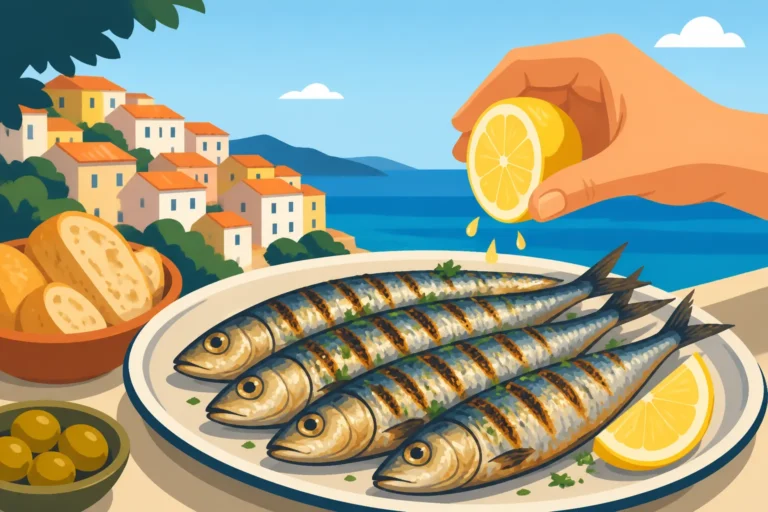
June is festival month. Lisbon celebrates Santo António on the night of 12 to 13 June, and Porto celebrates São João on the night of 23 to 24 June. Streets fill with grilled sardines, sangria, music, and decorations. In Lisbon, people give each other small pots of basil called “manjericos” with little paper poems. In Porto, people playfully tap each other on the head with plastic hammers or leeks.
The etiquette is joyful but still respectful. These are neighborhood parties first, and tourist attractions second. Buying food and drinks from local residents’ stalls supports the community, and joining a dance when invited is a lovely way to connect. Avoid blocking narrow streets or doorways, and remember that people actually live in those buildings.
Festival nights draw enormous crowds, so plan ahead. Accommodation in central neighborhoods sells out quickly, and booking early through a platform such as Booking.com gives you more choice. If you want to catch both cities’ festivals in one trip, a site like Omio lets you compare train and bus options between Lisbon and Porto in one place. For neighborhood tips and festival highlights, see Santos Populares: Lisbon and Porto’s June Street Parties.
History, Spain, and Topics to Handle Carefully
Portugal and Spain share a peninsula, but they are very different countries with distinct languages, histories, and identities. Speaking Spanish to a Portuguese person, or saying the languages are basically the same, is a common irritant. Many Portuguese understand Spanish well, but they appreciate visitors who try Portuguese or default to English.
The Estado Novo dictatorship and the Carnation Revolution remain an important part of the national memory. The 25 de Abril holiday celebrates the peaceful revolution that restored democracy, and you will see red carnations everywhere. Conversations about this era can be emotional, particularly with older Portuguese whose families lived through it, so listen more than you speak.
The colonial past, emigration, and the economic crisis are also sensitive subjects. Many families have relatives who emigrated to France, Switzerland, or the Americas in search of work. If you want to understand these topics more deeply, a guided walking tour with a local historian, which you can find through platforms like GetYourGuide, offers context and nuance. You will notice the concept of “saudade” running through these conversations: a melancholic longing that colors music, poetry, and everyday speech.
Language as Social Currency
You can live in Lisbon or the Algarve for a long time speaking only English, and many Portuguese, especially younger people, speak it well. Even so, the difference between being treated as a tourist and being treated as a neighbor often comes down to a few words of Portuguese.
Why Trying Portuguese Matters Even When They Answer in English
It can be deflating to say a carefully rehearsed sentence in Portuguese and have the waiter immediately reply in English. Do not take this as a rejection. Most of the time, the person is trying to help you, to save time, or to practice their own English. The effort you made still registers.
Keep using your Portuguese for greetings, thanks, and simple requests, even when the conversation moves to English. Over time, the people you see regularly will begin speaking to you in Portuguese, slowly and patiently, because you have shown you want to learn. That shift is often when real relationships begin.
European Portuguese sounds very different from Brazilian Portuguese, with swallowed vowels and a softer rhythm. If you learned Brazilian Portuguese, you will be understood, but you will hear the difference immediately. Many locals find a Brazilian accent charming, but European Portuguese phrases and pronunciation will help you blend in.
Phrases That Smooth Every Interaction
A handful of phrases cover most daily situations. “Bom dia” is used until around lunchtime, “boa tarde” in the afternoon, and “boa noite” once it gets dark. “Com licença” is used to get past someone or enter a room, while “desculpe” means sorry or excuse me. “Se faz favor” is a polite way to get attention, and “por favor” means please.
The word for thank you changes depending on who is speaking. Men say “obrigado,” women say “obrigada,” regardless of who they are thanking. Getting this right is a small detail that locals notice and appreciate. In shops, saying “bom dia” when you enter and “obrigado” or “obrigada, bom dia” when you leave is basic courtesy.
When you need to ask for something, softening phrases make a big difference. “Podia ajudar-me, por favor?” means “Could you help me, please?” and opens almost any door. For a structured list of essential phrases with pronunciation tips, see Survival Portuguese for Travelers: Key Phrases to Learn First. Practicing them before your first café visit makes the moment far less intimidating, and it will change how you are received on your very first morning.
Disclaimer
This article is for general informational purposes only and does not constitute professional advice. Laws, prices and regulations vary by location and change over time. Consult a qualified professional for guidance on your specific situation.