How to Dress for Churches and Religious Sites in Portugal
Disclosure: This article contains affiliate links. If you buy through them, we may earn a commission at no extra cost to you. Read our full disclosure.
Oh, my friend, I’ve been there. You’re strolling through a charming Portuguese village, perhaps down a cobbled street in Alfama, admiring the beautiful azulejo tiles, and then you spot it – a magnificent old church, its doors invitingly open. You instinctively want to step inside, soak in the history and peaceful atmosphere, only to hesitate, wondering, "Am I dressed appropriately?" It’s a common expat conundrum, a moment of cultural uncertainty that can leave you feeling a bit awkward or, worse, unintentionally disrespectful. This guide is here to unravel the often unwritten rules of dressing for churches and religious sites across Portugal, helping you navigate these sacred spaces with confidence and respect.
Why Dress Codes Matter: Understanding Portuguese Culture and Respect
Let's be honest, for many of us coming from more secular or casually dressed societies, the idea of a dress code for religious sites can feel a little old-fashioned or even unnecessary. But here in Portugal, a country deeply rooted in Catholic traditions, it's not just about rules; it’s about respect, tradition, and maintaining the sanctity of places that hold profound spiritual significance for many. When you enter a church, a monastery, or a revered sanctuary like Fátima, you're stepping into more than just a tourist attraction; you're entering a living, breathing place of worship and community.
The Significance of Modesty in Portuguese Churches
Portuguese culture, particularly in its approach to religious spaces, places a high value on modesty. This isn't about shaming or judging personal style, but rather about acknowledging the sacredness of the environment. Imagine if someone walked into your home with muddy boots on your clean rug – it's not a personal attack, but it shows a lack of consideration for the space. Similarly, in a church, clothing that is too revealing can be seen as distracting or disrespectful to those who are there to pray or reflect. It signals a misunderstanding of the context, and while most Portuguese are incredibly forgiving and polite, it's a silent cultural misstep you can easily avoid.
This emphasis on modesty often dates back centuries, to times when churches were not just spiritual centers but also critical social hubs. The guidelines for appropriate attire were ingrained in society as a mark of reverence. While society has evolved, these norms persist, particularly in more traditional areas or at major pilgrimage sites. It’s a quiet expectation, rather than an explicitly enforced rule at every single doorway, but it’s keenly observed. Understanding this helps bridge the gap between our modern sensibilities and the deeply held values of the local community. It also reflects a broader aspect of Daily Life in Portugal: Supermarkets, Language, and Cultural Etiquette, where small gestures of cultural understanding go a long way.
Avoiding Unintentional Offence and Ensuring Entry
Beyond cultural respect, there's a practical side: avoiding being turned away. While most smaller parish churches might simply give you a disapproving glance, major cathedrals, popular pilgrimage sites, and particularly active places of worship often have clearer, sometimes enforced, dress codes. Some visitors have tried to visit the Sé de Lisboa or the Bom Jesus do Monte in Braga on a sweltering summer day, only to be politely (but firmly) informed that their shorts or sleeveless tops weren't quite going to cut it. It’s disheartening to travel all that way, eager to see a historic site, only to be barred entry due to a simple wardrobe oversight.
This isn't about being exclusionary; it's about preserving a shared space. Many tours you book through platforms like GetYourGuide that visit historic churches will often remind you of the dress code, but it’s always best to be prepared beforehand. These places are not just open to tourists; they are where baptisms, weddings, funerals, and daily mass take place. Imagine how a family attending a solemn event might feel if tourists are snapping photos in beachwear. A little foresight ensures you can explore these magnificent structures freely and with a clear conscience, integrating smoothly into the local rhythm. Remember, part of the charm of living in Portugal is embracing these little cultural nuances, which often contribute to the country's unique character.
The Essential Guide: What to Wear and What to Avoid
Alright, so what exactly does "modest attire" translate to when you're standing in front of a church in Porto or a chapel in the Algarve? Let's break down the specifics so you know exactly how to prepare your wardrobe. It’s not about being drab, but about being mindful and comfortable.
Covering Shoulders and Knees: The Golden Rule
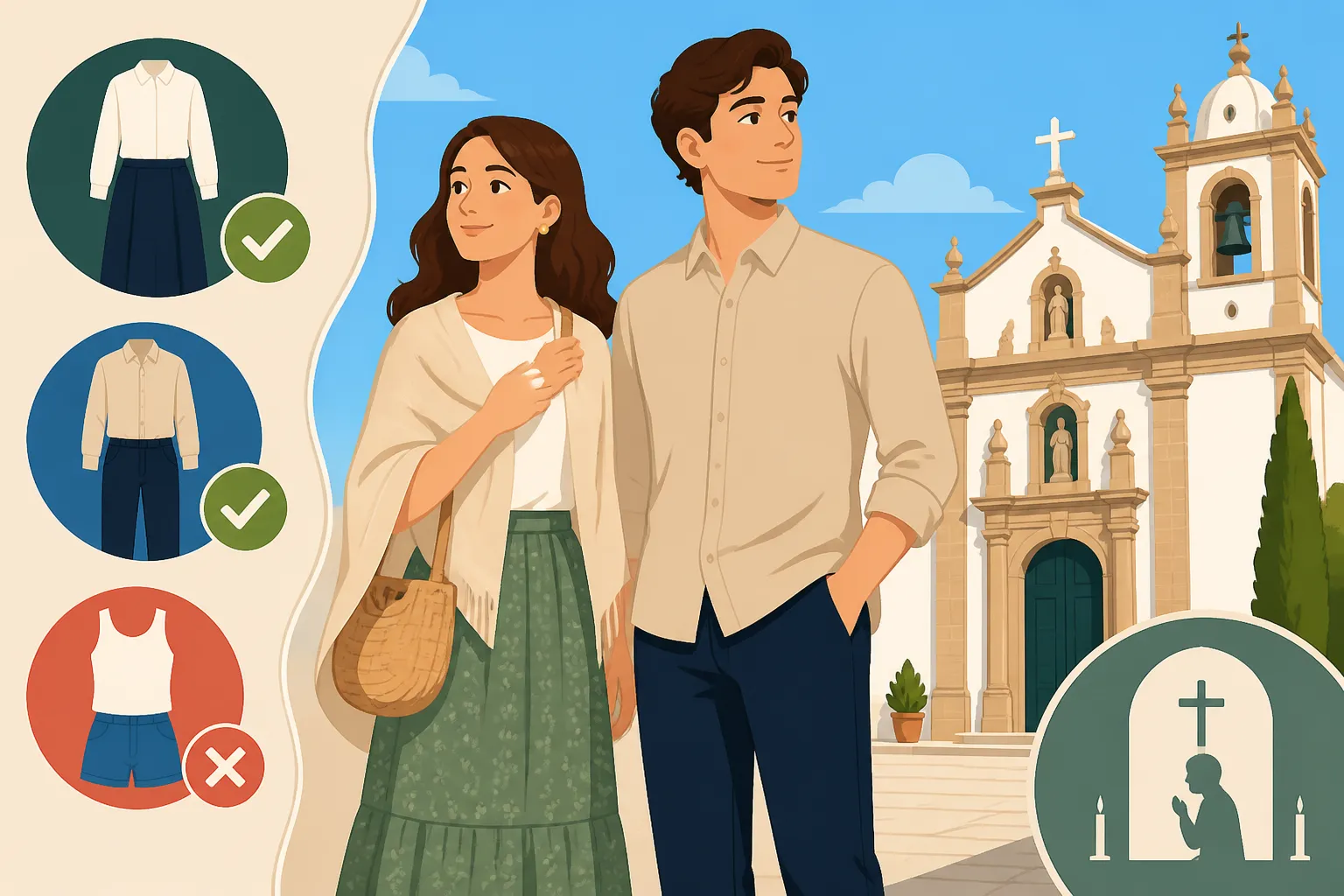
This is the absolute cornerstone of church dress codes in Portugal. Both men and women should aim to have their shoulders and knees covered.
-
For Women:
- Tops: Opt for blouses, t-shirts, or sweaters with sleeves. Sleeveless tops, spaghetti straps, halter necks, or anything that exposes your midriff are generally considered inappropriate. If you absolutely love a tank top, always carry a lightweight scarf, pashmina, or cardigan that you can easily drape over your shoulders before entering. This is a common and accepted practice, and you'll see many locals doing it, especially in warmer months.
- Bottoms: Long skirts, trousers, or capri pants are ideal. Shorts that end above the knee are a definite no-go. Even knee-length shorts might be borderline in more conservative areas or at significant sites. Maxi dresses or skirts are perfect as they offer both comfort and coverage.
- Dresses: Choose dresses with sleeves or wear a cardigan over a sleeveless dress. Ensure the hemline falls at or below the knee.
-
For Men:
- Tops: T-shirts (not tank tops or muscle shirts), collared shirts, or polo shirts are perfectly acceptable. Avoid anything overly casual like undershirts or tops with potentially offensive graphics.
- Bottoms: Long trousers or jeans are the safest bet. While some might get away with neat, longer shorts (bermudas) in less formal churches, it's safer to err on the side of caution and wear trousers if you plan to enter multiple sites or a major cathedral. Definitely avoid athletic shorts or swimwear.
Think of it this way: if you'd wear it to a casual dinner out, it's probably fine for a church, provided it covers the key areas. But if it's something you'd wear to the beach or the gym, best to change or add layers.
Footwear and Headwear: Finishing Touches
While not as strictly enforced as shoulder and knee coverage, footwear and headwear can also play a role in respectful church attire.
- Footwear: Generally, closed-toe shoes are preferred, but neat sandals are often tolerated, especially in hot weather. Flip-flops or extremely casual beach sandals are usually seen as too informal. The main thing is that your feet should be clean and presentable. Given the amount of walking you'll do on Portugal's charming but uneven cobblestones, comfortable and sturdy footwear is always a good idea anyway!
- Headwear: For women, covering your head is not generally required in Portugal's Catholic churches, unlike in some other religions or cultures. You'll occasionally see older Portuguese women wearing a veil during mass, but it's not expected for visitors. For men, it is customary and respectful to remove hats, caps, or any head covering upon entering a church. This is a fairly universal sign of respect in many religious buildings.
It's all about presenting yourself in a way that shows you acknowledge the solemnity and sacred nature of the space. There's no need for formal wear, but a smart casual approach will serve you well. If you plan to spend several days exploring the churches and monasteries of Braga, perhaps consider Booking.com to find a conveniently located hotel where you can easily return to change outfits if needed.
Here’s a quick summary table for easy reference:
| Item Type | Recommended for Churches / Religious Sites | Avoid / Be Cautious |
|---|---|---|
| Tops (Women) | T-shirts, blouses, long-sleeved tops, modest dresses, cardigans, scarves | Tank tops, spaghetti straps, crop tops, deep necklines, bare shoulders |
| Bottoms (Women) | Long skirts, maxi dresses, trousers, capri pants | Short shorts, mini-skirts, athletic shorts |
| Tops (Men) | T-shirts (plain), collared shirts, polo shirts, sweaters | Tank tops, muscle shirts, shirts with offensive graphics, bare chests |
| Bottoms (Men) | Long trousers, jeans, neat Bermuda shorts (longer length) | Short shorts, athletic shorts, swimwear |
| Footwear | Closed-toe shoes, neat sandals, comfortable walking shoes | Flip-flops, beach sandals, muddy or dirty shoes |
| Headwear | Women: Optional, but respectful. Men: Remove hats/caps. | Men: Wearing hats/caps inside the church |
Practical Tips for Tourists and Expats: Staying Prepared
Knowing the rules is one thing, but actually integrating them into your travel routine or daily life as an expat can take a bit of practice. Here are some seasoned tips to keep you comfortable, respectful, and never caught off guard.
The Emergency Scarf/Pashmina Trick
This is perhaps the most valuable piece of advice any expat can give you for navigating Portugal's religious sites. A lightweight scarf or pashmina is your secret weapon. It takes up minimal space in your bag, backpack, or even a larger purse, and can be deployed in seconds. Imagine you’re out exploring Lisbon's vibrant neighborhoods, maybe after checking out a few spots from our Lisbon Neighborhood Guide: Best Areas for Expats and Digital Nomads, and you decide spontaneously to pop into the grand Lisbon Cathedral (Sé de Lisboa). If you're wearing a sleeveless top due to the heat, simply whip out your scarf, drape it over your shoulders, and you're good to go.
This trick works equally well for men who might find themselves in a situation where they need to quickly cover up. While less common, carrying a light shirt you can easily throw on over a tank top is also a good idea. This practicality allows for spontaneity without sacrificing respect, making it easier to adapt to the diverse experiences Portugal offers. Plus, a stylish scarf can double as an accessory or even a picnic blanket in a pinch – multitasking at its best!
Layering for Comfort and Compliance
Portugal's weather, especially in transitional seasons, can be quite unpredictable, and even in summer, the interiors of old stone churches can be surprisingly cool. Layering is your friend, not just for warmth, but for dress code compliance. A stylish light jacket or cardigan worn over a more casual top allows you to easily adjust to temperature changes and ensures you always have shoulder coverage. For bottoms, consider trousers made from breathable fabrics or long skirts that are flowy and comfortable.
If you’re planning a day trip to Fátima, you can easily check train or bus schedules on Omio to make sure you have enough time to change into appropriate attire, or simply pack versatile layers that work for both the journey and the destination. Being strategic with your clothing choices means you don't have to carry a separate "church outfit" and can seamlessly move from exploring historic sites to enjoying a meal at a local tasca. This approach also aligns with general travel smarts, ensuring you’re ready for whatever the day brings.
Planning Ahead for Major Pilgrimage Sites
While spontaneous visits to local churches are part of the charm, certain major religious sites, like the Sanctuary of Fátima or Bom Jesus do Monte in Braga, draw immense crowds and maintain stricter protocols. These aren't just churches; they are pilgrimage destinations. If these are on your itinerary, a little extra planning is wise. Look up their specific visitor guidelines online beforehand – many of these sites have dedicated sections on their websites.
For places like Fátima, where many pilgrims walk on their knees as a form of penance, the atmosphere is particularly devout. Dress accordingly, leaning more towards conservative options. You’ll also want to consider comfortable walking shoes, as these sites often involve extensive walking. For a comprehensive overview of getting around, you might find our guide on Public Transport and Driving in Portugal: Trains, Tolls, and Licenses helpful for planning your journey to these spiritual hubs. Remember, a little advance preparation ensures your visit is spiritually enriching and culturally respectful.
Beyond the Outfit: General Etiquette in Portuguese Religious Sites
Dressing appropriately is a fantastic start, but true respect in Portuguese churches extends beyond what you wear. It’s also about how you behave within these sacred walls. Many expats feel like cultural fish out of water, and these subtle cues make a huge difference in how you're perceived and how much you truly appreciate the experience.
Maintaining a Quiet and Reverent Demeanor
Once inside a church, monastery, or chapel, the atmosphere shifts. These are places of quiet contemplation, prayer, and worship. The most important rule of thumb is to be quiet. Keep your voice low, or better yet, don't speak at all unless absolutely necessary. Avoid loud conversations, boisterous laughter, or any behavior that might disrupt others' reflection. Children, while certainly welcome, should be encouraged to maintain a quiet demeanor. If your little ones are having an off day, sometimes it's better to step outside for a moment rather than inadvertently disturb the peace. Our guide on Moving to Portugal with Kids: Schools, Childcare, and Family Life can offer more tips on navigating public spaces with children.
Mobile phones should be silenced, and phone calls are an absolute no-go. If you must use your phone for navigation or to check information, do so discreetly and silently. Remember, the quiet reverence creates a space for spiritual connection, and respecting that is a core part of Portuguese church etiquette.
Photography, Movement, and Respectful Exploration
Taking photos inside churches is generally permitted, but there are crucial caveats. Always check for signs indicating "No Photography" or "No Flash." Even if photography is allowed, be extremely discreet. Avoid using a loud flash, which can be startling and disrespectful. Never photograph people who are praying or attending mass without their explicit permission – it's a huge invasion of privacy. Focus on the architecture, the art, or the general ambiance, rather than individuals.
When moving around, do so quietly and consciously. Avoid walking in front of people who are kneeling or praying. If a service is in progress, it's best to stay in the back, avoid entering or exiting during key parts of the liturgy, and certainly don't wander around for sightseeing. Some churches might even rope off areas during mass, so respect these boundaries. If you arrive and mass is underway, you can either sit quietly in the back and observe, or consider returning later. This mindfulness allows both locals to worship and tourists to appreciate the beauty without conflict.
Understanding and respecting these customs isn't just about avoiding trouble; it's about enriching your own experience in Portugal. It shows genuine appreciation for the country's heritage and its people. Plus, when you blend in, you'll often find that locals are even more welcoming and keen to share their beautiful culture with you. It's one of those Expat life hacks: Never rush a coffee, and other daily cultural adjustments that truly make you feel at home.
Disclaimer
Please note that while this guide provides comprehensive information, rules and customs can sometimes change or vary slightly depending on the specific religious site or local interpretation. It is always wise to observe local behavior and signage for the most up-to-date guidance. This information is for general informational purposes only and does not constitute official legal or religious advice.