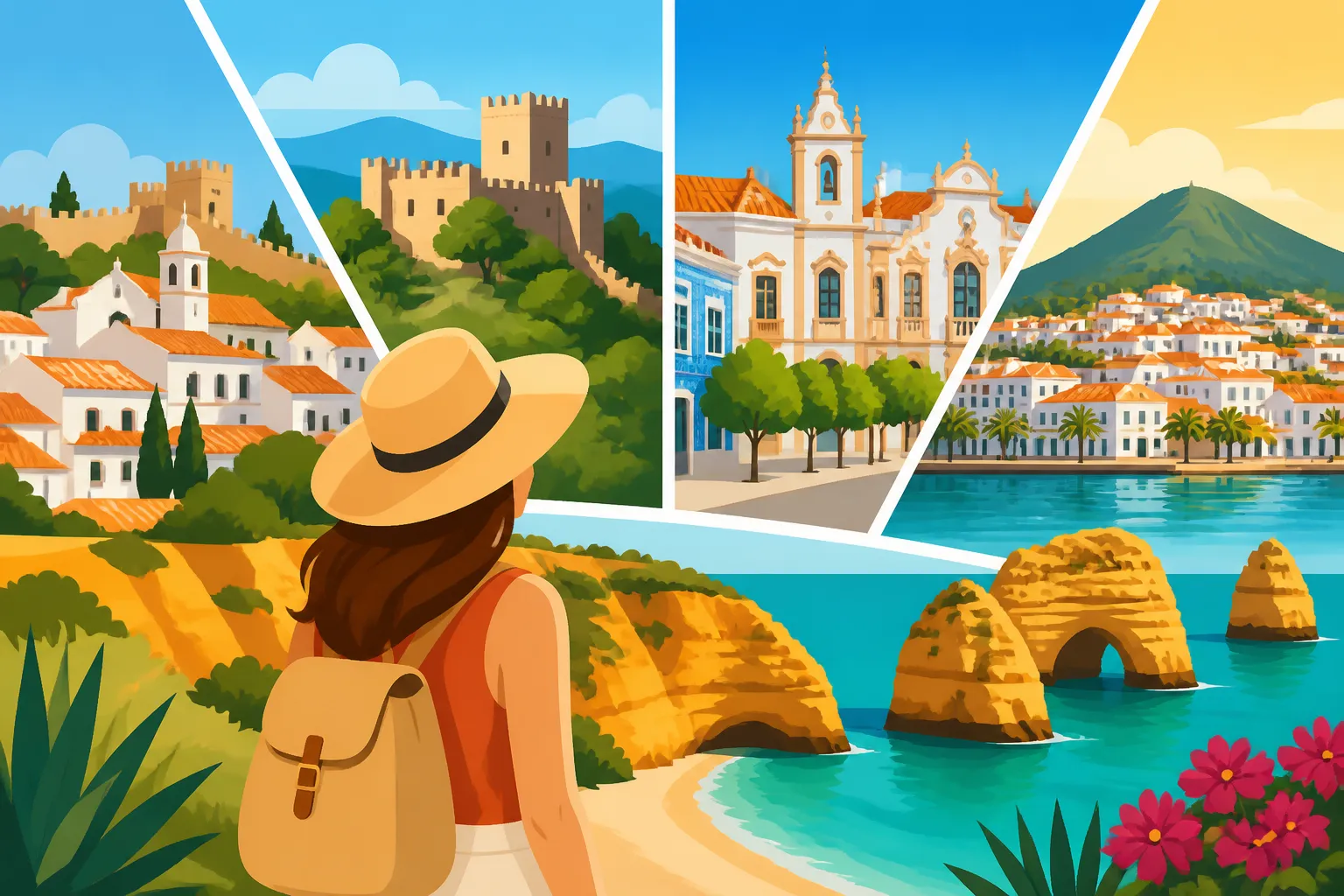
What Are the Best Day Trips From the Algarve?
Disclosure: This article contains affiliate links. If you buy through them, we may earn a commission at no extra cost to you. Read our full disclosure.
Ah, the Algarve! Sun-drenched beaches, delicious seafood, and that wonderfully relaxed vibe that makes so many of us fall in love with Portugal. But let's be honest, as much as we adore lounging by the sea, sometimes you just get that itch to explore a little further, right? That feeling of wanting to peel back another layer of this beautiful country, to see beyond the familiar tourist spots. If you've been wondering what lies beyond those golden sands and picturesque cliffs, and how to actually get there without a huge headache, you're in the right place. This guide is all about uncovering the very best day trips you can take from the Algarve, making sure you get to experience more of Portugal's diverse beauty, history, and charm.
Exploring the Eastern Algarve's Natural Wonders and Historic Towns
The eastern side of the Algarve, often overlooked by those who rush straight to the more famous western beaches, holds a wealth of authentic Portuguese experiences. It's a gentler landscape, dotted with historic towns, incredible natural parks, and a pace of life that feels wonderfully unhurried. For expats living in the central or western Algarve, venturing east offers a delightful change of scenery, and for tourists, it’s a chance to see a different facet of this popular region.
Faro: The Algarve's Underestimated Capital
Many people fly into Faro Airport and then immediately leave, heading straight to their coastal resort. What a shame! Faro, the capital of the Algarve, is a beautiful and historic city that absolutely deserves a day of your exploration. It’s got a much more local, less touristy feel than some of the resort towns, and it's easily accessible by train or car from most points in the Algarve. Driving into Faro is straightforward, and there's ample parking available, often in underground garages near the city center.
When you get there, head straight for the Cidade Velha, the old walled town. Wander through the Arco da Vila, an imposing neoclassical arch, and let yourself get lost in the labyrinthine cobblestone streets. You’ll find stunning architecture, orange trees lining the squares, and a profound sense of history. Don't miss the Cathedral of Faro, with its rather unassuming exterior hiding a surprisingly ornate interior and a tower you can climb for panoramic views over the city and the Ria Formosa. For something a little more macabre but utterly fascinating, visit the Capela dos Ossos (Bone Chapel) at the Igreja do Carmo. It's a striking reminder of life's transience, adorned with the bones and skulls of over 1,000 monks. While it might sound a bit unsettling, it’s a truly unique experience. After soaking up the history, enjoy a leisurely lunch at one of the many traditional restaurants in the old town, perhaps sampling some fresh seafood caught that very morning. You might even find yourself chatting with locals, which is always a treat!
Tavira: Venetian Charm and Island Escapes
If you continue east from Faro, you’ll discover Tavira, often lauded as one of the prettiest towns in the Algarve, and for good reason. It's bisected by the Gilão River, which is spanned by a beautiful Roman bridge (Ponte Romana) with seven arches, making for incredibly picturesque views. Tavira has a quiet, almost Venetian charm, with its white-washed buildings, traditional tiled roofs, and numerous churches (they say there are 37!). It’s the kind of place where you can happily spend hours just strolling, soaking in the atmosphere.
Take some time to explore the castle ruins, which offer fantastic views, and wander through the lovely Jardim da Alagoa, a tranquil garden perfect for a moment of repose. But the real draw for many is its proximity to Ilha de Tavira, one of the barrier islands of the Ria Formosa Natural Park. You can catch a ferry from the town center or from Quatro Águas, and within minutes, you'll be on a pristine sandy beach that stretches for miles. This is a perfect escape on a hot day, where you can swim, sunbathe, or enjoy a meal at one of the casual beach restaurants. Don't forget your sunscreen and a good book! Getting to Tavira is quite easy by car, with a good train connection as well. Just be aware that ferry times to Ilha de Tavira can vary by season, so it's always wise to check in advance.
Ria Formosa Natural Park: A Biodiverse Lagoon
Nestled along the eastern Algarve coast, the Ria Formosa Natural Park is a protected area of incredible natural beauty and biodiversity. It’s a labyrinth of lagoons, canals, salt pans, and barrier islands that constantly change with the tides, home to an astonishing array of birdlife, including flamingos, and an important ecosystem for marine life. A day trip here isn't about visiting a single town, but immersing yourself in nature. This is one of those places where the hustle and bustle of daily life just melts away, replaced by the sounds of birds and the gentle lapping of water.
The best way to experience Ria Formosa is by boat. You can find numerous tour operators in Faro and Olhão offering guided trips. These tours often take you through the serene channels, stopping at various points like Culatra or Farol island, where you can enjoy traditional fishing villages, pristine beaches, and even a lighthouse. Many of these islands are car-free and offer a truly unique glimpse into local life. For those who prefer a more active adventure, kayaking or stand-up paddleboarding through the calm waters is an unforgettable experience. You'll get up close with nature, perhaps spotting chameleons on the dunes or observing migratory birds. Remember to pack a hat and plenty of water, as the sun can be intense, even in the cooler months. You can often find and book these excursions easily through platforms like GetYourGuide, ensuring you get a reliable tour with good reviews.
Venturing North: Alentejo's Charm and Vineyards
Leaving the coast behind and heading north from the Algarve, you quickly enter the vast, undulating landscapes of the Alentejo region. This is a different Portugal altogether – expansive plains, cork oak forests, olive groves, and a slower, more rural pace of life. The Alentejo is often called the "breadbasket of Portugal," known for its incredible food, excellent wines, and historic fortified towns. It's a fantastic contrast to the Algarve, offering a glimpse into a more traditional and rustic side of Portuguese culture.
Mértola: A Hidden Gem on the Guadiana
Just about an hour and a half north of Faro, perched dramatically on a hilltop overlooking the Guadiana River, is the captivating town of Mértola. This is truly a hidden gem, often bypassed by tourists, making it an ideal day trip for those seeking an authentic historical experience without the crowds. Mértola has a rich and complex history, having been an important river port during Roman, Visigothic, and Islamic rule. This layered past is evident everywhere you look.
Start your visit at the castle, which offers breathtaking views of the river and the surrounding Alentejo countryside. Within the castle walls, you'll find the remains of a beautiful Islamic mosque, later converted into the Church of Nossa Senhora da Anunciação – a unique fusion of architectural styles. The town itself is a living museum, with archaeological sites, a Roman house, and several small museums dedicated to Islamic art and local history. Take your time to stroll through the narrow, winding streets, pausing for a coffee or a traditional Alentejano meal. The local cuisine here is hearty and delicious, often featuring game meats, river fish, and strong local wines. Mértola is a place where you can genuinely feel the whispers of history around every corner, and it offers a wonderfully tranquil escape from the bustling coast. Access is primarily by car, and the drive itself is quite scenic, winding through rolling hills.
The Alentejo Wine Route: Savoring Portuguese Flavors
No trip to the Alentejo would be complete without indulging in its phenomenal wine. The region is renowned for producing some of Portugal’s finest wines, characterized by their robustness and unique flavors. A day trip along the Alentejo Wine Route is an absolute must for any oenophile, or simply anyone who appreciates good food and drink in a beautiful setting. The closest part of the Alentejo wine region to the Algarve would be around Beja or further east towards Évora (though Évora might be a stretch for a true day trip, it's doable if you start early).
Many quintas (wine estates) offer tours and tastings, allowing you to learn about the winemaking process from grape to glass and, of course, sample their exquisite produce. Imagine touring a sun-drenched vineyard, hearing about the local varietals like Antão Vaz and Aragonês, and then settling down for a tasting paired with local cheeses and charcuterie. It's pure bliss. Some wineries, such as Herdade do Esporão or Cartuxa near Évora, are quite famous and offer comprehensive experiences, but there are countless smaller, family-run estates that provide a more intimate and personal touch. While you might want to consider booking these experiences in advance, especially during harvest season, you can often find fantastic local recommendations by simply asking around once you're in the region. Remember to choose a designated driver or consider a guided tour that includes transport, so everyone can enjoy the tastings responsibly. When planning your route, keep in mind that distances in the Alentejo can be deceptive, so factor in ample travel time.
The Wild West Coast and Beyond
While the Algarve's southern coast is famous for its sheltered beaches and calm waters, heading west offers a completely different experience. The wild, rugged coastline, part of the Southwest Alentejo and Vicentine Coast Natural Park, is a dramatic landscape of towering cliffs, secluded coves, and powerful Atlantic swells. It's a paradise for surfers, hikers, and anyone who loves raw, untamed nature.
Sagres and Cabo de São Vicente: End of the World Views
A journey to the very southwestern tip of Europe is a truly iconic Algarve day trip. Sagres, a small, windswept town, is steeped in maritime history. It’s famously associated with Prince Henry the Navigator and the Portuguese Age of Discovery, believed to be the site of his navigational school (though historians still debate its exact location). The town has a laid-back, surf-town vibe, but its real draw is the dramatic natural beauty and the sense of standing at the edge of the known world.
The highlight of any visit here is undoubtedly the Fortaleza de Sagres, a massive fortress built to protect the coast. Wander its imposing walls, soak in the panoramic views of the ocean, and walk the perimeter to find the giant compass rose etched into the ground. Just a few kilometers further west is Cabo de São Vicente (Cape St. Vincent), mainland Europe's most southwesterly point. This is a truly spectacular, windswept promontory where sheer cliffs plunge into the crashing Atlantic. The lighthouse, one of Europe's most powerful, stands as a solitary sentinel. It’s an incredibly atmospheric spot, especially at sunset, when the sky explodes in a riot of colors. Be prepared for strong winds and wear layers, even on a sunny day. Driving there is the easiest option, but there are also local bus services from Lagos. The rugged beauty of this area reminds you of the sheer power of nature.
Costa Vicentina Natural Park: Rugged Cliffs and Surfer Havens
Stretching north from Sagres, the Southwest Alentejo and Vicentine Coast Natural Park (Parque Natural do Sudoeste Alentejano e Costa Vicentina) encompasses some of Portugal's most breathtaking and untouched coastline. This protected area is a haven for nature lovers, offering a stark contrast to the more developed central Algarve. Here, you'll find wild, expansive beaches backed by towering cliffs, perfect for long walks, surfing, or simply finding a quiet spot to watch the waves. It's a far cry from the bustling resort beaches, and many expats find it a refreshing escape.
Consider exploring towns like Aljezur, with its Moorish castle ruins and charming old town, or Odeceixe, a picturesque village where the river meanders to the sea. The beaches in this region, such as Praia da Arrifana, Praia do Amado, and Praia da Bordeira, are legendary among surfers for their consistent waves. Even if you don't surf, the dramatic scenery alone is worth the drive. There are also numerous hiking trails, including sections of the Rota Vicentina, a long-distance walking path that offers incredible coastal views. Packing a picnic is a great idea, as dining options can be sparse in some of the more remote areas. This area is best explored by car, giving you the freedom to stop at viewpoints and discover hidden coves. Just be mindful of parking, especially at popular surf spots during peak season.
Practical Tips for Planning Your Algarve Day Trips
Embarking on a day trip from the Algarve should be an enjoyable adventure, not a logistical nightmare. As an expat who's navigated these roads and tried to figure out train schedules more times than I can count, I can tell you that a little planning goes a long way. Portugal's infrastructure is generally good, but knowing your options and anticipating a few local quirks can make all the difference.
Transportation: Cars, Trains, and Guided Tours
Deciding on your mode of transport is crucial. For maximum flexibility, especially if you plan to visit multiple spots or more rural areas like the Alentejo or parts of the Costa Vicentina, a rental car is almost always your best bet. Driving in Portugal is generally pleasant, with well-maintained roads and stunning scenery. Just remember to account for toll roads, which can be paid for with a Via Verde transponder (highly recommended) or at designated spots. For a deeper dive into driving here, you might find our guide on Navigating the Portuguese Toll System: Via Verde and Electronic Tolls incredibly useful.
If you prefer not to drive, trains are an excellent option for destinations along the coastal line, like Faro and Tavira from other Algarve towns, or even for connecting to larger cities further north. The Comboios de Portugal (CP) network is reliable and comfortable, offering a stress-free way to enjoy the scenery. You can easily check schedules and book tickets online, or even use platforms like Omio to compare various train and bus options. For more on train travel, check out Using Comboios de Portugal (CP) Trains and the Navegante Pass.
Finally, guided tours are fantastic if you want to sit back, relax, and let someone else handle all the logistics. Many local operators, often found through services like GetYourGuide, offer day trips that cover popular destinations like the Ria Formosa or Sagres. This is particularly good for solo travelers or if you're uncomfortable with driving on unfamiliar roads. Plus, a good guide can provide invaluable insights into the history and culture of the places you visit.
Here's a quick comparison of travel options for some popular day trip destinations:
| Destination | Recommended Transport | Pros | Cons |
|---|---|---|---|
| Faro | Train, Car | Easy access, train is scenic | Parking can be tricky in peak season if driving |
| Tavira | Train, Car | Direct train connection, charming drive | Ferry to island requires checking schedules |
| Ria Formosa | Tour (Boat), Car | Best experienced by boat, tours handle logistics | Limited land access to true "park" areas, need a tour for full experience |
| Mértola | Car | Scenic drive, ultimate flexibility for exploring | Limited public transport, further inland |
| Sagres / Cabo | Car, Bus (from Lagos) | Dramatic coastal drive, flexibility for stopping at viewpoints | Can be windy and remote |
| Costa Vicentina | Car | Essential for exploring multiple beaches/towns | Roads can be winding, some areas very remote |
Timing Your Excursions: Seasons and Weekdays
Portugal is blessed with sunshine for much of the year, but the season you choose for your day trip can significantly impact your experience. Spring (April-May) and Autumn (September-October) are often considered the sweet spot for day trips. The weather is warm but not scorching, the landscapes are vibrant (especially in spring), and the crowds are thinner than in the peak summer months. You'll find it easier to book tours, get restaurant reservations, and navigate smaller towns.
Summer (June-August), while wonderful for beach days, can be very hot, especially when venturing inland to places like the Alentejo. Expect larger crowds, higher prices, and intense sun, meaning early starts are advisable. Conversely, Winter (November-March) offers a quieter experience, often with mild, sunny days. However, some smaller attractions might have reduced hours, and coastal areas can be quite windy. Always check opening times for specific attractions, especially outside of peak season. Whenever possible, try to plan your day trips for weekdays to avoid the local weekend rush, particularly if you're heading to popular spots or places with limited parking.
Essential Packing and Booking Considerations
Preparing for your day trip properly can prevent small annoyances from becoming big frustrations.
- Footwear: Comfortable walking shoes are a must, especially if you plan on exploring historic centers, hiking trails, or rugged coastal paths. Those cobblestone streets are beautiful but tough on unprepared feet!
- Layers: Even in summer, coastal areas can be breezy, and inland temperatures can drop in the evenings. Pack layers that you can easily add or remove.
- Sun Protection: Sunglasses, a hat, and high-factor sunscreen are essential year-round, but especially in Portugal's sunny climate.
- Water & Snacks: While you'll find plenty of cafes and restaurants, especially in towns, having a water bottle and some snacks is smart, particularly for longer drives or trips to more remote natural areas.
- Cash: While card payments are widely accepted, it's always a good idea to carry some euros, especially for smaller purchases, local markets, or tips.
- Technology: Ensure your phone is charged, and consider carrying a portable power bank. Download offline maps of your destination, just in case you lose signal in a remote area.
- Language: While many people in tourist areas speak English, venturing further afield means you'll encounter more Portuguese-only speakers. Learning a few basic phrases will go a long way and is always appreciated. Our guide on Learning European Portuguese: Top Apps, Tutors, and Free Government Classes can give you a head start!
When it comes to booking, whether it's a rental car, a train ticket via Omio, or a guided tour through GetYourGuide, it's generally best to do so in advance, especially during peak season. This ensures availability and often secures better prices. For accommodation if you decide to extend your day trip to an overnight stay, Booking.com is a reliable platform. Always confirm your bookings and double-check any specific requirements (like ID for train tickets or driving license for car rentals) before you set off.
Disclaimer
Please note that while this guide offers comprehensive advice, travel information, prices, and regulations in Portugal can change. It's always a good idea to verify details with official sources or local providers before making your plans.