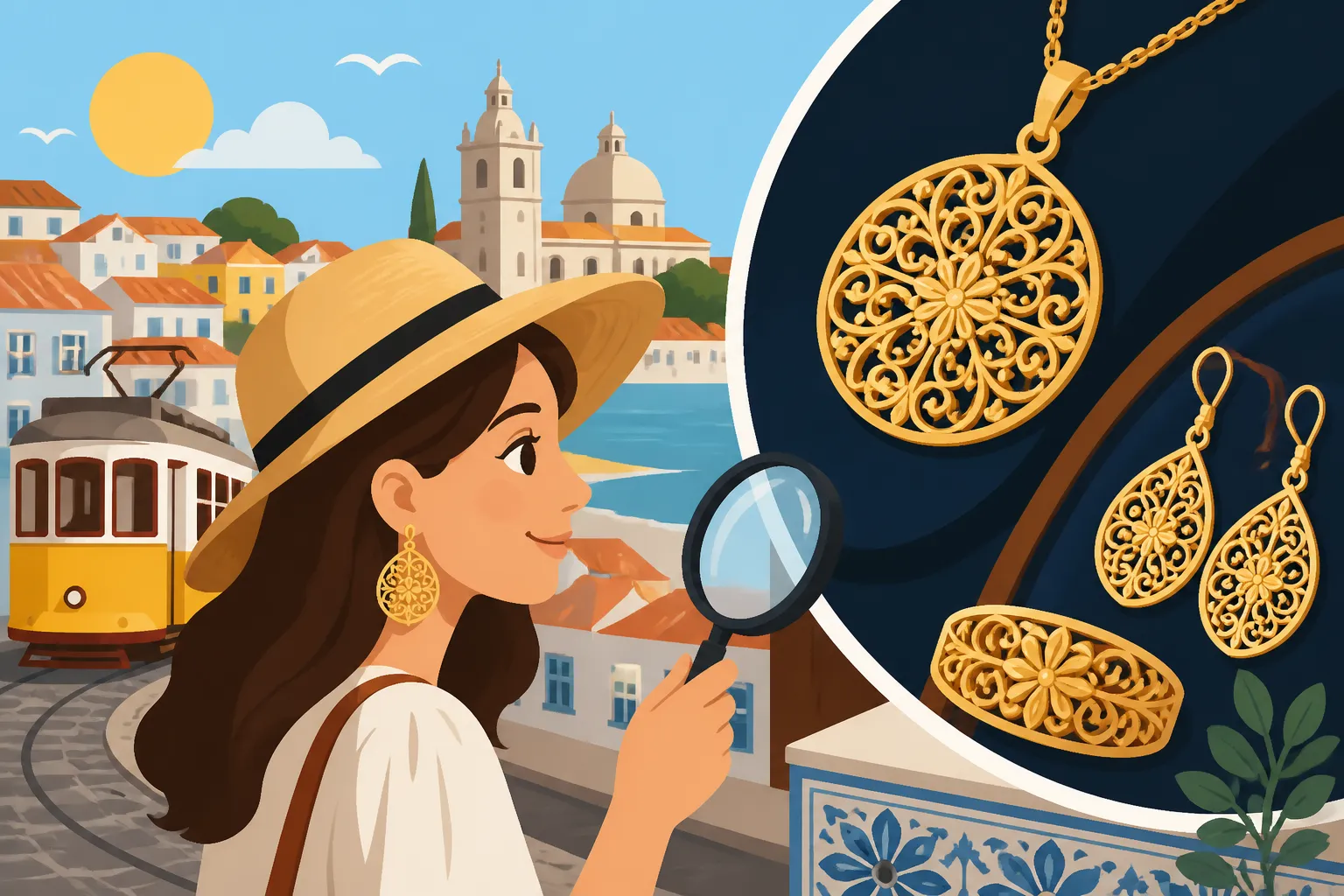
How to Find Filigree Jewelry in Portugal
Disclosure: This article contains affiliate links. If you buy through them, we may earn a commission at no extra cost to you. Read our full disclosure.
Oh, the hunt for authentic Portuguese filigree jewelry! It's one of those beautiful quests that can either lead you to a treasured family heirloom or, unfortunately, to a mass-produced trinket that just doesn't quite capture the soul of Portugal. Countless tourists and newcomers get swept up in the charm of filigrana only to feel a bit lost in how to tell the real deal from the tourist trap. This guide is here to cut through the noise, helping you understand what makes Portuguese filigree so special and, more importantly, exactly where and how to find those exquisite pieces that truly speak to the country's rich artisanal heritage.
The Allure of Portuguese Filigree: More Than Just Metal
There's something truly enchanting about Portuguese filigree. It's not just jewelry; it's a whisper of history, a testament to incredible skill, and often, a symbol steeped in local folklore and tradition. For many, it evokes images of elegant folk dancers adorned with intricate gold, or the iconic Coração de Viana (Heart of Viana), a motif that has become synonymous with the country itself. But what exactly is filigree, and why should you invest your time in finding an authentic piece?
A Glimpse into the Craft and History
At its heart, filigree is a painstaking technique where artisans take delicate threads of gold or silver, often as fine as hair, and curl, twist, and solder them together to create intricate, lace-like patterns. Imagine an artist weaving metal as if it were fabric, forming intricate designs that are both robust and incredibly ethereal. This isn't a quick process; each piece is a labor of love, requiring immense patience, precision, and a steady hand.
The roots of filigree in Portugal stretch back centuries, with influences from the Phoenicians and Romans, but it was during the Baroque and Rococo periods that Portuguese artisans truly made it their own, particularly in the northern regions. They perfected the art, creating pieces that were both opulent and deeply expressive. The Coração de Viana, for instance, was originally created for Queen D. Maria II in the mid-19th century and quickly became a popular symbol of faith, love, and devotion, especially in the Minho region. You’ll see these hearts everywhere, but the true filigree ones hold a special magic. They aren’t just pretty; they tell a story, connecting you to generations of tradition and craftsmanship. This historical depth is what makes authentic filigree so much more than just a shiny accessory; it's a wearable piece of Portuguese identity.
Recognizing Authentic Filigree vs. Mass-Produced Imitations
Now, here’s where things get tricky, and where a lot of expats and tourists, myself included, have felt that pang of frustration. You walk into a souvenir shop, see rows of shiny "filigree" at suspiciously low prices, and think, "Score!" Only to realize later that what you bought was likely mass-produced, stamped metal that only vaguely mimics the real thing. It's a common trap, and it's disheartening when you're looking for genuine artistry.
So, how do you spot the difference? The key lies in the details. Authentic Portuguese filigree, whether in gold or silver, will always be exceptionally fine and intricate. You should be able to discern individual threads, meticulously twisted and joined. Look closely; if it looks like a flat, pressed, or stamped piece of metal with simulated filigree patterns, it’s not genuine. Real filigree has a three-dimensional quality, a depth that stamped metal simply cannot replicate.
Another crucial indicator is the hallmark. By law, all genuine gold and silver jewelry sold in Portugal must bear official assay marks that certify its purity. For gold, the most traditional Portuguese filigree is made with 19.2 karat (800 parts per thousand gold), giving it a distinct, rich yellow hue that's slightly different from 18k or 24k gold. You'll typically see a small deer head symbol with the number 800 for 19.2k gold. For silver, 925 sterling silver is common, but 833 silver (also known as prata de lei) is also traditional for filigree, often marked with a swallow or an eagle's head. If a piece lacks these tiny, often discreet, official marks, walk away. It's not legal, and it's certainly not authentic. The weight also plays a role; while delicate, real filigree will have a certain heft to it, a substantial feel that cheap imitations lack because they're often hollow or made from much lighter, cheaper materials. Don't be afraid to pick it up, feel it, and scrutinize it under good light.
Where to Hunt for Authentic Filigrana: Key Regions and Cities
Finding genuine filigree is less about stumbling upon it by chance and more about knowing where to look. It requires a bit of an adventure, a willingness to step beyond the main tourist arteries and into the heartlands of this ancient craft. Trust me, the journey is part of the reward.
The Northern Heartlands: Viana do Castelo and Gondomar
If you are truly serious about finding the finest examples of Portuguese filigree, your pilgrimage must lead you north. This is where the magic truly happens, where generations of artisans have kept the tradition alive.
Viana do Castelo is, without a doubt, the unofficial capital of Portuguese filigree. This charming city in the Minho region is famous for its annual Romaria de Nossa Senhora da Agonia, a vibrant festival where women don breathtaking traditional costumes adorned with cascades of gold filigree necklaces, earrings, and the iconic Coração de Viana. These aren't just decorations; they are often family heirlooms, passed down through generations, showcasing the very best of the craft. When you walk through Viana, especially outside of the peak tourist season, you'll find ourivesarias (jeweler's shops) that have been in the same family for decades. These are the places where you'll find not just jewelry, but stories.
Getting to Viana do Castelo is quite straightforward. You can easily take a train or a bus from Porto, often a scenic journey that gives you a glimpse of the lush northern landscape. Services like Omio can help you compare routes and book your tickets, making the travel planning seamless. Once there, spend time wandering the older streets. Don't just stick to the main squares; venture into the quieter alleys, and look for small, unassuming storefronts. Many jewelers here still craft pieces on-site or source directly from local workshops they've known for years.
Just a stone's throw from Porto lies Gondomar, another crucial hub for gold filigree. While less picturesque for tourists than Viana do Castelo, Gondomar is where a significant number of Portugal's master filigree artisans and large-scale workshops are located. Many high-quality jewelers across Portugal, including those in Lisbon and Porto, source their filigree from Gondomar. If you're feeling adventurous, you might even find small workshops that offer visits, though these are often less formally structured than tourist experiences. Sometimes, you can find cultural tours on platforms like GetYourGuide that might include artisan visits in the greater Porto region, which could lead you to a filigree workshop in Gondomar or a nearby town. Visiting these areas truly gives you an appreciation for the skill and dedication involved.
Lisbon and Porto: Navigating Urban Jewelry Scenes
While the north is the undisputed heart of filigree production, you can certainly find beautiful and authentic pieces in Portugal's larger cities, Lisbon and Porto. However, you'll need a keener eye, as these cities also have a higher concentration of souvenir shops selling lesser-quality imitations.
In Lisbon, head to the upscale neighborhoods like Chiado and Baixa. Streets like Rua Augusta, Rua do Ouro (Street of Gold), and Rua da Prata (Street of Silver) have historically been home to jewelers. You'll find more established, traditional ourivesarias here that carry authentic filigree, often alongside other types of fine jewelry. These shops tend to be reputable, with knowledgeable staff who can explain the hallmarks and craftsmanship. Expect prices to reflect the quality and the prime location, but you're paying for authenticity and peace of mind. While exploring Lisbon, you might want to extend your stay to truly delve into the city's offerings, using services like Booking.com to find a comfortable base for your explorations. For a deeper understanding of where to base yourself, check out our Lisbon Neighborhood Guide: Best Areas for Expats and Digital Nomads.
Porto also boasts some excellent jewelry shops, particularly around the city center and the bustling Rua de Santa Catarina. Similar to Lisbon, focus on established jewelers rather than purely souvenir-oriented stores. Many shops in Porto will proudly display signs indicating "Filigrana Portuguesa" and will be happy to show you their certified pieces. Given its proximity to Gondomar, Porto jewelers often have a direct connection to the skilled artisans there, ensuring high quality. Understanding the city's layout and best spots can be enhanced by reading our Porto Neighborhood Guide: Where to Live for Culture, Tech, and Family. When you’re spending a few days hunting for that perfect piece, having a good hotel booked through Booking.com makes the experience much more enjoyable.
Remember, whether you're in a big city or a small northern town, the rule of thumb remains: if it seems too good to be true, it probably is. The goal is to find a piece that resonates with you and truly represents Portuguese artistry.
Tips for a Successful Filigree Hunt and Making Your Purchase
Navigating the world of artisanal jewelry in a foreign country can be daunting, especially with a language barrier. But a little preparation and cultural understanding can go a long way in securing a beautiful, authentic piece of filigree.
Asking the Right Questions and Price Negotiation
When you step into a reputable ourivesaria, don't be shy about asking questions. Most jewelers, especially in larger cities and tourist-friendly areas, will have some English speakers on staff. However, knowing a few Portuguese phrases can not only bridge the gap but also show respect for the local culture. Phrases like "É feito à mão?" (Is it handmade?) or "Qual é a pureza?" (What's the purity?) can quickly help you ascertain the authenticity and quality. If you want to dive deeper into communicating effectively, our guide on Learning European Portuguese: Top Apps, Tutors, and Free Government Classes can be a valuable resource.
When it comes to pricing, genuine filigree is an investment, not a cheap souvenir. Gold filigree, particularly 19.2k, will be significantly more expensive due to the precious metal content and the labor-intensive craftsmanship. Silver filigree is more accessible but still reflects the artistry involved. Don't expect aggressive haggling as you might in some other cultures. While it's generally not customary to haggle intensely over prices in Portugal, for a significant purchase, a polite inquiry about "um pequeno desconto" (a small discount) or "o melhor preço" (the best price) might be met with a small concession, especially if you're paying in cash or buying multiple items. Always be respectful and understand that you are paying for heritage and skill. For a broader perspective on managing your finances in Portugal, you can consult our guide on Money and Finance in Portugal: The Ultimate 2026 Guide for Expats.
Payment methods are usually flexible. Most established shops accept major credit cards (Visa, Mastercard), and many also support the local MB Way system, which is fantastic for quick mobile payments. Cash is always an option, and some smaller artisans might even prefer it. If you need to withdraw cash, the widespread Multibanco ATM network is convenient, though always be mindful of your surroundings, particularly when carrying valuables, as discussed in our article on Crime Rates and Neighborhood Safety in Portugal's Major Cities.
Protecting Your Investment: Hallmarks, Certificates, and Returns
As mentioned earlier, hallmarks are your best friend in verifying authenticity. Every piece of gold or silver jewelry in Portugal must legally bear specific marks that indicate the metal's purity and the manufacturer's or assay office's identification. Familiarize yourself with these marks before you go. The official Portuguese assay office is Imprensa Nacional-Casa da Moeda (INCM), and their marks are recognized internationally. A reputable jeweler will show you these marks and explain their significance without hesitation.
Additionally, always request a certificate of authenticity, known in Portuguese as a certificado de garantia. This document should detail the metal type, purity, weight, and sometimes even the artisan or workshop. It serves as your guarantee of authenticity and quality, crucial for insurance purposes or if you ever decide to resell the piece. Keep it safe!
Regarding returns or exchanges, Portuguese consumer law provides protections, but policies can vary slightly from shop to shop. It's always a good idea to clarify the política de devolução (return policy) before making a purchase, especially for high-value items. Usually, you'll need the original receipt and the item in its original condition. For general insights into the pace of life and expected interactions in Portugal, our guide to Daily Life in Portugal: Supermarkets, Language, and Cultural Etiquette can provide useful context for shopping and other daily activities.
Here's a handy table to help you distinguish between various types of filigree:
| Feature | Authentic Gold Filigree (19.2k) | Authentic Silver Filigree (833/925) | Imitation/Mass-produced |
|---|---|---|---|
| Material | 19.2k (800) yellow gold | Sterling silver (925) or 833 silver | Plated base metals, often brass or copper |
| Hallmarks | Yes, specific Portuguese assay mark (e.g., deer head) | Yes, specific Portuguese assay mark (e.g., swallow, eagle) | Absent or fake/generic |
| Craftsmanship | Extremely fine, delicate, intricate, hand-woven threads | Very fine, delicate, detailed, hand-woven | Coarse, less detailed, visible glue/solder, often stamped |
| Weight/Feel | Lighter than solid gold, but with substance | Delicate but not flimsy | Very light, feels cheap, hollow |
| Appearance | Distinctive rich yellow gold, lustrous | Bright silver, can tarnish naturally | Dull, uneven color, may look too perfect or mass-produced |
| Price | High (investment piece) | Moderate to high (depending on complexity) | Low |
| Where to Buy | Specialized jewelers (ourivesarias), artisan workshops | Specialized jewelers, artisan workshops | Tourist traps, souvenir shops |
The journey to find authentic Portuguese filigree is an experience in itself, offering a deeper connection to the country's artistic soul. Whether you journey by Using Comboios de Portugal (CP) Trains and the Navegante Pass to the northern heartland or meticulously explore the shops of Lisbon and Porto, the effort is well worth it. You're not just buying jewelry; you're bringing home a piece of Portugal's heritage, meticulously crafted and rich with history. Just remember to budget for this exquisite treasure, as the Cost of Living in Portugal 2026: Detailed Budgets for Singles and Families can vary, and a quality piece will reflect its true value. Happy hunting!
Disclaimer
The information provided in this guide is for general informational purposes only and does not constitute professional advice. While we strive to provide accurate and up-to-date information, rules and practices related to purchasing jewelry, authenticity, and consumer rights can change. Always conduct your own research, verify information with official sources or trusted professionals, and exercise due diligence before making any purchases. We are not responsible for any outcomes resulting from the use of this information.