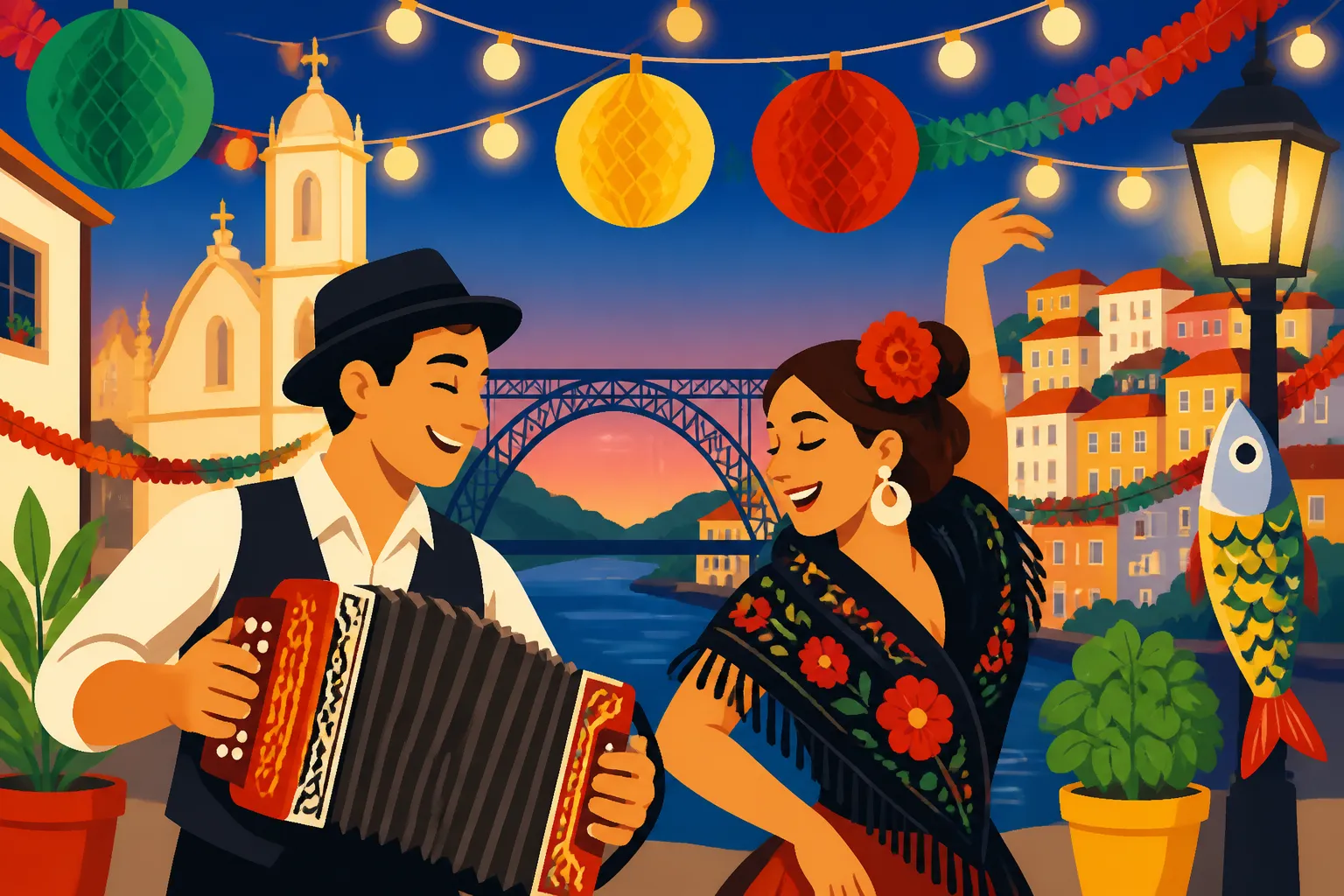
Santos Populares: Lisbon and Porto’s June Street Parties
Disclosure: This article contains affiliate links. If you buy through them, we may earn a commission at no extra cost to you. Read our full disclosure.
If you find yourself in Lisbon or Porto during the month of June, you will quickly realize that the tranquil, sun-drenched afternoons you envisioned are about to be replaced by a city-wide sensory explosion. From the inescapable scent of grilled sardines to the deafening roar of Pimba music, navigating the Santos Populares can be an overwhelming logistical nightmare for the uninitiated expat or tourist. This guide provides the deep, street-level intel you need to survive the chaos and actually enjoy the most important cultural event on the Portuguese calendar.
The Cultural Core of Santos Populares
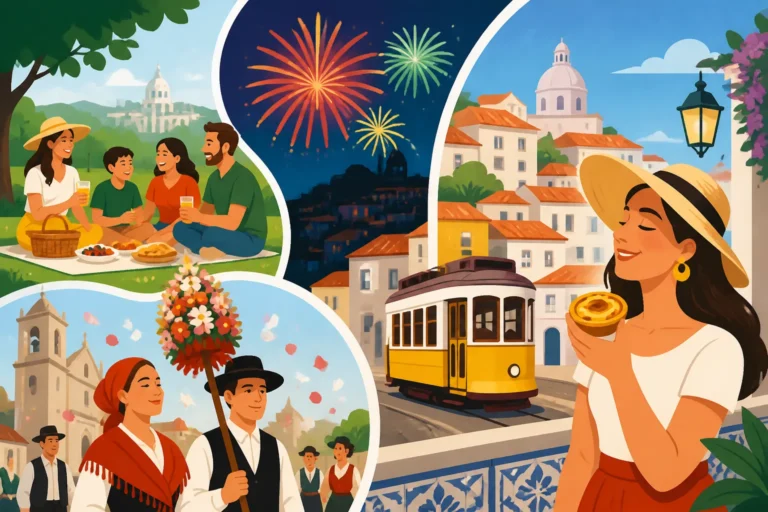
The Santos Populares (Popular Saints) are not just a series of parties; they are the heartbeat of Portuguese identity, stretching across the entire month of June. While the rest of the world might celebrate Midsummer with quiet bonfires or nature walks, Portugal turns its historic neighborhoods into open-air living rooms. As someone who has lived through a decade of these "Santos," I can tell you that if you try to fight the rhythm of June, you will lose. You have to embrace the smoke, the crowds, and the sheer absurdity of it all.
Santo António: The Matchmaker of Lisbon
Santo António is the patron saint of Lisbon, and his feast day on June 13th marks the peak of the city's celebrations. Known as the matchmaker saint, he is the reason you will see small pots of "Manjerico" (bush basil) sold on every street corner. These plants usually come with a small paper carnation and a four-line poem, often containing a romantic or cheeky message.
For the locals, Santo António is a serious affair. The "Casamentos de Santo António" (St. Anthony's Weddings) is a televised tradition where dozens of couples get married simultaneously, sponsored by the city council. If you are staying in the city center, which you might have booked through Booking.com to be close to the action, expect the festivities to start on the night of the 12th and last until the sun comes up on the 13th. The historic center essentially shuts down for vehicles, and the air becomes a thick fog of sardine smoke.
São João: The Hammer-Wielding Chaos of Porto
Move north to Porto on the night of June 23rd, and the vibe shifts from romantic matchmaking to surrealist street combat. São João is arguably the biggest party in the country, and its hallmark is the "martelinho"—a colorful plastic hammer that squeaks when you hit someone on the head. In years past, people used leeks (alho-porro) to "bless" passersby with a pungent swipe across the face, but the plastic hammers have largely taken over.
The celebration in Porto is deeply communal. People set up makeshift grills on their doorsteps, and the entire city descends toward the Ribeira district for a massive fireworks display over the Douro River. If you are traveling between the two cities for both festivals, using a platform like Omio is essential to secure train tickets early, as the Alfa Pendular and Intercidades trains sell out weeks in advance during the Santos season. You can find more about the logistics of moving between cities in our guide on Public Transport and Driving in Portugal: Trains, Tolls, and Licenses.
São Pedro: The Maritime Farewell
The final saint in the trio is São Pedro, celebrated on June 29th. While it doesn't carry the same weight in the capital or the northern hub as the other two, it is a massive event in fishing towns like Cascais, Sintra, and Póvoa de Varzim. São Pedro is the patron saint of fishermen, and the celebrations often involve boat processions and even more outdoor grilling.
For expats living in the outskirts, São Pedro is often the "saner" version of the Santos. It provides a chance to enjoy the tradition without the claustrophobic crowds of Alfama or Ribeira. It is a more local, maritime-focused event where the connection to the sea is palpable. If you’re interested in the local vibes of these areas, check out our Lisbon Neighborhood Guide: Best Areas for Expats and Digital Nomads for more on where to find these quieter pockets.
Navigating the Lisbon Arraiais: A Survivor’s Guide
In Lisbon, the street parties are known as "arraiais." Every "freguesia" (parish) hosts at least one, but the most famous ones are concentrated in the historic slope neighborhoods. Living in these areas during June is a test of patience; your front door will likely be blocked by a beer tap, and your laundry will smell like fish until July.
Alfama, Mouraria, and Graça
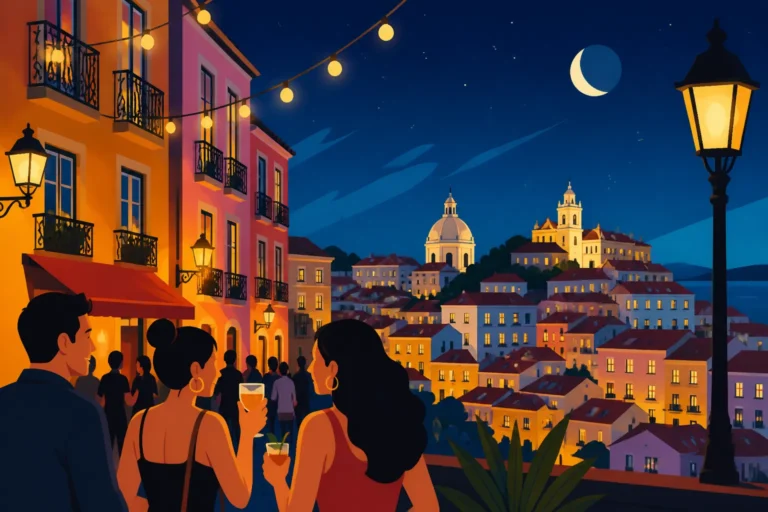
These are the "Big Three" neighborhoods for Santo António. Alfama, with its labyrinthine alleys, is the epicenter. Tables are pulled out into the streets, and you’ll find residents selling "bifanas" (pork sandwiches) and "sangria" directly from their kitchen windows. It is incredibly charming for the first hour, but by 11 PM, the "becos" (alleys) become so crowded that movement is almost impossible.
Mouraria offers a slightly more diverse vibe, reflecting its multicultural population, while Graça provides a bit more breathing room and incredible views from its "miradouros." If you are planning to visit these spots, I highly recommend booking a guided evening walk through GetYourGuide to learn about the history of Fado and the Santos, as having a local guide can help you navigate the shortcuts that aren't on Google Maps. You might also want to read up on Safety and Emergency Preparedness in Portugal for Foreign Residents to keep your wits about you in these dense crowds.
The Marchas Populares
On the night of June 12th, the Avenida da Liberdade hosts the "Marchas Populares." This is a massive choreographed parade where each neighborhood (Bairro Alto, Alfama, Madragoa, etc.) competes for the title of the best performance. Think of it as a more traditional, folk-oriented version of Rio’s Carnival.
The participants wear elaborate costumes and sing songs dedicated to their neighborhood and Santo António. It is a point of immense pride. If you want to see the parade, you have to arrive hours early to claim a spot on the sidewalk, or pay for a seat in the "bancadas" (stands). It is a long night, and the winners aren't announced until the early hours of the morning.
Practical Tips for the Lisbon Crowds
The number one mistake newcomers make is trying to use a car or even an Uber on the night of the 12th. Most of the city center is cordoned off. Instead, rely on the Metro, which usually runs all night on special occasions, or the Navegante pass. You can learn more about this in our article on Using Comboios de Portugal (CP) Trains and the Navegante Pass.
Also, be prepared for the "toilet situation." Public bathrooms are non-existent in the narrow streets of Alfama. Most people end up queuing at bars, which will often charge a Euro or expect you to buy a drink. My veteran advice? Plan your hydration levels carefully. The sheer volume of people makes every basic task—like getting a drink or finding a seat—an exercise in endurance.
Porto’s São João: Hammers, Sky Lanterns, and Fireworks
Porto’s celebration is, in my opinion, even more intense than Lisbon’s. It’s a night where social hierarchies disappear, and everyone is fair game for a squeaky hammer hit. If you’re living in the north, you already know that Porto Neighborhood Guide: Where to Live for Culture, Tech, and Family highlights the city's community spirit, but during São João, that spirit is dialed up to eleven.
The Squeaky Hammer Etiquette
It sounds ridiculous, but there is an etiquette to the "martelinhos." You don’t hit hard; it’s a light tap on the head as a greeting. If someone hits you, you hit them back. It’s a constant, rhythmic "squeak-squeak" that fills the air. For those who find this annoying, the only solution is to stay indoors—but then you’d miss the magic.
The older generation still carries "alho-porro" (flowering leeks). Getting hit with one of these is considered good luck, though it leaves you smelling like an onion patch. In recent years, the sky lanterns (balões de São João) have also become a massive part of the night. Thousands of paper lanterns are released into the sky, creating a glowing canopy over the Douro. However, be aware that if the weather is too dry or windy, the government often bans them to prevent wildfires.
The Ribeira Fireworks and the Bridge Walk
The climax of the night is the fireworks display launched from barges in the Douro River and from the top of the Dom Luís I Bridge. It usually starts at midnight and lasts for about 20 minutes. The best vantage points are in Ribeira (Porto side) or Cais de Gaia (Gaia side).
After the fireworks, the tradition is to walk all the way from the city center to the beaches of Foz or Matosinhos. It’s a several-kilometer trek, but the streets are lined with music stages and food stalls the whole way. Watching the sunrise over the Atlantic after a night of São João is a rite of passage for any expat in Porto. If you're staying in Gaia, you can find a room on Booking.com with a river view to avoid the worst of the walk back.
Escaping the Center: Foz and Vila Nova de Gaia
If the thought of a million people in Ribeira gives you anxiety, the "Santos" in Foz or the residential parts of Vila Nova de Gaia are much more manageable. They still have the music, the sardines, and the "pimba" bands, but you might actually find a place to sit down. These areas are great for families with children who want to experience the tradition without the risk of getting lost in a sea of hammer-wielding teenagers.
| Feature | Lisbon (Santo António) | Porto (São João) |
|---|---|---|
| Main Night | June 12th | June 23rd |
| Key Symbol | Manjerico (Basil) | Plastic Hammers / Leeks |
| Main Event | Marchas Populares (Parade) | Fireworks & Bridge Display |
| Traditional Food | Sardines & Caldo Verde | Sardines & Roasted Kid/Lamb |
| Vibe | Romantic, Traditional, Crowded | Wild, Playful, Communal |
| Transport | Metro (Limited Access) | Walking is the only way |
Essential Food and Drink: The Santos Menu
You cannot talk about the Santos without talking about the food. The entire month is a caloric marathon. The smell of the charcoal grills is the true "official" scent of June in Portugal. If you are worried about the cost, don't be—this is one of the most affordable times to eat out, though prices have risen lately. You can check our breakdown of the Cost of Living in Portugal 2026: Detailed Budgets for Singles and Families for more on food inflation.
The Sardinhada (Sardine Feast)
The sardine is king. Tradition dictates that you eat them on a thick slice of "pão de milho" (cornbread). As you eat the fish, the fat and oil soak into the bread, which you eat at the very end. This is the "correct" way to do it. If you ask for a fork and a plate in a crowded arraial, you will get some very confused looks.
The quality of the sardines is a major topic of conversation. June is when they are at their fattest and most delicious. If you aren't a fan of fish bones, the "bifana" is your best friend. A bifana is a thin pork cutlet marinated in garlic and wine, served in a crusty roll with mustard or piri-piri. It is the ultimate street food. For more on the nuances of Portuguese dining, see our guide on Portuguese Coffee Culture and Restaurant Etiquette: Ordering Like a Local.
Caldo Verde and Pimba Music
To wash it all down, you need a "cup" (plastic, usually) of red wine or a "fino/imperial" (small draft beer). The night usually ends with a bowl of "Caldo Verde"—a kale and potato soup with a slice of chouriço. It is the perfect "hangover preventative" and keeps you going through the chilly early morning hours.
While you eat, you will be subjected to "Pimba." This is a genre of Portuguese pop music known for its accordion-heavy beats and double-entendre lyrics. It is incredibly catchy, surprisingly loud, and after three beers, you will find yourself dancing to it with a complete stranger. It is the soul of the arraial.
Vegetarian and Alternative Options
I’ll be honest: being a vegetarian during the Santos is a challenge. The menu is traditionally meat and fish-centric. However, in recent years, more "modern" arraiais in neighborhoods like Arroios or Princípe Real have started offering grilled peppers, "queijo no pão" (cheese in bread), and even vegan bifanas. If you're a vegetarian, I'd suggest checking GetYourGuide for food tours that specifically cater to dietary restrictions during the festival season.
The Expat’s Survival Guide: Noise, Safety, and Sanity
June tends to bring mixed feelings for residents. While the festivals are beautiful, they are also exhausting. If you live in the "Pink Zone" or any historic center, your life is about to get very loud.
Dealing with the Noise (The Law of the Santos)
In Portugal, the "Lei do Ruído" (Noise Law) is essentially suspended during the big nights of the Santos. Music can—and will—blast until 4 AM. If you are a light sleeper, earplugs are not a suggestion; they are a survival requirement. If you are house hunting, keep this in mind. A beautiful apartment in Alfama looks great in January, but it is a front-row seat to a month-long rock concert in June.
There is also the issue of "public hygiene." With thousands of people drinking beer in streets without enough toilets, things can get unpleasant. The "Yellow Book" for complaints won't help you much here; it’s better to just accept that June is a messy month and the city clean-up crews (who are heroes) will have everything spotless by noon the next day.
Transport and Mobility Realities
Do not try to drive. Just don't. Between the road closures and the "unconventional" parking of festive locals, you will get stuck. The Metro and trains are your best bet, but even they will be packed. If you need a ride home, you’ll find yourself asking Using Bolt vs Uber in Portugal: Which ride-hailing app is cheaper? because prices will surge to 3x or 4x the normal rate. Often, walking an extra two kilometers away from the party zone before calling a car will save you twenty Euros.
Staying Safe in the Shove
Portugal is generally very safe, and the Santos are family-friendly events. However, the sheer density of people in spots like Alfama or Ribeira is a pickpocket’s dream. Keep your phone and wallet in front pockets or zipped bags. The biggest danger isn't crime, though—it’s dehydration and heat. Even at night, the crowds generate a lot of heat, and the smoke from the grills can be irritating. Drink plenty of water between those beers.
Beyond the Big Cities: The Regional Santos
While Lisbon and Porto get the international headlines, the rest of Portugal doesn't stay quiet. If you want a more "authentic" and less "touristy" experience, heading into the interior or to smaller coastal cities is a fantastic idea.
Braga and the Festas de São João
Braga claims to have the oldest São João celebration in the country. It is much more focused on folklore and ethnography than Porto’s party. You’ll see "Gigantones" (giant puppets) and "Cabeçudos" (big-headed figures) parading through the streets. It is a fantastic cultural deep dive that feels more like a medieval pageant than a modern street party.
Sintra and the Romantic Santos
Sintra’s São Pedro celebrations are magical because of the backdrop. The foggy, forested hills of Sintra give the street parties a mystical vibe. It is often significantly cooler in Sintra than in Lisbon, which can be a welcome relief from the June heat. Just be aware that transport to and from Sintra on festival nights can be tricky, so check the CP train schedules in advance.
The Algarve and the Beach Bonfires
In the south, the Santos are often celebrated on the beach. Jumping over bonfires (saltar a fogueira) is a common tradition, especially for São João and São Pedro. It is a much more laid-back version of the holiday, involving picnics on the sand and late-night swims. It’s the perfect way to experience the tradition if you prefer the sound of waves to the sound of Pimba.
Disclaimer
The information provided in this guide is for informational purposes only. Festival dates, transport schedules, and local regulations in Portugal are subject to change by municipal authorities. While we strive for accuracy, always check local government websites or official festival pages (like EGEAC in Lisbon) for the most up-to-date information regarding road closures, safety protocols, and event programming. This guide does not constitute legal or professional travel advice.