Survival Portuguese for Travelers: Key Phrases to Learn First
Disclosure: This article contains affiliate links. If you buy through them, we may earn a commission at no extra cost to you. Read our full disclosure.
Most travelers land in Lisbon or Porto expecting English to be the universal language, only to realize that while many speak it, the "language of respect" is European Portuguese. You will quickly find that a simple "Bom dia" opens doors that a "Hello" cannot, especially in the local tascas and neighborhood shops. This guide provides the linguistic tools to navigate daily interactions, show genuine respect to the locals, and handle travel logistics with confidence.
The Cultural Weight of a Simple Greeting
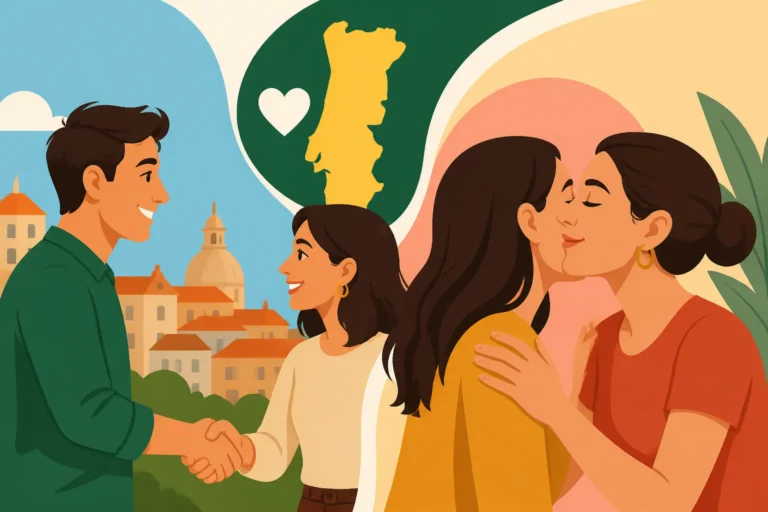
When I first moved to Portugal, I made the classic mistake of thinking that because English is widely understood in tourist hubs, I could just breeze through my day using it. I quickly learned that the Portuguese value etiquette and formality far more than we often do in the English-speaking world. Entering a shop or a café without a greeting is considered quite rude. It is not just about communication; it is about acknowledging the person in front of you.
Why the First Greeting is Non-Negotiable
In Portugal, the greeting is the most important part of any transaction. Whether you are checking into a room you found on Booking.com or buying a stamp at the CTT, you must start with the appropriate time-of-day greeting. The Portuguese are generally reserved but incredibly warm once the ice is broken, and nothing breaks the ice faster than showing you have made an effort to learn the local customs.
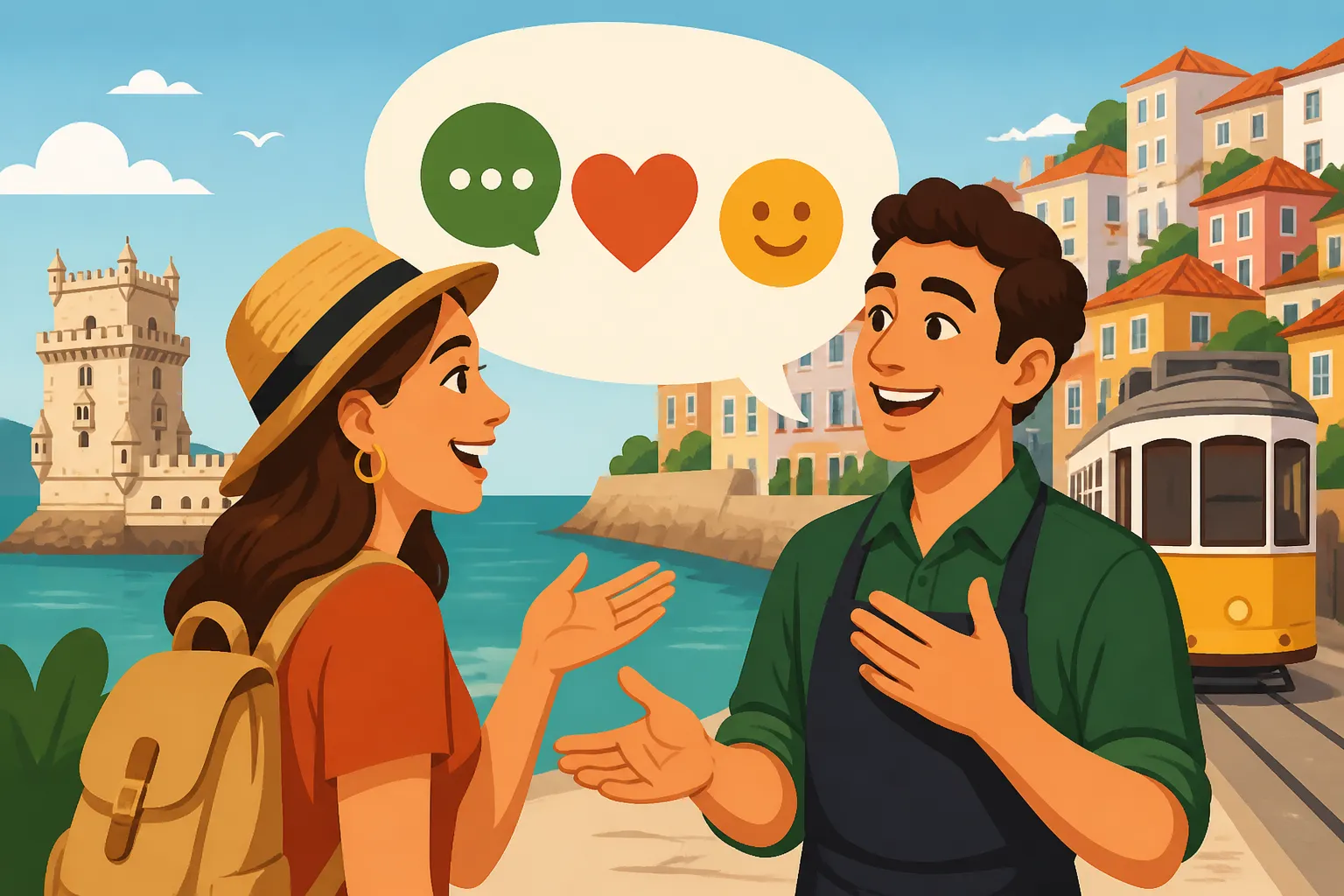
If you walk up to a counter and immediately start speaking English, the service might be efficient, but it will likely be cool. However, if you start with a "Bom dia" and then ask, "Fala Inglês?" (Do you speak English?), the entire atmosphere shifts. You have signaled that you are a guest who respects their culture, not just a consumer passing through. This small gesture often results in better service, more smiles, and perhaps even a local tip about the best hidden viewpoint in the neighborhood.
Greetings Throughout the Day
The Portuguese have a specific rhythm for their greetings. "Bom dia" is used from sunrise until lunch. Now, "lunch" in Portugal is a strictly defined window, usually between 12:30 PM and 2:30 PM. Once the clock strikes noon or you have finished your midday meal, you transition to "Boa tarde" (Good afternoon). This lasts until the sun goes down, at which point you switch to "Boa noite" (Good night/Good evening).
It is also worth noting that "Boa noite" is used both as a greeting when you arrive at a restaurant and as a way to say goodbye when you leave. If you are ever unsure, listen to what the locals are saying as they walk in. You will also hear "Olá" quite frequently, which is a casual "Hello" used among friends or in more relaxed environments, but sticking to the time-based greetings is always the safer, more respectful bet for travelers.
The Magic of Por Favor and Obrigado
If you learn nothing else, learn how to say please and thank you. "Por favor" is universal for please. However, "Thank you" is where many travelers get tripped up because it is gender-dependent based on the speaker, not the person being thanked. If you identify as male, you say "Obrigado." If you identify as female, you say "Obrigada."
There is a common misconception that you should change the ending based on who you are talking to, but that is incorrect. It is always about you. Many expats struggle with this for months, but once you get the muscle memory down, it becomes second nature. Using these phrases liberally—when a waiter brings your water, when someone holds a door, or when you finish a transaction—is the key to a smooth social experience. You might even find that Learning European Portuguese: Top Apps, Tutors, and Free Government Classes is your next logical step if you find yourself falling in love with the lilt of the language.
Navigating the Table: Food and Drink Essentials
Dining out is the heart of the Portuguese experience. However, the menus can be daunting, and the "coffee culture" is a world unto itself. Understanding how to order will save you from the "tourist trap" feeling and help you eat like a local in a traditional "Churrasqueira" or "Taberna."
Ordering Your Coffee Like a Local
In Portugal, a "café" is not just a place; it is a small espresso. If you simply ask for "um café," you will receive a tiny, powerful shot of caffeine. If you want something more akin to an Americano, ask for an "Abatanado." If you prefer milk, you have two main options: a "Meia de leite" (half milk, half coffee, similar to a flat white) or a "Galão" (mostly milk with a bit of coffee, served in a tall glass).
The etiquette of the café is also important. In many places, it is cheaper to drink your coffee standing at the counter ("ao balcão") than sitting at a table ("à mesa"). You will often see locals rushing in, tossing back an espresso, and leaving within two minutes. If you are settling in for a long session of planning your day, sit at a table, but be prepared for the price to be slightly higher. For more on this, check out our guide on Portuguese Coffee Culture and Restaurant Etiquette: Ordering Like a Local.
Restaurant Etiquette and Paying the Bill
One of the biggest surprises for newcomers is the "couvert." When you sit down, the waiter will likely bring out bread, olives, cheese, and sometimes pâté or ham. This is not free. If you eat it, you pay for it. If you don't want it, simply say "Não, obrigado/a" and they will take it away. It is perfectly acceptable to refuse the couvert, and it won't be seen as an insult.
When you are ready to pay, don't expect the waiter to bring the bill automatically. In Portugal, it is considered rude to rush guests. You will need to catch their eye and say, "A conta, por favor." If you are in a rush to catch a train you booked on Omio, make sure you ask for the bill well in advance. Also, keep in mind that many smaller, traditional places are "Só dinheiro" (cash only), so always ask "Aceita cartão?" (Do you accept cards?) before you sit down.
Special Dietary Requirements and Allergies
While Portugal is becoming much more vegetarian and vegan-friendly, especially in cities like Lisbon and Porto, the traditional rural diet is heavily centered on meat and fish. If you have an allergy or a strict diet, you need to be very clear. "Eu sou vegetariano/a" (I am vegetarian) is usually understood, but "Eu sou vegano/a" might require more explanation in smaller towns.
If you have a gluten allergy, say "Eu tenho alergia ao glúten" or "Sem glúten, por favor." It is helpful to know that most traditional Portuguese soups, like "Caldo Verde," are thickened with potatoes, but always double-check. For those traveling with children and concerned about nutrition, Pediatric Care in Portugal: Vaccinations and Child Health Checks offers a look at how health is managed locally, though for a traveler, a simple "É picante?" (Is it spicy?) is often the most important question to ask to avoid surprises for little ones.
On the Move: Transportation and Directions
Getting around Portugal is generally easy, but the linguistic nuances of the transport system can be tricky. Whether you are using the Metro in Lisbon or the "Comboios de Portugal" (CP) trains, knowing a few key phrases will prevent you from ending up on the wrong side of the Tagus river.
Asking for Directions and Reading Signs
Even with GPS, the winding, hilly streets of Alfama or Ribeira can be confusing. To ask where something is, use "Onde é…?" (Where is…?). For example, "Onde é a casa de banho?" (Where is the bathroom?) is perhaps the most useful phrase in any language. If you are looking for a specific landmark or a meeting point for a tour you booked on GetYourGuide, you can say "Onde é o ponto de encontro?"
Understanding the answers is the next challenge. "À direita" means to the right, "À esquerda" means to the left, and "Em frente" means straight ahead. Portuguese people are incredibly helpful and will often go out of their way to show you where to go, sometimes even walking you part of the way. If you find the directions too complex, look for a "Posto de Turismo" (Tourist Office), where they will almost certainly speak fluent English.
Public Transport Phrases for Trains and Buses
When using the trains or buses, you will likely interact with ticket machines or kiosks. If you are using a platform like Omio to book long-distance trips, you will already have your ticket, but for local transit, you’ll need to buy a card like the "Navegante" in Lisbon or "Andante" in Porto. You can learn more about this in our article on Navegante Pass Lisbon: How to get the €40 monthly unlimited transit card.
Key words to look for at the station include "Bilheteira" (Ticket office), "Cais" (Platform), and "Horário" (Schedule). If you need to ask if a train goes to a certain place, say "Este comboio vai para…?" (Does this train go to…?). And remember, "Próxima paragem" means "Next stop." Always keep your ticket until you have fully exited the station, as you often need it to pass through the turnstiles to leave.
Dealing with Taxis and Ride-Sharing Apps
While Uber and Bolt are ubiquitous in Portuguese cities, traditional taxis are still very common and often have their own stands ("Praça de Táxis"). If you are using a taxi, it is helpful to have your destination written down or pulled up on your phone. You can say, "Para este endereço, por favor" (To this address, please).
Most taxi drivers in major cities speak some English, but in smaller towns, it is less common. Knowing the phrase "Quanto custa?" (How much does it cost?) is vital. While taxis are metered, it is always good to have an idea of the price beforehand. If you are coming from the airport, be aware of luggage fees, which are standard and usually around 1.60 Euros. For more tips on getting around, see Public Transport and Driving in Portugal: Trains, Tolls, and Licenses.
Checking In and Settling In
Your accommodation is your sanctuary, and whether you’ve booked a luxury hotel or a cozy guesthouse on Booking.com, the check-in process sets the tone for your stay. Beyond the hotel, you’ll likely visit markets or pharmacies, where a few specific phrases go a long way.
Phrases for Hotels and Guesthouses
When you arrive, start with your greeting and then say, "Tenho uma reserva em nome de…" (I have a reservation in the name of…). They will ask for your "Passaporte" or "Cartão de Cidadão." It is a legal requirement in Portugal for hotels to record the ID details of all foreign guests.
If you need something for your room, you might ask, "Pode dar-me mais toalhas?" (Can you give me more towels?) or "Qual é a senha do Wi-Fi?" (What is the Wi-Fi password?). If there is a problem, such as the air conditioning not working, say "O ar condicionado não funciona." Being polite but direct is the best approach. If you are staying long-term and need to handle more complex administrative tasks, you might find yourself Registering your rental contract with Finanças: Why your landlord must do it later on.
Essential Shopping and Market Talk
The "Mercado Municipal" is where you will find the freshest produce and a true slice of local life. Here, you will need to know your numbers and weights. "Um quilo" (one kilo) or "Meio quilo" (half a kilo) are standard. If you want just a few of something, you can say "Quatro maçãs, por favor" (Four apples, please).
In shops, if you are just looking, you can say "Estou só a ver, obrigado/a." If you want to know the price, "Quanto custa isto?" is your go-to. Unlike some other cultures, bargaining is not common in Portuguese shops or markets, except perhaps at flea markets like the "Feira da Ladra" in Lisbon. The price listed is almost always the price you pay. For help with shopping for essentials, check out Pharmacies and Medication in Portugal: Prescriptions and OTC Drugs.
Handling Problems and Asking for Help
In the unlikely event that something goes wrong, you need to know how to ask for help. "Ajuda" means help. If it is an emergency, you should call 112, which is the universal emergency number in the EU. You can ask, "Fala Inglês?" immediately, and they will usually transfer you to an English-speaking operator.
If you have lost something, you can say "Perdi a minha carteira" (I lost my wallet) or "Perdi o meu telemóvel" (I lost my phone). If you need to find the police station, ask "Onde é a esquadra da polícia?". For more detailed information on staying safe, refer to Emergency Medical Care in Portugal: Calling 112 and Going to the Hospital.
| English Phrase | Portuguese Translation | Phonetic Pronunciation |
|---|---|---|
| Good morning | Bom dia | Bohn dee-ah |
| Good afternoon | Boa tarde | Boh-ah tar-deh |
| Good night | Boa noite | Boh-ah noy-teh |
| Please | Por favor | Poor fah-vohr |
| Thank you (Male) | Obrigado | Oh-bree-gah-doo |
| Thank you (Female) | Obrigada | Oh-bree-gah-dah |
| Do you speak English? | Fala Inglês? | Fah-lah een-glezh? |
| Where is…? | Onde é…? | Ohn-deh eh…? |
| The bill, please | A conta, por favor | Ah kohn-tah poor fah-vohr |
| How much? | Quanto custa? | Kwahn-too koosh-tah? |
Beyond the Basics: Connection and Courtesy
Once you have mastered the essentials, you might want to engage a bit more with the locals. The Portuguese are proud of their language and history, and even a small attempt at conversation is highly appreciated.
Small Talk and Social Niceties
Simple questions like "Tudo bem?" (Is everything okay/How are you?) are common. The typical answer is "Tudo bem, obrigado/a." If someone asks you if you like Portugal, you can say "Sim, gosto muito!" (Yes, I like it a lot!).
When you are leaving a place, "Adeus" is a formal goodbye, while "Tchau" is very casual. A common middle ground is "Até logo" (See you later) or "Bom resto de dia" (Have a good rest of your day). These small phrases make you sound much more fluent and integrated than you might actually be. If you are staying longer and moving with family, you might be interested in Moving to Portugal with Kids: Schools, Childcare, and Family Life.
Useful Question Words for Curious Travelers
To truly explore, you need to be able to ask questions.
- Quem? (Who?)
- O quê? (What?)
- Quando? (When?)
- Onde? (Where?)
- Porquê? (Why?)
- Como? (How?)
Using these with a bit of miming can solve almost any communication barrier. For example, pointing to a bus and asking "Quando?" will usually get you the departure time. If you are curious about the cost of living or staying long-term, you might want to look into Cost of Living in Portugal 2026: Detailed Budgets for Singles and Families.
Language Learning Resources and Next Steps
Survival Portuguese is just the beginning. If you want to dive deeper, I highly recommend using apps that focus on European Portuguese specifically, as the Brazilian version is quite different in pronunciation and some vocabulary. Practice your "sh" sounds and your closed vowels.
Listen to local radio or watch the news (RTP) to get a feel for the cadence. And most importantly, don't be afraid to make mistakes! The Portuguese will not mock you; they will be genuinely happy that you are trying. For those looking to work here, Learning Portuguese for Career Growth: Certificates and Business Language is an excellent resource for professional development.
Disclaimer
This guide is intended for informational purposes for travelers and expats in Portugal. While we strive for accuracy, language use and social norms can vary by region. This content does not constitute legal or professional advice. Always verify important travel details with official sources or local authorities during your stay.