Local Romarias and Religious Festivals in Portugal
Disclosure: This article contains affiliate links. If you buy through them, we may earn a commission at no extra cost to you. Read our full disclosure.
Expats and tourists often find themselves blindsided by Portugal's sudden road closures, booming fireworks at 2 AM, and villages that transform overnight into neon-lit party hubs. This disconnect occurs because Google rarely tracks the hyper-local calendars of religious Romarias. This guide bridges that gap, offering a veteran's insight into navigating these spiritual and social marathons with respect and local savvy.
Understanding the Romaria: More Than Just a Party
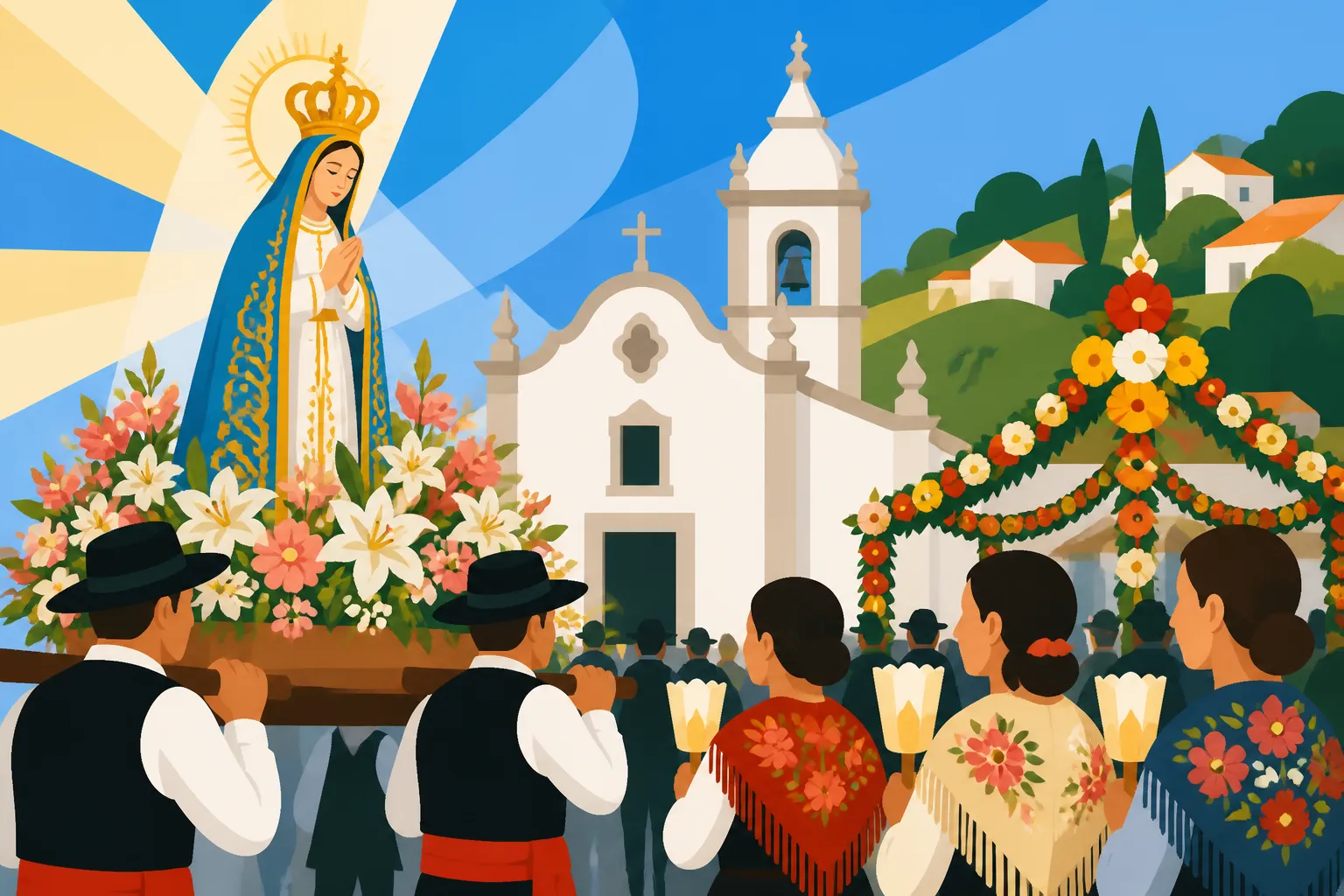
When you first move to Portugal, you might hear the term Romaria and assume it is just another street fair. In reality, a Romaria is a specific type of religious pilgrimage combined with a massive communal celebration. The word comes from "Roma," referring to the historical pilgrimages to Rome, but in the Portuguese context, it usually involves traveling to a local shrine, chapel, or church to honor a specific saint. For many locals, this is the most important date of the year—more significant than a birthday or even Christmas. It is a time when the "sacred" and the "profane" meet in a chaotic, beautiful blend of prayer and piri-piri chicken.
The spiritual roots of these events are deeply tied to the concept of the promessa or vow. You will see people walking for miles along the roadside, sometimes barefoot or on their knees, carrying heavy wax replicas of body parts. This is not for show; it is a deeply personal act of devotion to thank a saint for a perceived miracle, like recovering from an illness or surviving an accident. As an expat, witnessing this can be moving, but it requires a level of solemnity. Understanding these layers helps you realize why the local church remains the absolute heart of the community, even for those who do not attend mass regularly.
Unlike standard city festivals that are often organized by municipal tourism boards, Romarias are frequently grassroots. They are funded by the local Comissão de Festas, a group of neighbors who spend the entire year knocking on doors to collect donations. This creates a fierce sense of ownership. When you attend, you are not just a spectator; you are a guest in a neighborhood's collective living room. This is why Portuguese Greeting Etiquette: When to Use Beijinhos vs Handshakes is so vital to understand; a polite greeting to the elders sitting on their stone doorsteps goes a long way in being welcomed into the fold rather than being viewed as a curious outsider.
Seasonal Calendar: When and Where to Find the Best Romarias
Portugal’s festival calendar follows the agricultural and liturgical year, meaning the experience changes drastically depending on the season. Spring is dominated by the solemnity of Holy Week (Semana Santa). In cities like Braga, the atmosphere is heavy with the scent of incense and the sound of muffled drums. The processions are grand, featuring hooded "farricocos" carrying torches. It is a time of reflection, and while there are still outdoor stalls selling almonds and traditional folar bread, the vibe is more reserved than the summer explosions. This is a great time to use GetYourGuide to find specialized walking tours that explain the specific iconography of the floats, which can be baffling to those not raised in the Catholic tradition.
Summer, specifically June through August, is when the "Santos Populares" take over. This is the peak of the Romaria season because the weather is reliable and the emigrantes (Portuguese living abroad) return to their home villages. From the humid mountains of the Minho to the dry plains of the Alentejo, every weekend features a different village saint. You will encounter the "Pimba" music—a genre of catchy, accordion-heavy pop with double-entendre lyrics—blaring from massive speaker stacks. If you are Living in rural Portugal: How far is the nearest hospital usually?, be aware that these festivals often mean the only road into your village will be blocked by a stage for three days straight.
As the heat fades into autumn, the Romarias shift toward the harvest. The Magusto festivals in November, celebrating Saint Martin (São Martinho), are less about grand processions and more about fire and food. This is the time of the "new wine" and roasted chestnuts. While the scale is smaller than the mid-summer madness, the intimacy is greater. You might find yourself invited into a neighbor's garage to taste their homemade água-pé (a light alcoholic drink made from grape remains). During these transitions, many expats find that Expat life hacks: Never rush a coffee, and other daily cultural adjustments are the key to surviving the slow-moving pace of these rural gatherings.
Iconic Festivals You Cannot Miss
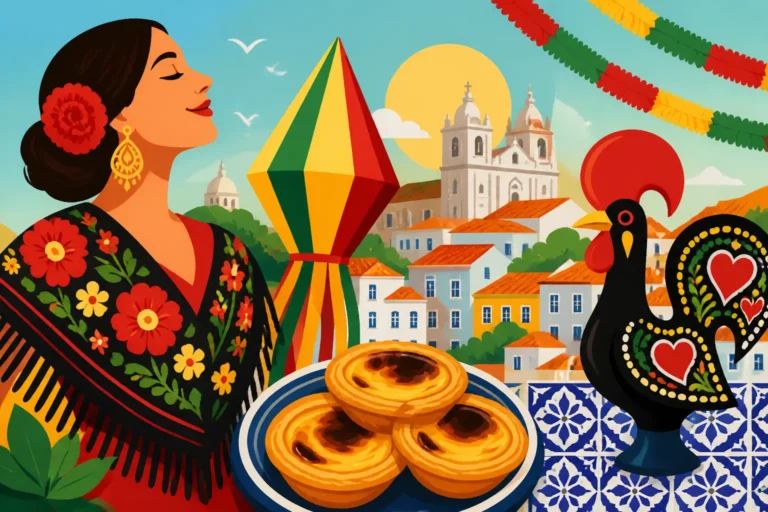
If you are looking for the "Big Three" of Portuguese festivals, you must start with the Festas de Lisboa in June. The city transforms into a labyrinth of grilled sardine smoke and basil plants (manjericos). The highlight is the night of June 12th, the eve of Santo António. The Alfama and Bica districts become nearly impassable. To navigate this, you should book your accommodation through Booking.com months in advance, specifically looking for places with soundproofing unless you plan on dancing until 6 AM. The "Marchas Populares" parade down Avenida da Liberdade is a televised spectacle of costume and choreography that rivals Rio’s Carnival in its local importance.
Further north, Porto’s São João on June 23rd is perhaps the most unique festival in Europe. Imagine thousands of people hitting each other over the head with squeaky plastic hammers and releasing hot air balloons into the night sky. It sounds like madness because it is. The tradition originally involved hitting people with garlic flowers (alho-porro) to bring good luck, but the plastic hammers took over in the 1970s. The fireworks over the Douro River are world-class. To get to Porto during this time, using Omio to secure train or bus tickets early is essential, as the city reaches 100% capacity and the A1 highway becomes a parking lot.
For a display of sheer traditional wealth, the Romaria de Nossa Senhora da Agonia in Viana do Castelo (August) is unparalleled. This is where you see the famous "Mordomia" parade, where hundreds of women walk through the streets wearing traditional red or blue costumes and kilograms of family heirloom gold around their necks. The gold is a status symbol of the Minho region’s history. It is a vibrant, loud, and incredibly colorful event that requires significant planning. If you are coming from Lisbon or the Algarve, checking Omio for flight or long-distance bus options to the north is a smart move to avoid the exhaustion of a 5-hour drive.
| Festival Name | Primary Location | Date | Key Tradition |
|---|---|---|---|
| Semana Santa | Braga | March/April | Solemn processions and "Farricocos" |
| Santo António | Lisbon | June 12-13 | Grilled sardines and "Marchas Populares" |
| São João | Porto | June 23-24 | Plastic hammers and Douro fireworks |
| São Pedro | Sintra / Évora | June 28-29 | Maritime blessings and street dances |
| Romaria da Agonia | Viana do Castelo | Mid-August | Gold-laden "Mordomia" parade |
| São Martinho | Nationwide | Nov 11 | Roasted chestnuts and new wine |
Practical Logistics for Festival Goers
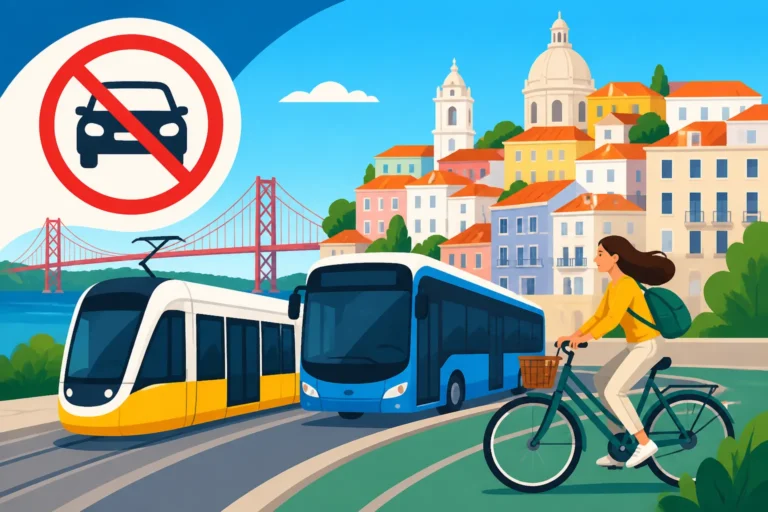
Navigating a Romaria requires a tactical mindset. First, forget your car. In most Portuguese villages, the "center" consists of one or two narrow cobblestone streets. When a festival happens, these streets are filled with stalls selling farturas (deep-fried dough), religious icons, and toys. Parking becomes a creative art form that often results in blocked driveways and steep fines. It is much better to check Public Transport and Driving in Portugal: Trains, Tolls, and Licenses to see if a local regional train or "autocarro" can get you within walking distance.
Accommodation is another hurdle. During major Romarias, local guesthouses fill up a year in advance with returning family members. If you are a tourist, using Booking.com to find stays in neighboring towns is often more realistic. For example, if you are attending a festival in a small Alentejo village, you might need to stay in a larger hub like Évora or Beja and commute in. Be prepared for the cost of living to spike slightly during these weeks; food and drink prices at festival stalls are often higher than your local café, so checking the Cost of Living in Portugal 2026: Detailed Budgets for Singles and Families can help you budget for these seasonal outlays.
Safety is generally not a major concern, as Romarias are family-oriented, but crowds can be overwhelming. Heatstroke in the summer and dehydration are real risks. If you find yourself in a medical pinch, knowing the protocols for Emergency Medical Care in Portugal: Calling 112 and Going to the Hospital is vital. Furthermore, if you feel a vendor has significantly overcharged you or if there is a serious service issue, remember that every legal establishment, even temporary festival kiosks, must provide access to the complaint book. Understanding the 'Livro Amarelo' (Yellow Book) for Medical Complaints and service disputes can give you peace of mind while navigating the chaotic markets.
The Cultural Etiquette: Respecting the Sacred and Profane
To the uninitiated, the transition from a somber mass to a loud street party can be jarring. However, the Portuguese see no contradiction here. The etiquette is simple: be quiet and respectful inside the church, but feel free to be loud and boisterous outside. When entering a church during a Romaria, remove hats and ensure your shoulders are covered. You will likely see locals lighting candles or kissing the feet of a statue; even if you are not religious, maintaining a respectful distance and avoiding flash photography is the standard.
Food is the second pillar of the Romaria. You are expected to eat, and eat a lot. The most common festival foods are bifanas (pork sandwiches), frango assado (piri-piri chicken), and sardinhas assadas (grilled sardines). There is a specific way to eat these, often standing up at a grease-stained paper-covered table. Don't be afraid to get your hands dirty. For the full experience, brush up on Portuguese Coffee Culture and Restaurant Etiquette: Ordering Like a Local because the post-procession espresso (bica) is a mandatory ritual for the locals to regain their energy before the night's concert begins.
Interacting with the locals is where the magic happens. Many expats feel shy, but a Romaria is the best time to practice your language skills. If you are Registering Your Address with Junta de Freguesia (Atestado de Morada), you might even see the local officials you dealt with for your paperwork dancing the Vira or serving soup. Join in. If someone offers you a drink or a sweet, accepting it (even just a small taste) is a sign of respect. The Portuguese are incredibly proud of their local traditions, and seeing a foreigner take a genuine interest is the fastest way to turn a neighbor into a friend.
Comparing Northern vs. Southern Religious Traditions
The "Two Portugals" are very evident in their religious celebrations. In the North (Minho, Trás-os-Montes, Douro), the festivals are visceral, loud, and intense. The percussion is dominated by the bombo—huge, deep-toned drums that you feel in your chest before you hear them. The folk dances are fast-paced and athletic. There is an almost Celtic energy to the festivities. If you are used to the quiet, orderly festivals of Northern Europe, the Northern Portuguese Romaria will be a sensory shock.
In contrast, the South (Alentejo and Algarve) tends to be more melodic and, in some ways, more melancholic. Instead of the loud drums, you might hear the Cante Alentejano, a polyphonic choral singing that is now a UNESCO Intangible Cultural Heritage. The processions often take place under a punishing sun, leading to a slower, more deliberate pace. The focus shifts from the rhythmic chaos of the North to the vocal beauty of the South. Both are equally valid, but your preference will likely depend on whether you prefer a mosh-pit energy or a soulful, atmospheric experience.
Finally, the music reflects this regional divide. While the accordion is a staple nationwide, the North leans heavily into the Concertina and the Gaita de Foles (bagpipes), while the South integrates more guitar and vocal harmonies. Regardless of where you are, you will eventually encounter a Desfolhada or a Rusga—impromptu gatherings of musicians. For any expat, these moments are the ultimate reward for enduring the bureaucracy of moving here. They represent the soul of the country that no guidebook or government manual can ever truly capture. Staying safe is easy if you follow Safety and Emergency Preparedness in Portugal for Foreign Residents, allowing you to focus entirely on the rhythm of the night.
Disclaimer
The information provided in this guide is for informational purposes only and reflects the personal experiences of the author. Festival dates, local laws, and public transport schedules in Portugal are subject to change by municipal authorities or religious organizations. Always verify specific event details with the local Câmara Municipal or Junta de Freguesia before traveling. The author and publisher are not responsible for any inconveniences, losses, or legal issues arising from the use of this information.