Surfing and Water Sports in Portugal
Disclosure: This article contains affiliate links. If you buy through them, we may earn a commission at no extra cost to you. Read our full disclosure.
Many newcomers arrive in Portugal with dreams of catching the perfect wave, only to be overwhelmed by the sheer power of the Atlantic and the logistical nightmare of transporting gear between hidden coves. This guide cuts through the romanticized fluff to provide the raw, practical details of navigating Portugal’s waters safely and efficiently as an expat or visitor.
The Atlantic Reality: Understanding the Portuguese Coastline
When I first moved to the Silver Coast, I made the classic rookie mistake of thinking a summer swell in Portugal would be similar to the Mediterranean or Southern California. It isn't. The Portuguese coastline is exposed to the full force of the North Atlantic, meaning the water is colder, the currents are stronger, and the waves are significantly more powerful than most people expect. If you are planning to spend a significant amount of time here, understanding the geography is the first step toward not getting caught in a "wash-and-wear" cycle that leaves you exhausted and discouraged.
Seasonal Swell Variations and What to Expect
The Portuguese surf season is generally divided into two distinct halves. From late September through April, the North Atlantic produces massive, consistent swells. This is the time when the big wave chargers head to Nazaré, and the more experienced surfers flock to the reefs of Ericeira. For a beginner or intermediate surfer, these winter months can be intimidating. You’ll often find that the "beginner" beaches are closing out, and the conditions are only suitable for those who know how to handle a heavy duck-dive.
Conversely, the summer months (May to August) bring smaller, more manageable waves, but they also bring the crowds. This is when the northern winds, known as the "Nortada," pick up. These winds can be a nightmare for surfers, turning a clean morning session into a choppy mess by 11 AM. However, if you are looking to learn, the summer is your best bet for finding gentle whitewater. Just keep in mind that the water temperature rarely rises above 18-19 degrees Celsius, even in August, so don't expect to be trunking it like you're in Bali.
Wetsuit Requirements and Gear Logistics
You are going to need a good wetsuit. Period. Tourists who try to brave the water in a 2mm shorty in October often struggle to last long before the cold becomes unbearable. For most of the year in central and northern Portugal, a high-quality 4/3mm wetsuit is the standard. In the dead of winter, especially if you are heading up toward Porto or Viana do Castelo, you might even consider a 5/4mm with boots and a hood. The wind chill here is real, and it can sap your energy faster than the paddling does.
If you are an expat living here long-term, investing in your own gear is a must. Renting every weekend will quickly eat into your Cost of Living in Portugal 2026: Detailed Budgets for Singles and Families. Most local surf shops in Peniche or Ericeira offer "buy-back" schemes for used boards, which is a great way to transition from a foamie to a hardboard without committing a thousand euros upfront. Just be prepared for the administrative hurdle of finding a place to store a 9-foot longboard in a tiny Lisbon T1 apartment.
Top Surf Regions: Where to Catch the Best Waves
Portugal is blessed with a variety of coastlines, each offering a different flavor of surf. Depending on your skill level and where you've decided to settle down, you’ll find yourself gravitating toward specific "hubs." Navigating these areas requires a bit of local knowledge, especially when it comes to parking and avoiding the heavy localism that can sometimes bubble up at the more sensitive reef breaks.
Ericeira: The World Surf Reserve
Ericeira is the crown jewel of Portuguese surfing. As a World Surf Reserve, it boasts a high concentration of world-class breaks within a few kilometers. From the heavy barrels of Coxos to the more forgiving (but still challenging) Ribeira d'Ilhas, there is something for everyone—if you can find a spot in the lineup. As an expat who has spent many mornings at Ribeira, my best advice is to get there before the sun comes up. By 9 AM, the surf schools descend, and the water becomes a chaotic sea of blue and yellow jerseys.
Living in or visiting Ericeira is relatively easy thanks to platforms like Booking.com, which list everything from high-end surf lodges to traditional guesthouses. The town itself has a fantastic vibe, but be warned: the prices for everything from a "galão" to a surfboard repair are higher here than in the neighboring villages. If you are staying in Lisbon and want to head up for a day trip, using Omio to check bus schedules from Campo Grande is a lifesaver, though many surfers prefer to rent a car to haul their gear.
Peniche and the Silver Coast
Peniche is essentially a peninsula that sticks out into the Atlantic, which means that no matter which way the wind is blowing, there is almost always a beach that is offshore. This unique geography makes it one of the most consistent surf spots in Europe. Supertubos is the famous break here, known as the "European Pipeline," but it is strictly for experts. Beginners should stick to Cantinho da Baía, a long sandy stretch that offers gentle waves and plenty of space to practice your pop-up.
The Silver Coast extends north from Peniche toward Nazaré. This region is significantly more rugged and less "touristy" than the Algarve. You’ll find empty peaks if you’re willing to drive down some dirt tracks, but be careful with the tide. Many of these beaches disappear at high tide, leaving you trapped against the cliffs. If you find yourself in a sticky situation, it’s vital to know how Emergency Medical Care in Portugal: Calling 112 and Going to the Hospital works, as some of these rural areas can be difficult for ambulances to access.
The Algarve: Southern Swells and Summer Sanctuaries
When the northern swells become too massive in the winter, many surfers flee south to the Algarve. The west coast (Costa Vicentina) around Sagres is raw and beautiful, offering powerful waves and stunning scenery. The south coast, meanwhile, usually requires a massive swell to wrap around Cape St. Vincent to start working. However, when it does, spots like Zavial offer world-class, sheltered conditions that are a dream to surf.
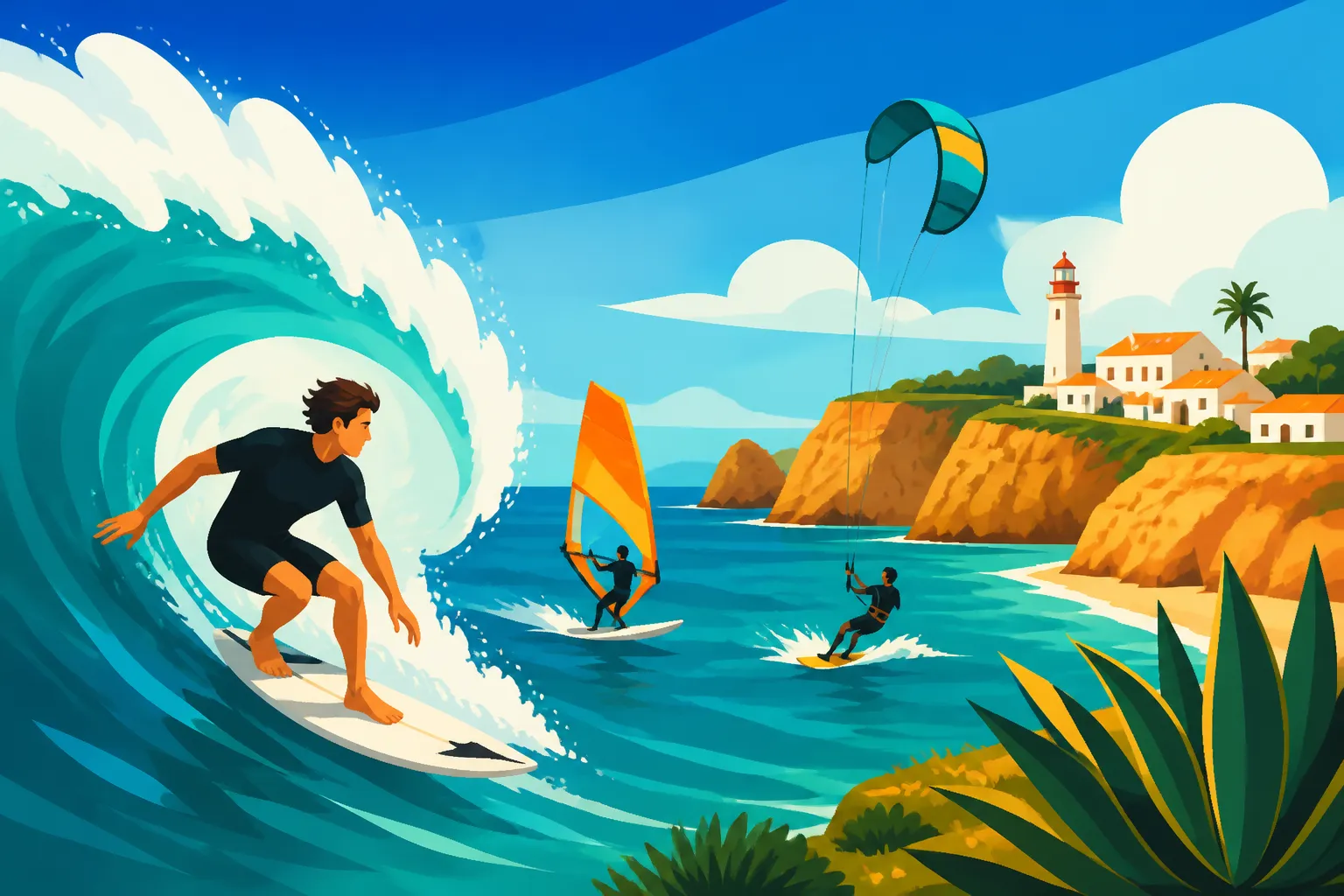
The Algarve is also the best place for other water sports like kitesurfing and windsurfing, particularly around the Alvor lagoon. If you’re planning a trip down south, I highly recommend checking out GetYourGuide for specialized tours, such as guided SUP trips through the Benagil caves. It’s a great way to see the coastline from a different perspective, especially on those rare days when the ocean is as flat as a pancake.
| Region | Best Skill Level | Water Temp (Avg) | Best Season | Crowds |
|---|---|---|---|---|
| Ericeira | Intermediate to Pro | 14°C – 18°C | Autumn/Winter | Very High |
| Peniche | All Levels | 14°C – 18°C | Year-round | High |
| Algarve (West) | Intermediate | 16°C – 20°C | Winter | Medium |
| Algarve (South) | Beginner | 17°C – 21°C | Summer/Winter | High |
| Nazaré | Professional | 13°C – 17°C | Winter | Low (In-water) |
Logistical Realities: Transport and Safety
Moving your gear around Portugal is one of those hidden frustrations that no one tells you about in the brochures. The Public Transport and Driving in Portugal: Trains, Tolls, and Licenses system is excellent for people, but it’s not always board-friendly. If you are relying on the Comboios de Portugal (CP) trains, you need to check the specific rules for the line you are using; Cascais trains are usually fine with boards, but the long-distance Alfa Pendular is a different story.
Transporting Surfboards and Equipment
If you are planning to explore the coast, renting a car is almost mandatory. Most rental agencies at the airport will try to upsell you on insurance, and given the narrow, winding roads leading to some of the best surf spots, it might be worth it. Make sure the car has roof rack compatibility or enough space to put the seats down. Surfers who book the cheapest small car online often discover at the airport that a 7-foot board will not fit in a Fiat 500.
For those using public transport, Omio is a great tool for finding express buses (Rede Expressos) that connect major hubs like Lisbon, Peniche, and Lagos. These buses usually have large luggage compartments where you can store a board in a protective bag, but it’s always polite to tip the driver a euro or two for the extra hassle of loading it.
Staying Safe in the Atlantic
Safety cannot be overstated. The Atlantic has a nasty habit of catching people off guard with "sneaker sets"—unexpectedly large waves that can wash you off the rocks or pull you into a rip current. Always observe the water for at least fifteen minutes before paddling out. Look for where the waves are breaking and where the water is moving back out to sea.
If you do get injured, you need to be familiar with the local medical system. While the public system is available, many expats prefer having Private Health Insurance in Portugal: Costs, Coverage, and Best Providers to skip the long wait times in public hospitals. If you end up in the ER after a nasty encounter with a reef or another surfer's fin, understanding Emergency Rooms (Urgências) in Portugal: Triage Colors and Wait Times will help manage your expectations regarding how quickly you’ll be seen.
Beyond Surfing: Diving, Kayaking, and Coasteering
While surfing dominates the headlines, Portugal’s waters offer a wealth of other activities that are equally rewarding. Whether you are looking for the adrenaline rush of coasteering or the tranquility of a sunset kayak, the options are nearly endless.
Scuba Diving and Snorkeling
Scuba diving in Portugal is a hidden gem, particularly in areas like Sesimbra, the Berlengas islands off Peniche, and the Azores. The water is clear, and the marine life is surprisingly diverse, with everything from octopus to large schools of sea bream. The Berlengas, in particular, is a UNESCO Biosphere Reserve and offers some of the best wreck diving in Europe.
You can book these experiences easily through GetYourGuide, which often features reputable local dive centers. If you are an expat living here, it’s worth getting your PADI certification locally. Just remember that the same rules about water temperature apply—you’ll be diving in a thick wetsuit or even a drysuit in the winter. Afterward, make sure to stay hydrated, and while the water is generally good, check Is it safe to drink tap water in Portugal? Water quality by region to ensure you are staying healthy.
Kayaking and Coasteering
For those who prefer to stay on top of the water, the caves of the Algarve are a must-see. Kayaking through the arches and into the "eye" of Benagil is a bucket-list experience. However, it’s become incredibly popular, so I recommend booking the earliest possible slot to avoid the swarm of tourist boats.
Coasteering—which involves a mix of swimming, climbing, and jumping off cliffs into the ocean—is another fantastic way to experience the rugged Arrábida Natural Park or the Vicentina Coast. It’s physically demanding, and you should only ever do it with a professional guide. Long-term exposure to the sun during these activities can take a toll on your skin, so it’s wise to schedule Sunscreen and skin cancer checks: Visiting a dermatologist in Portugal as part of your routine healthcare.
Cultural Nuances and Coastal Etiquette
Portugal has a deep-rooted maritime culture, and as an outsider, it’s important to respect the local traditions and unwritten rules of the water. Whether you’re a digital nomad on a D8 visa or a retiree on a D7, being a "good neighbor" in the lineup will make your life much easier.
Respecting the Lineup and Localism
Localism exists in Portugal, though it is generally less aggressive than in places like Hawaii or Australia. However, at certain high-performance breaks, the locals can be protective of their waves. The rule of thumb is simple: be humble, don't snake people, and wait your turn. If you show up with a group of five friends and try to take over a peak, you will be told to leave, likely in very colorful Portuguese.
Spend time watching the locals. They know the currents, they know where the submerged rocks are, and they know which waves are likely to close out. By showing respect, you’ll find that the Portuguese surfing community is incredibly welcoming and willing to share tips about the best "tascas" for a post-surf meal.
Environmental Stewardship
The Portuguese are fiercely proud of their coastline. You will often see "limpeza de praia" (beach clean-up) events organized by local surf schools. Join one! It’s the fastest way to make friends and show that you care about the community. Never leave trash behind, and avoid trampling on the dunes, which are vital for preventing coastal erosion.
As you spend more time in the sun and salt, your body might start to feel the strain. It’s not uncommon for regular surfers to develop "surfer’s ear" or chronic shoulder issues. If you find yourself in pain, look into Physical Therapy and Rehabilitation Services for Expats in Portugal to keep your body in peak condition for the next swell.
Financial and Administrative Considerations for Water Sports
Doing water sports in Portugal isn't just about buying a board; there are administrative and financial layers to consider, especially if you are living here as an expat. From insurance to equipment taxes, being prepared will save you a headache at the end of the fiscal year.
Insurance for the Active Expat
Most standard travel insurances have "extreme sports" exclusions. If you are surfing or diving regularly, you need to ensure your policy specifically covers these activities. If you are a resident, your Private Health Insurance in Portugal: Costs, Coverage, and Best Providers might cover injuries sustained while surfing, but it’s crucial to read the fine print. Some insurers require a specific "sport add-on" to cover hospitalizations resulting from water sports accidents.
Budgeting for the Lifestyle
Water sports can be an expensive hobby. Between the cost of a high-quality wetsuit (approx. €250-€400), a decent board (€500+), and the fuel to get to the beach, it adds up. If you are a freelancer or digital nomad, make sure your budget accounts for these "lifestyle costs." Being able to drop everything and head to the beach when the swell is perfect is one of the greatest perks of living here, but it requires financial flexibility.
When purchasing gear from international sites, be mindful of customs. If you order a custom board from outside the EU, you might be hit with significant import duties. It’s often better to buy locally or use European-based marketplaces to avoid the CTT (Portuguese Post) customs bottleneck.
Disclaimer
The information provided in this guide is for educational and informational purposes only. While every effort has been made to ensure accuracy, the nature of ocean conditions, local laws, and healthcare regulations in Portugal can change rapidly. Always consult with local experts, professional instructors, and official government sources before engaging in water sports or making significant financial and healthcare decisions. Safe surfing!