The Costa Vicentina: Wild Beaches and Cliffs
Disclosure: This article contains affiliate links. If you buy through them, we may earn a commission at no extra cost to you. Read our full disclosure.
Picture this: you drive three hours from Lisbon to a famous cliff-top beach and find a gravel car park, no signal, fog, and a red flag on the lifeguard tower. Then you realise the nearest open restaurant is twenty minutes away. This guide explains how to plan the Costa Vicentina’s beaches, trails, towns and logistics so the coast rewards you instead of exhausting you.
Understanding the Costa Vicentina Before You Go
The first time I drove south from Lisbon toward the southwest coast, I expected something like a quieter Algarve. What I found was a protected stretch of Atlantic shoreline where the land drops sharply into the ocean, the villages are small, and the wind usually decides the plan for the day. The Costa Vicentina does not cater to you in the way resort coasts do. Once you understand that, you will probably love it.
Where the Coast Actually Begins and Ends
The name Costa Vicentina is often used loosely, but most people mean the coastline inside the Parque Natural do Sudoeste Alentejano e Costa Vicentina. The park runs from around São Torpes and Porto Covo, south of the industrial port of Sines, down past Cabo de São Vicente near Sagres. From there it turns east along the southern coast toward Burgau. It crosses two regions. The northern half is in the Alentejo, and the southern half is in the western Algarve, with the Seixe river at Odeceixe marking the border.
This split matters more than it sounds. The Alentejo section, with Porto Covo, Vila Nova de Milfontes, Almograve and Zambujeira do Mar, feels rural and agricultural. Small fishing harbours are tucked into the rock. The Algarve section, with Odeceixe, Aljezur, Arrifana, Carrapateira and Vila do Bispo, has more surf culture, more international visitors and slightly more infrastructure. If you want the inland side of the region too, see The Alentejo: Plains, Wine, and Hilltop Towns, because many travellers pair a few coastal nights with a loop through Évora or the hill towns.
A useful way to think about it is that the northern half is for walkers and slow travellers, and the southern half is for surfers and beach-hoppers. That is a simplification, because both halves have both, but it helps when you are deciding where to base yourself.
Why It Feels So Different From the Rest of the Coast
Because it is a natural park, large-scale development has been held back for decades. You will not see tower-block hotels or long promenades lined with bars. You will see dunes held together by low scrub, sea stacks with nesting birds, and dirt tracks leading to beaches with no buildings at all. Locals will tell you this is one of very few places in the world where storks nest on coastal rock like this.
The flip side is that conveniences you take for granted can disappear. Some beaches have a seasonal café and lifeguards in summer and nothing at all the rest of the year. Mobile coverage dips in valleys. Fuel stations are spaced out. None of this is dangerous if you plan for it, but it does catch people off guard after a day in Lagos or Cascais.
Weather, Wind and the Best Seasons
The Atlantic here is cold year-round compared with the southern Algarve, and the water rarely feels truly warm, even in August. The summer pattern often brings morning fog, sometimes called the “neblina”, which can sit over the beaches until late morning. After that comes a strong northerly wind in the afternoon. A beach that looked perfect at noon can be sandblasting your ankles by four o’clock.
Spring, from around March to early June, is my favourite time. The cliffs are covered in wildflowers, the trails are green, and accommodation is easier to find. Early autumn is excellent too: the sea is at its warmest, the crowds thin out after the Portuguese school holidays, and the light is golden. Winter brings big swells that serious surfers chase, along with quiet villages and some closed restaurants. For a broader look at how beach seasons work across the country, read When Is the Best Time for a Beach Holiday in Portugal?.
The Wild Beaches Worth Planning Around
There are dozens of beaches along this coast, and trying to see them all in a weekend is how people end up spending more time in the car than on the sand. Choose a few that suit your style, whether that means calm estuary water for kids, surf breaks, or empty coves you walk down to.
Alentejo Beaches From Porto Covo to Zambujeira
Porto Covo is a whitewashed village with a cluster of small coves right beneath it. Just south, Praia da Ilha do Pessegueiro faces a small island with the ruins of an old fort. It is a lovely spot at sunset, though currents around the island can be strong. Vila Nova de Milfontes sits on the mouth of the Rio Mira. Its estuary beaches, such as Praia da Franquia, have much calmer water than the open coast, which makes Milfontes a natural base for families. Across the river, Praia das Furnas offers both river and ocean sides.
Further south, Praia do Malhão is a long, wild stretch backed by dunes, and it is popular with surfers and people who want space. Almograve has a broad beach with rocky platforms that are fun to explore at low tide. Zambujeira do Mar is a cliff-top village with a beach directly below. In summer it gets lively, especially during its well-known music festival period. The tiny coves south of the village, such as Praia dos Alteirinhos, are reached by steep paths.
If you are travelling with young children, Milfontes is the safest choice of the Alentejo towns. You can find more options in Family Beaches and Calm Water in Portugal. Open-coast beaches here can have dangerous rip currents even on days that look gentle.
Algarve Beaches From Odeceixe to Sagres
Odeceixe beach is many people’s favourite in the whole region, and it is easy to see why. The Seixe river curls around a sandbank before meeting the sea, so you get a sheltered river lagoon on one side and Atlantic waves on the other. Further south, Monte Clérigo and Arrifana sit below Aljezur. Arrifana is a horseshoe bay under high cliffs, with a ruined fortress at the top and a small fishing harbour. Ponta da Atalaia nearby has a viewpoint and remnants of an old Islamic-era settlement.
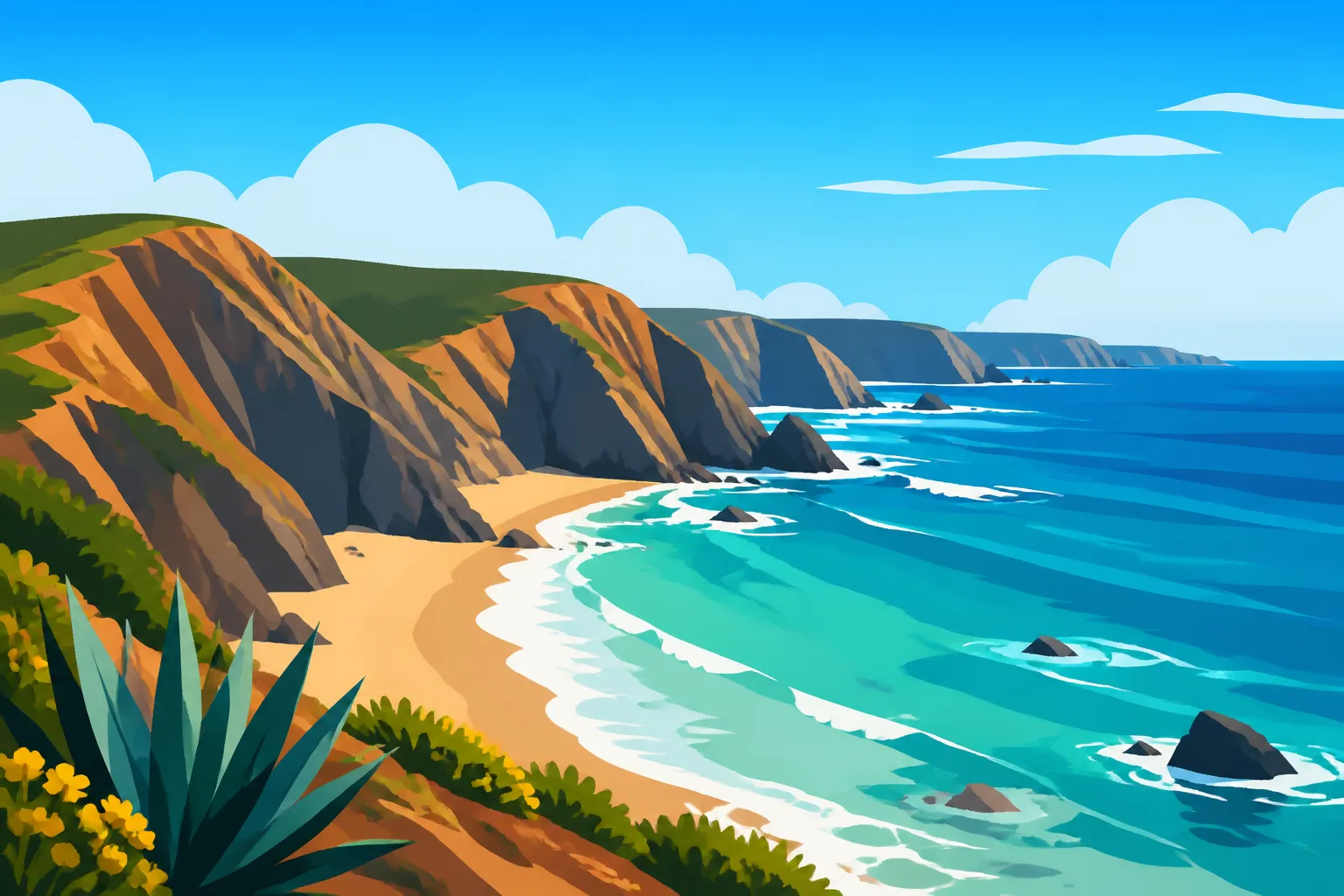
Carrapateira is home to two of the most photographed beaches on the coast. Praia da Bordeira is a huge expanse of sand and dunes with a river channel. Praia do Amado is a surf hub with several schools operating from the beach car park. The Pontal da Carrapateira loop road and footpath between them is one of the most dramatic short walks in Portugal. Near Vila do Bispo, Praia do Castelejo and Praia da Cordoama are framed by dark schist cliffs. Around Sagres, Praia do Tonel faces west for surf, while Mareta and Martinhal face south and are often sheltered when the north wind blows.
That last point is the secret to surviving windy days. When the west coast is battered by a northerly wind, drive to Sagres and use the south-facing beaches. Many beaches on the southern stretch of the park are covered in The Best Beaches in the Algarve if you want to extend the trip east.
Beach Comparison Table
| Beach | Region | Best For | Water Conditions | Access |
|---|---|---|---|---|
| Praia da Franquia, Milfontes | Alentejo | Families, paddleboarding | Calm estuary water | Walk from town |
| Praia do Malhão | Alentejo | Space, surfing, dunes | Open ocean, strong currents | Dirt road and car park |
| Zambujeira do Mar | Alentejo | Village atmosphere | Open ocean, sheltered cove | Steps from village |
| Praia de Odeceixe | Border | River lagoon plus waves | Calm river, rough sea | Road and short walk |
| Praia da Arrifana | Algarve | Surf lessons, views | Moderate, sheltered bay | Steep road down |
| Praia da Bordeira | Algarve | Dunes, long walks | Open ocean, river channel | Boardwalk over dunes |
| Praia do Amado | Algarve | Learning to surf | Consistent waves | Dirt track to car park |
| Praia do Castelejo | Algarve | Dramatic cliffs, sunsets | Powerful surf | Paved road down |
| Praia da Mareta, Sagres | Algarve | Windy-day refuge | Often sheltered | Walk from Sagres |
For more detail on reaching specific beaches, parking at them and timing your visit, see How to Visit the Beaches of the Costa Vicentina. If you prefer coves with almost nobody on them, Hidden and Quiet Beaches in Portugal covers similar spots elsewhere in the country.
Hiking the Rota Vicentina and the Cliffs
Walking is where the Costa Vicentina really shows itself. From a car you see beaches. On foot you see the cliff-top heath, fishermen perched on ledges far above the water, and coves you would never find otherwise.
The Fishermen’s Trail Versus the Historical Way
The Rota Vicentina is a network of marked walking routes. The two main ones are the Trilho dos Pescadores, or Fishermen’s Trail, and the Caminho Histórico, or Historical Way. The Fishermen’s Trail hugs the coast, using paths that locals have long used to reach fishing spots. It is marked in blue and green. The Historical Way runs inland through villages, cork oak country and farmland, and is marked in red and white.
The Fishermen’s Trail is the famous one, but it surprises people with how tiring it is. Long sections run over soft sand, which feels like walking on a beach for hours at a time. Doing the stage between Almograve and Zambujeira in midsummer heat taught me to respect this route. The Historical Way is firmer underfoot and more shaded in parts. It also passes through villages where you can stop for coffee, which makes it a good choice for hotter months or for anyone who finds sand hard on their knees.
Many walkers mix the two. They might walk a coastal stage one day and an inland stage the next, or do circular day walks rather than the full linear route. The official Rota Vicentina organisation publishes stage information and circular routes, and it is worth reading its maps before choosing.
Planning Your Stages Step by Step
If you want to walk several consecutive stages of the Fishermen’s Trail, here is the process I recommend:
- Choose your direction. Walking north to south keeps the wind at your back on typical summer afternoons, which makes a real difference over soft sand.
- Decide how many stages you can realistically manage, and leave at least one rest day in a town like Milfontes or Odeceixe.
- Book accommodation for each stage end in advance, especially from late spring onward, because villages have limited beds.
- Check whether a luggage transfer service operates on your chosen stages, so you only carry a daypack.
- Download offline maps and the official route tracks before you go, as coverage drops in places.
- Plan water and food carefully, because some stages pass no cafés at all.
- Check the weather and wind forecast every evening, and adjust or shorten the next day if strong wind or heat is expected.
For general preparation, including footwear, sun protection and what to carry on Portuguese trails, see Hiking in Portugal: Trails and How to Prepare.
Cliff Safety and Respecting the Park
The cliffs here are made of schist and sandstone, and edges crumble without warning. Paths sometimes run very close to drops, and in fog or strong wind the margin for error shrinks. Stay on the marked path, keep children close, and never stand right at the edge for a photo. Fishermen work on ledges that look impossible. They have done it for generations, and visitors should not copy them.
Wild camping is not allowed in the natural park, and there are rules on overnight parking for camper vans and motorhomes. Authorities have tightened enforcement in recent years as van travel has grown, so use official campsites and designated motorhome areas instead of pulling up on a cliff-top track. It is frustrating when you see others doing it, but the fines are real and the dune ecosystems are fragile.
The park is also an important area for birds, including storks, choughs and migrating raptors around Sagres in autumn. If wildlife is part of your plan, Birdwatching and Wildlife in Portugal is a good companion read. Please carry out everything you bring in. Bins at remote beaches are often overflowing by late summer.
Surfing and Water Safety on an Unforgiving Coast
The Costa Vicentina is one of the best surf regions in Europe, and that is exactly why you should treat its water with care. The same swells that create great waves also create powerful currents.
Learning to Surf in Arrifana, Amado and Beyond
Praia do Amado, Arrifana, Monte Clérigo and Praia do Tonel all have surf schools and camps, many run by small local teams or long-settled foreign surfers. Beginners usually start on whitewater in sheltered corners, and good schools pick the beach each day based on the swell and wind. That flexibility is one of the main advantages of booking lessons rather than renting a board and guessing.
If you want to compare lesson options, guided coastal hikes or kayak trips in one place, GetYourGuide lists activities in the Sagres and Aljezur area. You can read reviews and see what is included before booking. I still like to check the school’s own page too, so I can see where they actually teach and how large their groups are. For a beginner’s walkthrough of how lessons work, see How to Learn to Surf in Portugal as a Beginner. For the wider surfing map, see Surfing in Portugal: Ericeira, Peniche, and Nazaré.
Reading Flags, Rips and Lifeguard Seasons
Portuguese beaches use a flag system on lifeguarded beaches. Green means bathing is allowed, yellow means you may paddle at the edge but not swim, and red means no entering the water. A chequered flag indicates the lifeguard post is temporarily unattended. On many Costa Vicentina beaches, lifeguards only work during the official bathing season, so outside summer you may find no one on duty at all.
Rip currents are common where rivers meet the sea or where sandbanks shift. They look like calmer, darker channels of water between breaking waves, which is exactly why swimmers are drawn into them. If you are caught in one, do not swim against it. Float, raise an arm, and swim parallel to the shore until you are out of the pull. Tides here are significant, and some coves become cut off at high tide, so check tide times before walking around headlands.
Practical Gear for Atlantic Days
Even in summer, a wetsuit makes surfing and swimming far more pleasant, and most schools include one. For beach days, pack a windbreak or plan to use dune shelter. You will also want layers for foggy mornings and windy evenings, plenty of sun protection, and water shoes for rocky platforms. What to Pack for a Beach Trip in the Algarve has a solid checklist that works just as well for the west coast. I would simply add an extra fleece.
Getting There, Getting Around and Where to Stay
Logistics are where most Costa Vicentina trips are won or lost. Distances look short on a map, but small roads, dirt tracks and limited public transport add up.
Driving Versus Public Transport
A car makes this coast far easier. Many of the best beaches sit at the end of unpaved tracks with no bus anywhere nearby, and you will want the freedom to move to a sheltered beach when the wind picks up. From Lisbon, most people take the motorway south and then switch to national roads toward the coast. From the Algarve, the coastal road north from Vila do Bispo through Aljezur to Odeceixe is straightforward. For toll payment, insurance and rental tips, read Renting a Car in Portugal: Tolls, Insurance, and Driving Tips. If you want to fold the coast into a longer drive, How to Plan a Portugal Road Trip Itinerary helps with pacing.
Without a car, it is still possible but slower. Long-distance coaches serve some of the main towns, such as Vila Nova de Milfontes, Zambujeira do Mar, Odeceixe and Aljezur. Services are less frequent than on major routes, though, and schedules change with the seasons. A platform like Omio is handy for comparing coach and train connections from Lisbon or the Algarve in one search, but always confirm the final timetable with the operator. For more on coach networks, see Buses in Portugal: Rede Expressos and Regional Networks. Walkers on the Rota Vicentina often arrive by coach, walk the stages, and leave from a different town, which works well.
Choosing a Base Town
| Base Town | Region | Atmosphere | Good For | Watch Out For |
|---|---|---|---|---|
| Vila Nova de Milfontes | Alentejo | Lively small town on a river | Families, first visits | Busy in August |
| Porto Covo | Alentejo | Quiet whitewashed village | Couples, slow travel | Limited dining off-season |
| Zambujeira do Mar | Alentejo | Cliff-top village | Hikers, sunsets | Very crowded during festival time |
| Odeceixe | Border | Hillside village by a river | Hikers, lagoon beach | Few parking spaces in summer |
| Aljezur | Algarve | Market town with castle | Surfers, central access | Beaches need a short drive |
| Sagres | Algarve | Surf town at the cape | Wind refuge, nightlife | Exposed and windy |
Accommodation ranges from village guesthouses and rural farmstays, often called “montes” in the Alentejo, to surf camps, campsites and a handful of boutique hotels. Booking.com is useful for seeing what is available across several villages at once. This matters most in peak season, when Odeceixe or Porto Covo can be fully booked. Small family-run places often take bookings directly too. For an overview of lodging types, from guesthouses to pousadas, see Accommodation in Portugal: Hotels, Guesthouses, and Pousadas.
Food, Opening Hours and Village Rhythm
Eating well here is one of the great pleasures of the trip. Look out for percebes, the goose barnacles gathered from wave-battered rocks by licensed harvesters, as well as grilled fish straight from the harbour. Octopus dishes, rich seafood rice, and the sweet potatoes of Aljezur turn up in everything from side dishes to desserts. Harbour restaurants in Milfontes, Porto Covo and Arrifana are often simple places with a daily catch on display. For more on what to order, Seafood in Portugal: Bacalhau, Sardines, and More is a good primer.
What surprises newcomers is the rhythm. Lunch runs from roughly early to mid-afternoon, kitchens close between services, and dinner rarely starts before evening. Off-season, many beach cafés and some village restaurants close entirely or open only at weekends. If you arrive at a remote beach hungry at four in the afternoon, you may find nothing open. Carry snacks, fill up on water in town, and ask your host which places are open that week. They always know.
A Sample Itinerary and Final Planning Tips
To pull this together, here is how I would spend five days on the coast for a first visit, assuming a car and a mix of beaches and walking.
Five Days From North to South
- Day one: Arrive in Porto Covo, walk down to the coves below the village, and watch sunset at Ilha do Pessegueiro.
- Day two: Walk the coastal stage toward Vila Nova de Milfontes or drive there, then spend the afternoon on the calm Mira estuary beaches.
- Day three: Visit Cabo Sardão to see the cliff-nesting storks, then continue to Zambujeira do Mar for a seafood dinner.
- Day four: Drive to Odeceixe for the river lagoon, then on to Arrifana for a surf lesson or the fortress viewpoint.
- Day five: Explore Carrapateira’s Bordeira and Amado beaches and the Pontal loop, then finish at Cabo de São Vicente for sunset.
This route keeps daily driving short and moves in the direction of the prevailing wind. It also ends at the cape, where sunset is a ritual with crowds gathering at the lighthouse. If the wind is brutal on any day, swap in a sheltered south-facing Sagres beach.
Common Frustrations and How to Avoid Them
The most common frustration I hear from friends visiting is the sense that the coast is “closed” or empty. Usually that is just seasonality and village hours. Plan meals around local timings, carry cash for small cafés where card machines sometimes fail, and treat fog as a morning event rather than a ruined day. The second frustration is parking at popular beaches in August. Arrive early, or pick a less famous beach nearby, because the coast is full of alternatives.
The third is underestimating the sea. Respect the flags, avoid swimming alone on unguarded beaches, and ask locals or surf schools about conditions. For general advice on staying safe as a traveller, including protecting belongings in beach car parks, see Staying Safe in Portugal: Common-Sense Tips for Travelers.
Extending Your Trip Inland and Under the Stars
If you have extra days, the inland Alentejo is a perfect contrast to the wild coast. It offers cork forests, quiet hill villages and some of the darkest night skies in Europe. The Alqueva area is designated a dark sky destination, and How to Stargaze in the Alentejo’s Dark Sky Reserve explains how to plan a night there. Even on the coast itself, step away from village lights on a clear night and you will see more stars than you thought possible.
The Costa Vicentina rewards patience. Give it a few more days than you think you need, let the wind and tides shape your plans, and you will leave with a very different picture of Portugal than the one on most postcards.
Disclaimer
This article is for general informational purposes only and does not constitute professional advice. Laws, prices and regulations vary by location and change over time. Consult a qualified professional for guidance on your specific situation.