Portugal’s Most Beautiful Villages (Aldeias) to Visit
Disclosure: This article contains affiliate links. If you buy through them, we may earn a commission at no extra cost to you. Read our full disclosure.
Picture this: you have driven forty minutes up a switchback road in the Beira interior, your phone has lost signal, and the “most beautiful village in Portugal” is a cluster of shuttered granite houses with one café that closed at noon. This guide shows you which aldeias are worth the trip, how to reach them, and how to time a visit so it pays off.
What Makes a Portuguese Aldeia Worth the Detour
The word aldeia simply means village, but Portuguese villages are not all the same. Some are fortified hilltop settlements that guarded the border with Spain for centuries. Others are schist hamlets tucked into mountain folds, built from the dark slate-like stone that surrounds them. A few are polished, well-signposted showpieces. Many are quiet places where the main event is an old man feeding his chickens.
When I first moved here, I chased every “top ten villages” list I could find and ended up exhausted and slightly disappointed. The lesson was that the beauty of these places depends on matching the village to your mood, your transport, and the season. For a wider sense of how the regions differ before you narrow things down, see Portugal’s Regions and Where to Go: A Traveler’s Overview.
The Historic Villages Network vs the Schist Villages
Two organised networks will shape your planning. The Aldeias Históricas de Portugal are a group of roughly a dozen fortified villages in the central interior. They include Monsanto, Piódão, Sortelha, Castelo Rodrigo, Almeida, Belmonte, Linhares da Beira, Marialva, Trancoso, Castelo Mendo, Castelo Novo and Idanha-a-Velha. These are granite and schist settlements with castles, walls, pillories and long frontier histories. Signposting is good, and most have a small interpretation centre or tourist office.
The Aldeias do Xisto, or Schist Villages, form a separate network spread across the mountains of central Portugal, especially the Serra da Lousã and the area around the Zêzere river. Talasnal, Cerdeira, Candal, Casal de São Simão and Fajão are among the best known. These feel more rustic and more about hiking, river beaches and rural silence than about military history.
Then there are the villages that belong to neither network but are spectacular anyway. This group includes the whitewashed hilltop villages of the Alentejo, the granite hamlets of the Minho with their stone granaries, and the wine villages of the Douro. Do not limit yourself to the official lists.
Setting Realistic Expectations: Quiet, Steep, and Sometimes Shuttered
The interior of Portugal has lost much of its population over the decades, and many villages have more houses than residents. That is part of the atmosphere, but it also means services are thin. One café, one small grocery and perhaps a restaurant that opens only for lunch is a normal setup. Mondays are often dead, and in winter some guesthouses close entirely.
The streets are steep, cobbled and sometimes slick after rain. If you are travelling with someone who has limited mobility, choose your villages carefully. Óbidos and Castelo de Vide are manageable. Monsanto and Piódão involve serious uphill walking on uneven stone.
Accept the slowness. The moment I stopped treating these places as checklist stops and started sitting on a bench with a coffee and a pastel, they began to make sense.
The Historic Villages of the Beira Interior
This is the heartland of fortified Portugal, a high plateau of granite boulders, chestnut trees and long views toward Spain. Winters are cold and summers are hot and dry. Spring and autumn are the sweet spots.
Monsanto: Houses Wedged Between Boulders
Monsanto is the village that ends up on postcards, and for good reason. Houses are built under, between and against enormous granite boulders. Some rocks form entire roofs or walls. Walking up the main lane, you will pass a house that seems to be crushed beneath a single giant stone, and you will wonder how anyone sleeps there at night.
The climb to the castle ruins at the top is steep but worth every step. From the battlements you look across the flat plains of the Beira Baixa toward the Spanish border. Go in the late afternoon when the light turns the granite gold and the day-trippers have left. In early May, the village holds the Festa da Santa Cruz. Residents carry the marafona, a traditional rag doll, and a clay pot of flowers is thrown from the castle walls. This is the kind of local celebration covered in Local Romarias and Religious Festivals in Portugal.
The practical reality is that Monsanto sits a long drive from any city. The nearest sizeable town is Castelo Branco, and public transport into the village is minimal. Most visitors drive. If you can, stay overnight in one of the stone guesthouses. The village at night, with lamplight on the rocks and total silence, is the real reward.
Piódão: The Schist Amphitheatre in the Serra do Açor
Piódão is built in tiers of dark schist houses stacked up a steep valley wall. Almost every door and window frame is painted the same shade of blue, and the white church at the bottom stands out like a lighthouse. Seen from the road above as you arrive, it looks almost unreal.
Getting there is half the experience, and not always the fun half. The roads through the Serra do Açor are narrow, winding and unguarded in places. Drive slowly, use your horn on blind corners and do not attempt it in fog if you are nervous. Once you arrive, park in the designated area at the edge of the village and explore on foot. Vehicles cannot get far into the lanes anyway.
There are walking trails leading to the neighbouring villages of Foz d’Égua and Chãs d’Égua. Foz d’Égua has a lovely river pool and a small suspension bridge. In summer, this makes a perfect half-day loop. Pack water and proper shoes, because the paths are rocky.
Sortelha, Castelo Rodrigo, and the Border Fortress Villages
Sortelha is one of the most complete walled villages in the country. A ring of granite walls encloses a tiny medieval settlement, and you can walk sections of the ramparts. It is quieter than Monsanto and, in my experience, more atmospheric for it.
Castelo Rodrigo sits on a hill overlooking the Spanish frontier near Figueira de Castelo Rodrigo. It has a ruined palace, a medieval cistern and sweeping views. Time a visit for late February or March, when the almond trees across the surrounding hills burst into white and pink blossom. Almeida, nearby, is a star-shaped fortress town with moats and bastions, a dramatic reminder of the wars fought along this border. Belmonte is known as the birthplace of the navigator Pedro Álvares Cabral and for its Jewish heritage museum, which tells the story of a crypto-Jewish community that survived here in secret for centuries.
These villages pair well on a two- or three-day loop by car. If fortifications are your main interest, see Castles and Fortresses of Portugal for more strongholds to add.
Alentejo Hilltop Villages and Walled Towns
The Alentejo is a different world: rolling plains, cork oaks, whitewashed houses with blue or yellow trim, and summer heat that will flatten you by mid-afternoon. Plan village visits for the morning and evening, and hide indoors at lunch like everyone else. For the bigger regional picture, see The Alentejo: Plains, Wine, and Hilltop Towns.
Monsaraz and the Alqueva Lake
Monsaraz is a tiny walled village on a hilltop above the Alqueva reservoir, one of the largest artificial lakes in Europe. The village has only a couple of main streets, all paved in schist and lined with whitewashed houses. At the far end is a castle with a former bullring inside its walls, and the views over the water toward Spain are spectacular.
The day crowds thin out after sunset, and that is when Monsaraz becomes magical. The Alqueva area is a recognised dark sky reserve, and on a clear night the stars are astonishing. To plan an evening around it, see How to Stargaze in the Alentejo’s Dark Sky Reserve.
Just below the hill, the village of São Pedro do Corval is one of the biggest traditional pottery centres in the country. Dozens of workshops sell hand-painted plates and bowls. If you want something meaningful to bring home, read Portuguese Crafts: Ceramics, Cork, and Filigree before you go shopping.
Marvão and Castelo de Vide
Marvão perches on a granite crag in the Serra de São Mamede, so high that on misty mornings it floats above the clouds. The castle walls run right along the cliff edge, and the panorama across the Alentejo and into Spain is one of the finest in Portugal. The village itself is small, immaculate and very quiet.
Castelo de Vide, a short drive away, is larger and more lived-in. It has a beautifully preserved Jewish quarter with a medieval synagogue, a famous Renaissance fountain called the Fonte da Vila, and steep lanes full of flowerpots. It is worth sleeping in Castelo de Vide, which has more restaurants and services, and visiting Marvão for sunset.
Mértola: Islamic Heritage on the Guadiana
Mértola sits above the Guadiana river in the southern Alentejo. It is one of the best places in Portugal to understand the centuries of Islamic rule. Its main church was once a mosque, and you can still see the mihrab, the prayer niche, inside. Small museums scattered around town display Islamic ceramics, Roman finds and early Christian remains.
The town is hot in summer and wonderfully peaceful in spring, when the surrounding fields turn green and wildflowers cover the hills. The Vale do Guadiana Natural Park around it is excellent for birdwatching.
Northern Villages: Granite, Granaries, and Green Valleys
The north is green, wet and mountainous, with granite villages, vineyards and a stronger sense of living rural tradition. Expect rain outside summer, and bring layers.
Soajo and Lindoso: The Espigueiro Villages
Soajo and Lindoso are famous for their espigueiros, narrow granite granaries raised on stone stilts to keep grain dry and safe from rodents. Most are topped with a small cross. In Soajo, a cluster of them sits on a bare granite outcrop at the edge of the village. In Lindoso, dozens are gathered below a medieval castle. The effect, especially in morning mist, is haunting.
Both villages lie on the edge of Portugal’s only national park. They make a natural base for hiking among wild ponies, long-horned cattle and abandoned stone shelters. For trails and practical tips on the wider area, see The Peneda-Gerês National Park: A Visitor’s Guide.
Sistelo: The Terraced Valley
Sistelo, in the Arcos de Valdevez municipality, is surrounded by steep agricultural terraces carved into the hillsides over generations. The landscape is so striking that locals sometimes call it the “little Portuguese Tibet.” A wooden walkway follows the river Vez through the valley, making it easy to walk between hamlets without tackling the mountain roads.
Go in late spring, when the terraces are bright green, or in autumn, when the colours turn. Sistelo is small, so a few hours is enough. Combine it with Soajo for a full day.
Provesende and the Douro Wine Villages
Most visitors to the Douro Valley stay in Pinhão or Peso da Régua, but the high villages above the river are worth a detour. Provesende has a granite pillory, an old fountain, manor houses with family crests and a bakery that locals drive to from neighbouring villages. Favaios is known for its sweet Moscatel wine and its traditional bread.
These villages give you a sense of the Douro as a working place rather than a tourist backdrop. If you would rather not drive the twisting roads after wine tastings, guided Douro trips are easy to book through GetYourGuide, and some include stops in hilltop villages.
Villages Near the Coast and Cities: Easier Wins
Not everyone has a week and a rental car. These villages are reachable from major cities or the coast, and they still deliver plenty of charm.
Óbidos: The Walled Showpiece
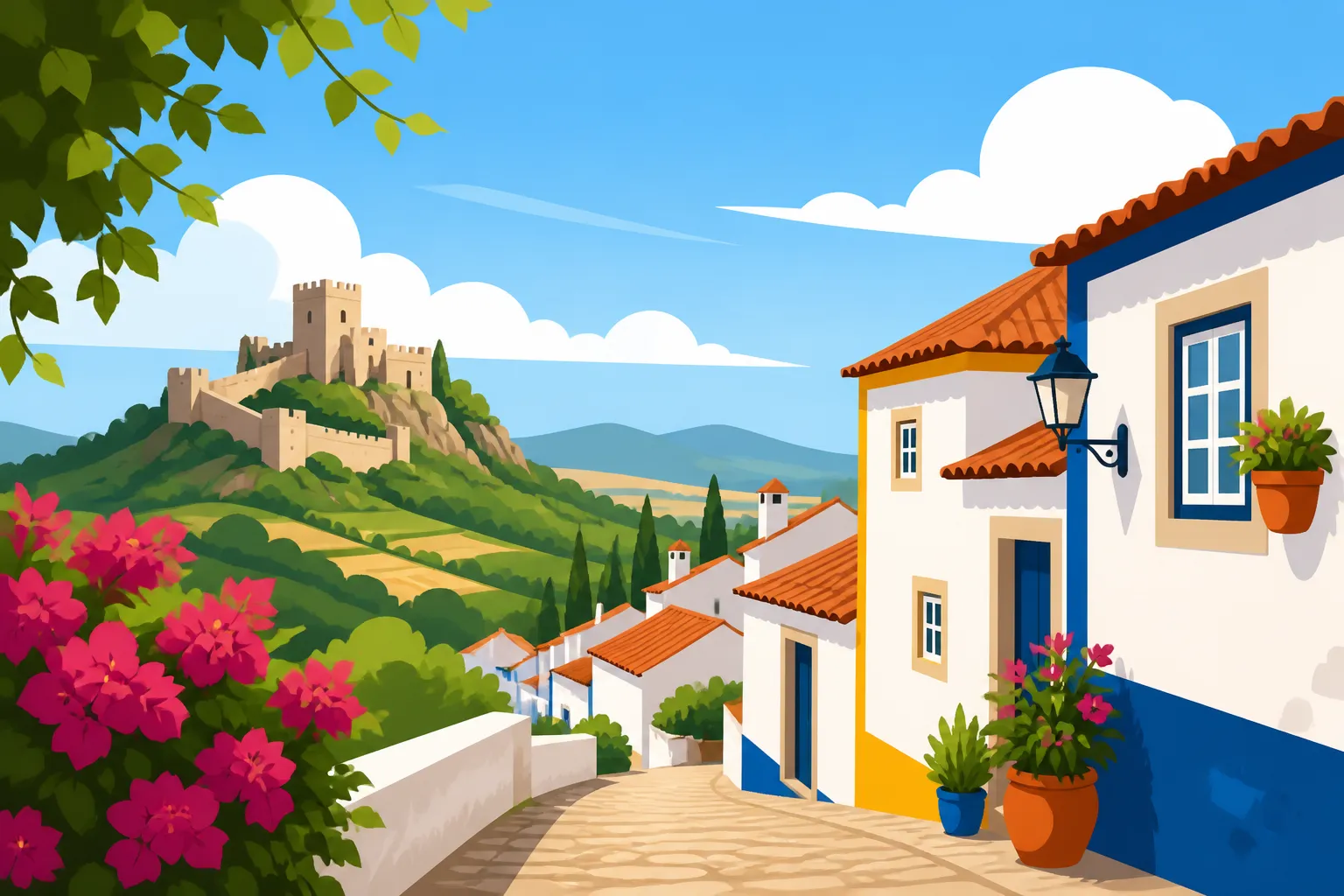
Óbidos is the most visited village in Portugal, and you will feel it on a summer weekend. Inside its complete medieval walls are whitewashed houses with blue and yellow trim, bougainvillea and cobbled lanes. You can walk most of the ramparts, though there are no railings, so watch your footing and keep children close.
Order a ginjinha, the local sour cherry liqueur, served in a small chocolate cup. Then browse the bookshops; one of them is set inside a former church. The village hosts seasonal events, including a chocolate festival and a Christmas village, which bring big crowds.
Óbidos is easy to reach by direct bus from Lisbon’s Campo Grande area. Guided day trips that combine it with Nazaré or Fátima are widely available on GetYourGuide. For step-by-step logistics, see How to Take a Day Trip to Óbidos From Lisbon.
Talasnal and the Lousã Schist Villages
Talasnal is the most accessible of the schist villages. It sits in the Serra da Lousã, above the town of Lousã and within reach of Coimbra. Restored stone houses, chestnut forests and walking trails make it a favourite weekend escape. Cerdeira, nearby, has become a small hub for artists and craft workshops.
You can walk up from the Lousã castle area on a forest trail, which is steep but beautiful. Alternatively, drive up the mountain road and park outside the village. There are a couple of restaurants serving hearty mountain food, but check opening days before you rely on them.
Cacela Velha and Alte in the Algarve
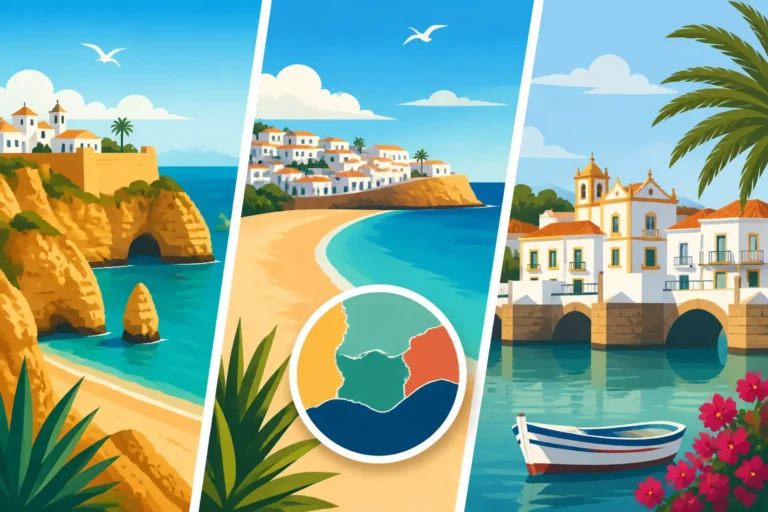
Cacela Velha is a tiny whitewashed village on a bluff above the Ria Formosa lagoon in the eastern Algarve. It has a small fort, a church and views over sandbanks and turquoise water. At low tide you can wade or take a small boat across to the beach. It is a calm counterpoint to the busy resort towns.
Alte, inland in the hills above Loulé, has whitewashed lanes, a little church and a spring-fed picnic area at the Fonte Grande. It is a pleasant half-day trip from the coast, especially on a hot day.
Comparing Portugal’s Most Beautiful Villages at a Glance
| Village | Region | Main Appeal | Best Season | Car Needed |
|---|---|---|---|---|
| Monsanto | Beira Baixa | Houses built among boulders, castle views | Spring and autumn | Yes |
| Piódão | Serra do Açor | Tiered schist houses, river walks | Spring and early autumn | Yes |
| Sortelha | Beira Interior | Complete medieval walls | Spring and autumn | Yes |
| Castelo Rodrigo | Beira Interior | Border views, almond blossom | Late winter and spring | Yes |
| Monsaraz | Alentejo | Lake views, stargazing, pottery | Spring and autumn | Strongly recommended |
| Marvão | Alentejo | Clifftop castle, panoramic views | Spring and autumn | Strongly recommended |
| Mértola | Southern Alentejo | Islamic heritage, river setting | Spring | Strongly recommended |
| Soajo and Lindoso | Minho | Granite granaries, national park | Late spring to early autumn | Yes |
| Sistelo | Minho | Terraced valley, riverside walkway | Late spring and autumn | Yes |
| Óbidos | Oeste | Walled village, easy from Lisbon | Weekdays outside summer | No |
| Talasnal | Serra da Lousã | Schist houses, forest trails | Spring and autumn | Helpful |
| Cacela Velha | Eastern Algarve | Lagoon views, quiet atmosphere | Spring and autumn | Helpful |
Planning Your Village Trip: Transport, Stays, and Etiquette
Getting There With and Without a Car
For most interior villages, a car is not a luxury; it is the difference between seeing them and not. Public transport to small villages is often limited to school buses or a single daily service. Here is how I approach it:
- Decide whether your route is mostly coastal or mostly interior. Coastal and city-adjacent villages work with public transport. Interior villages almost always need a car.
- Travel by train or long-distance bus to a gateway town such as Coimbra, Castelo Branco, Guarda or Évora. Omio is handy for comparing train and bus options and times for these legs.
- Pick up a rental car in the gateway town rather than driving out of Lisbon or Porto traffic. For tolls and insurance, see Renting a Car in Portugal: Tolls, Insurance, and Driving Tips.
- Plan short driving days. Mountain roads are slow, and a route that looks close on the map can take far longer than you expect.
- Download offline maps before you leave. Signal disappears in valleys and mountain passes.
- If you cannot drive, focus on Óbidos, Talasnal via Lousã, and villages reachable on guided tours. For alternatives, see How to Get Around Portugal Without a Car.
Where to Sleep: Stone Houses, Turismo Rural, and Pousadas
Staying overnight transforms a village visit. Day-trippers leave by late afternoon, and you inherit the quiet streets, the evening light and the sound of church bells. Look for turismo rural and alojamento local properties. Many are restored stone houses with thick walls, wood-burning stoves and hosts who will tell you where to eat.
Booking.com lists a good range of these rural guesthouses, including schist cottages in the Lousã mountains and village houses in Monsaraz and Monsanto. Read recent reviews carefully for notes about parking, steep access and heating. Old stone houses can be very cold in winter if the heating is poor.
Portugal’s historic pousadas, often set in castles, convents or manor houses, are another option. There is one inside the walls of Óbidos, for example. To weigh them against regular hotels, see How to Choose Between a Hotel and a Pousada in Portugal.
Village Etiquette and Practical Survival Tips
These are homes, not open-air museums. Many residents are elderly and have lived in the same house all their lives. Say bom dia or boa tarde when you pass people. Do not peer into windows or open closed gates, and ask before photographing anyone up close. Keep your voice down in the evening, because sound carries in narrow stone lanes.
A few practical habits will save you frustration:
- Carry some cash. Small cafés and village shops may not take cards, and there may be no ATM nearby.
- Check restaurant opening days in advance. Many close one day a week, often Monday or Tuesday, and kitchens usually close after lunch until dinner.
- Park outside the walls or in designated areas. Driving into medieval lanes is a classic way to get stuck or scrape a rental car.
- Wear shoes with real grip. Polished cobblestones and schist slabs become slippery, especially when wet.
- Bring water and sun protection in summer, particularly in the Alentejo and Beira interior, where shade can be scarce.
- Avoid peak summer weekends at the most famous villages if you can. A Tuesday in October will show you a completely different Monsanto or Óbidos.
The most beautiful villages in Portugal reward patience more than speed. Pick a handful that suit your route, give each one an evening, and let the slow rhythm of rural Portugal do the rest.
Disclaimer
This article is for general informational purposes only and does not constitute professional advice. Laws, prices and regulations vary by location and change over time. Consult a qualified professional for guidance on your specific situation.