Óbidos, Nazaré, and Silver Coast Day Trips
Disclosure: This article contains affiliate links. If you buy through them, we may earn a commission at no extra cost to you. Read our full disclosure.
Many travelers get trapped in the "Lisbon bubble," assuming central Portugal is just a blur of highway scenery between the capital and Porto. They often struggle with fragmented bus schedules and conflicting advice on how to navigate the rugged Atlantic coastline. This guide solves that confusion by providing a veteran’s blueprint for exploring Óbidos, Nazaré, and the Silver Coast.
Why the Silver Coast is the Ultimate Escape from Lisbon
The Silver Coast, or Costa de Prata, is the wild, authentic cousin of the manicured Algarve. While the southern coast feels like a continuous resort, the Silver Coast is where you’ll find the true heart of Portuguese maritime culture. It is a region of dramatic cliffs, medieval fortifications, and a pace of life that hasn't changed much in fifty years. For an expat or a tourist, this area offers a reprieve from the skyrocketing prices and overcrowded squares of Lisbon’s Baixa district.
Understanding the Geography of the Costa de Prata
When we talk about the Silver Coast, we are generally referring to the stretch of coastline between Ericeira and just north of Nazaré. It is a region defined by the Atlantic’s raw power. Unlike the calm Mediterranean waters of other southern European destinations, the water here is cold, the waves are formidable, and the wind can be relentless. This geography has shaped the local architecture—houses are built with thick walls and small windows to keep the moisture and salt at bay.
For those planning a day trip, it is vital to understand that while these towns look close on a map, the winding coastal roads can turn a short hop into a long journey. The A8 motorway is the main artery connecting these spots, but if you want the scenic experience, you’ll be ducking on and off the secondary N-roads. Navigating this requires a bit of patience, especially when dealing with Public Transport and Driving in Portugal: Trains, Tolls, and Licenses.
The Allure of Authenticity vs Big City Buzz
Many long-term residents have seen the city transform. While the capital is beautiful, it can sometimes feel like an open-air museum for tourists. The Silver Coast is where the Portuguese actually live, work, and eat. In towns like Caldas da Rainha or Peniche, you won’t find menus with five different languages and "tourist prices." You’ll find the Prato do Dia (plate of the day) served for eight euros to locals who have been eating at the same tasca for three decades.
This region is also a haven for those who find the administrative weight of the big cities exhausting. Everything is just a little bit more relaxed here. If you are a resident or long-term visitor, you’ll find that the local Câmara (town hall) or Junta de Freguesia is often less backed up than the ones in Lisbon or Porto. The Silver Coast represents a "middle path" for expats—close enough to the amenities of the city, but far enough to breathe.
Óbidos: Stepping into a Medieval Fairytale
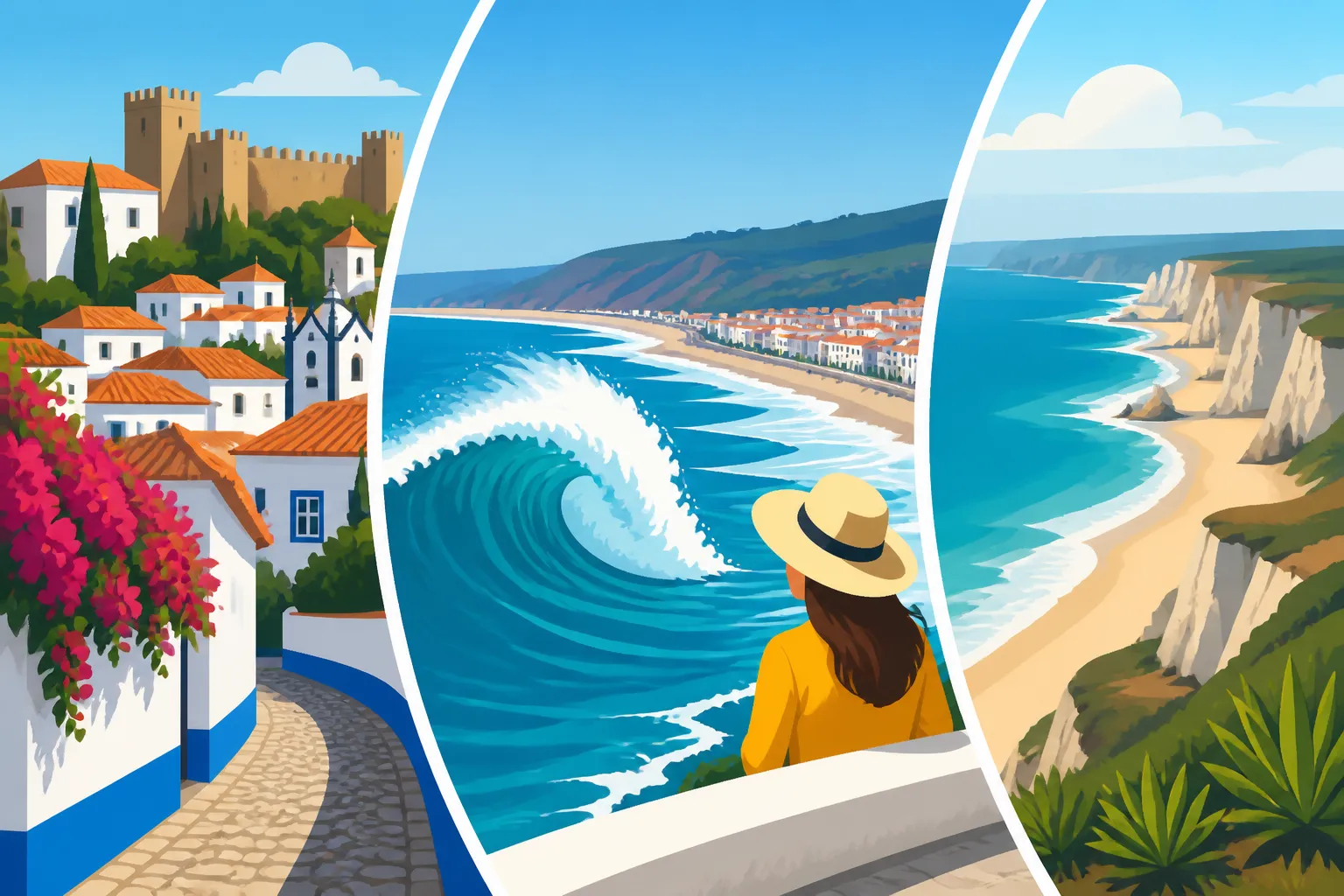
Óbidos is often the first stop for anyone heading north from Lisbon, and for good reason. It is a perfectly preserved medieval walled town that was traditionally the property of the Queens of Portugal. When you walk through the main gate, the Porta da Vila, with its traditional blue and white azulejos, you are immediately transported back several centuries. However, the secret is out, and Óbidos can get incredibly crowded between 11:00 AM and 4:00 PM.
Walking the Walls and Navigating the Cobblestones
The most iconic thing to do in Óbidos is to walk the perimeter of the castle walls. It offers a 360-degree view of the terracotta rooftops and the surrounding vineyards. A word of caution from someone who has done this several times: there are no handrails. If you have vertigo or are traveling with small children, this can be a nerve-wracking experience. The limestone can be slippery, even when dry, so leave the flip-flops at home and wear sturdy walking shoes.
Down on the ground, the town is a maze of cobblestone alleys. Every corner is a photo opportunity, with whitewashed houses trimmed in yellow or blue paint. The reason for these colors is traditionally to ward off evil spirits and insects, though today they mostly serve to keep the town looking pristine for the UNESCO Creative City of Literature status it holds. As you wander, keep an eye out for the small bookstores tucked into unconventional places, like the inside of an old church or a former market.
Beyond the Castle: Ginja, Books, and Seasonal Festivals
You cannot leave Óbidos without trying Ginjinha de Óbidos. While you can find this sour cherry liqueur in Lisbon, the version here is often served in a small edible chocolate cup. It’s a bit of a cliché, but it’s a delicious one. For about 1.50 Euro, you get a shot of the sweet, potent nectar and a snack. It’s the perfect fuel for more exploring.
Óbidos is also a town of festivals. If you visit in the summer, you might stumble upon the Medieval Market, where everyone dresses in period costumes and you eat turkey legs with your hands. In December, it transforms into Vila Natal (Christmas Village). If you’re planning to visit during these high-traffic times, I highly recommend checking Omio for bus schedules early, as the "Rápida Verde" bus from Lisbon's Campo Grande station fills up fast.
Logistics: How to Get to Óbidos from Lisbon
Most people assume the train is the best way to get to Óbidos, but that is a common rookie mistake. The Óbidos train station is located outside the town walls at the bottom of a hill, and the service is infrequent and slow. The bus is your best friend here. The "Rápida Verde" operated by Rodoviária do Oeste takes about an hour and drops you right at the foot of the main gate.
If you choose to drive, remember that parking near the castle can be a nightmare. There is a large paid parking lot near the tourist office, but during peak season, it’s full by noon. If you are driving a rental, ensure you are comfortable with Navigating the Portuguese Toll System: Via Verde and Electronic Tolls because the A8 has several electronic gantries that can be confusing for newcomers.
Nazaré: From Giant Waves to Traditional Fishing Culture
Nazaré is a town of two halves. On one side, it is a world-famous surfing destination known for the biggest waves ever ridden. On the other, it is a traditional fishing village where women still wear seven skirts and dry sardines on the beach. It is this duality that makes Nazaré so fascinating for a day trip.
The North Canyon and the Science of the 100-Foot Wave
If you visit between October and March, you are likely here for the "Big Waves." These monsters are created by the Nazaré Canyon, a massive underwater trench that funnels Atlantic swells directly toward the lighthouse (Farol de Nazaré). Even if there are no 100-foot waves on the day you visit, the power of the ocean at Praia do Norte is humbling. You can stand on the cliffs near the Forte de São Miguel Arcanjo and feel the ground vibrate as the waves crash.
For those interested in the history of this phenomenon, the fort houses a small surf museum. It details how Garrett McNamara first "discovered" the potential of these waves and put Nazaré on the global map. It’s a great way to spend an hour, especially if the wind is picking up and you need a break from the elements.
O Sítio and the Funicular: Catching the Best Views
The town of Nazaré is split into the beach area (Praia) and the clifftop area (Sítio). To get between the two, you should take the funicular. It’s a quick, steep ride that has been operating since 1889. Once you reach the top, you’ll find the Santuário de Nossa Senhora da Nazaré, a beautiful church with a legend involving a knight, a deer, and a miraculous intervention by the Virgin Mary.
The view from the Miradouro do Suberco in Sítio is arguably the most famous view in Portugal. You look down over the red-tiled roofs of the town and the vast crescent-shaped beach. It’s the perfect place to sit for a moment and practice Portuguese Coffee Culture and Restaurant Etiquette: Ordering Like a Local. Order a "Bica" and just watch the world go by.
Fresh Seafood and the Ladies of Seven Skirts
Back down at the beach level, you’ll encounter the "Ladies of the Seven Skirts." Traditionally, fishwives wore seven layers of skirts to stay warm while waiting for their husbands to return from the sea, and to help them count the days of the week. Today, it’s largely a symbolic tradition, but you’ll still see them selling dried nuts and fruit along the promenade.
When it comes to lunch, Nazaré is all about the sea. You must try the Caldeirada (fish stew) or Arroz de Marisco (seafood rice). Be careful with the "couvert" (the bread, olives, and cheese brought to your table at the start). Unlike in many other countries, these aren't free, and the cost can add up. For more on this, check out Tipping culture in Portugal: Do you leave 10% or just round up the bill?.
Hidden Gems of the Silver Coast: Caldas da Rainha and Peniche
If you have a car and want to go beyond the big two, the Silver Coast has several other stops that offer a more "local" feel. These towns are less about the "fairytale" aesthetic and more about the daily grit and creativity of Portuguese life.
Caldas da Rainha: Thermal Waters and Quirky Ceramics
Caldas da Rainha (The Queen's Thermal Baths) was founded by Queen Leonor after she noticed locals bathing in smelly, sulfurous waters to heal their ailments. Today, it is a bustling market town. The Praça da Fruta is the only daily open-air fruit and vegetable market in Portugal, and it is a riot of color and local produce.
The town is also the center of Portuguese ceramics, specifically the work of Rafael Bordallo Pinheiro. You’ll see giant ceramic cabbage leaves, swallows, and—more controversially—phallic-shaped pottery that the town is famous for. It’s a quirky, artistic hub that feels very different from the coastal villages. If you find yourself thirsty while browsing the markets, rest assured that Is it safe to drink tap water in Portugal? Water quality by region.
Peniche and Berlengas: For the Adventurous Spirit
Peniche is a rugged peninsula that was once an island. It is a working port, and the smell of salt and grilled sardines is everywhere. The Peniche Fortress is a somber but necessary visit; it was used as a political prison during the Salazar dictatorship and now serves as a museum of resistance and liberty.
From Peniche, you can take a boat to the Berlengas Islands. This is a protected nature reserve with crystal clear (but freezing) water and a stunning sea fort, the Forte de São João Baptista. If you’re prone to seasickness, be warned: the crossing can be extremely rough. Booking these boat trips via GetYourGuide helps ensure you’re with a reputable operator who prioritizes safety.
Comparison of Silver Coast Destinations
| Destination | Primary Vibe | Best For | Must-Try |
|---|---|---|---|
| Óbidos | Medieval / Romantic | History Buffs & Couples | Ginjinha in a chocolate cup |
| Nazaré | Dramatic / Traditional | Surfers & Sea Lovers | Dried Sardines & Caldeirada |
| Peniche | Rugged / Authentic | Adventurers & Hikers | Boat trip to Berlengas |
| Caldas da Rainha | Artistic / Bustling | Market Shoppers & Art Fans | Bordallo Pinheiro Ceramics |
Planning Your Logistics: Transport, Timing, and Tours
Getting the timing right on a Silver Coast day trip is the difference between a magical memory and a stressful slog. If you are trying to see Óbidos and Nazaré in one day, you really need to start early.
Driving vs Public Transport
Driving is undoubtedly the most flexible way to see the region. It allows you to stop at the smaller beaches like Baleal or Foz do Arelho. However, if you are new to the country, be aware that Portuguese drivers can be "assertive." If you plan to rent a car, you’ll want to be brushed up on Driving in Portugal: Exchanging Your Foreign License to a Portuguese One to make sure your paperwork is in order.
If you don't want the stress of driving, the bus system is reliable but requires planning. There is no direct train that makes sense for this route. You will likely be using the "Rede Expressos" or "Rodoviária do Oeste" lines. I find it much easier to use Omio to compare times and buy tickets on my phone rather than trying to navigate the often-confusing ticket windows at Sete Rios or Campo Grande.
Guided Tours: When to Delegate the Planning
Sometimes, you just want to sit back and let someone else handle the tolls and the parking. There are many "Óbidos and Nazaré" combo tours leaving from Lisbon. These are great if you are short on time, but be prepared for a very structured day. You might only get 90 minutes in Óbidos, which isn't enough to really "get lost" in the backstreets.
If you go this route, look for "small group" tours on GetYourGuide. They often use smaller vans that can navigate the tight streets of the Sítio in Nazaré more easily than a large tour bus. Plus, the guides are usually locals who can tell you exactly How to order coffee in Portugal: Bica, Meia de Leite, Pingado, and Galão without sounding like a textbook.
Where to Stay and Eat: Making the Most of Your Visit
While these are popular day trips, there is a strong argument for staying overnight. When the tour buses leave Óbidos at 5:00 PM, the town takes on a completely different, almost hauntingly beautiful atmosphere.
Dining Tips: Avoiding the Tourist Traps
On the Silver Coast, the rule of thumb is: the further you are from the main "viewpoint," the better the food will be. In Nazaré, avoid the restaurants directly on the front line of the beach with pictures of food on the menu. Instead, walk two or three blocks back into the narrow residential streets. Look for a place where the paper tablecloths are being changed rapidly and the TV is tuned to a football match.
In Óbidos, many of the restaurants inside the walls are quite good, but they are priced for tourists. If you have a car, drive 10 minutes to the surrounding villages for a more authentic meal. Remember that Using the MB Way app: Why it’s better than carrying cash in Portugal is becoming common, but in these smaller village tascas, having some cash on hand is still a veteran move.
Overnight Stays on the Silver Coast
If you decide to turn your day trip into a weekend, Booking.com has a fantastic range of "Turismo Rural" (rural tourism) options. These are often renovated farmhouses or manor homes that offer a level of peace you won’t find in the city. Staying in a "Quinta" near Óbidos allows you to wake up before the crowds and enjoy the morning mist over the vineyards.
In Nazaré, I recommend staying in the Sítio area rather than by the beach. It’s quieter, and waking up to the sound of the Atlantic crashing against the cliffs is an experience you won’t soon forget. Plus, you’ll have easy access to the clifftops for a sunrise walk before the funicular starts its daily run.
Disclaimer
The information provided in this guide is for informational purposes only. While I strive to keep everything as up-to-date as possible, schedules for transport like Using Comboios de Portugal (CP) trains and the Navegante Pass or Buying train tickets online with Comboios de Portugal (CP) app can change without notice. Always verify local opening times and travel requirements before setting out on your journey. Portugal is a wonderful country, but its administrative and logistical systems can be unpredictable—embrace the chaos as part of the adventure.