How to See a Live Fado Show in Lisbon (Not a Tourist Trap)
Disclosure: This article contains affiliate links. If you buy through them, we may earn a commission at no extra cost to you. Read our full disclosure.
You've arrived in Lisbon, soaked in the sun, and now you're yearning for Fado—the soulful, melancholic heart of Portugal. But how do you find the real Fado experience without stumbling into a place designed purely for tourist dollars? It's a common dilemma, and trust me, I've been there, wondering if I'm about to drop a fortune on a diluted show. This guide is your insider's map to experiencing genuine Fado in Lisbon, steering clear of tourist traps, and truly connecting with this incredible cultural tradition.
What is Fado, Anyway? A Glimpse into Portugal's Soul
Before we dive into where to find it, let's talk about what Fado truly is. It's more than just music; it's a profound expression of Portuguese identity, often described by the untranslatable word saudade. This feeling of deep longing, melancholy, and nostalgia for something or someone lost or never attained, permeates every note and lyric. Fado isn't meant to be happy-go-lucky background music; it's meant to evoke emotion, to stir something within you.
The origins of Fado are steeped in the working-class neighborhoods of Lisbon, particularly Alfama and Mouraria, where sailors, bohemians, and common folk gathered in taverns to sing about their hardships, loves, and longings. It wasn't always a polished performance; it was raw, spontaneous, and deeply personal. Over time, it evolved, gaining recognition and becoming an integral part of Portugal's cultural fabric, even being recognized by UNESCO as Intangible Cultural Heritage of Humanity.
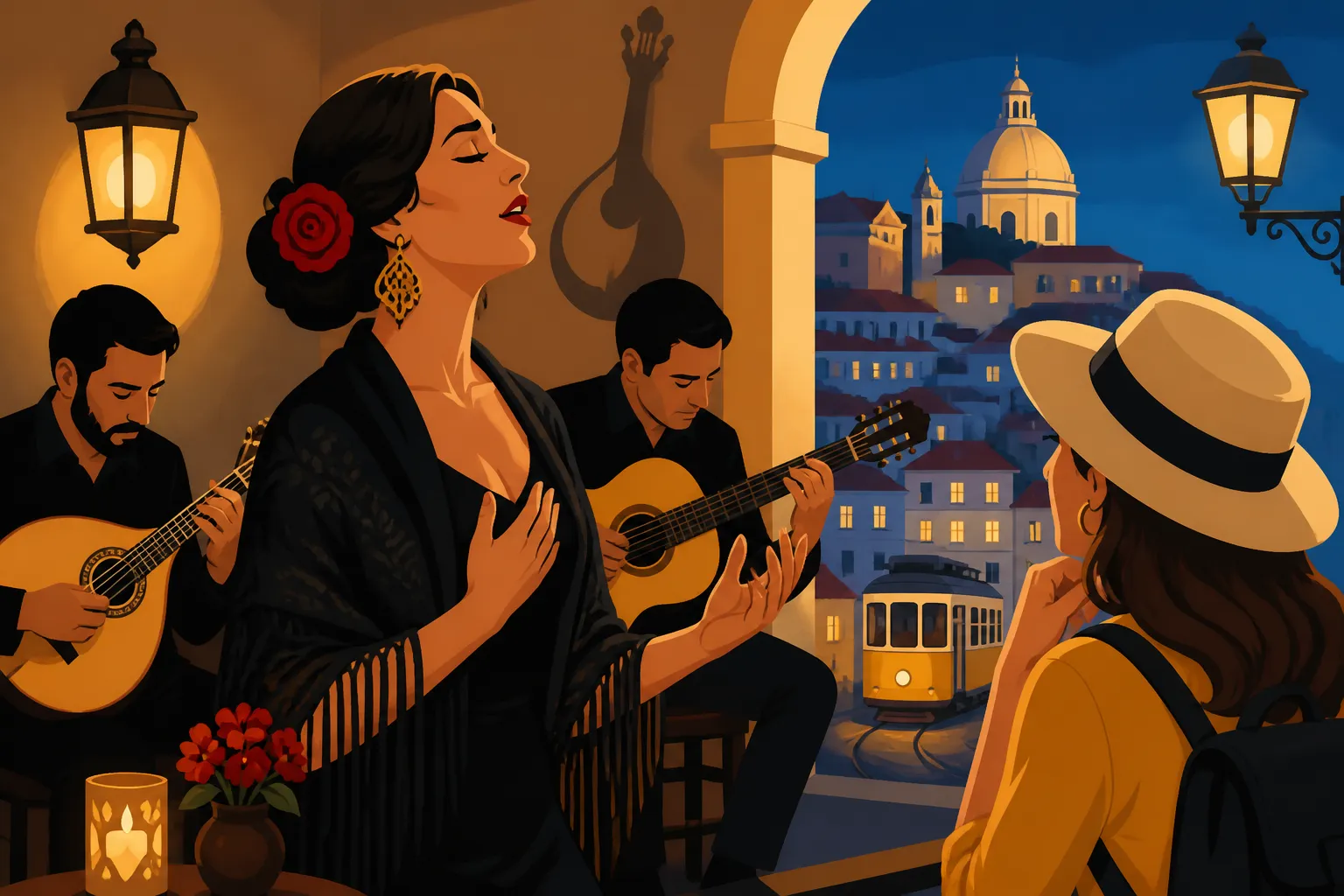
A Fado performance typically features a fadista (the singer, male or female) accompanied by a classical Portuguese guitar (guitarra portuguesa) and a classical Spanish guitar (viola de fado). The unique pear-shaped, 12-string Portuguese guitar with its distinctive sound is truly the soul of the accompaniment. The vocal style is often intense, powerful, and deeply emotional, requiring incredible skill and passion from the singer. When the Fado begins, particularly during the more intense numbers, an almost sacred silence falls over the room. This isn't just about politeness; it's about respecting the deep emotional current of the music and the performer. You'll quickly notice that locals will often hush talking or pause their meals, fully immersing themselves in the performance. For a deeper understanding of Portugal's daily rhythm, you might want to read our guide on Daily Life in Portugal: Supermarkets, Language, and Cultural Etiquette.
Navigating the Minefield: How to Spot a Fado Tourist Trap
Alright, let's get down to business: how do you avoid paying an exorbitant amount for a Fado show that feels more like a theme park attraction than a cultural experience? Lisbon, like any popular city, has its share of places that capitalize on tourist interest without delivering authenticity. Here are some glaring red flags and helpful tips to distinguish the real deal from the Fado facade.
Red Flags to Watch Out For
First and foremost, be wary of aggressive touts on the street. If someone is practically dragging you into a restaurant with a booming Fado soundtrack playing from external speakers, that's a huge warning sign. Authentic Fado houses rely on their reputation and word-of-mouth; they don't need to ambush passersby. Similarly, places with large, flashy signs plastered with "FADO SHOW TONIGHT!" in multiple languages, often accompanied by pictures of performers, should raise your eyebrow. True Fado houses often have more understated, traditional signage.
Another big red flag is a fixed-price menu that seems either too cheap or ridiculously expensive for what's offered. Often, these menus will be heavily padded with inflated drink prices or serve sub-par Portuguese cuisine as a way to bundle the show. While Fado is usually enjoyed with dinner, the meal should still be a respectful representation of Portuguese gastronomy, not an afterthought. If the Fado show starts unusually early, say before 8:30 PM or 9:00 PM, it's also a sign that they're catering to the early-bird tourist crowd rather than the traditional late-night Fado rhythm. Real Fado usually kicks off later and carries on into the small hours, embodying the nocturnal spirit of Lisbon's older districts.
The Food Factor: A Fado Meal Should Be More Than Just Filler
In many traditional casas de fado, a Fado show is intricately linked with a dining experience. This isn't just about having a meal; it's about spending an evening immersed in Portuguese culture, enjoying good food alongside profound music. Therefore, the quality of the food is a critical indicator of authenticity. If a place serves bland, generic, or overpriced food that clearly doesn't prioritize local flavors and fresh ingredients, it's likely that the Fado itself is also being treated as a secondary, commercialized element.
An authentic Fado house will often offer traditional Portuguese dishes – think bacalhau à brás, grilled fish, or rich stews – prepared with care. The meal sets the stage, allowing you to settle in, enjoy the company, and anticipate the music. The Fado performances typically happen in sets, with breaks for conversation and enjoying your meal. If you're looking for recommendations on navigating local eateries, our article on Portuguese Coffee Culture and Restaurant Etiquette: Ordering Like a Local might come in handy.
Price vs. Authenticity: What to Expect to Pay
While you certainly want to avoid tourist traps, don't expect a Fado show to be "cheap." Quality experiences often come with a price tag, especially when you consider it includes dinner and a live, intimate performance. Expect to pay anywhere from €40 to €80 per person for a full dinner and Fado show at a reputable establishment. Some of the most renowned places might even go a bit higher.
Beware of places offering a "show only" option for a very low price, as these can sometimes be in less-than-ideal settings or lack the true atmosphere. Conversely, fixed menus exceeding €100-€120 per person without clear justification (like exceptional gourmet food or a truly star-studded lineup of fadistas) might be overcharging. The value comes from the intimacy, the quality of the musicianship, the food, and the overall ambiance. It’s about the full experience, not just a quick tune. For a general overview of expenses, check out our guide on Cost of Living in Portugal 2026: Detailed Budgets for Singles and Families.
Your Guide to Authentic Fado Houses in Lisbon
So, where should you go? Lisbon has several neighborhoods renowned for Fado, and within them, some truly special casas de fado (Fado houses) where the tradition is cherished and upheld.
Neighborhoods of Soul: Alfama, Mouraria, and Bairro Alto
The oldest and most traditional Fado neighborhoods are Alfama and Mouraria. These historic districts, with their narrow, winding streets and ancient houses, are where Fado was born and still thrives. You can feel the history in the air, the echoes of past melodies lingering in every alleyway. Bairro Alto, while known for its lively nightlife, also hosts some excellent Fado houses, offering a slightly different, often more refined, experience. Choosing a Fado house in one of these areas is a good starting point for authenticity. To help you explore these districts, consult our Lisbon Neighborhood Guide: Best Areas for Expats and Digital Nomads.
Renowned Casas de Fado and Hidden Gems
Here are some places that consistently receive high praise for their authentic Fado experiences:
- Clube de Fado: Located right by the Lisbon Cathedral in Alfama, Clube de Fado is widely regarded as one of Lisbon's premier Fado venues. Founded by renowned Fado guitarist Mário Pacheco, it offers top-tier fadistas and musicians in a beautiful, atmospheric setting. The food is excellent, and the service is professional. Reservations are absolutely essential, and expect a sophisticated yet deeply moving experience. It’s definitely not a cheap night out, but it’s worth the investment for the quality.
- Mesa de Frades: Tucked away in Alfama, Mesa de Frades is a small, intimate venue set within a former chapel, adorned with stunning traditional azulejo tiles. This place radiates authenticity. The Fado here is raw, powerful, and deeply emotional, often featuring established names and promising new talents. Space is limited, making reservations crucial. The food is traditional Portuguese fare, fresh and delicious. It's truly an experience where the music takes center stage, and you feel a personal connection to the artists.
- Casa de Linhares: Also in Alfama, Casa de Linhares is another highly respected institution. It offers a slightly more spacious setting while retaining a warm and welcoming atmosphere. You'll find a rotation of excellent fadistas performing here, and the food is consistently good. It's a fantastic option if Mesa de Frades is too small or fully booked.
- A Baiuca: If you're looking for something a bit more rustic and less polished, A Baiuca in Alfama is a local favorite. It's a small, no-frills place that feels like stepping back in time. The Fado is often performed by older, seasoned fadistas with incredible life stories in their voices. The food is simple, hearty, and authentic. It's a real slice of traditional Lisbon Fado, though sometimes it can get a bit loud due to its size and popularity.
- Maria da Mouraria: Located in the birthplace of Fado, Mouraria, this house is a tribute to Maria Severa, often considered the first Fado singer. It offers a warm, welcoming environment with deeply passionate performances. The food is excellent, and the history palpable. It’s a fantastic choice to experience Fado in its true historical context.
Beyond these dedicated Fado houses, keep an eye out for "Fado Vadio." This refers to informal, often spontaneous Fado performances that pop up in local tascas (taverns) and community gatherings, particularly in Alfama and Mouraria. These are usually amateur nights where anyone can sing, creating a wonderfully raw and unpredictable experience. While harder to plan for, asking locals or checking community boards might lead you to one of these truly authentic, uncommercialized Fado nights.
Booking Your Experience: Tips and Platforms
For the more established casas de fado, booking in advance is absolutely essential, especially for weekend nights. Many places have limited seating, and they fill up quickly.
- Direct Bookings: The best way to ensure authenticity and avoid third-party fees is to book directly with the Fado house via phone or their website. This also allows you to ask specific questions about the evening's program, seating, and menu options.
- Online Tour Platforms: While direct bookings are generally advisable, some reputable online platforms can offer convenient packages. GetYourGuide, for example, lists various Fado experiences. If you use such platforms, be extremely diligent. Read reviews carefully, looking for specific mentions of authenticity, food quality, and the intimacy of the performance. Filter for smaller venues and those described as "traditional" rather than "dinner show with live music." Pay close attention to negative reviews that mention a "tourist trap" feel or poor food.
- Accommodation: If you're planning your trip, consider staying in or near Alfama or Mouraria. Websites like Booking.com can help you find suitable accommodation in these areas, making it easier to walk to and from your Fado show late at night. This can also save you the hassle and cost of late-night taxis or ride-shares, though services like Using Bolt vs Uber in Portugal: Which ride-hailing app is cheaper? are readily available.
When booking, always confirm what's included in the price – is it just the show, or dinner and drinks too? Also, inquire about the starting time of the Fado sets, so you can plan your arrival accordingly and fully enjoy the entire evening without feeling rushed.
Fado Etiquette: Being a Respectful Audience Member
Experiencing Fado is an immersion, and knowing the unwritten rules helps you appreciate it fully and show respect for the performers and the tradition.
Silence is Golden
This cannot be stressed enough: when the fadista is singing, silence is paramount. Locals will often put down their cutlery, pause their conversations, and simply listen, sometimes with their eyes closed, lost in the music. Talking, loud whispering, or clinking glasses during a performance is considered incredibly rude and disrespectful. If you need to speak, do so quietly during the breaks between songs or sets. This isn't a casual background music venue; it's a place where deep art is being shared. Embrace the quiet; it allows the emotion to truly wash over you.
Dinner and a Show: How Eating Fits In
As mentioned, Fado often comes with dinner. Typically, dinner service will take place, and then there will be sets of Fado performances interspersed with breaks. This means you won't be eating your main course while a powerful Fado song is being performed directly in front of you. Instead, you'll order your meal, enjoy starters and your main dish, and then the lights dim slightly, and the Fado begins. During the Fado sets, you might quietly sip a glass of wine, but active eating usually pauses. Once the set is over, the atmosphere lightens, conversations resume, and you can order dessert or more drinks. It’s a beautifully choreographed evening that allows both culinary and musical enjoyment.
Dress Code: Respectful Attire for a Special Night
While there isn't a strict formal dress code for most Fado houses, it's generally a good idea to dress smart-casual. Think respectful, neat attire – something you'd wear to a nice dinner out. Avoid very casual wear like shorts, flip-flops, or overly revealing clothing, especially in the more traditional and revered establishments. Showing respect through your attire is just another way to honor the cultural significance of the Fado experience. You're not just going to a show; you're participating in a Portuguese tradition.
| Fado House Name | Location | Vibe/Atmosphere | Typical Price Range (Dinner + Show) | Booking Advice |
|---|---|---|---|---|
| Clube de Fado | Alfama | Elegant, sophisticated, high-quality music | €60 – €90+ | Essential, often weeks in advance. Direct booking. |
| Mesa de Frades | Alfama | Intimate, historic chapel, deeply emotional | €50 – €80 | Essential, very limited space. Direct booking. |
| Casa de Linhares | Alfama | Traditional, warm, welcoming, great acoustics | €50 – €75 | Recommended, especially for weekends. Direct booking. |
| A Baiuca | Alfama | Rustic, lively, old-school tavern feel, raw Fado | €40 – €60 | Often walk-in, but can get crowded. Simple food. |
| Maria da Mouraria | Mouraria | Historic, passionate, excellent traditional food | €50 – €70 | Recommended, especially for weekends. Direct booking. |
To truly appreciate Fado, try to learn a few basic Portuguese phrases. While many in tourist-focused areas speak English, understanding even a little of the language can deepen your connection to the heartfelt lyrics. Consider exploring resources like Learning European Portuguese: Top Apps, Tutors, and Free Government Classes before your trip. The more you engage with the local culture, the richer your Fado experience will be. Enjoy the melancholy, the passion, and the unique soul of Portugal!
Disclaimer
The information provided in this article is for general guidance only. While we strive to keep our content accurate and up-to-date, prices, opening hours, and specific cultural practices can change. We recommend verifying details directly with Fado houses or service providers before making plans. We are not responsible for any outcomes based on the information provided herein.