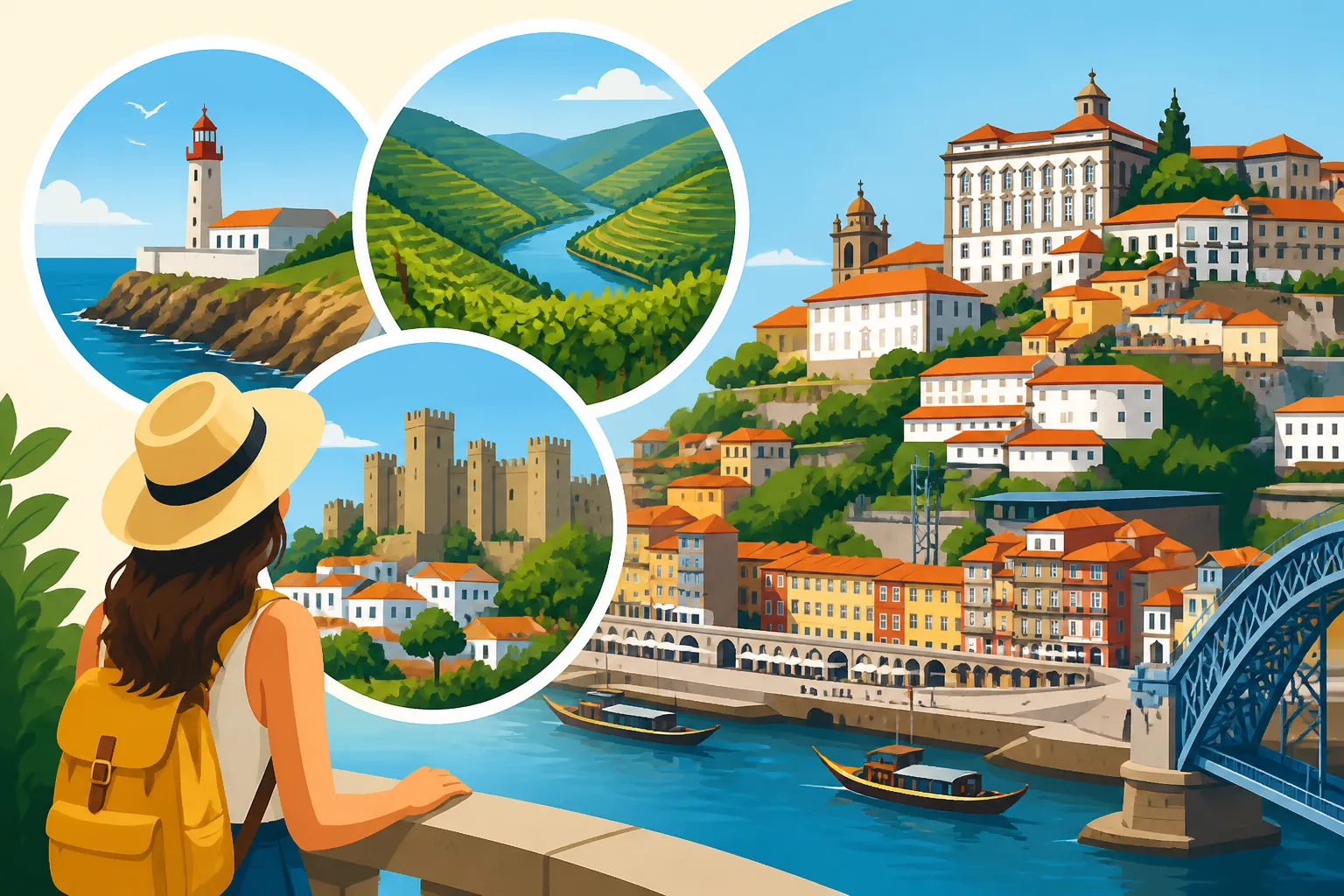
Best Day Trips From Porto
Disclosure: This article contains affiliate links. If you buy through them, we may earn a commission at no extra cost to you. Read our full disclosure.
Porto is a city that captures your soul with its granite facades and winding alleys, but many visitors make the mistake of never leaving the city limits. This oversight means missing the lush vineyards, ancient birthplaces of the nation, and wild Atlantic coastlines just an hour away. This guide solves that by detailing the most rewarding day trips from Porto with veteran local insights.
The Douro Valley: More Than Just Port Wine
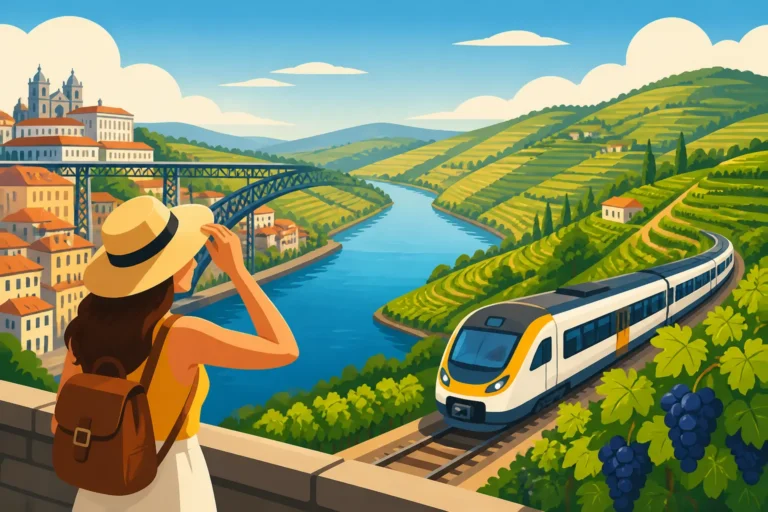
If you have time for only one trip outside of Porto, it has to be the Douro Valley. I remember my first time heading out there; I thought I’d seen enough vineyards in my life, but the Douro is different. It’s a UNESCO World Heritage site for a reason. The hills are so steep and the terraces so precisely carved that it looks like a giant green staircase leading down to the river. The mistake most people make is trying to rush the Douro. They book a bus tour that spends six hours on the road and only one hour at a winery. Don’t be that person.
Navigating the Douro by Train vs Boat
The "Linha do Douro" is, in my humble opinion, one of the most beautiful train journeys in Europe. You’ll want to depart from São Bento Station—not just for the journey, but to see those famous blue and white azulejos. The train tracks eventually hug the river so closely that you feel like you’re floating on the water. It’s much more affordable than the tourist boats and gives you the flexibility to get off at various stops. You can easily check schedules and prices on Omio to see how the train stacks up against the long-distance bus options if you're coming from further out.
Once you arrive in a town like Pinhão, you might want to consider a short, one-hour boat trip on a traditional rabelo boat. These were the vessels that originally transported Port wine barrels down to the cellars in Gaia. Booking a small group tour via GetYourGuide is usually the best way to ensure you aren't crammed onto a massive cruise ship with 200 other people. The perspective from the water, looking up at the schist walls of the vineyards, is something a train window just can't replicate.
The Quintas You Actually Need to Visit
"Quinta" is the Portuguese word for a wine estate or farm. In the Douro, there are hundreds, but for a day trip, you need to be strategic. Many travelers head straight to the biggest names, which are great, but can feel a bit like a factory tour. I personally love Quinta da Roêda or Quinta do Bomfim. They are within walking distance of the Pinhão train station, which is crucial if you plan on participating in the tastings.
When you sit down for a tasting, remember that Douro table wines (reds and whites) are just as prestigious as the fortified Port. The climate here is brutal—scorching in the summer and freezing in the winter—which produces incredibly concentrated grapes. Make sure you brush up on Portuguese Coffee Culture and Restaurant Etiquette: Ordering Like a Local before you sit down for lunch at a Quinta, as the service style in the valley is much more relaxed and traditional than in the heart of Porto.
Pinhão: The Heart of the Region
Pinhão itself is a sleepy little town that wakes up for the grape harvest in September. The train station here is a work of art, decorated with 24 tile panels depicting the traditional stages of wine production. It’s the perfect place to base your day. If you’re feeling adventurous, you can hike up to some of the viewpoints (miradouros) like Casal de Loivos. The view from there is often cited as one of the best in the world. Just be warned: the hike is steep, and the Portuguese sun is unforgiving. If you’re visiting during a heatwave, check Safety and Emergency Preparedness in Portugal for Foreign Residents to stay informed about wildfire risks, which can occasionally affect train services in the valley.
Northern Gems: Guimarães and Braga
Heading north from Porto takes you into the Minho region, the greenest part of Portugal and the historical soul of the country. Many people try to squeeze both Guimarães and Braga into one day. While it’s possible, it’s a marathon, not a sprint. If you are an expat living here, I’d suggest giving each its own day. If you’re a tourist on a tight schedule, start early.
Guimarães: Where Portugal Was Born
There is a sign on the old city wall of Guimarães that reads "Aqui Nasceu Portugal" (Portugal was born here). This was the first capital of the kingdom and the birthplace of the first king, Afonso Henriques. Walking through the Largo da Oliveira feels like stepping back into the 10th century. The houses have wooden balconies, and the streets are paved with worn, uneven stones.
The main attraction is the Castelo de Guimarães and the adjacent Paço dos Duques de Bragança. The castle is a rugged, medieval fortress, while the palace is a 15th-century residence with very distinctive brick chimneys that look like they belong in a fairytale. Pro tip: buy the combined ticket for both to save a few euros. After all the walking, you’ll likely be hungry. Minho cuisine is heavy and delicious. Look for "Arroz de Cabidela" if you’re brave, or "Posta à Mirandesa" for a world-class steak. When the bill comes, don't worry too much about the math; Tipping culture in Portugal: Do you leave 10% or just round up the bill? will help you navigate the local norms.
Braga: The City of Archbishops
Braga is often called the "Portuguese Rome" because of its sheer number of churches. It’s one of the oldest Christian cities in the world, but thanks to its large university, it actually has a very youthful, vibrant energy. The Sé de Braga (Cathedral) is the oldest in the country and is a mix of Romanesque, Gothic, and Baroque styles.
However, the real showstopper is Bom Jesus do Monte, located just outside the city center. It’s a sanctuary famous for its monumental zig-zagging Baroque stairway that climbs 116 meters. Each landing has fountains representing the five senses. If the thought of climbing 577 steps makes your knees ache, there is a water-balanced funicular—the oldest in the world—that will take you to the top for a couple of euros. For getting between the city center and Bom Jesus, I usually find that Using Bolt vs Uber in Portugal: Which ride-hailing app is cheaper? is a lifesaver, as the local buses can be a bit confusing for first-timers.
Logistics: Doing Both in One Day?
If you want to do both, take the train from Porto’s São Bento or Campanhã station to Guimarães first thing in the morning. Around 2 PM, take a bus or a quick Uber/Bolt over to Braga (it’s about a 25-minute drive). Spend the afternoon in Braga and then take the urban train back to Porto in the evening. You can use the Buying train tickets online with Comboios de Portugal (CP) app to keep your tickets handy on your phone. If you decide you've fallen in love with the Minho and want to stay the night, Booking.com has some incredible converted convents and manor houses in the area that are worth the splurge.
Coastal Escapes: Aveiro and Costa Nova
When the Porto humidity gets to be too much, the ocean air of Aveiro is the perfect antidote. Often dubbed the "Venice of Portugal," Aveiro is built around a series of canals. While the comparison to Venice is a bit of a stretch, the town has a unique charm that is entirely its own, largely thanks to its Art Nouveau architecture and colorful boats.
Aveiro: The Moliceiros and the Canals
The canals of Aveiro are navigated by "moliceiros," which were originally used to harvest seaweed (moliço) for fertilizer. Today, they are brightly painted tourist boats, often featuring rather cheeky or "saucy" folk art on the bow and stern. A 45-minute cruise is the standard way to see the city's salt pans and its elegant Art Nouveau buildings.
One thing you have to do is visit the Mercado do Peixe (Fish Market). Even if you don't plan on buying a whole octopus, the atmosphere is electric. Nearby, you'll find plenty of spots to try the local specialty: Ovos Moles. These are thin wafers shaped like shells or fish, filled with a rich, creamy mixture of egg yolks and sugar. They are an acquired taste for some, but a local obsession for others. If you happen to encounter a rude vendor or feel you’ve been overcharged, remember that every business is required by law to have a complaint book; What is the 'Livro de Reclamações' and how does it solve consumer disputes? explains how to use it.
Costa Nova: Striped Houses and Sandy Beaches
Just a short bus or taxi ride from the center of Aveiro is Costa Nova. This is the place you see on Instagram with the "candy-striped" houses. These wooden cottages, called "palheiros," were originally built by fishermen to store their gear. Today, they are mostly holiday homes and are impeccably maintained.
The beach at Costa Nova is massive, with golden sand and powerful Atlantic waves. It’s a great place for a long walk, even in the winter. If you’re there in the late afternoon, find a kiosk selling "Tripas de Aveiro." Despite the name (which means tripe), it’s actually a thick, undercooked crepe usually filled with chocolate or ovos moles. It’s the ultimate Portuguese comfort food.
Transportation and Accessibility
Getting to Aveiro is incredibly easy. The "Urbano" (suburban) train runs almost every hour from Porto and takes about an hour and 15 minutes. It’s very cheap—just a few euros each way. You don't even need to book in advance; just show up at the station and use your Siga card or buy a ticket at the kiosk. For more details on the rail network, see Public Transport and Driving in Portugal: Trains, Tolls, and Licenses.
| Destination | Travel Time (Train) | Best For | Must-Try Food |
|---|---|---|---|
| Douro Valley | 2 – 2.5 hours | Scenery & Wine | Port Wine & Roasted Kid |
| Guimarães | 1 hour | History & Architecture | Tortas de Guimarães |
| Braga | 1 hour | Religion & Views | Bacalhau à Braga |
| Aveiro | 1 hour 15 mins | Canals & Coastline | Ovos Moles |
| Viana do Castelo | 1.5 hours | Folklore & Sea Views | Torta de Viana |
Nature and Adventure: Peneda-Gerês National Park
This is for the travelers who need to escape the city noise. Peneda-Gerês is Portugal’s only National Park, and it is a wild, rugged expanse of mountains, oak forests, and crystal-clear lagoons. However, I have to be honest: this is the one day trip where you really need a car. While there are buses to the main towns, you’ll miss 90% of the park's beauty without your own wheels.
Finding the Best Lagoons and Waterfalls
The park is famous for its "lagoas" (lagoons) and waterfalls. Cascata do Arado is one of the most famous, but it can get crowded. If you’re willing to hike a bit, you can find much more secluded spots. The water is freezing, even in August, but after a hike in the 30-degree heat, it feels like heaven.
Another highlight is the Mata de Albergaria, an ancient forest through which a Roman road still passes. You can actually see the Roman milestones still standing. If you are driving, be aware that there are strict limits on how many cars can enter this protected area per day, and parking is very restricted. Make sure you understand how the toll systems work if you're taking the highway from Porto to get there; Navigating the Portuguese Toll System: Via Verde and Electronic Tolls is a must-read before you get behind the wheel of a rental car.
Historical Villages: Lindoso and Soajo
In the northern part of the park, you’ll find the villages of Lindoso and Soajo. They are famous for their "espigueiros"—granite granaries built on stilts to keep rats away from the corn. They look like tiny stone tombs and are clustered together on the hillsides. The Lindoso Castle also offers a great view over the border into Spain.
Life in these villages hasn't changed much in decades. You’ll still see elderly women dressed in black tending to their gardens and cows with massive horns (called Cachena cows) wandering the roads. Be respectful, drive slowly, and remember that Portuguese public holidays 2026: When supermarkets and banks are closed might affect the availability of small village cafes or local shops.
Practical Tips for Driving in the Park
The roads in Gerês are narrow, winding, and often lack guardrails. If you aren't a confident driver, I strongly suggest booking a 4×4 tour via GetYourGuide. These guides know the hidden tracks that Google Maps doesn't even recognize. If you do drive yourself, make sure your rental car has enough power; those tiny 1.0-liter engines can struggle with the steep inclines of the Serra da Cabreira.
The Holy Grail of Surf and History: Viana do Castelo
Further up the coast from Porto lies Viana do Castelo, one of my personal favorite cities in the North. It’s often overlooked for the more famous Braga or Guimarães, but Viana has a unique mix of maritime history, traditional folklore, and high-end surfing.
Santa Luzia: The Best View in the North
High above the city sits the Santuário de Santa Luzia. It’s an imposing Neo-Byzantine temple that looks a bit like the Sacré-Cœur in Paris. You can take a funicular from the city center up to the church. From the top, the view of the Lima River meeting the Atlantic Ocean is breathtaking. If you have the stamina, you can even climb the narrow stairs to the very top of the church dome (the zimbório). It’s tight, but the 360-degree view is worth every claustrophobic second.
Northern Beaches and Surfing Culture
Viana is a hub for water sports. Praia do Cabedelo, located just across the river, is world-renowned for kitesurfing and windsurfing because of the consistent winds. The beach itself is stunning, backed by pine forests and dunes. There are several surf schools here if you want to try your hand at catching an Atlantic wave.
The city center of Viana is also a gem of Manueline (Portuguese late Gothic) architecture. The Praça da República is the heart of the town, featuring a beautiful 16th-century fountain and the old city hall. If you’re visiting in August, you might catch the Romaria de Nossa Senhora d'Agonia, a massive festival where women wear incredible amounts of traditional gold jewelry. It’s a sight you won't see anywhere else in the world. To get here, you can check bus and train options on Omio to see which fits your morning schedule best.
Essential Day Trip Logistics and Transportation
Planning these trips requires a bit of foresight. While Porto is very walkable, the surrounding regions are spread out. The train system is generally excellent for cities, but for the Douro Valley and Gerês, a bit more planning is required.
If you’re taking the train, always check if there’s a holiday. Portugal has many national and municipal holidays that can drastically reduce the frequency of public transport. I’ve been stranded in a small town before because I forgot it was a local saint's day. Always keep an eye on Portuguese public holidays 2026: When supermarkets and banks are closed to avoid the same fate.
For those who prefer not to drive, the "Rede Expressos" bus network is very reliable and often faster than the train for certain routes, like Porto to Viana do Castelo. You can buy tickets online or at the terminal in Campo 24 de Agosto.
Lastly, regardless of where you go, bring layers. The weather in Northern Portugal is notorious for changing in an instant. You might start your day in a sunny 25-degree Porto and find yourself in a misty, 15-degree Minho by noon. A light waterproof jacket is a veteran expat’s best friend.
Disclaimer
The information provided in this guide is for informational purposes only. While we strive to keep all details—including prices, schedules, and legal requirements—up to date for 2026, travel conditions in Portugal can change rapidly. Always verify specific train times, entrance fees, and local regulations before your departure. This guide does not constitute legal or professional travel advice.