Manueline Architecture: Jerónimos, Belém, and Beyond
Disclosure: This article contains affiliate links. If you buy through them, we may earn a commission at no extra cost to you. Read our full disclosure.
When you first arrive in Belém, the sheer scale of the limestone monuments can be overwhelming, and the intricate carvings of stone ropes, sea monsters, and exotic plants often leave visitors more confused than inspired. This guide untangles the complex history of Manueline architecture, providing you with the cultural context and logistical tips needed to navigate Portugal’s most iconic landmarks without feeling like a lost tourist.
Understanding the Essence of Manueline Design
To truly appreciate the buildings you see in Lisbon and across the country, you have to understand that Manueline architecture isn't just a style; it is a celebration of a very specific, golden moment in Portuguese history. It is worth knowing that the detail isn't just "extra decoration." It is a visual diary of the Age of Discoveries, frozen in stone during the reign of King Manuel I at the turn of the 16th century.
The Historical Context of the Age of Discoveries
The Manueline style emerged during a period of unprecedented wealth and global expansion. Portugal was no longer just a small corner of the Iberian Peninsula; it was the center of a maritime empire that stretched from Brazil to India. This era, roughly between 1490 and 1520, saw the transition from the Late Gothic to the Early Renaissance, but Portugal took a detour into this uniquely nationalistic aesthetic.
The wealth pouring into Lisbon from the spice trade funded these massive projects. When you look at the Mosteiro dos Jerónimos, you aren't just looking at a church; you are looking at "pepper money." Every carving was intended to show the world that Portugal had mastered the oceans. Understanding this history helps you see past the beauty and into the political ambition of the time.
Identifying Key Elements: Ropes, Armillary Spheres, and Sea Life
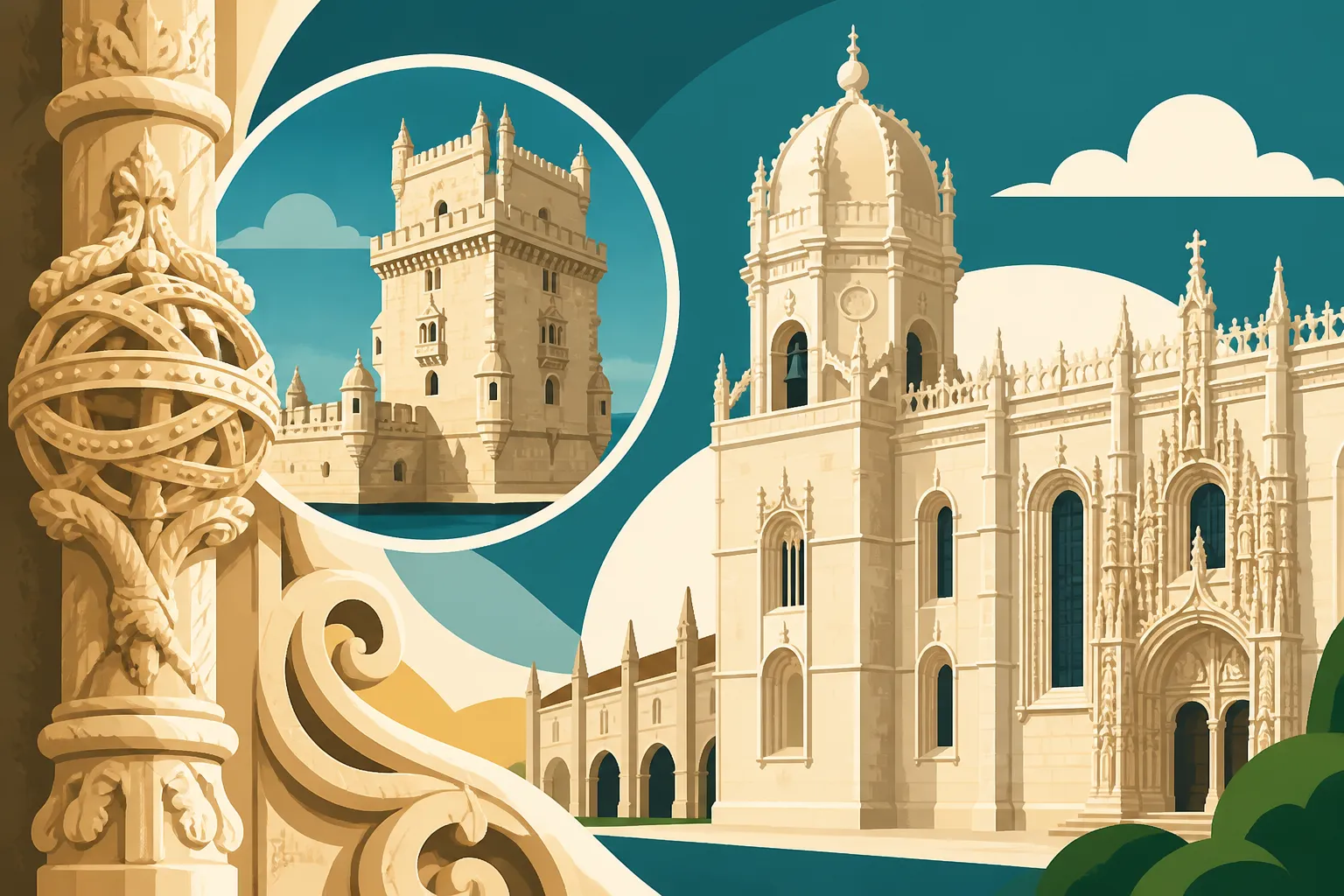
If you want to spot Manueline architecture like a local, you need to look for the recurring motifs that define the "Late Portuguese Gothic." The most obvious symbol is the thick, stone-carved rope. These ropes often twist around columns or frame windows, complete with realistic knots that look as if they could be untied. They represent the nautical life and the rigging of the caravels that discovered new worlds.
Beyond the ropes, keep an eye out for the Armillary Sphere. This was the personal emblem of King Manuel I and represented the celestial sphere and navigation. You will also see the Cross of the Order of Christ—the religious order that funded many of the voyages. More subtly, the architecture incorporates "vegetal" elements like artichokes (representing the unknown flora of the New World) and coral, which appears to "grow" out of the arches.
King Manuel I: The Visionary Behind the Style
King Manuel I, often called "The Fortunate," was the driving force behind this movement. He wanted a style that was uniquely Portuguese to distinguish his kingdom from the Spanish neighbors and the rest of Europe. By blending traditional Gothic structures with these maritime and naturalistic ornaments, he created a brand identity for the Portuguese Crown.
As you explore these sites, remember that Manuel was also an absolute monarch. The grandiosity of these buildings was designed to evoke awe and fear. In many ways, the Manueline style was a form of 16th-century propaganda, reminding every citizen and visiting dignitary that the King of Portugal was the "Lord of Conquest, Navigation, and Commerce of Ethiopia, Arabia, Persia, and India."
The Crown Jewel: Mosteiro dos Jerónimos
The Mosteiro dos Jerónimos is the ultimate expression of the Manueline style and is usually the first stop for anyone visiting Belém. However, many visitors make the mistake of only seeing the church (which is free) and skipping the cloisters, which is where the real architectural magic happens. It is essential to plan ahead, as the queues can be soul-crushing during the peak summer months.
Navigating the Crowds and Finding the Quiet Cloisters
Living here has taught me that timing is everything when it comes to Jerónimos. If you show up at 11:00 AM on a Saturday, you will likely spend two hours in a line that wraps around the block. To avoid the worst of it, try to arrive 30 minutes before opening or visit during the final hour before closing. You can often find skip-the-line tickets on platforms like GetYourGuide, which I highly recommend if you value your sanity.
Once you get inside the cloisters, don't rush. The two-story structure is a masterpiece of light and shadow. While the ground floor is usually packed with tour groups, the upper level is often much quieter. This is where you can truly appreciate the delicate "lace-work" of the stone. Take a moment to sit on the stone benches and imagine the monks of the Order of Saint Jerome praying here, surrounded by symbols of an empire they helped justify through their faith.
Artistic Details You Might Miss: Symbols and Stories
Most people look at the Jerónimos and see a lot of "pretty carvings," but there is a narrative hidden in the stone. Look closely at the southern portal—the massive door facing the river. It features over 40 statues, but the central figure is Henry the Navigator. Higher up, you will find the Virgin of Bethlehem, to whom the Vasco da Gama and his crew prayed before their historic voyage.
Inside the church of Santa Maria, the columns are designed to look like giant palm trees, reaching up to a complex vaulted ceiling that seems to defy gravity. This "palm tree" motif was a direct reference to the exotic landscapes explorers were discovering in Africa and Asia. If you look at the tombs of Vasco da Gama and Luís de Camões, you will see they are also encased in heavy Manueline symbolism, forever linking the nation's greatest explorer and its greatest poet to this specific era.
Practical Tips for Visiting: Tickets, Times, and Logistics
Logistically, Jerónimos requires a bit of prep. The ticketing system has moved almost entirely digital for the cloisters. You can’t always rely on the kiosks on-site, so book your slot on your phone while having breakfast. Also, be aware of Portuguese public holidays 2026: When supermarkets and banks are closed, as these monuments often have different hours or are closed entirely on major festive days.
If you are coming from central Lisbon, don't just default to the tram. Navegante Pass Lisbon: How to get the €40 monthly unlimited transit card is a lifesaver for residents, but even for short-term stays, using a pre-loaded Zapping card is better than paying the "tourist price" on the tram. Alternatively, if you are in a rush, Using Bolt vs Uber in Portugal: Which ride-hailing app is cheaper? is a common question, and usually, Bolt wins on price in the Belém area.
The Guardian of the Tagus: Torre de Belém
The Belém Tower is perhaps the most photographed building in Portugal, and for good reason. It looks like a giant chess piece standing in the water. But beyond its photogenic exterior, it serves as a fascinating example of how Manueline architecture was applied to military fortifications. Originally, it sat much further out in the river; the shifting of the Tagus over centuries has brought it closer to the shore.
Defensive Fortification vs. Decorative Icon
When you approach the tower, you might notice that it looks almost too delicate to be a fort. This was a hallmark of the Manueline era: the blurring of lines between function and fashion. While it was equipped with cannons and served as a defensive bastion to protect the harbor, King Manuel I insisted it be covered in decorative ropes, shields, and balconies. It was meant to be the first thing sailors saw when returning home—a grand welcome to a powerful city.
The interior of the tower is surprisingly cramped. If you have claustrophobia, you might want to admire it from the outside. The spiral staircases are incredibly narrow, and there is a "traffic light" system to manage the flow of people moving up and down. While the view from the top is spectacular, the real architectural value is in the lower bastions, where you can see the early Renaissance influence on military engineering.
The Rhino and Other Exotic Influence
One of the most famous and quirky details of the Torre de Belém is the stone carving of a rhinoceros. This wasn't just a flight of fancy for the sculptor. In 1515, an actual rhinoceros was sent from India as a gift to King Manuel I. It was the first rhino seen in Europe since Roman times, and it caused a sensation. The king even tried to stage a fight between the rhino and an elephant to see if they were natural enemies (the elephant ran away).
The inclusion of the rhino on the tower’s exterior is a perfect example of how Manueline architecture captured the "newness" of the world. To the people of 16th-century Lisbon, this carving was as shocking and modern as a statue of an alien would be to us today. As you walk around the base of the tower, see if you can spot it; it’s on the northwestern side, though the stone has been weathered by the salty Atlantic air.
Best Times for Photography and Avoiding the Lines
If your goal is the perfect photo, skip the midday sun. The tower faces south, so the light can be very harsh between 12:00 PM and 3:00 PM. Sunset is the magic hour here, as the limestone turns a warm, honey-gold color. This is also when the crowds begin to thin out. Most tour buses depart by 5:00 PM, leaving the waterfront to the locals and savvy expats.
Be wary of Common tourist scams in Lisbon: Pickpockets on Tram 28 and fake hash sellers when you are distracted by the beauty of the tower. Belém is generally safe, but any high-density tourist area attracts opportunists. Keep your bag in front of you while waiting in line. If you decide to skip the interior, there is a lovely grassy area nearby where you can sit, enjoy a Pasteis de Belém, and simply take in the view of the tower against the 25 de Abril Bridge.
Beyond Belém: Manueline Gems Across Portugal
While Belém is the epicenter, some of the most dramatic Manueline architecture is found in central Portugal. If you are living here as an expat or staying for more than a few days, you must take a trip north to Tomar and Batalha. These sites offer a more profound, almost spiritual look at the style, far from the frantic energy of the capital.
Convent of Christ in Tomar: The Famous Window
The Convent of Christ in Tomar was the headquarters of the Knights Templar (and later the Order of Christ). It is a sprawling complex that layers centuries of architecture, but its Manueline Chapterhouse window is legendary. This single window is so encrusted with sea-inspired motifs—ropes, seaweed, and even the "buckles" of the Order's belts—that it takes several minutes of staring just to process the detail.
Getting to Tomar is easy via the train. You can check schedules and book tickets on Omio or through Comboios de Portugal (CP) Trains and the Navegante Pass. The journey takes about two hours from Lisbon's Santa Apolónia station. Once in Tomar, the walk up the hill to the castle is steep, so wear comfortable shoes. The town itself is charming and much more affordable for a weekend stay than Lisbon; you can find great guesthouses on Booking.com that put you right in the historic center.
Batalha Monastery: The Unfinished Chapels
Batalha Monastery is a UNESCO World Heritage site that was built to commemorate the Portuguese victory over the Castilians in 1385. While it started as a Gothic masterpiece, the "Unfinished Chapels" (Capelas Imperfeitas) were added later and feature some of the most breathtaking Manueline carvings in existence. As the name suggests, these chapels were never roofed, leaving the intricate stone arches exposed to the blue Portuguese sky.
Standing in the center of the Unfinished Chapels is a surreal experience. The lack of a ceiling makes the ornate pillars look like they are reaching directly for the heavens. It is a powerful reminder of how the Manueline style was often used for royal pantheons. Since Batalha is a bit harder to reach by train, I suggest looking into Public Transport and Driving in Portugal: Trains, Tolls, and Licenses if you plan on renting a car to explore this region.
Sintra and the Palácio da Pena's Neo-Manueline Twist
Sintra offers a different flavor of this style. During the 19th-century Romanticism movement, King Ferdinand II became obsessed with Portugal's past and created "Neo-Manueline" architecture. The most famous example is the Pena Palace. While much of it is a technicolor dream of different styles, you will see direct homages to the Jerónimos and Tomar in the carvings around the main gateways.
Living in the Lisbon area, you’ll quickly learn that Sintra is its own beast. It’s significantly colder and mistier than the coast. It is often said that Cascais expat life: Is the premium rent worth the seaside lifestyle? is great for the sun, but Sintra is where you go for the soul. When visiting Pena, look for the "Triton" gateway—a terrifying half-man, half-fish creature that seems to hold up the palace. It is a direct 19th-century interpretation of the sea-beasts found in 16th-century Manueline art.
Logistics for the Architecture Enthusiast
Planning an architectural tour of Portugal requires a bit more than just a map and a desire to see old buildings. You have to account for the "Portuguese pace" of life, the intricacies of the transport system, and the occasional administrative hurdle that can trip up even the most seasoned traveler.
Organizing Your Route: From Lisbon to Central Portugal
If you want to see all the major Manueline sites, a three-day itinerary is best. Day one should be dedicated to Belém (Jerónimos and the Tower). Day two should take you to Tomar, and day three to Batalha and Alcobaça. This "Golden Triangle" of monasteries in central Portugal is relatively close together but requires careful planning if you aren't driving.
Using a car gives you the most flexibility, but be aware that Portuguese motorways are expensive. You will need to understand the toll system, which is largely electronic. For those who prefer to relax, many expats use Omio to book inter-city buses (Rede Expressos), which are often more reliable and comfortable than the regional trains for reaching places like Batalha.
Choosing the Right Transport Options
Within Lisbon, the Navegante card is your best friend. You can pick one up at any Metro station. However, for the Belém run, consider taking the train from Cais do Sodré instead of the #15 tram. The train is faster, cooler, and less prone to the "sardine-can" feeling of the tram. If you are staying in the city for a while, definitely look into How to get your Número de Utente online without visiting the health center or other administrative tasks, but for pure transport, the Navegante is the only card you need.
For your longer trips, the Comboios de Portugal (CP) website is functional but can be finicky with foreign credit cards. This is where a third-party aggregator can actually save you a headache. Also, keep in mind that during The "August Shutdown": Why getting things done in summer is impossible, train and bus frequencies might change, and the heat in central Portugal can be intense. Always carry plenty of water; and yes, Is it safe to drink tap water in Portugal? Water quality by region is a valid concern, though in Lisbon and the main cities, the tap water is perfectly fine to drink.
Where to Stay Near the Most Iconic Landmarks
If you are an architecture lover, staying in Belém is a treat. It’s much quieter than downtown Lisbon once the tourists leave at 6:00 PM. You’ll find some beautiful boutique hotels on Booking.com that overlook the river. In Tomar, I recommend staying in the old town to enjoy the evening atmosphere of the Praça da República.
When checking into your accommodation, remember Portuguese greeting etiquette: When to use Beijinhos vs Handshakes. Even if you don't speak the language fluently, a simple "Bom dia" goes a long way. The staff in these historic towns are often very proud of their local monuments and can give you "insider" tips on which small, local chapel also features Manueline details that the big guidebooks miss.
Comparison of Major Manueline Sites
| Site | Location | Key Feature | Best Time to Visit |
|---|---|---|---|
| Mosteiro dos Jerónimos | Belém, Lisbon | Two-story Cloisters | Weekday at 9:30 AM |
| Torre de Belém | Belém, Lisbon | Rhinoceros Carving | Sunset (for photos) |
| Convent of Christ | Tomar | Chapterhouse Window | Early Morning |
| Batalha Monastery | Batalha | Unfinished Chapels | Late Afternoon |
| Pena Palace | Sintra | Neo-Manueline Triton | Off-season (Nov-Feb) |
| Church of Conceição Velha | Baixa, Lisbon | Ornate Facade | Any time (walk-by) |
Disclaimer
This guide is for informational purposes only. While every effort has been made to ensure accuracy, opening times, ticket prices, and transport regulations in Portugal can change frequently. Always verify with official monument websites or local authorities before planning your trip. The author is an expat living in Portugal and shares these insights based on personal experience and current local conditions in 2026.