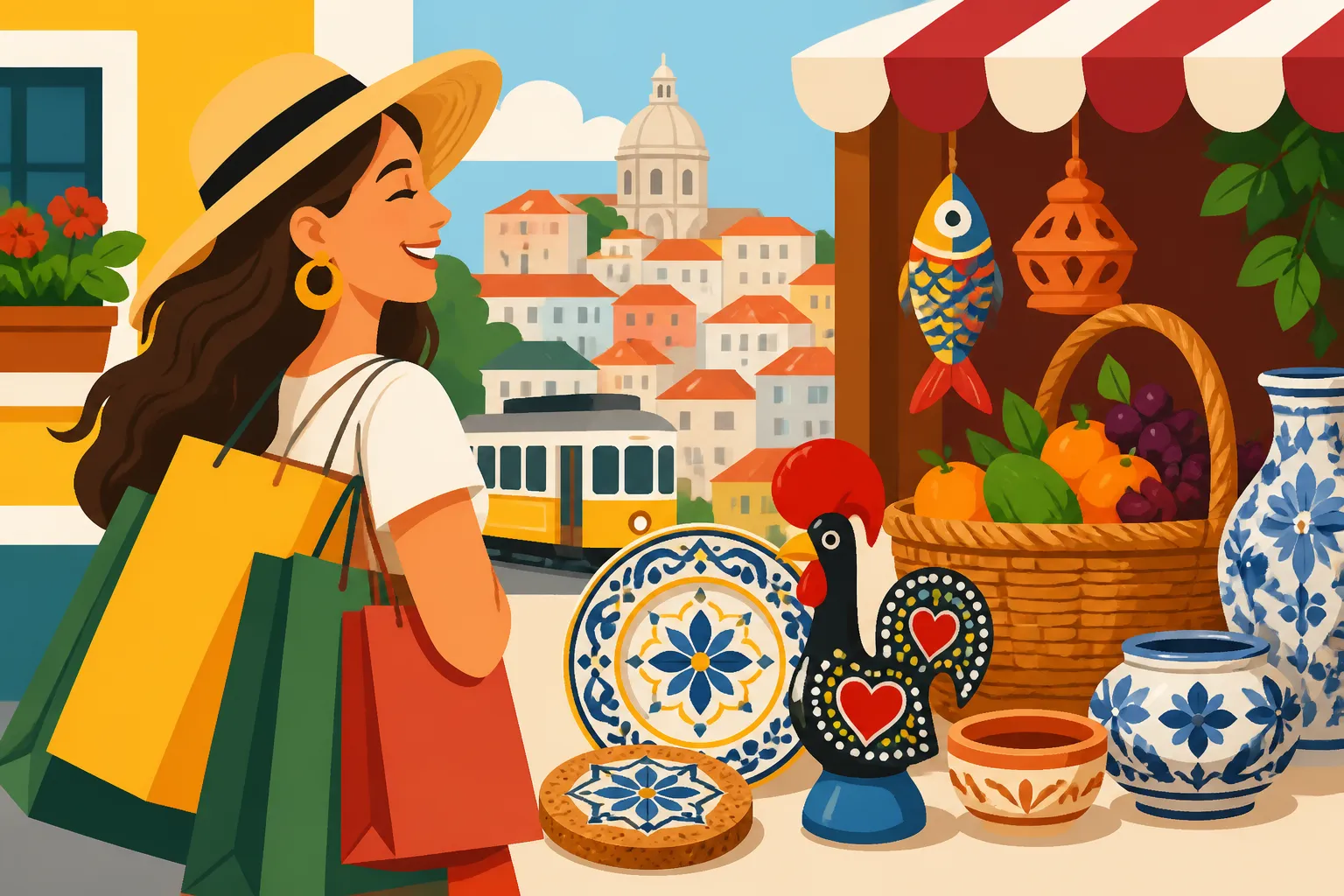
Shopping, Markets, and Portuguese Crafts
Disclosure: This article contains affiliate links. If you buy through them, we may earn a commission at no extra cost to you. Read our full disclosure.
You’ve wandered into a Lisbon souvenir shop, picked up a “handmade” tile, and spotted a factory sticker on the back. Or you reached the Barcelos fair at noon, just as the stalls were packing up. This guide covers where to shop in Portugal, how markets really work, which crafts are worth carrying home, and how to get them home intact.
Understanding the Portuguese Shopping Rhythm
Before we get to tiles and filigree, you need to understand how and when Portugal shops. I learned this the hard way in my first month. I arrived at a ceramics workshop in Alfama at 1:15 in the afternoon, determined to buy a gift. The door was locked, and a handwritten “volto já” note (“back soon”) was taped to the glass. “Soon” turned out to mean nearly two hours. Nobody was being rude. The country simply runs on a schedule that takes a while to absorb.
Shop Hours, Lunch Closures, and Sunday Trading
Portugal runs two shopping systems side by side. The first is the big shopping centre: Colombo and Amoreiras in Lisbon, NorteShopping and Via Catarina in Porto, Forum Algarve near Faro. These open late into the evening and trade on Sundays and most public holidays. If you need a phone charger at 9 PM on a Sunday, this is where you go.
The second system belongs to the small, independent shops where the interesting stuff lives. Many still close for lunch, roughly from around one until three in smaller towns. They often shut on Saturday afternoons and stay closed all Sunday. In tourist-heavy areas like Baixa, Chiado, and Porto’s Ribeira, more shops now stay open through lunch. Once you head inland to places like Estremoz, Caldas da Rainha, or Viana do Castelo, the traditional rhythm is very much alive.
Picture this scenario. You take a morning train to a pottery town, have a leisurely lunch, and plan to shop afterwards. By the time you finish your coffee, it’s half past two and every workshop door is closed. Then they reopen just as your return train leaves. The fix is simple: shop in the morning, eat when the locals eat, and save the afternoon for wandering. Also check public holidays and local feast days, because a town celebrating its patron saint may close everything except the cafés.
Paying at Shops, Stalls, and Workshops
Card payments are widely accepted in Portugal, but the network has a local twist. Multibanco is the national debit system, and many small vendors prefer it or accept only it. At market stalls and in tiny workshops, cash is still king. Plenty of older artisans have no card machine at all. Those who do sometimes have a minimum spend they’d rather not tell you about.
Many Portuguese stallholders now accept MB Way, a phone-to-phone payment app. It usually needs a Portuguese bank account, so it is more useful for residents than for short-term visitors. For a visit, I carry a modest amount of cash in small notes and coins for flea markets and rural fairs, and use a card everywhere else. For a full breakdown of how cards, ATMs, and the local network behave, see Cash vs Card in Portugal and Using Multibanco.
One more thing that surprises newcomers: cashiers will often ask “Contribuinte?” or “Quer número de contribuinte na fatura?” They are asking whether you want your tax number on the receipt. As a tourist you can simply say “não, obrigado” or “não, obrigada.” Residents usually say yes, because those receipts count toward their annual tax return.
Haggling Etiquette and Reading the Room
In regular shops, haggling is not part of the culture. Prices are marked, and asking for a discount in a boutique feels awkward rather than savvy. The same goes for most artisan workshops. The person behind the counter often made the piece with their own hands. Pushing hard on price is a quick way to end a warm conversation.
Flea markets are different, especially Feira da Ladra in Lisbon or the antiques sections of rural fairs. A polite question works well, such as “Faz um preço melhor se levar os dois?” (“Can you do a better price if I take both?”). Bundling items is the most natural way to negotiate. Gentle haggling over a single item is fine at a junk stall, but keep it friendly and never insulting.
Food markets sit somewhere in the middle. You won’t haggle over the price of cherries. Still, a vendor who sees you come back week after week may throw in an extra lemon or a handful of parsley. That relationship is worth more than any discount. My fishmonger at the Mercado de Arroios still cleans my sardines faster for me than for anyone else in the queue.
Portugal’s Great Markets: Where Locals and Travelers Actually Shop
Markets are where Portugal’s shopping culture is most alive. They range from century-old covered halls to sprawling weekly fairs that take over entire town squares. For a deeper dive into the different types, see Markets in Portugal: Food, Flea, and Farmers’ Markets.
Lisbon’s Markets: From Flea Treasures to Food Halls
Feira da Ladra, the “Thieves’ Market,” spreads across Campo de Santa Clara behind the Pantheon. It traditionally runs on Tuesdays and Saturdays. Arrive early, ideally in the morning before the heat and the tour groups. You’ll find vintage azulejos, old postcards, vinyl records, military buttons, mismatched cutlery, and occasionally a real treasure. It is chaotic, dusty, and wonderful. Keep your bag zipped and in front of you, because crowded flea markets attract pickpockets. For practical advice on that, see Avoiding Pickpockets and Scams in Portugal.
Mercado da Ribeira at Cais do Sodré has two personalities. One half is the Time Out Market food hall, packed with visitors eating from chef-run counters. The other half is the traditional produce market, where Lisbon families still buy fruit, fish, and flowers in the morning. Visit the traditional side early and the food hall later, and you’ll see both faces of the city in one building. Mercado de Campo de Ourique offers a more neighbourhood version of the same idea, with fewer tourists and excellent petiscos.
LX Factory in Alcântara is a converted industrial complex full of independent shops, designer studios, and the famous bookshop Ler Devagar. It hosts a weekend market where local makers sell prints, jewellery, and small-batch ceramics. If you want a guided overview of Lisbon’s food markets and tasting stops, GetYourGuide lists walking food tours that move through these halls with a local guide. That is handy if you’re nervous about ordering in Portuguese. For a practical walk-through, see How to Visit the LX Factory and Lisbon’s Markets.
Porto and the North: Bolhão and the Barcelos Thursday Fair
Porto’s Mercado do Bolhão is the city’s grand covered market. It reopened after a long renovation and now mixes traditional vendors with small restaurants. Come for cured meats, cheeses from Serra da Estrela, salted cod, and the flower stalls. Some long-time vendors are wonderfully theatrical, calling out to passers-by in a thick northern accent. Practical tips, including the best time of day to visit, are in How to Shop at the Bolhão Market in Porto.
The Barcelos market, held every Thursday on the huge Campo da República, is one of the oldest and largest weekly fairs in the Iberian Peninsula. It is also one of the best places in the country to buy traditional crafts. You’ll find painted Barcelos roosters, rustic pottery, wicker baskets, wooden spoons, linens, live chickens, and mountains of vegetables. The fair starts early and winds down by early afternoon. It is a working market rather than a show for tourists, so dress for walking and bring cash.
Barcelos is on the Minho railway line from Porto, so you can reach it without a car. You can compare train and bus times on Omio. On my first visit I stayed overnight on Wednesday so I could be there when the stalls opened. Searching Booking.com for small guesthouses in Barcelos made that easy, and arriving at dawn with a coffee in hand made the whole trip.
The Algarve and the Islands: Loulé, Olhão, and Funchal
In the Algarve, Loulé has a beautiful Moorish-revival market hall with red domes. It sells local honey, figs, almonds, carob products, and fresh fish. On Saturdays a large open-air market runs on the edge of town, locally called the “gypsy market.” It mixes clothing and household goods with copper, basketry, and pottery. Olhão’s twin waterfront market halls, one for fish and one for produce, are the place to see the region’s seafood economy up close.
Funchal’s Mercado dos Lavradores in Madeira is a sensory overload in the best sense. It is full of exotic fruit, flowers, and the famous black scabbardfish laid out on marble. Be aware that some fruit vendors there use aggressive tasting tactics with visitors. They offer you a slice of something exotic, then weigh and bag a large quantity before you’ve agreed to anything. Always ask the price per kilo first and say clearly how much you want.
Here’s a quick reference to the markets mentioned. Days and hours can change, so confirm with the market or the local câmara municipal before you travel.
| Market | Location | Traditional Schedule | Best For |
|---|---|---|---|
| Feira da Ladra | Lisbon, Campo de Santa Clara | Tuesdays and Saturdays | Antiques, vintage goods, curiosities |
| Mercado da Ribeira | Lisbon, Cais do Sodré | Daily, produce side busiest in mornings | Fresh produce and food hall dining |
| LX Factory market | Lisbon, Alcântara | Weekends | Independent designers and small makers |
| Mercado do Bolhão | Porto, city centre | Most days, check Sunday closure | Cheese, cured meats, flowers |
| Feira de Barcelos | Barcelos, Minho | Thursdays, mornings | Traditional crafts, pottery, rural goods |
| Loulé Saturday market | Loulé, Algarve | Saturdays | Copper, basketry, household goods |
| Mercado dos Lavradores | Funchal, Madeira | Most days, Fridays liveliest | Tropical fruit, flowers, fish |
Ceramics, Tiles, and Pottery: Portugal’s Most Iconic Crafts
If you bring home only one kind of souvenir, it will probably be ceramic. Portugal’s relationship with clay runs from Moorish-influenced tilework to Roman pottery traditions and modern design studios. For a fuller view across all the major crafts, see Portuguese Crafts: Ceramics, Cork, and Filigree.
Azulejos: New Tiles, Antique Tiles, and the Ethics of Buying
Azulejos are painted, glazed tiles. You’ll see them on church walls, metro stations, and the façades of ordinary apartment buildings. Before you buy, it helps to understand the history and styles, from blue-and-white panels to geometric patterns. See Azulejos: Portugal’s Tile Art and Where to See It. The Museu Nacional do Azulejo in Lisbon is the best place to train your eye.
For new tiles, Lisbon has historic workshops that still hand-paint them. Fábrica Sant’Anna has been producing them for generations and will make custom panels, such as house numbers or name plaques, if you have time to wait. Viúva Lamego is another heritage name with a striking tiled façade at Largo do Intendente. These pieces cost more than mass-produced souvenir tiles, but you are buying genuine hand-painting. Many tourist shops sell printed tiles decorated with transfers. They’re fine as inexpensive mementos, but they shouldn’t be sold as handmade.
Antique tiles need real care. Portugal has a well-documented problem with tiles stripped from historic buildings and sold on. Initiatives such as SOS Azulejo work to protect this heritage. If you’re offered a stack of loose old tiles at a flea market and the seller can’t tell you where they came from, walk away. Reputable antique dealers can explain the origin of a piece. Selling and exporting tiles removed from listed buildings is restricted. My personal rule: buy new tiles from workshops, and buy antique ones only from established dealers who give you a proper receipt. For buying advice by type and budget, see How to Shop for Portuguese Ceramics and Tiles.
Pottery Traditions: Caldas da Rainha, Estremoz, Bisalhães, and Vista Alegre
Caldas da Rainha, north of Lisbon, is home to the Bordallo Pinheiro factory. It makes the famous cabbage-leaf plates, lettuce bowls, swallows, and whimsical animal figures. The factory shop and town stores often carry seconds with tiny glaze imperfections at reduced prices. These are a favourite with residents furnishing their kitchens. The town also has a lively daily fruit market in Praça da República, so it makes a satisfying day out.
In the Alentejo, Estremoz is known for its clay figurines, the “Bonecos de Estremoz.” These colourful hand-modelled figures show saints, farmers, musicians, and village scenes, and the craft is recognised by UNESCO as Intangible Cultural Heritage. Estremoz also holds a well-known Saturday market where you can find the figures alongside antiques and local produce. Far to the north, near Vila Real, the black pottery of Bisalhães is fired in pits to get its smoky colour. It is on UNESCO’s list of heritage in need of urgent safeguarding, which means buying directly from its remaining potters supports a craft that could otherwise disappear.
At the refined end of the spectrum sits Vista Alegre, Portugal’s historic porcelain maker, based in Ílhavo near Aveiro. The factory complex includes a museum, a chapel, and a shop. It’s an easy stop on a trip to Aveiro and Costa Nova. Vista Alegre stores also appear in Lisbon and Porto shopping centres, but buying at the source feels special.
Using Clay Cookware at Home
Many visitors fall in love with the rustic terracotta pots sold at markets: shallow cazoilas, glazed casseroles, and the little clay chouriço grills called “assadores.” Before you buy, think about how you cook. Traditional clay cookware works best over gas flames, in a conventional oven, or over embers. It does not work on induction hobs, because clay isn’t magnetic. On glass-ceramic electric hobs it can crack if heated unevenly. A metal heat diffuser plate helps on electric and gas cooktops.
New clay pots usually need curing before first use. Common methods involve soaking the pot in water, then heating it gently, sometimes rubbed with garlic or oil. Ask the seller how they recommend preparing it. Market potters are usually delighted to explain. Never move a hot clay pot onto a cold wet surface, and avoid sudden temperature changes such as pouring cold water into a hot dish.
Glazes deserve a moment of thought too. Glazes on some older or very rustic decorative pottery were not intended for food use. If you plan to cook or serve food in a piece, buy from a seller who confirms it is food-safe. Keep purely decorative vintage pieces for display. Reputable modern makers produce cookware designed for kitchen use, and they’ll tell you so.
Cork, Wool, and Embroidery: Textiles and Natural Materials
Portugal’s craft story goes well beyond ceramics. Some of the most useful and beautiful souvenirs are made from cork, wool, and linen.
Cork: From the Alentejo Forests to Your Bag
Portugal is the world’s leading producer of cork, most of it harvested from cork oak montados in the Alentejo. The bark is stripped by hand at long intervals without felling the tree, which makes cork one of the more sustainable materials you can buy. Souvenir shops in Lisbon and Porto sell cork wallets, handbags, hats, umbrellas, coasters, and even shoes.
Quality varies enormously. Good cork fabric feels soft and flexible, with an even grain and neat, durable stitching. Cheap versions may be thin cork laminate glued onto low-grade backing that peels quickly. Check the seams, turn the item over to inspect the inside, and ask whether it was made in Portugal. If you want to see the material at its source, some Alentejo estates and cork companies offer visits that explain the harvest. Guided options appear on platforms like GetYourGuide, often combined with wine tastings. More detail on what separates good cork products from tourist tat is in How to Buy Cork Products in Portugal.
Wool and Rugs: Burel and Arraiolos
In the Serra da Estrela mountains, the town of Manteigas is the home of burel. This dense, felted wool cloth was traditionally made into shepherds’ capes. Burel Factory revived the craft and now produces contemporary blankets, cushions, bags, and accessories in rich colours. The fabric is warm, nearly waterproof, and very hard-wearing. Anyone who has lived through a damp Portuguese winter in a poorly insulated flat will appreciate it.
Arraiolos, a small Alentejo town near Évora, is famous for hand-embroidered wool rugs with a distinctive cross-stitch technique. Authentic Arraiolos rugs are made by hand, often by local women working at home or in small workshops. Expect them to be priced accordingly. The town has an interpretation centre dedicated to the craft, and several workshops let you watch the stitching in progress. Ask about the origin and how the piece was made, because machine-made imitations exist.
Embroidery: Lenços dos Namorados and Madeira Work
From the Minho region in the north come the “Lenços dos Namorados,” or Valentine’s handkerchiefs. Traditionally, a young woman embroidered one for the man she loved. The designs show hearts, birds, flowers, and naïve little verses, often deliberately misspelled in the old tradition. If he wore it publicly, the courtship was accepted. Genuine hand-embroidered lenços certified as regional products are sold in Viana do Castelo, Vila Verde, and good craft shops in Porto.
Madeira embroidery is a different world: fine white-on-white or coloured needlework on linen and cotton. Tablecloths, napkins, and christening gowns are typical pieces. Authentic Madeira embroidery carries a certification seal from the regional institute that oversees the craft. That seal is your best guarantee against imported imitations. In Funchal, several embroidery houses let you see the work being done. It’s worth visiting one before buying so you can understand why the hand-finished pieces cost what they do.
Filigree, Jewelry, and Metalwork
Gold and Silver Filigree: Gondomar and Viana do Castelo
Filigree, “filigrana” in Portuguese, is jewellery made from extremely fine twisted threads of gold or silver soldered into lace-like patterns. The two great centres are Gondomar, just east of Porto, and Viana do Castelo. The most famous design is the Coração de Viana, the heart of Viana, a heart shape topped with a flame. Traditional festivals in Viana, especially the Romaria d’Agonia in August, are a spectacle of women wearing their family filigree with regional costume.
Portugal has a strict system for hallmarking precious metals. Gold and silver items sold commercially must be tested and stamped by the official assay offices, the Contrastarias in Lisbon and Porto. When you buy filigree, look for the hallmark, usually a tiny stamp you may need a magnifier to see, and ask the jeweller to point it out. Inexpensive “filigree-style” pieces may be plated base metal. They’re perfectly fine as costume jewellery, but they should be priced and described as such.
My advice is to buy from established jewellers in Gondomar, Viana, or Porto’s Rua das Flores, or from workshops where you can see the artisan at work. Ask for an invoice that describes the metal, and keep it. A deeper look at styles, workshops, and how to judge craftsmanship is in How to Find Filigree Jewelry in Portugal.
Copper Cataplanas and Traditional Metalwork
The cataplana is a clam-shaped hinged copper pan from the Algarve, used to steam seafood, pork, and clams into the dish of the same name. Copper cataplanas are sold all over the south, especially in Loulé, where coppersmiths have worked for generations. A traditional cataplana is copper on the outside with a tin or stainless steel lining inside. Unlined decorative copper pieces are for display, not cooking.
When buying, check that the hinges are solid and the two halves close tightly, because that seal is what makes the dish work. Lined copper cataplanas suit gas cooking well. Like clay, copper is not suitable for induction unless the base is specifically designed for it. Many modern stainless steel cataplanas are induction-friendly, so if your kitchen at home is induction, ask for one of those.
Northern Portugal also has a tradition of tinware, wrought iron, and handmade knives. Look out for rustic wooden-handled knives at the Barcelos fair, often sold beside agricultural tools. They make practical, characterful gifts. Just remember that knives belong in checked luggage, never in your cabin bag.
Edible Souvenirs and Concept Stores
Tinned Fish, Olive Oil, Wine, and Sweets
Tinned fish, “conservas,” is one of Portugal’s great affordable luxuries. Sardines, mackerel, tuna, octopus, and roe are packed in olive oil, tomato sauce, or with spices, in beautifully designed retro tins. Conserveira de Lisboa near the Sé has been selling its own brands from the same shop for decades, wrapping each tin in paper. Brands such as Ramirez, José Gourmet, and Minerva are widely available and well regarded. Avoid the theatrical “year-of-birth” sardine shops if you’re after value. They’re entertaining, but you’re paying mostly for the packaging.
Olive oil from the Alentejo and Trás-os-Montes, Port wine from the Douro lodges, Madeira wine, and ginjinha cherry liqueur all make excellent gifts. Wine and oil travel well in checked luggage if wrapped carefully. Bottle protector sleeves are sold in many wine shops, or you can wrap bottles in clothing inside sealed plastic bags. Remember that liquids over the cabin allowance cannot go in hand luggage. If you’re flying cabin-only, buy after security at the airport or have the shop ship it for you.
Sweets are trickier. Pastéis de nata don’t travel well beyond a day or so. Shelf-stable treats do, such as ovos moles from Aveiro sold in little wooden barrels, Algarve fig and almond sweets, and Madeira’s dense bolo de mel. Check your home country’s rules on bringing in meat and dairy products before packing presunto or Serra da Estrela cheese, because many countries restrict them.
Concept Stores: A Vida Portuguesa, Claus Porto, and Design Shops
If you’re short on time and want quality Portuguese products under one roof, concept stores are your friend. A Vida Portuguesa, with shops in Chiado, Intendente, and Porto, curates heritage brands: old-fashioned soaps, enamelware, toys, ceramics, notebooks, and food. It’s a thoughtful place to find gifts and to learn which brands have historic roots.
Claus Porto makes luxurious soaps in illustrated wrapping that has barely changed in style for generations. Their flagship shops in Lisbon and Porto are beautiful to visit even if you only buy one bar. Ach. Brito is another heritage soap and fragrance maker worth knowing. Embaixada, a restored palace in Príncipe Real, gathers several Portuguese designers into one building.
For a broader neighbourhood-by-neighbourhood guide to boutiques, department stores, and markets in the two big cities, see Shopping in Lisbon and Porto: From Markets to Boutiques. If you’re weighing which items deserve suitcase space, see Portuguese Souvenirs Worth Buying (and What to Skip).
Buying Smart: Authenticity, Packing, and Getting It Home
Spotting Genuine Handmade Pieces
The Portuguese government runs a certification scheme for traditional crafts, and many regional products carry seals of origin. These help, but your own eye matters more. Hand-painted tiles show slight variations in line and colour from tile to tile. Printed ones are uniform. Handmade pottery has a slightly irregular base and visible throwing marks. Real filigree carries an official hallmark. Certified Madeira embroidery carries its seal.
Ask questions. “Foi feito aqui?” (“Was it made here?”) and “Quem fez isto?” (“Who made this?”) are simple phrases that start real conversations. Genuine artisans are usually proud to talk about their process, their village, and sometimes their grandparents who taught them. Vague answers or a sudden change of subject are a signal to look more closely.
Here’s a summary of the main crafts covered above, with what to check before you buy.
| Craft | Main Region | Where to Buy | What to Check |
|---|---|---|---|
| Hand-painted azulejos | Lisbon, Porto | Heritage tile workshops | Hand-painting variations, documented origin for antiques |
| Bordallo Pinheiro ceramics | Caldas da Rainha | Factory shop, branded stores | Seconds have minor glaze flaws |
| Bonecos de Estremoz | Alentejo | Estremoz workshops and Saturday market | Hand modelling, artisan signature |
| Black pottery of Bisalhães | Trás-os-Montes | Direct from potters near Vila Real | Pit-fired finish, decorative or functional use |
| Cork products | Alentejo | Specialist cork shops | Soft flexible surface, solid stitching |
| Burel wool | Serra da Estrela | Manteigas, design shops | Dense felted weave |
| Arraiolos rugs | Alentejo | Arraiolos workshops | Hand cross-stitch, origin information |
| Lenços dos Namorados | Minho | Viana do Castelo, Vila Verde | Hand embroidery, certification |
| Madeira embroidery | Madeira | Funchal embroidery houses | Official regional seal |
| Gold and silver filigree | Gondomar, Viana do Castelo | Established jewellers | Official assay hallmark, invoice |
| Copper cataplanas | Algarve | Loulé coppersmiths | Tight seal, lined interior for cooking |
Packing Fragile Pieces and Shipping Them Home
Ceramics and glass are the souvenirs most likely to break on the journey home. Here’s the method I’ve refined after several sad suitcase openings:
- Ask the shop to wrap each piece individually. Most workshops and market potters will use newspaper or bubble wrap if you ask.
- Wrap each piece again in soft clothing such as socks, T-shirts, or scarves, filling bowls and cups from the inside too.
- Place fragile items in the centre of your suitcase, surrounded by soft layers on every side, never against the shell or the wheels.
- Pack plates vertically like records rather than stacked flat, which spreads impact better.
- Keep the most valuable or delicate piece in your cabin bag, cushioned in a sweater, if it meets the airline’s hand luggage rules.
- Photograph the item and keep your receipt, both for any insurance claim and for customs questions.
For larger pieces, such as tile panels, rugs, or full dinner services, shipping is often the safer route. Many heritage workshops and larger stores will arrange shipping abroad for you. That is the easiest option, because they know how to crate tiles properly. Otherwise, CTT, the Portuguese postal service, offers international parcel services, and couriers are available in the cities. Ask about insurance and tracking, and declare contents accurately on customs forms.
Tax-Free Shopping and Customs When You Leave
If you live outside the European Union, you may be able to reclaim VAT on qualifying purchases in shops that participate in tax-free schemes. You’ll need to request the tax-free form at the point of sale, show your passport, and get the paperwork validated when you leave the EU. Portugal’s airports have electronic validation kiosks for this. The rules, minimum spend thresholds, and exact steps are set out in Tax-Free Shopping in Portugal for Non-EU Visitors, and the airport validation step is covered in How to Claim a Tax Refund When Shopping in Portugal.
On arrival in your home country, the usual duty-free allowances apply to what you bring back, along with restrictions on food products such as cured meat and cheese. These vary by destination, so check your own customs authority’s guidance before you fly. Keep receipts for higher-value items like filigree or Arraiolos rugs handy in your carry-on, so you can answer questions without digging through your suitcase.
Planning a Craft-Focused Day Trip
Some of the best shopping in Portugal happens outside the big cities. Here’s how I’d plan a craft-themed day trip, using Caldas da Rainha from Lisbon or Barcelos from Porto as examples:
- Choose your destination around its market day: Thursday for Barcelos, Saturday for Estremoz or Loulé.
- Check train and bus options the day before. Comparison tools like Omio help you see regional rail and coach times together, and you can confirm on the operator’s own site.
- Plan to arrive early in the morning, when markets are freshest and workshops are open.
- Shop and visit workshops before lunch, then eat where the locals eat.
- Use the afternoon for museums, such as the Bordallo Pinheiro museum spaces or the Vista Alegre museum, which keep longer hours than small shops.
- Carry cash, a sturdy tote bag, and some wrapping material for fragile buys.
- Leave buffer time before your return journey in case a conversation with an artisan runs long. In my experience, it usually does.
When you combine an early start, an open mind, and a few polite phrases of Portuguese, you’ll often come home with more than a souvenir. You get a story about the person who made it.
Disclaimer
This article is for general informational purposes only and does not constitute professional advice. Laws, prices and regulations vary by location and change over time. Consult a qualified professional for guidance on your specific situation.