Fado, Music, Nightlife, and Entertainment in Portugal
Disclosure: This article contains affiliate links. If you buy through them, we may earn a commission at no extra cost to you. Read our full disclosure.
Many newcomers arrive in Portugal expecting a standard European nightlife experience only to be blindsided by 2:00 AM club openings, "tourist trap" Fado dinners that cost a fortune, and the confusing "minimum spend" cards in discos. This guide solves the mystery of Portuguese entertainment, helping you distinguish authentic cultural soul from overpriced spectacles while navigating the country's unique late-night logistics.
The Soul of Portugal: Understanding and Experiencing Fado
If there is one thing that defines the Portuguese spirit, it is Fado. To the uninitiated, it might sound like a mournful wail, but to those of us who have lived here through the gray winters and the bright summers, it is the musical embodiment of saudade—that untranslatable word for a deep, nostalgic longing. However, finding "real" Fado is an administrative challenge in itself. Many expats fall into the trap of booking a €70 dinner show in a brightly lit room where the food is mediocre and the singing feels staged.
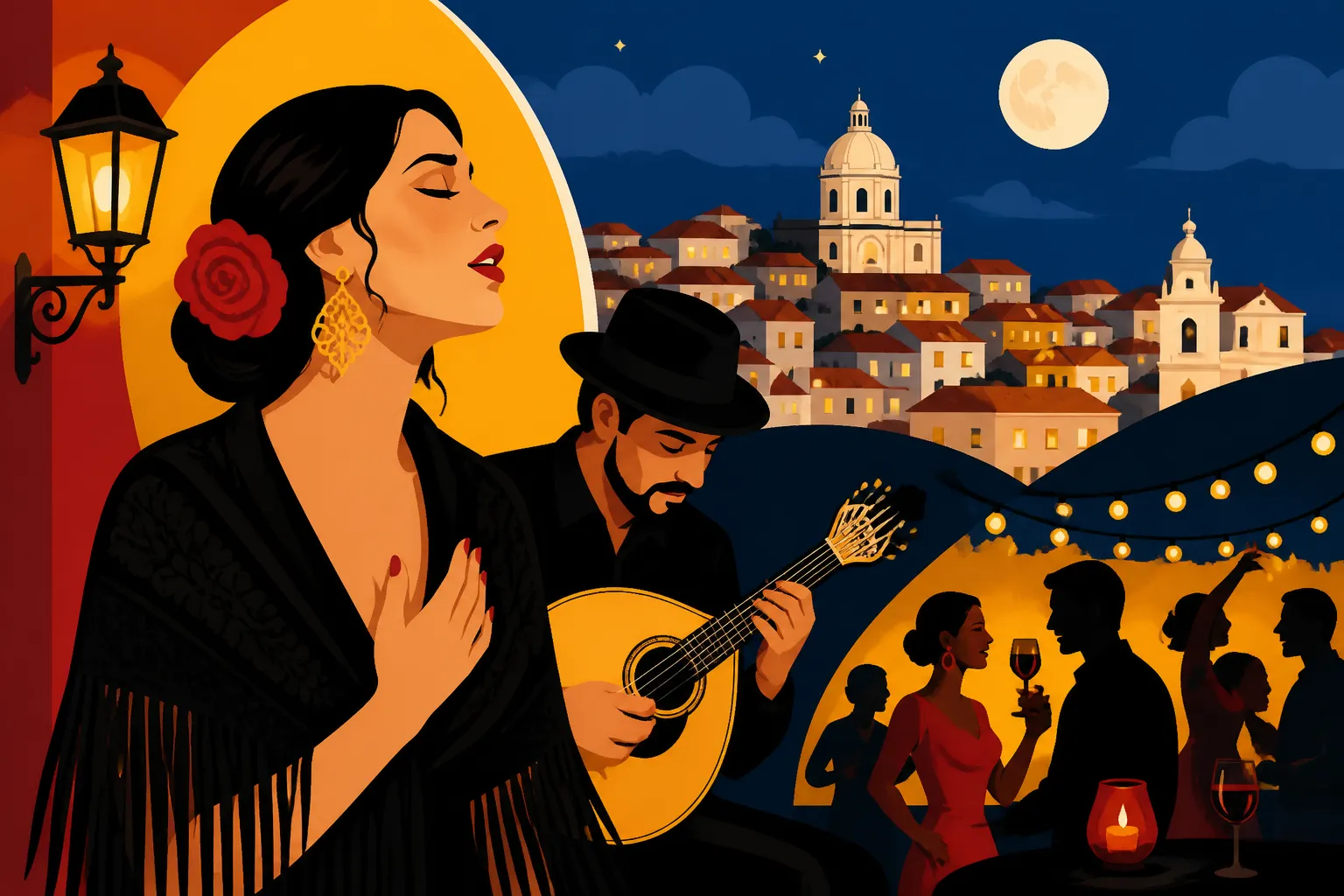
To truly experience Fado, you have to understand its two main varieties: Fado de Lisboa and Fado de Coimbra. In Lisbon, Fado is traditionally sung by a solo performer, often a woman (the fadista), accompanied by the twelve-string Portuguese guitar and a classical guitar. It is raw, emotional, and rooted in the working-class struggles of the historic neighborhoods. In contrast, Fado de Coimbra is sung exclusively by men, often students at the historic university, and it carries a more academic, serenading tone. If you are planning a trip to the north to compare the two, using Omio is a reliable way to book the train between Lisbon and Coimbra to see the stylistic shift for yourself.
Fado Vadio vs. Professional Fado Houses
When you go looking for Fado, you will encounter the term Fado Vadio, or "vagrant Fado." This is the amateur version, and in my experience, it is often much more rewarding than the professional houses. In a Fado Vadio session, anyone from the neighborhood might stand up and sing—a grandmother who has lived in Alfama for eighty years, a local baker, or a young student. There is no stage; they just stand in the middle of the tavern. These sessions are usually found in small, cramped tascas where you pay only for your wine and snacks.
Professional Fado houses, on the other hand, are structured performances. While some are excellent, they are businesses first. If you choose this route, look for places that emphasize the music over the "full dinner package." Some of the best experiences can be found by booking through specialized local platforms like GetYourGuide, which often highlight smaller, more intimate venues that vet their performers for quality and authenticity rather than just tourist appeal.
The Etiquette of Silence: "Silêncio, que se vai cantar o Fado"
There is a sacred rule in Fado: when the music starts, everything stops. You will often hear a stern "Silêncio!" from the staff or regular patrons the moment the Portuguese guitar begins its first trill. This is not a suggestion; it is a cultural mandate. Many a tourist has been shushed into embarrassment for trying to whisper a food order while the singer is mid-verse.
In authentic spots, even the kitchen stops working. The lights are dimmed, and the only focus is the emotion of the singer. If you are visiting a Fado house, finish your conversation and your chewing before the set begins. This level of respect is part of what makes the experience so hauntingly beautiful. It creates an atmosphere where the room breathes with the performer. It is a far cry from the background music you might find in a typical English pub or an American lounge.
Top Neighborhoods for Fado Exploration
Lisbon is the undisputed heart of the Fado world, specifically the neighborhoods of Alfama, Mouraria, and Bairro Alto. Alfama is the oldest and most famous, with its winding alleys acting as a natural acoustic chamber. However, it is also the most prone to tourist pricing. Mouraria is often considered the birthplace of Fado and retains a grittier, more local feel. If you are staying in the city, check a Lisbon Neighborhood Guide: Best Areas for Expats and Digital Nomads to see which district fits your vibe before heading out for the evening.
Bairro Alto offers a mix. While it is the center of the city’s generic nightlife, it hides some of the most historic Fado houses in its side streets. The key is to look for places with "Fado Vadio" signs or those that don't have a barker standing outside trying to pull you in with a laminated menu. Real Fado doesn't need a salesperson; you can hear it drifting out of the windows and doors as you walk by.
Lisbon’s Nightlife: From Historic Alleys to Modern Rooftops
Lisbon does not sleep early. If you try to go to a club at midnight, you will likely be the only person there besides the cleaning staff. The "night out" in Lisbon is a marathon, not a sprint. It usually begins with a late dinner, followed by "street drinking" in Bairro Alto, and then a slow migration toward the riverfront clubs as the sun begins to think about rising.
For many expats, the sheer volume of people standing in the streets of Bairro Alto on a Friday night is overwhelming. It is a chaotic, loud, and sticky environment where every doorway is a tiny bar selling mojitos and imperial (small beers) in plastic cups. This is a rite of passage, but it is rarely the final destination. Most people eventually make their way down the hill toward Cais do Sodré or the massive warehouses of Alcântara.
Bairro Alto and the Culture of the "Copo de Plástico"
Bairro Alto is a grid of narrow streets that transforms after 9:00 PM. The bars here are often no larger than a walk-in closet, which is why the party happens on the pavement. This is where you’ll learn the importance of Portuguese Coffee Culture and Restaurant Etiquette: Ordering Like a Local because the transition from the afternoon coffee to the evening beer is a seamless part of the social fabric.
The "plastic cup" culture is a practical response to the narrow streets. You grab a drink and wander until you find a group of friends or a corner with good music. Be warned, though: Bairro Alto is also where you are most likely to encounter "looky-looky" men offering fake substances. To stay prepared, you should read up on Common tourist scams in Lisbon: Pickpockets on Tram 28 and fake hash sellers to ensure your night doesn't end with a frustrating police report.
Cais do Sodré: From Red Light District to Nightlife Hub
Cais do Sodré was once the city’s rough-and-tumble port district, frequented by sailors looking for trouble. Today, it is home to the famous "Pink Street" (Rua Nova do Carvalho). While Pink Street is the "Instagram" face of Lisbon nightlife, the real gems are in the surrounding streets. You’ll find legendary spots like Pensão Amor, a former brothel turned into a multi-room bar with burlesque decor, or Musicbox, which consistently hosts the best underground DJs and live bands.
The vibe here is slightly more sophisticated than Bairro Alto but still retains an edge. It is also where you will find some of the best late-night food. After a few hours of dancing, nothing beats a prego (steak sandwich) or a bifana from a local late-night eatery. If you are staying in this area, you likely found your accommodation on Booking.com, as it is one of the most popular hubs for short-term stays due to its proximity to everything.
Luxury Rooftops and Riverside Lounges
If the crowded streets aren't your scene, Lisbon has seen an explosion of rooftop bars over the last few years. Places like Park (located on top of a parking garage), V Portugal, or the rooftops in Príncipe Real offer stunning views of the Tagus River and the 25 de Abril Bridge. These spots are perfect for sunset drinks, though the prices will be significantly higher than the €2 beers in Bairro Alto.
Down by the river, the Docas de Santo Amaro and the area near the Santa Apolónia station offer large-scale clubs and lounges. Lux Frágil is the most famous club in the country, known for its strict door policy and world-class electronic music. Getting in can be a challenge; even as a resident, if you don’t look the part or arrive at the right time, you might find yourself rejected at the door.
| Entertainment Type | Typical Start Time | Typical End Time | Best Neighborhood |
|---|---|---|---|
| Fado House | 8:30 PM | 11:30 PM | Alfama / Mouraria |
| Street Bars | 10:00 PM | 2:00 AM | Bairro Alto |
| Nightclubs | 2:00 AM | 6:00 AM | Cais do Sodré / Santos |
| Rooftop Lounges | 6:00 PM | 12:00 AM | Príncipe Real / Baixa |
| Jazz/Live Music | 9:30 PM | 1:00 AM | Avenida da Liberdade |
Porto and the North: Riverside Rhythms and Alternative Scenes
Porto has a nightlife scene that is arguably more concentrated and intense than Lisbon’s. While Lisbon is spread out over its seven hills, Porto’s night revolves largely around a few key streets near the university and the river. The vibe here is often described as more "authentic" and less "polished" than the capital, with a strong emphasis on alternative music and rock.
The city’s transformation over the last decade has been remarkable. What used to be abandoned buildings in the city center are now thriving multi-story bars and cultural hubs. The northern hospitality is also very real; don’t be surprised if a group of locals strikes up a conversation with you while you’re waiting for a drink.
The Galerias de Paris and Rua de Cândido dos Reis
The "Galerias" are the heart of Porto’s nightlife. These two parallel streets are packed with bars that cater to every taste, from 80s pop to heavy techno. Much like Bairro Alto, the party often spills out into the street, especially during the warmer months. The architecture here is stunning, with many bars occupying old bookstores or fabric warehouses, retaining their high ceilings and ornate woodwork.
One thing you’ll notice in Porto is that the "night out" feels very communal. Because the area is so compact, you can easily bar-hop between five or six different places in a single hour. This is the perfect place to practice your social skills, and knowing Expat life hacks: Never rush a coffee, and other daily cultural adjustments will help you understand the slower, more conversational pace of a Porto evening.
Ribeira After Dark: Jazz and Riverside Views
The Ribeira district, a UNESCO World Heritage site, is famous for its colorful houses and the Dom Luís I Bridge. While it is very touristy during the day, it takes on a different character at night. There are several tucked-away wine bars and jazz clubs that offer a more relaxed atmosphere than the Galerias. Sitting by the Douro River with a glass of Port wine is an essential Porto experience.
Across the bridge in Vila Nova de Gaia, the port wine cellars sometimes host exclusive events and parties. However, most of the "real" nightlife remains on the Porto side. If you are staying in the Ribeira, be prepared for some noise, as the sound of music and revelry tends to echo off the stone walls and the water.
Casa da Música and the Alternative Scene
For those who prefer high-culture entertainment, Casa da Música is a must-visit. This architectural marvel, designed by Rem Koolhaas, is the main concert hall in Porto. It hosts everything from symphony orchestras to experimental electronic acts. The acoustics are among the best in the world, and the building itself is a piece of art.
Porto also has a thriving "underground" scene. Places like Maus Hábitos (located on the top floor of a parking garage) serve as a restaurant, art gallery, and nightclub all in one. It is the epicenter of Porto’s creative community. If you want to see where the local artists, musicians, and designers hang out, this is the place. It’s a great spot to learn about Portuguese Work Culture: Hours, Communication, and Office Etiquette by chatting with the locals who work in the city’s burgeoning tech and creative sectors.
Summer Festivals and Live Music: Beyond the Traditional
When the heat of summer hits, the music moves outdoors. Portugal has become one of Europe’s premier destinations for music festivals. Whether you’re into massive international headliners or niche indie bands, the festival circuit here is world-class. These festivals are not just about the music; they are massive social events that define the Portuguese summer.
For an expat, attending a festival is a great way to integrate. It’s where you see the Portuguese at their most relaxed. The production quality is generally high, and the locations—ranging from city parks to riverside meadows—are spectacular.
Major Music Festivals: NOS Alive, Rock in Rio, and Primavera
Lisbon hosts two of the biggest festivals in the country: NOS Alive and Rock in Rio Lisboa. NOS Alive, held in Algés, consistently pulls in the biggest names in indie and rock (think Radiohead, Arctic Monkeys, or The Cure). It is incredibly well-organized, with trains running late into the night to take people back to the city center.
Porto’s heavy hitter is Primavera Sound Porto, held in the beautiful Parque da Cidade. It is the smaller, more curated sibling of the Barcelona festival and is widely considered one of the most "Instagrammable" festivals in the world due to its lush green surroundings and ocean views. Tickets sell out months in advance, so if you’re planning to attend, make sure your finances are in order by checking Money and Finance in Portugal: The Ultimate 2026 Guide for Expats.
The "Arraiais" and Santos Populares
You cannot talk about entertainment in Portugal without mentioning the Santos Populares in June. This is the "party of the people." Throughout the month, neighborhoods across the country—but especially in Lisbon (Santo António) and Porto (São João)—transform into massive street parties.
Imagine thousands of people squeezed into tiny alleys, the smell of grilled sardines filling the air, and "Pimba" music (traditional, often humorous pop music) blasting from every corner. In Porto, people hit each other on the head with plastic hammers and release hot-air balloons into the sky. It is pure, unadulterated joy. It is also the only time of year when the usually reserved Portuguese public becomes truly boisterous. If you are in Lisbon on the night of June 12th or Porto on June 23rd, don't bother trying to sleep; the party goes on until the sun comes up.
Jazz, Blues, and Classical Series
For a more sedate evening, Portugal offers numerous jazz and classical series. Jazz em Agosto in Lisbon, held at the Gulbenkian Foundation, is a highlight for music lovers. The outdoor amphitheater, surrounded by trees and water, provides a magical setting for avant-garde jazz.
In the winter, the various municipal theaters (Teatro Nacional D. Maria II in Lisbon, Teatro Nacional São João in Porto) offer a steady stream of high-quality performances. While many plays are in Portuguese, some are subtitled, and the dance and musical performances are universally accessible. It’s a great way to spend an evening if you’re looking to escape the rainy winter nights.
Cultural Entertainment: Theatre, Cinema, and Folklore
Beyond the bars and clubs, Portugal has a rich cultural life that often flies under the radar for many foreigners. The theater scene is vibrant, particularly in the big cities, and the cinema culture is surprisingly deep. Unlike some of its neighbors (looking at you, Spain), Portugal rarely dubs foreign films. Instead, everything is subtitled. This is a massive advantage for English-speaking expats, as you can see the latest Hollywood blockbusters or indie gems in their original language.
Folklore is also a significant part of the cultural landscape, especially as you move away from the coast. In the interior, you will still see traditional "Ranchos Folclóricos" performing at local fairs. While it might seem "touristy" at first glance, these groups are deeply important to local identity and often involve multiple generations of a single family.
Cinema Culture and the "Original Version" Advantage
Going to the cinema in Portugal is a pleasant experience. Most malls have high-end theaters (NOS or Castello Lopes), but the real joy is in the independent cinemas like Cinema Ideal in Lisbon or Cinema Trindade in Porto. These smaller venues focus on European cinema and documentaries.
As mentioned, the lack of dubbing is a lifesaver. You can go to any major cinema and hear the original voices of the actors. Just look for "V.O." (Versão Original) on the listing. If you see "V.P." (Versão Portuguesa), that means it’s dubbed—usually only the case for children's animated movies. This makes movie-going one of the easiest ways for expats to enjoy local entertainment without a language barrier.
Theatre and Performance Art in the Digital Age
The theater scene in Portugal is heavily subsidized by the state, which means ticket prices are often very affordable—usually between €10 and €20. The National Theatres produce world-class work, often with a modern, experimental twist. Even if you don't speak the language, the visual storytelling in Portuguese theater is often strong enough to follow.
In recent years, Lisbon has also become a hub for contemporary dance and performance art. The CCB (Centro Cultural de Belém) and Culturgest host international troupes and local innovators. If you're looking for something that challenges the mind rather than just the liver, these venues are your best bet.
Regional Fairs and the "Festa" Culture
If you move to a smaller town or village, the "Festa" is the highlight of the social calendar. Every village has its patron saint, and every saint has a party. These events usually involve a procession, a brass band, a massive shared meal, and a dance party in the town square.
This is where you will experience the "real" Portugal. It's where the local Tipping culture in Portugal: Do you leave 10% or just round up the bill? becomes relevant as you buy drinks from the local fire department’s fundraising bar. These festivals are loud, colorful, and go on for several days. They are the primary way that rural communities maintain their social bonds.
The Algarve and Beyond: Beach Clubs and Regional Festas
The Algarve offers a completely different flavor of entertainment. Here, the focus is on the "resort lifestyle." During the summer, the region transforms into a massive playground for Europeans, with a heavy emphasis on beach clubs, golf-side lounges, and high-end dining. However, if you look past the neon lights of Albufeira’s "Strip," you can still find authentic regional entertainment.
The islands of Madeira and the Azores also have unique traditions. Madeira is famous for its New Year’s Eve fireworks (once a world record holder) and its flower festivals, while the Azores offer a more nature-focused, quiet nightlife centered around local taverns and community halls.
Vilamoura vs. Lagos: The Glitz vs. The Backpackers
Vilamoura is the glitzy side of the Algarve. It’s where you’ll find the Marina, yachts, and high-end clubs like Seven or Dice. It’s a "see and be seen" environment. If you’re looking to wear your best clothes and spend a significant amount on bottle service, this is where you go.
Lagos, on the other hand, has long been the favorite of the younger, more adventurous crowd. It has a high concentration of bars aimed at surfers and backpackers. The vibe is much more casual—think flip-flops and craft beer rather than heels and champagne. It’s also the gateway to some of the best sunset boat parties in the country.
The "Strip" in Albufeira: A Word of Caution
Every country has one, and in Portugal, it’s the Albufeira Strip. It is a long road packed with themed bars, karaoke, and very cheap, very strong drinks. For many expats living here long-term, it’s a place to avoid, as it’s largely catered to short-term tourists on stag and hen parties.
However, if you move just a few streets away into the Old Town, you’ll find a much more charming atmosphere with live music in the squares and better-quality restaurants. The contrast between the two is a perfect example of how Portugal manages its dual identity as a tourist hotspot and a traditional nation.
Island Entertainment: Madeira and the Azores
Nightlife in Madeira is centered around Funchal. The city has a sophisticated feel, with many hotels hosting "Dinner and a Show" events that feature traditional Madeiran folklore (the bailinho da Madeira). For a younger crowd, the "Zona Velha" (Old Town) of Funchal is a maze of painted doors and tiny bars where the local drink, Poncha, flows freely. Be careful with Poncha—it’s made with sugar cane aguardiente, honey, and lemon, and it’s much stronger than it tastes.
The Azores offer a much more subdued experience. Nightlife here is about sitting in a square with a glass of local wine or attending a "Tourada à Corda" (bullrun on a rope) on the island of Terceira. These are community events rather than commercial entertainment, and as an expat, being invited to one is a sign that you’re truly being integrated into the community.
Practical Tips for Navigating Portuguese Nightlife
Now for the "boots on the ground" advice. Portuguese nightlife has some quirks that can lead to frustration or financial surprises if you aren't prepared. From the way you pay for drinks in a club to the way you get home, there are systems in place that differ from the UK, US, or Northern Europe.
As an expat, the biggest adjustment is the timing. If you suggest meeting at 9:00 PM for a night out, your Portuguese friends will assume you mean for a long, slow dinner, not for the first bar. The night is a marathon, and pacing yourself is key.
Understanding the "Consumo Mínimo" and Club Cards
When you enter a major nightclub in Lisbon or Porto, you are often handed a magnetic card. Do not lose this card. This card tracks every drink you buy. You don't pay at the bar; you pay at the exit. If you lose the card, the "penalty" is usually the maximum possible spend on the card, which can be as high as €150 or €200.
Some clubs also have a consumo mínimo (minimum spend). You might pay €10 or €20 to enter, but that amount is "loaded" onto your card as credit for drinks. If you don't spend it, you don't get it back. This system is designed to keep people inside the club once they’ve entered.
Dress Codes and Door Policies
While Portugal is generally a casual country, the high-end clubs in Lisbon (like Lux or Urban Beach) have notoriously picky doormen. Large groups of men are often turned away unless they have a table reservation. Wearing "smart casual" is the safest bet—avoid flip-flops, sports jerseys, or overly baggy clothes if you're heading to a waterfront club.
In the smaller bars of Bairro Alto or Porto’s Galerias, there is effectively no dress code. You can wear whatever you want. The key is to know your destination before you dress for the night. If you're unsure, a pair of dark jeans and a clean shirt will get you in almost anywhere.
Late Night Dining: The "Ceia"
One of the best parts of Portuguese nightlife is the ceia—the late-night meal. In many cities, you’ll find bakeries (padarias) that open at 3:00 or 4:00 AM to sell fresh bread to the morning delivery drivers and the night owls. Getting a warm pão com chouriço (chorizo bread) straight from the oven at 4:30 AM is a spiritual experience.
In Lisbon, the "Bifana" is the king of late-night food. It’s a simple pork sandwich with mustard and chili oil. There are specific spots like As Bifanas do Afonso that are legendary. Knowing where to find these late-night snacks is a key part of surviving the long Portuguese night.
Managing Late Nights: Safety, Transport, and Recovery
The logistics of getting home after a night out can be tricky. Public transport, while excellent during the day, becomes sparse in the early hours of the morning. However, compared to many other European capitals, Lisbon and Porto are relatively safe at night, provided you stay in well-lit areas and keep your wits about you.
For the morning after, you'll need to know the local recovery methods. The Portuguese don't really do "greasy spoons" for breakfast; instead, they head to the local pastelaria for a strong coffee and a pastry.
Getting Home: Bolt, Uber, and Night Buses
Ride-hailing apps are your best friend at 4:00 AM. You can check Using Bolt vs Uber in Portugal: Which ride-hailing app is cheaper? to save a few euros on your ride home. In general, Bolt is often cheaper and more widely used by locals. Taxis are also plentiful, but ensure they use the meter to avoid being overcharged as a foreigner.
Lisbon has a network of "Rede da Madrugada" (Night Network) buses that run when the Metro is closed (between 1:00 AM and 6:30 AM). They all converge at Cais do Sodré or Rossio. While cheap, they can be infrequent, so always check the schedule on the Carris app before you commit to waiting.
Personal Safety and Pickpockets
Portugal is consistently ranked as one of the safest countries in the world. However, in the chaotic nightlife hubs, petty theft is common. Pickpockets thrive in the crowds of Bairro Alto and on the night buses. Keep your phone and wallet in your front pockets or a zipped bag.
Another thing to be aware of is the "drug sellers" in central Lisbon. They are essentially a nuisance rather than a threat, but they can be very persistent. A firm "No, obrigado" and continuing to walk is the best way to handle them. They are selling fake substances (usually pressed herbs or flour), so even if you were looking for trouble, you wouldn’t find it with them.
The Morning After: Recovery Portuguese Style
When you finally wake up at noon, head to your nearest pastelaria. The Portuguese cure for a hangover is a café cheio (an espresso pulled slightly longer) and a torrada (thick-cut buttered toast). If you need something more substantial, look for a place serving Canja de Galinha (chicken soup), which is the traditional "get well" meal here.
Living in Portugal means embracing the night. Whether it's the quiet intensity of a Fado house or the sunrise views from a riverside club, the entertainment here is a reflection of the culture itself: late, loud, and deeply emotional. Once you master the timing and the "card system," you'll find that the Portuguese night is where the most authentic memories are made.
Disclaimer
This guide is for informational purposes only. Nightlife venues, entry requirements, and event schedules in Portugal can change frequently. While we strive to provide the most up-to-date information, we recommend checking specific venue websites or local listings before heading out. Always drink responsibly and follow local laws and regulations regarding alcohol consumption and public behavior.