Évora City Guide: Roman Ruins and Alentejo Charm
Disclosure: This article contains affiliate links. If you buy through them, we may earn a commission at no extra cost to you. Read our full disclosure.
Stepping off the train into Évora, you immediately notice the drop in tempo compared to the frantic pace of Lisbon. Yet, for many travelers and new expats, planning a trip to this UNESCO World Heritage city presents a distinct set of challenges. Between navigating scorching summer temperatures, deciphering complex historical layers spanning two millennia, avoiding tourist traps, and figuring out local transport rules, it is easy to miss the true soul of the region. This comprehensive guide breaks down everything you need to know about Évora, offering practical, ground-level advice on historical landmarks, regional dining, transport logistics, and day trips across the golden plains of the Alentejo.
Getting to Évora and Navigating Local Logistics
Reaching Évora from major Portuguese hubs is straightforward, but making the journey seamless requires understanding the subtle differences between regional transit options. Whether you plan a quick weekend getaway or are considering the Alentejo for long-term living, getting your transit strategy right saves hours of potential frustration.
Taking the Train or Bus from Lisbon and Porto
When traveling from Lisbon to Évora, you have two primary choices: the regional train operated by Comboios de Portugal (CP) or long-distance intercity buses. Trains depart regularly from Lisbon’s Sete Rios or Entrecampos stations and take roughly an hour and a half to cross the Tagus River and glide through the dry, rolling cork oak landscapes. The Évora train station sits just south of the historic city walls, making it a manageable fifteen-minute uphill walk into the central plaza, Praça do Giraldo.
Buses offer an equally reliable alternative, often running on slightly more flexible schedules throughout the day. The main bus terminal (Terminal Rodoviário) is located just west of the city center, offering easy access to taxi stands and local bus stops. If you are traveling from Porto or further north, catching an express connection through a platform like Omio allows you to compare schedule alignments, prices, and travel durations between rail and coach operators. Keep in mind that public transit within Évora itself is rarely necessary unless you are venturing out to the commercial zones; the historic core is entirely navigable on foot.
If you are exploring the country extensively, mastering the national rail network is an absolute necessity. You can learn more about tickets, discounts, and routes in our dedicated guide to Using Comboios de Portugal (CP) Trains and the Navegante Pass.
Driving and Parking Near the Historic Center
Driving to Évora affords maximum flexibility to explore the surrounding countryside, but taking a car inside the medieval city walls is a classic rookie mistake. The streets within the historic center were constructed centuries before automobiles existed. They are extremely narrow, often one-way, tightly winding, and packed with pedestrian activity. Navigation apps frequently fail to account for temporary street closures, local delivery hours, or extremely tight tight-corner alleyways that can scrape side mirrors.
The best strategy for drivers is to utilize the designated parking lots situated just outside the perimeter walls. There are several large, open-air parking areas near the Public Garden (Jardim Público) and near the northern gates (Portas de Aviz). Many of these outer lots are completely free or charge minimal daily rates compared to the metered spaces inside the gates. If your accommodation sits within the walls, contact your host beforehand to ask if they hold a special parking authorization pass for guests.
Navigating the highway system to reach Évora requires understanding the electronic toll payment infrastructure on the A6 highway from Lisbon. For a detailed breakdown of how to handle toll tags and avoid hefty fines, take a look at our article on Navigating the Portuguese Toll System: Via Verde and Electronic Tolls.
Managing the Alentejo Climate and Walking Cobblestone Streets
The Alentejo region experiences some of Portugal’s most intense weather extremes. Summers (particularly July and August) bring intense, dry heat where afternoon temperatures frequently exceed forty degrees Celsius. During these months, the city slows down significantly during midday. Locals stay indoors behind thick granite walls, and public activity shifts entirely to the cool morning hours and late evenings. If you visit during summer, pack lightweight, breathable clothing, wide-brimmed hats, and plenty of sunscreen.
Conversely, winter in Évora brings surprisingly crisp, damp cold, especially once the sun sets over the plains. Traditional Portuguese stone houses often lack modern insulation or central heating, meaning indoor ambient temperatures can mirror the outdoors. Wearing layered clothing is essential, regardless of the season.
The city’s pavement presents another practical consideration. Évora is paved almost entirely with traditional calçada portuguesa (white limestone and black basalt cobblestones). These uneven surfaces look charming in photos, but they demand sturdy, supportive footwear with good traction. High heels, thin sandals, or smooth-soled shoes are recipe for twisted ankles or slips, particularly after a light rain when the polished stones turn slick.
If you are thinking about making a permanent move to this scenic part of the country, it helps to understand how lifestyle costs vary across regions. Read our full overview on Cost of Living in Portugal 2026: Detailed Budgets for Singles and Families.
Must-See Historical Landmarks in the Old Town
Évora is often called a museum-city, and for good reason. Every turn down a whitewashed lane reveals traces of Visigothic fortification, Moorish architecture, or Renaissance grandeur. Exploring the historic core chronologically provides an incredible perspective on how these layers built upon one another over two thousand years.
The Roman Temple of Évora and Surrounding Plaza
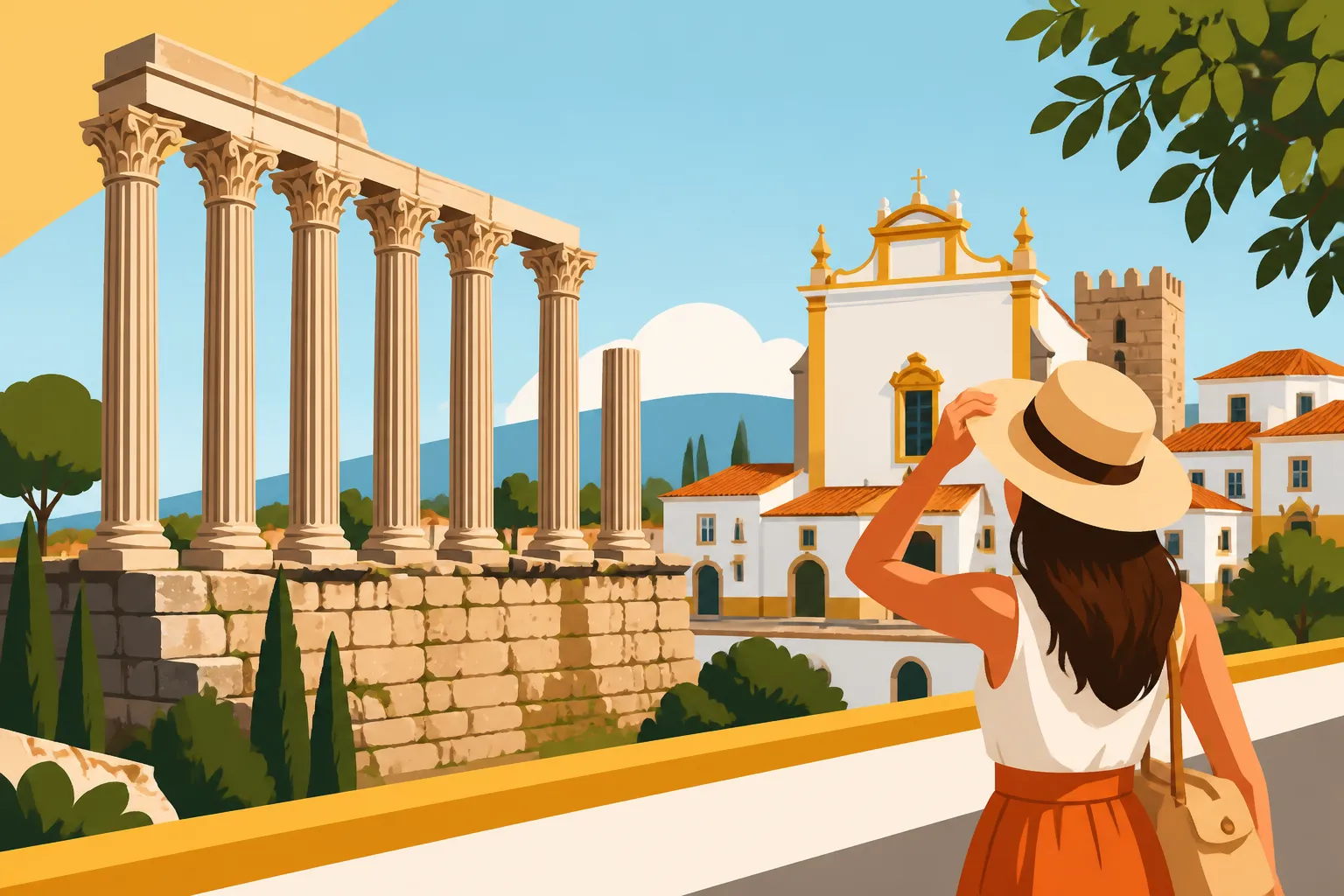
Standing proudly in the highest point of the city, the Roman Temple—frequently referred to locally as the Temple of Diana—is one of the best-preserved Roman structures on the Iberian Peninsula. Constructed around the first century AD, its Corinthian granite columns and marble capitals have survived centuries of upheaval, largely because the structure was enclosed and repurposed as a fortress, municipal slaughterhouse, and storehouse during medieval times.
The plaza surrounding the temple offers an exquisite, open environment to soak in the atmosphere. Adjoining the square is the picturesque Diana Garden (Jardim de Diana), which provides sweeping views over the eastern walls toward the open Alentejo countryside. Adjacent to the plaza, you will also find the former Convent of Lóios, now converted into a historic Pousada, and the Palace of the Dukes of Cadaval. Spending an hour sitting in the square with a cold drink while admiring the contrast between ancient stone and bright yellow-trimmed facades is a quintessential Évora experience.
The Cathedral of Évora (Sé de Évora) and Cloisters
Just steps away from the Roman Temple sits the Cathedral of Évora (Sé de Évora), the largest medieval cathedral in Portugal. Built between the late twelfth and thirteenth centuries, its fortress-like exterior reflects the transitional era between Romanesque and Gothic architectural styles. The conical spires covered in scale-like tiles give the cathedral a striking silhouette against the blue Alentejo sky.
Inside, the vast central nave leads toward a striking main chapel crafted from multi-colored marble. Visitors can purchase tickets to explore both the main hall and the fourteenth-century Gothic cloisters, where carved statues depicting the apostles line the entryways. The absolute highlight of a visit to the Sé, however, is climbing the narrow spiral staircase up to the cathedral roof. From the rooftop terrace, you gain an unmatched 360-degree panorama of the entire city’s rooftops, church spires, and the endless horizon of olive groves surrounding Évora.
The Chapel of Bones (Capela dos Ossos) and Church of St. Francis
No trip to Évora is complete without visiting its most famous—and macabre—attraction: the Chapel of Bones (Capela dos Ossos), located within the Church of St. Francis (Igreja de São Francisco). Built in the seventeenth century by Franciscan monks, the walls and central pillars of this small interior chapel are meticulously lined with thousands of human bones and skulls exhumed from overcrowded monastic and church graveyards across the city.
Above the entrance portal, an inscription greets visitors with a sobering philosophical reminder: “Nós ossos que aqui estamos pelos vossos esperamos” (“We bones that are here, await yours”). The chapel was conceived by the monks as a contemplative exercise on the transience of material life and the inevitability of death.
Due to its high popularity, long queues can form outside the Church of St. Francis during peak hours. Securing skip-the-line tickets or joining a guided walking tour through GetYourGuide can help streamline your entry while ensuring you receive rich historical context about the Franciscan order’s presence in the Alentejo.
| Landmark | Key Feature | Practical Visitor Tip |
|---|---|---|
| Roman Temple (Temple of Diana) | 1st-Century Corinthian Columns | Free to view; best lit at night |
| Sé de Évora (Cathedral) | Medieval Roof Terrace Views | Requires small fee for roof access |
| Capela dos Ossos (Chapel of Bones) | Interior Lined with Human Bones | Visit early morning to avoid lines |
| Aqueduto da Água de Prata | 16th-Century Aqueduct Arches | Walk along base built into houses |
Experiencing Alentejo Gastronomy and Local Culture
Alentejan food is legendary throughout Portugal. Born out of rustic peasant traditions, the local cuisine relies on simple, high-quality local ingredients: crusty wheat bread, extra virgin olive oil, garlic, fresh cilantro, pork, and lamb. Paired with world-class regional wines, dining in Évora is a slow, sensory ritual.
Traditional Alentejan Cuisine and Must-Try Dishes
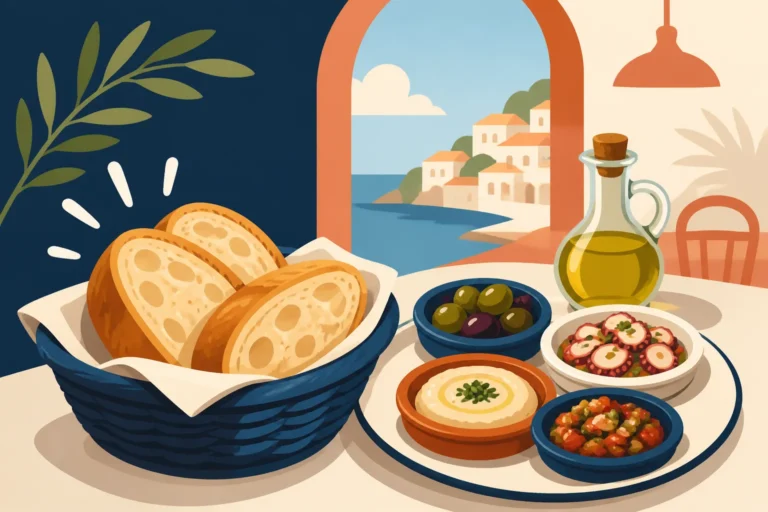
When dining in traditional taverns (tascas) across Évora, discard any expectations of quick service. Meals here are meant to be lingered over. A classic meal almost always starts with a basket of sourdough bread, local olives, cured hams (presunto), and soft sheep cheeses like Queijo de Nisa or Queijo Serpa.
For the main course, look out for iconic regional dishes such as:
- Carne de Porco à Alentejana: Marinated cubes of tender pork cooked alongside clams, fried potatoes, garlic, and fresh coriander, bound together with a savory paprika paste (massa de pimentão).
- Açorda à Alentejana: A fragrant, comforting soup constructed from a broth infused with crushed garlic, coriander, olive oil, and poached eggs, poured over chunks of stale bread.
- Ensopado de Borrego: A rich, slow-simmered lamb stew served over thick slices of country bread, seasoned with wild herbs like mint and oregano.
For dessert, the city’s conventual pastry heritage takes center stage. Centuries ago, nuns used egg whites to starch their habits, leaving an abundance of yolks that were combined with sugar and almonds to create rich sweets. Be sure to sample a Pão de Rala or a delicate Queijada de Évora alongside a freshly brewed espresso.
To get comfortable with ordering coffee, snacks, and house wines like a local, review our essential guide to Portuguese Coffee Culture and Restaurant Etiquette: Ordering Like a Local.
Wine Tasting and Regional Enotourism Experiences
The Alentejo is one of Portugal’s premier wine-producing regions, celebrated for full-bodied red wines and smooth, aromatic whites. The sunny climate ensures high ripeness levels in grape varieties like Aragonez, Trincadeira, Alicante Bouschet, and Antão Vaz. Évora serves as the ideal hub for exploring famous local wineries (quintas).
Within the city itself, you can visit the tasting room of the Rota dos Vinhos do Alentejo (Alentejo Wine Route Commission) to sample flights from across the region and pick up vineyard maps. Just a short drive outside the city center sit legendary estates like Herdade do Esporão and Cartuxa (the producer of the coveted Pêra-Manca wine). Booking an advance tasting session or a guided cellar tour through Booking.com or directly through the wineries allows you to explore oak-aging cellars, tour sprawling vineyards, and participate in curated olive oil tastings.
Local Artisan Crafts and Cork Products
As you stroll down streets like Rua 5 de Outubro, which connects Praça do Giraldo to the Cathedral, you will notice dozens of shops showcasing local handcrafts. The Alentejo is the world’s leading producer of cork, and local artisans have transformed this natural, sustainable material into far more than bottle stoppers. You will find cork-crafted handbags, shoes, hats, umbrellas, and home decor items.
In addition to cork, Évora is famous for hand-painted ceramics (loça de Alcobaça and rustic Alentejo pottery) featuring floral motifs and rural motifs. Hand-woven wool rugs from the nearby town of Arraiolos are another incredible craft item. Known for their distinct cross-stitch technique that dates back to the XV century, these intricate rugs make magnificent heirloom souvenirs or decorative home additions.
When making everyday purchases at local artisan shops or dining out, calculating service tips can cause confusion. Learn what is expected by consulting our reference on Tipping culture in Portugal: Do you leave 10% or just round up the bill?.
Planning Your Stay and Accommodations in Évora
Deciding where to base yourself and how long to stay in Évora depends heavily on your travel style, budget, and whether you are relying on public transit or a rental vehicle.
Historic Boutique Hotels vs Modern Guest Houses
Accommodation options in Évora cater to every preference, ranging from converted sixteenth-century monasteries to intimate, family-run bed and breakfasts. Staying within the historic center inside the walls provides an incredible atmosphere; you can walk out your front door directly onto quiet cobble lanes illuminated by warm lantern light after daytime tour groups have departed.
Historic boutique hotels often feature preserved architectural details such as vaulted brick ceilings, tile work (azulejos), and peaceful interior courtyards. Conversely, modern guest houses located just outside the walls often offer amenities that are harder to find in older structures within the gates, such as subterranean garage parking, elevator access, large swimming pools, and central climate control. Platform searches on Booking.com reveal an extensive inventory across both categories, allowing you to filter specifically for properties with essential summer amenities like outdoor pools or air conditioning.
Best Neighborhoods to Stay for Walkability and Parking
If walkability is your main priority, look for accommodations located near Praça do Giraldo or the Cathedral District. From here, virtually every landmark, restaurant, and wine bar is within a ten-minute walk. However, keep in mind that delivery vehicles and early-morning street sweepers can generate noise on narrow lanes.
If you are traveling with a car, consider staying in the Northern Wall District (near Portas de Aviz) or along the South-Western Perimeter near Jardim Público. These zones offer easier vehicle access, proximity to large municipal parking spaces, and direct exits onto outer ring roads without forcing you to navigate the tight inner-city maze.
| Area | Pros | Cons |
|---|---|---|
| Praça do Giraldo Core | Ultra-walkable, vibrant nightlife | Cobblestone noise, zero parking |
| Cathedral Quarter | Historic charm, magnificent views | Steep inclines, tricky luggage walk |
| Outer Perimeter (Walls) | Easy parking, modern amenities | 10-15 min walk to top landmarks |
Ideal Itinerary Length and Expat Relocation Insights
For general tourists, a stay of two full days and two nights is the sweet spot for Évora. This duration gives you sufficient time to visit the major monuments without rushing, enjoy lingering multi-course meals, and take a half-day excursion to a nearby winery or megalithic site.
For digital nomads, retirees, or expats testing the waters for a prospective move, spending a week or two in Évora offers a deep dive into inland Portuguese living. The city offers an exceptional balance of cultural depth, university-town vitality (thanks to the historic University of Évora), and modern infrastructure. It is far quieter and more affordable than Lisbon or the Algarve, yet sophisticated enough to prevent rural isolation.
Expats who decide to settle in the Alentejo often balance the rustic appeal of rural estates with practical daily considerations. To weigh regional pros and cons, read our comparative guide on Where to Live in Portugal: Lisbon, Porto, Algarve, and Silver Coast Compared.
If you are taking steps toward long-term relocation, you will also want to familiarize yourself with foreign buyer regulations. Take a look at our step-by-step primer on Buying Property in Portugal as a Foreigner: The Step-by-Step 2027 Guide.
Day Trips and Excursions Around the Évora Region
While Évora itself possesses enough charm to keep you occupied, the surrounding Alentejo landscape is dotted with pre-historic monuments, medieval castles, and picturesque whitewashed villages perched high above the plains.
The Megalithic Site of Almendres Cromlech
Located roughly fifteen kilometers west of Évora near the village of Nossa Senhora de Guadalupe, the Almendres Cromlech (Cromeleque dos Almendres) is one of the largest and most important megalithic complexes in Europe—predating Stonehenge by more than a millennium.
Nestled inside a quiet grove of cork oaks and olive trees, the site consists of roughly ninety massive granite monoliths arranged in a double oval formation. Many of the stones feature faint circular, spiral, and wave engravings, believed to have served astronomical, ceremonial, or seasonal agricultural functions for prehistoric Iberian communities.
Reaching Almendres Cromlech requires driving along an unpaved dirt track for the final few kilometers. It is completely open to the public and lacks commercial barriers, giving visitors a rare, authentic connection to ancient history. Combining this trip with a visit to the nearby Cave of Escoural (Gruta do Escoural), known for Paleolithic rock art, makes for an unforgettable morning outing.
Monsaraz Hilltop Village and Lake Alqueva
Perched dramatically on a rocky hill overlooking the Spanish border, the medieval walled village of Monsaraz is an essential Alentejo day trip, located about an hour’s drive east of Évora. The entire village is pedestrianized, featuring gleaming whitewashed houses, schist stone slate pathways, and a castle fortress at the southern tip.
From the ramparts of Monsaraz Castle, you are treated to breathtaking views over Lake Alqueva, the largest man-made reservoir in Western Europe. The lake area has transformed the surrounding landscape into a haven for water sports, boat cruises, and dark-sky astronomy tourism. The Alqueva region is certified as a Starlight Tourism Destination, offering some of the clearest, unpolluted night-sky views on the continent.
Organized day tours departing from Évora often package visits to Monsaraz with wine tastings and lake cruises. Booking these excursions in advance through GetYourGuide ensures you have dedicated transport without needing to navigate regional rural bus timetables, which can be sparse on weekends.
Medieval Estremoz and Marble Quarries
To the northeast of Évora lies Estremoz, one of the three “marble towns” of the Alentejo (alongside Borba and Vila Viçosa). The region sits on massive reserves of high-grade marble, which is used so abundantly that you will see marble doorsteps, window frames, cobblestones, and park benches throughout the town.
Estremoz is divided into two distinct sections: the lower town (Cidade Baixa) organized around a massive central square, and the upper medieval town (Cidade Alta) crowned by a thirteenth-century keep known as the Marble Tower (Torre das Argolas). If you visit on a Saturday, the central square hosts one of the largest and most vibrant open-air markets in southern Portugal, selling everything from antique furniture and live poultry to fresh sheep cheeses and farm produce.
Living or traveling in inland regions like Estremoz or Évora offers incredible tranquil beauty, but it requires adjusting your expectations regarding access to services. If you are considering rural life, review our guide on Living in rural Portugal: How far is the nearest hospital usually?.
Before embarking on extensive road trips across the Alentejo countryside, you should also ensure your driver’s paperwork is fully compliant with national regulations. Read our instructions on Driving in Portugal: Exchanging Your Foreign License to a Portuguese One.
Finally, if your trip to Évora is part of a broader vision to move across the Atlantic or settle within the European Union permanently, you can explore the complete moving framework in our comprehensive guide, Living in Portugal Guide 2027: The Complete Relocation Manual for Expats.
Disclaimer
This article is for general informational purposes only and does not constitute professional advice. Laws, prices and regulations vary by location and change over time. Consult a qualified professional for guidance on your specific situation.