Are Portugal’s Beaches Good for Families?
Disclosure: This article contains affiliate links. If you buy through them, we may earn a commission at no extra cost to you. Read our full disclosure.
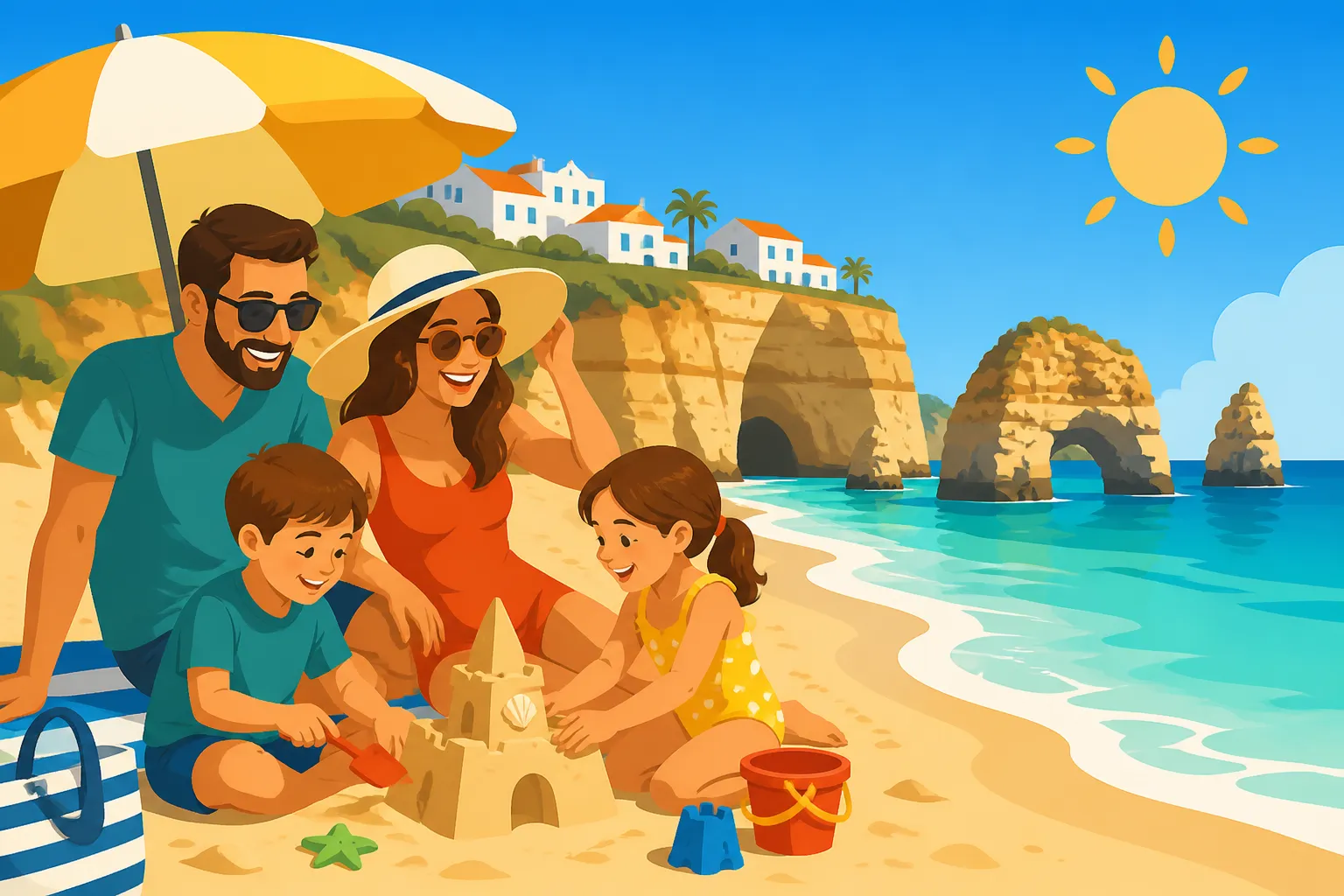
Picture this: you have driven an hour to a famous Algarve cove, the kids are already whining, and you find a staircase of 200 steps and waves crashing harder than you expected. Many families find Portugal’s coastline more complicated than the postcards suggest. This guide explains which Portuguese beaches suit toddlers, school-age kids and teens, and how to plan a beach day that actually works.
The Honest Answer: Yes, But the Atlantic Has Rules
Here is the short version from someone who has dragged sandy buckets, inflatable crocodiles and overtired children up and down this coast for years. Portugal’s beaches are wonderful for families. They are also not the Mediterranean. Expecting warm, flat water everywhere is the most common source of family beach disappointment here. Portugal faces the open Atlantic, and that shapes everything from water temperature to how far your seven-year-old can safely wade.
The good news is that Portugal also has some of the most child-friendly beach setups in Europe. You need to know where to look and when to go.
Why Portuguese Beach Culture Is Built Around Families
Spend one August Sunday on any beach near Lisbon and you will see that the Portuguese beach day is a multi-generational event. Grandparents set up folding chairs. Parents plant a striped windbreak, called a “para-vento”, against the afternoon breeze. Toddlers dig while older cousins play beach tennis, the frescobol-style paddle game you will hear clacking everywhere. Nobody bats an eye at a crying baby or a sandy picnic. Children are simply part of the scenery, and that relaxed attitude takes a lot of pressure off visiting parents.
Most staffed beaches also have a supervised bathing zone and lifeguards during the official bathing season, known as the “época balnear”. Each municipality sets the dates, which usually cover the summer months. Many popular beaches have a “concessão”, a licensed area where you can rent sunbeds and umbrellas, plus a beach bar with toilets, outdoor showers and sometimes a first-aid post. On larger beaches you will hear vendors calling out “Bolas de Berlim!”, custard-filled doughnuts sold from cool boxes. Your children will quickly decide these are the best part of Portugal.
Then there is the Bandeira Azul, the Blue Flag. Portugal awards it to a large number of beaches each season. It signals water quality, safety equipment and facilities standards. A Blue Flag beach is not automatically calm, but it is a sound baseline. A mother from Manchester I met at Praia da Rocha said she now filters every beach choice by “Blue Flag, lifeguard, toilets”, and that her stress levels halved.
The Atlantic Reality Check: Cold Water and Real Waves
Now the frustrating part, and I want to validate it. Plenty of parents arrive in Cascais in July, watch their kids sprint into the water, and hear screams that are not joyful. The western coast is cold even in high summer because of upwelling currents. Adults gasp. Small children often refuse to go beyond their ankles. It is normal, it is not a bad beach, and it does not mean your trip is ruined.
Waves are the other factor. West-facing beaches catch Atlantic swell directly. That is why Ericeira, Peniche and Nazaré are surf meccas. A beach can look gorgeous and still have a powerful shore break that knocks a small child flat. South-facing beaches, especially in the Algarve and on the Arrábida coast south of Lisbon, are far more sheltered. Lagoons, estuaries and river beaches are calmer still.
So the real question for families is not whether Portugal’s beaches are good. It is which coastline suits your children’s ages and swimming abilities. Get that right and Portugal is close to perfect. Get it wrong and you spend the day on lifeguard duty yourself.
Reading the Flags and the Lifeguard System
Teach your kids the flag system on day one and make it a game. A green flag means bathing is allowed. A yellow flag means caution: you can paddle at the edge, but swimming out is not permitted. A red flag means no entering the water at all, and lifeguards will blow their whistles at anyone who tries. A checkered flag means the beach is temporarily without lifeguard supervision, for example during their lunch break or outside staffed hours.
Lifeguards in Portugal take this seriously, and police can fine people who ignore a red flag. Take the whistles at face value. If a lifeguard waves your teenager back, they have probably spotted an “agueiro”, a rip current. Rips look like calmer, darker channels between breaking waves, which is why they can seem inviting. Teach older children the basic rule: if you are pulled out, do not fight the current straight back to shore. Swim parallel to the beach until you are free, then come in, or float and raise an arm for help.
For broader safety habits, including keeping valuables safe while everyone is in the water, see Staying Safe in Portugal: Common-Sense Tips for Travelers.
The Best Family Beaches by Region
After years of trial and error, these are the areas I recommend to friends with kids, along with the honest drawbacks of each.
The Eastern Algarve and the Ria Formosa Islands
If you have toddlers or nervous swimmers, head east of Faro. The Sotavento, the eastern Algarve, has long, flat, sandy beaches. The water is noticeably warmer than on the west coast and the slope into the sea is gentle. Monte Gordo, Manta Rota, Praia Verde and Altura are classic choices. Manta Rota in particular has wide sand at low tide that toddlers can wander for ages. The sea there is often so calm that parents read a book while kids splash nearby, though you should still keep your eyes up.
The Ria Formosa lagoon system adds a layer of adventure. Ilha de Tavira is reached by a short ferry from Tavira, which children find thrilling, and has an enormous beach with cafés near the landing point. At Praia do Barril, near Santa Luzia, you cross a footbridge and can ride a small tourist train across the dunes to an old tuna-fishing settlement. It has a strangely beautiful “anchor cemetery” where kids love climbing among rows of rusted anchors. Ilha da Armona, reached by ferry from Olhão, has a calm lagoon side that feels almost like a swimming pool on still days.
The trade-off is that the eastern Algarve is quieter and less dramatic. You will not get the golden cliffs from the postcards. Many families consider that a feature, not a bug. To compare bases, see Beach Towns of the Algarve Compared: Lagos to Tavira.
Western Algarve Coves: Beautiful but Plan for Stairs
The famous Algarve cliffs run roughly from Albufeira west to Lagos. These are the photos everyone shares: Praia da Marinha, Praia do Camilo, Praia Dona Ana, Praia da Falésia. They are stunning, and some are excellent for families. You do need to look at the access first.
Praia do Camilo near Lagos is reached by a long wooden staircase. Going down is fine. Coming back up with a sleeping toddler, a cool box and a wet umbrella in the afternoon heat is an endurance sport. Praia da Marinha also involves a steep path. If your children are small, favour beaches with flat access and room to spread out. Meia Praia in Lagos is a long, open beach with gentle entry on calm days. Praia da Rocha in Portimão is wide and well serviced, with a boardwalk. Praia dos Salgados and Praia Grande near Armação de Pêra are long and easy to reach.
The coves also have a tide problem. At high tide some small beaches almost disappear, and families get squeezed against the cliffs. Rockfall is a real hazard on this coast, and signs warn people not to sit directly under the cliffs. Take those signs seriously, even if everyone else seems to ignore them.
For boat trips to the sea caves, which kids usually rank as a holiday highlight, see How to Visit the Benagil Cave in the Algarve. You can book family-friendly boat tours through GetYourGuide. Before you book, check the operator’s own listing for minimum age rules, life jacket provision and whether the trip actually enters the caves. For the full regional picture, see The Best Beaches in the Algarve.
Lisbon, Cascais and the Arrábida Coast
If you are based in Lisbon, you have two main directions. West along the Cascais train line you will find Praia de Santo Amaro de Oeiras, Carcavelos, Parede, and the small town beaches of Cascais itself, such as Praia da Conceição and the tiny Praia da Rainha. The Cascais-line beaches are wonderfully convenient. The train runs from Cais do Sodré and drops you a short walk from the sand. Carcavelos is big and lively but often has waves and surf lessons, so it is better for older kids. The small Cascais bays are sheltered and calm, but they get crowded fast in peak season. The water, as noted above, is cold.
The real family gem near Lisbon is south, across the river, on the Arrábida coast near Setúbal. Praia da Figueirinha, Galapinhos, Galápos and Portinho da Arrábida face south into a protected bay. The water there is clear, calm and turquoise, the kind that makes you double-check you are still in Portugal. Figueirinha has shallow water that stretches out a long way, which is ideal for small children. Access to some Arrábida beaches is regulated in peak summer, with parking limits and shuttle systems. Check the municipality’s current arrangements before you go, rather than getting stuck in a road closure with hungry kids.
Costa da Caparica, also south of the river, offers miles of sand with beach bars every few hundred metres. It faces west, so expect waves on many days. Its southern stretches are quieter, and the little train along the dunes is a hit with children. The neighbourhood breakdown is in Lisbon’s Beaches: Cascais, Costa da Caparica, and Beyond.
Silver Coast, Alentejo and the North
The Silver Coast has one of the best family beaches in the country: São Martinho do Porto. The bay is almost a closed circle, shaped like a shell, with a narrow opening to the ocean. Inside, the water is calm and shallow and warms up more than the open sea. Visitors often see grandparents swim lazily there while toddlers paddle beside them. A little further south, Foz do Arelho sits where the Óbidos lagoon meets the sea. The lagoon side is gentle and popular with families and beginner windsurfers. Combine either with a morning in walled Óbidos for a full day.
Nazaré deserves a word, because people hear “giant waves” and panic. The record-breaking waves happen at Praia do Norte, mostly in winter. The main town beach in front of the promenade is a traditional summer family beach, though it still faces the Atlantic, so watch the flags.
On the Alentejo coast, Vila Nova de Milfontes is a family favourite because the Mira river estuary gives you calm, sheltered water right next to the ocean beaches. Further south, Odeceixe sits at the border with the Algarve. A river curves round the beach there, so on one side kids splash in the river while older siblings tackle the waves. That wilder coast is covered in The Costa Vicentina: Wild Beaches and Cliffs.
In the north, near Porto, beaches like Matosinhos and those around Foz are urban and easy to reach. The water is properly cold, and fog can roll in on summer mornings. Costa Nova near Aveiro, with its striped houses, is lovely for a stroll and sandcastles, though the sea is rough. Swim in the calm Ria de Aveiro lagoon instead. For a day-trip plan, see How to Visit Aveiro and Costa Nova From Porto.
Regional Comparison for Families
| Region | Typical Water Feel | Wave Conditions | Access and Facilities | Best Suited For |
|---|---|---|---|---|
| Eastern Algarve and Ria Formosa | Warmest on the mainland | Usually gentle, gradual slope | Flat access, ferries to islands, cafés near landings | Toddlers, babies, cautious swimmers |
| Western Algarve coves | Mild to cool | Mostly sheltered, varies with swell | Some steep stairs, small beaches shrink at high tide | School-age kids, families who walk well |
| Cascais line | Cold | Calm in small bays, surf at Carcavelos | Train access from Lisbon, busy in summer | Day trips from Lisbon, older kids for surf |
| Arrábida coast | Cool but very clear | Very calm, south-facing | Summer access restrictions, limited parking | Young children, snorkelling with older kids |
| Silver Coast lagoons and bays | Cool, warmer in the enclosed bays | Very calm at São Martinho and Foz do Arelho lagoon | Town facilities, easy access | Toddlers, mixed-age families |
| Alentejo coast and Costa Vicentina | Cold ocean, milder rivers | Strong ocean waves, calm estuaries | Rustic, fewer services | Adventurous families, teens |
| Porto and the north | Coldest | Often rough | Urban beaches, good promenades | Sandcastles, walks, short swims |
Planning a Family Beach Day Step by Step
The difference between a magical beach day and a meltdown is usually planning, not the beach. Here is the rhythm that works for us.
Timing Your Day Like a Portuguese Family
Portuguese families who know the sun do two shifts. They arrive in the morning, retreat for lunch and a rest in the hottest part of the day, then return in the late afternoon until the light turns golden. The sun in southern Portugal is intense, and the breeze hides how quickly children burn. Midday is also when the wind tends to pick up on many western beaches. That is why you see all those windbreaks.
Late afternoon is honestly the best part of a Portuguese beach day. The crowds thin, the sand cools, and families stay until sunset. Dinner in Portugal is often eaten late anyway, so a beach session until early evening fits the local rhythm well.
Season matters too. July and August bring the warmest water and the biggest crowds, especially when Portuguese schools are on holiday and half of Lisbon heads to the Algarve. June and September are, in my experience, the sweet spot for families with pre-school children. Beaches are calmer, parking is easier and prices for accommodation are often gentler. Lifeguard coverage depends on the municipal bathing season, so check it if you are travelling at the edges of summer. For month-by-month detail, see When Is the Best Time for a Beach Holiday in Portugal?.
What to Pack for a Family Beach Day
Here is the checklist I keep on my phone, refined through many forgotten items:
- High-factor sunscreen, reapplied after every swim, plus hats and UV-protective swim shirts for the kids.
- A windbreak or a sturdy umbrella with a sand anchor, because the wind will test flimsy gear.
- Water shoes for everyone, which protect against hot sand, rocks and stinging fish in the shallows.
- A cool box with water, fruit and sandwiches, since beach bar queues at lunchtime can be long.
- A light layer for each child, because late-afternoon breezes on the west coast can be surprisingly chilly.
- A small first-aid pouch with plasters, antiseptic wipes and after-sun.
- A beach bag with a zipped pocket for phones and keys, plus a cheap dry bag if you plan to swim as a family.
- Sand toys you are happy to leave behind, as local supermarkets sell inexpensive buckets and spades anyway.
- A wristband or a written note in your child’s pocket with your phone number, in case they wander off on a crowded beach.
That last point matters. On busy beaches, children lose their bearings because every umbrella looks the same. Agree on a meeting point, such as the lifeguard tower, and tell kids to go to a lifeguard if they get lost. Lifeguards deal with lost children constantly and are very good at it. More regional packing advice is in What to Pack for a Beach Trip in the Algarve.
Getting There Without a Car Meltdown
A car gives you flexibility, especially for reaching the Arrábida coves, the Alentejo coast and the quieter Algarve beaches. Parking near popular beaches in high summer can be stressful, though, and some lots fill up early. If you rent a car, read up on the electronic toll system first in How to Rent a Car in Portugal Without Toll Surprises.
Going car-free with kids is absolutely possible. Many families do it. The Cascais train line is the easiest beach commute in the country. In the Algarve, the regional train links Lagos, Portimão, Albufeira, Faro, Olhão, Tavira and Vila Real de Santo António. Local buses and ferries fill the gaps, and the island ferries in Olhão and Tavira are part of the fun. For the long trip down from Lisbon to the Algarve, comparing train and coach options on Omio is a quick way to see departure times side by side. Book directly or through it, and check the operator’s own page for current fares and family discounts. For a full car-free strategy, see How to Get Around Portugal Without a Car.
A practical tip from experience: on train days, travel light. One big beach bag per adult, a foldable umbrella, and buy bulky items like a windbreak locally. Kids, buckets and a station staircase are a combination you only need to experience once.
Hazards, Comfort and Matching Beaches to Your Kids
Portugal’s beaches are generally safe, but a few local hazards catch families out. Knowing them in advance turns a potential crisis into a minor story.
Weever Fish, Jellyfish and Sun
The weever fish, “peixe-aranha” in Portuguese, is the one most parents have never heard of until it happens. These small fish bury themselves in the sand in shallow water and have venomous spines on their backs. If someone steps on one, the pain is sudden and intense. It is rarely dangerous, but it causes a lot of tears. The standard first aid is to immerse the foot in water as hot as the person can tolerate without scalding, which breaks down the venom. Lifeguard posts know the drill and often have hot water ready. Water shoes prevent most stings, which is why they made my packing list. Shuffling your feet as you walk in the shallows also helps, as the fish swim away.
Jellyfish appear in some seasons. Occasionally the Portuguese man o’ war, the “caravela-portuguesa”, washes up, and the authorities issue warnings when it does. Teach kids never to touch anything blue and balloon-like on the sand, even if it looks dead. If a lifeguard posts a jellyfish warning, follow it.
The sun is the more common problem by far. The Portuguese summer sun is strong, and the cool ocean breeze makes it dangerously easy to underestimate. Shade from an umbrella, regular sunscreen and plenty of water are non-negotiable. In an emergency, Portugal’s number is 112, and lifeguards can call for help from the beach directly.
Toddlers Versus Teens: Matching the Beach to Age
The best Portuguese beach for your family depends almost entirely on your children’s ages. Take two hypothetical families. The first has a two-year-old and a five-year-old. They want shallow, warm water, flat access, toilets and a café within reach. Their ideal week is a base in Tavira or Monte Gordo, ferry days to Ilha de Tavira, and maybe a day trip west to see the cliffs from a boat rather than climbing down to them. São Martinho do Porto or Figueirinha in Arrábida are equally good if they are staying further north.
The second family has a ten-year-old and a fourteen-year-old who are bored easily and swim confidently. They will love beaches with waves, a surf lesson, kayaking through Algarve sea caves and coastal hikes. Ericeira, Peniche, Carcavelos and the Costa Vicentina suddenly become exciting options rather than worries. For first lessons, see How to Learn to Surf in Portugal as a Beginner. Ask surf schools about age minimums and wetsuit provision before booking, because the water is cold.
Mixed-age families do best at places with both kinds of water side by side. Odeceixe has a river and ocean together. Vila Nova de Milfontes has an estuary next to the open sea. Foz do Arelho has a lagoon beside the Atlantic. The little ones paddle safely while the older kids get their thrills a few hundred metres away, and the parents can actually sit down.
Don’t forget beach-adjacent activities for days when the flag is red or the fog rolls in. Dolphin-watching boat trips run from Lagos, Albufeira and Setúbal, and the Sado estuary near Setúbal has its own resident dolphin population. For those, see How to See Dolphins in the Algarve or Setúbal. GetYourGuide lists many of these tours with family reviews, which helps when you are judging whether a trip suits a seasick-prone six-year-old.
Choosing Your Base and Where to Stay
Where you sleep shapes your beach days more than any other decision. Staying within walking distance of a family beach means you can do the morning and late-afternoon shifts with a nap at home in between. Families with small children feel this difference enormously. A cheaper apartment twenty minutes inland often turns into twice-daily car loading with car seats in the heat.
When searching, look for apartments with a kitchen, a washing machine for endless sandy towels, air conditioning or at least good shade, and ground-floor or lift access if you have a buggy. A balcony with a drying rack is underrated. On Booking.com, the filters for kitchen, family rooms and distance from the beach save a lot of scrolling. Read recent reviews for comments on noise, because Algarve resort towns can be lively late at night in August.
For pure toddler logistics, I recommend Tavira, Manta Rota or Monte Gordo in the east, and São Martinho do Porto on the Silver Coast. Lagos or Alvor are better if you want a mix of calm days and adventure with older kids. Cascais suits families who want city sights and beach time on the same trip. To weigh up towns in more depth, see Which Algarve Town Is Best for Your Holiday?, and for the wider picture beyond the coast, see What Are the Best Places in Portugal for Traveling With Kids?.
So, are Portugal’s beaches good for families? Yes, wholeheartedly, as long as you choose your coastline with your children in mind. Go east or south for warm, gentle water. Save the wild west coast for older kids and confident swimmers. Treat the lifeguard flags as gospel, pack water shoes, and do the beach in two shifts the way Portuguese families have done for generations. Do that, and the hardest part of your holiday will be persuading everyone to leave the sand at sunset.
Disclaimer
This article is for general informational purposes only and does not constitute professional advice. Laws, prices and regulations vary by location and change over time. Consult a qualified professional for guidance on your specific situation.