How to Experience Santos Populares in Lisbon
Disclosure: This article contains affiliate links. If you buy through them, we may earn a commission at no extra cost to you. Read our full disclosure.
If you've ever heard whispers of Lisbon in June, chances are the phrase "Santos Populares" has come up, usually accompanied by a wide smile or a slight shiver of anticipation. For expats and tourists alike, the thought of experiencing Lisbon's street festivals can be both exhilarating and a tad overwhelming. This guide is here to demystify the beautiful chaos, offering a veteran expat's insights into truly living—not just observing—the magic of Santos Populares.
Understanding the Heart of Santos Populares: More Than Just a Party
Let me tell you, the Santos Populares in Lisbon isn't just a party; it's an immersion into the very soul of Portuguese tradition, community, and sheer joyful abandon. It’s when the city truly comes alive, spilling out onto cobblestone streets that have seen centuries of similar celebrations. It can be a lot to take in, especially if you’re new to the country, but understanding its roots makes the experience so much richer.
The Saints and Their Stories: Sant'António, São João, São Pedro
While the festivals technically span the entire month of June, Lisbon's heart beats strongest for one particular saint: Sant'António. He’s the star of the show here, known as the matchmaker saint, the patron saint of lost things, and, most importantly, the patron saint of Lisbon itself. His feast day falls on June 13th, and the night of June 12th is when everything truly explodes in a glorious, fragrant, and wonderfully noisy crescendo.
You'll hear tales of Sant'António's humble beginnings in Lisbon, his eventual move to Padua (which is why he's often referred to as Saint Anthony of Padua), and his enduring legacy. The traditions around him are deeply ingrained. Young couples, or even those just hoping to find love, often carry small statues of him or participate in the Casamentos de Santo António, mass weddings held annually as part of the celebrations. It’s incredibly sweet, a stark contrast to the raucous party just hours later.
While Sant'António dominates Lisbon, it's worth noting that other popular saints also get their due. São João (Saint John) is famously celebrated in Porto on June 23rd, known for its plastic hammers and bonfires, and São Pedro (Saint Peter) on June 29th, marking the end of the festival season in some areas. But for us in Lisbon, June is all about our dear Sant'António. It’s a powerful blend of religious reverence and uninhibited revelry, a paradox that only Portugal seems to master so beautifully.
A Sensory Overload: Food, Music, and Decorations
Prepare all your senses, because Santos Populares is an all-out assault in the best possible way. As you wander through the arraiais (the street parties), you'll quickly realize that the food is a centerpiece, and one dish reigns supreme: the sardine. Oh, the sardines! Grilled to perfection over open coals, their smoky aroma fills every alleyway, mingling with the scent of pine and basil. Served simply on a slice of rustic bread or with boiled potatoes and a salad, they are the quintessential festival food. Don't even try to avoid them; just embrace the oily fingers and the delicious taste of summer. Beyond sardines, you'll find bifanas (thin pork steak sandwiches), caldo verde (kale soup), and entremeada (grilled streaky pork). It’s simple, honest street food that’s cheap and utterly satisfying.
The soundtrack to this feast? It's a delightful cacophony of traditional Portuguese música popular and pimba music, blasting from speakers, performed by live bands, or sung by enthusiastic revelers. It's often cheesy, always catchy, and undeniably Portuguese. You'll hear accordions, clarinets, and guitars, inviting you to tap your feet or even break out into an impromptu dance. Don't worry if you don't know the lyrics; the joy is infectious, and you'll find yourself swaying along.
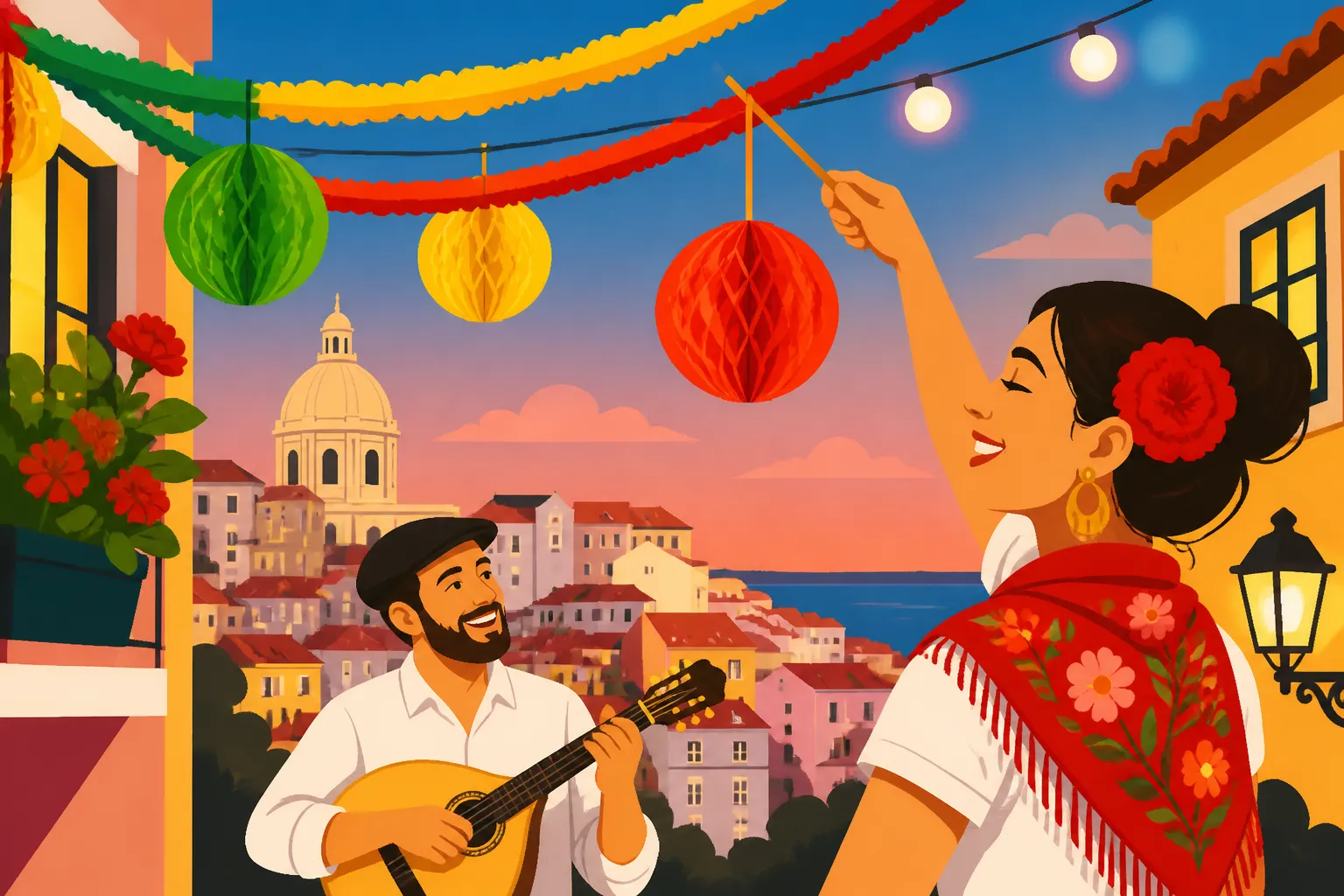
And then there are the decorations. Oh, the decorations! The historic neighborhoods transform into a kaleidoscope of color. Streets are festooned with vibrant paper garlands, streamers, and artificial flowers, creating a festive canopy overhead. Every balcony, every window, every corner seems to participate. And of course, the manjericos – small pots of basil, often adorned with paper carnations and a short poem – are everywhere. These fragrant plants are traditionally given as gifts to loved ones, embodying wishes of good luck and love. The whole city feels like one giant, joyous outdoor living room, inviting everyone to partake.
Navigating Lisbon's Festivities: Where and When to Go
Okay, so you're ready to dive in, but where do you even start? Lisbon is a big city, and while the spirit of Santos Populares permeates many areas, some neighborhoods are truly the epicenters of the action. Knowing where to go, and when, can make all the difference between a frustrating evening battling crowds and a magical night you’ll never forget.
Key Neighbourhoods and Their Vibe
Each historic neighborhood, or bairro, has its own distinct flavor during Santos Populares, shaped by its residents and its history. Getting lost (intentionally or not) in these areas is part of the fun, but it helps to know what kind of atmosphere you're looking for.
- Alfama: This is the absolute heart of Lisbon's Sant'António celebrations. Think narrow, winding streets, ancient buildings, and the most traditional arraiais. It's incredibly atmospheric, but be warned: it gets insanely crowded, especially on the night of June 12th. Navigating the steep hills and tight alleys can feel like being swept along in a human tide. It’s where you’ll find the most authentic experience, often with families grilling sardines right outside their homes and impromptu fado singing erupting. It’s chaotic, yes, but undeniably magical. If you're looking for that postcard-perfect, traditional Lisbon vibe, Alfama is your spot. Just remember to wear comfortable shoes and leave your personal space expectations at the door.
- Graça: Perched on one of Lisbon's highest hills, Graça offers a slightly more relaxed, yet still incredibly vibrant, atmosphere compared to Alfama. You’ll find larger squares like Largo da Graça that allow for more breathing room, along with stunning viewpoints (miradouros) where you can enjoy the festivities with a panoramic view of the city and the Tagus River. The crowd here tends to be a mix of locals and expats, creating a convivial, community feel. It’s a great option if you want to soak in the traditions without feeling completely overwhelmed by the sheer volume of people.
- Mouraria: Often overlooked by tourists, Mouraria is one of Lisbon's most historic and diverse neighborhoods. It’s actually considered the birthplace of Fado music! During Santos Populares, Mouraria bursts into life with arraiais that reflect its multicultural heritage. You'll find a lively, bustling atmosphere with fantastic food stalls and often more unique musical acts. It’s a wonderful place to experience a different facet of Lisbon’s festive spirit, perhaps a bit more gritty and real, but no less joyful.
- Bica / Bairro Alto: If your idea of Santos Populares leans more towards a lively, youthful party, then Bica and the lower parts of Bairro Alto might be your scene. While still traditional in their decor and food offerings, these areas, particularly Bica with its famous funicular street, become massive outdoor nightclubs. The drinks flow freely, the music is loud, and the energy is palpable. You'll find a lot of younger crowds, both local and international, dancing in the streets until the early hours. It's a high-energy experience, perhaps less about quiet tradition and more about letting loose.
- Castelo: The area surrounding the São Jorge Castle often hosts its own more curated celebrations. While it might not have the raw, spontaneous energy of Alfama, you can often find stages with live performances and food stalls in designated areas. It tends to attract a slightly more mature crowd and families looking for a festive experience that feels a bit more organized and less frantic. The views from up here are, of course, unparalleled, offering a truly stunning backdrop to the festivities.
When choosing your destination, consider your personal preferences. Do you crave the intense, traditional bustle of Alfama, the scenic views of Graça, or the boisterous party of Bairro Alto? No matter which you choose, prepare for an unforgettable night. To move between these lively areas, public transport is usually your best bet, though even the metro can get packed. Taxis and ride-sharing services like Uber or Bolt will be hard to come by and often stuck in traffic, so plan your routes carefully, keeping in mind that many streets will be closed.
The Grand Events: Marchas Populares and Wedding Processions
Beyond the general street party, two major events define Lisbon's Santos Populares, especially leading up to the main night of June 12th. These are spectacles that showcase Lisbon's pride, community spirit, and historical traditions.
First up are the Marchas Populares. This is the iconic parade of Santo António, taking place on the evening of June 12th, along the grand Avenida da Liberdade. Imagine a vibrant, dazzling procession where each of Lisbon's historic neighborhoods competes with elaborately choreographed dances, stunning costumes, and catchy songs. Each marcha represents its bairro, showcasing its unique identity and fierce pride. The creativity, effort, and sheer joy that go into these performances are astounding. It's a huge undertaking for the participants, who rehearse for months. To get a good viewing spot, you need to arrive very early, sometimes hours in advance, as the Avenida fills up quickly with eager spectators. You can try to snag a seat in the bleachers if you manage to get tickets, but many locals simply find a spot along the avenue and bring their own chairs and snacks. It's truly a magnificent display of Lisbonense spirit, patriotism, and community. If you can only experience one grand event, this should be it.
Then we have the Casamentos de Santo António, or the Santo António Weddings. These are mass weddings, a beautiful tradition where multiple couples (typically around 16) tie the knot on June 12th, often at the Sé Cathedral or the Church of Santo António, on the eve of the saint’s day. It’s a deeply romantic and symbolic event, paying homage to Sant'António as the patron saint of marriage. The couples are usually selected through an application process, and their weddings are sponsored, a lovely gesture for those who might otherwise struggle with the costs. Seeing the procession of these freshly married couples, often parading through the city streets before the Marchas Populares, is incredibly touching and adds another layer of tradition to the otherwise boisterous festivities. It's a moment of collective happiness and hope, a real testament to the enduring power of love in Lisbon.
You can often catch glimpses of the wedding parties as they move between locations, or if you plan to be near the churches involved. Keep an eye on local news for exact timings and routes closer to the date. Experiencing either of these events will give you a profound appreciation for the depth and meaning behind the celebrations, far beyond just the grilled sardines and cold beer.
Practical Tips for a Successful Santos Populares Experience
Alright, you've got the cultural background and the lowdown on where to go. Now, let's talk brass tacks: how do you actually survive and thrive amidst the joyful chaos of Santos Populares? Trust me, a little preparation goes a long way, especially for us expats who might not be accustomed to this level of festive frenzy.
Surviving the Crowds: Transport, Safety, and Comfort
First and foremost, transportation will be a challenge. On the night of June 12th, in particular, the city center becomes a pedestrian zone, and many roads are closed. Forget about driving; it's simply not an option. Your best bet is public transport, specifically the metro. However, even the metro will be packed, and trains will run late into the night (often until 3 AM or 4 AM), but expect long queues and a sardine-like experience within the carriages – fitting, given the festival's star dish! Buses will also be operating on special routes and schedules. It's wise to check the Carris and Metropolitano de Lisboa websites closer to the date for updated information. Trying to hail a taxi or call an Uber/Bolt will likely be an exercise in futility or extreme patience, with surge pricing through the roof.
Footwear is paramount. Seriously, this is not the night for cute sandals or high heels. You will be walking, standing, possibly dancing, and navigating uneven cobblestone streets that will be slick with spilled beer and sardine grease. Wear comfortable, closed-toe shoes that you don't mind getting a bit dirty. Your feet will thank you.
Safety is another key consideration. While Santos Populares is generally a good-natured celebration, huge crowds always attract opportunists. Keep your valuables secure and out of sight. A cross-body bag that zips shut is ideal; avoid backpacks that are easily accessible to pickpockets. Only carry what you absolutely need: a small amount of cash, one credit card, your phone, and perhaps a copy of your ID. Speaking of phones, consider a portable charger, as you'll likely be using it for navigation and photos, draining the battery quickly. For urgent situations, remember the European emergency number is 112, though navigating a crowd to find help can be difficult. It's always a good idea to have a local SIM card with a Portuguese number too, for better connectivity. Check out our guide on Getting a Portuguese SIM card at Lisbon Airport: Vodafone vs NOS vs MEO before you arrive.
Lastly, stay hydrated! June in Lisbon can be surprisingly warm, even at night. While beer and sangria flow freely, intersperse them with water. Public bathrooms are scarce and often have long lines, so plan accordingly. Personal space is also a concept that largely vanishes during these festivities; be prepared for very close proximity to strangers. Embrace it, it's part of the authentic experience! Remember, the guide Safety and Emergency Preparedness in Portugal for Foreign Residents offers more general tips for staying safe in Portugal.
Eating, Drinking, and Spending Like a Local
Let's talk about the real reason many of us love Santos Populares: the food and drink!
When it comes to sardines, you'll find stalls on almost every street corner in the main arraiais. These are usually run by local associations, clubs, or even just families. Look for the smoke and the long lines! Don't be shy; point to what you want. A grilled sardine on a piece of bread is simple perfection. For a sit-down meal, many traditional tascas will also offer grilled sardines and other festival specials. Just be aware that some restaurants will switch to a special, limited festival menu with higher prices.
Beyond sardines, definitely try a bifana (pork sandwich), which is just pure, delicious comfort food. And a bowl of caldo verde is perfect for soaking up all the festive drinks.
For drinks, imperial (a small beer) is the undisputed king. It's cheap, refreshing, and flows endlessly. You'll also find sangria (often red wine-based with fruit), and vinho verde (a "green" or young wine that's slightly fizzy and very refreshing). The prices at the street stalls are usually very reasonable.
Now, about cash vs. card: while Portugal is increasingly cashless, in the heat of the arraial and at smaller, impromptu stalls, cash is king. Many vendors prefer it, and it keeps lines moving. Make sure you have plenty of small denominations (e.g., €5, €10, €20 notes). You don't want to be the one holding up the line trying to pay for a €2 beer with a €50 note. ATMs (Multibancos) are available, but they can be hard to find in the thick of the crowds and might have long queues. It's best to withdraw cash earlier in the day. Understanding The Multibanco System and MB Way: Portugal's Unique Payment Network can help you navigate cash withdrawals and payments in general.
Budgeting for the experience is also good. While individual items are cheap, it's easy to lose track when you're caught up in the fun. A few euros for a sardine, a couple for a beer, and it adds up. Factor in some extra for any souvenir manjericos or other small treats. Our guide on Cost of Living in Portugal 2026: Detailed Budgets for Singles and Families can give you a general idea of expenses in Lisbon.
Embracing the Spirit: Language and Local Interactions
This is where you truly unlock the magic of Santos Populares. Don't just observe; participate!
A few basic Portuguese phrases will go a long way. "Olá!" (Hello), "Obrigado/a" (Thank you – male/female), "Por favor" (Please), "Uma imperial, por favor" (A beer, please), "Uma sardinha, por favor" (A sardine, please), and "Está tudo ótimo!" (Everything is great!) will endear you to the locals. Even a simple "Viva Santo António!" (Long live Saint Anthony!) will get you a smile. Our guide on Learning European Portuguese: Top Apps, Tutors, and Free Government Classes can give you a head start.
Engaging with locals is the best part. Strike up a conversation (even if it's just broken English and enthusiastic gestures!), share a laugh, and don't be afraid to try a few dance steps if the music moves you. Portuguese people are incredibly warm and welcoming, especially during these festivals. You'll find families, friends, and neighbors sharing tables, singing along, and generally just having a fantastic time together.
Singing along to the pimba music, even if you don't know the words, is a true sign of embracing the local culture. The songs are often lighthearted and about love, life, and everyday joys. You'll see everyone from grandmothers to teenagers belting out the tunes. Don't be self-conscious; just join in the general merriment.
Understanding the 'arraial' culture means recognizing that these are community events. People set up their own tables and chairs, they bring food, and they invite anyone to join. It's a collective celebration. Don’t be surprised if you get pulled into a conversation or offered a taste of something homemade. It’s all part of the charm. This is a side of Portugal that you won't find on a regular Tuesday, and it’s truly special. For more general insights into Portuguese daily life and etiquette, check out Daily Life in Portugal: Supermarkets, Language, and Cultural Etiquette. And when you're finally ready for a quiet moment, maybe even reflect on the vibrant Portuguese Coffee Culture and Restaurant Etiquette: Ordering Like a Local for another layer of cultural immersion.
Accommodation and Pre-Planning for Peak Season
Santos Populares isn't a secret, and Lisbon knows how to celebrate. This means that if you're planning to experience it, especially the epic night of June 12th, you need to think ahead when it comes to where you'll lay your head and how you'll get there.
Booking Ahead: Hotels, Apartments, and What to Expect
Let me be blunt: if you plan to be in Lisbon for Santos Populares, especially for the week leading up to June 13th, you must book your accommodation well in advance. This is peak season for local tourism, and while international visitors are plentiful, a huge number of Portuguese from other parts of the country flock to Lisbon for the festivities. Prices skyrocket, and availability dwindles rapidly. I'm talking months in advance, not weeks.
If you want to be right in the thick of the action, aim for hotels or apartments in or around the historic neighborhoods like Alfama, Mouraria, Graça, or Bairro Alto. Just be prepared for the noise levels. The party goes on until the early hours, and soundproofing in older Portuguese buildings can be… well, let's just say it's "authentic." If you're a light sleeper, or prefer a quieter night, consider staying a bit further out, perhaps in areas like Campo de Ourique, Estrela, or even across the river in Almada, and plan to commute into the city. Just remember those tricky public transport options on the main nights.
When searching for accommodation, use reputable platforms like Booking.com. They offer a wide range of options, from hostels to luxury hotels to private apartments. Be very clear about the dates you need and be prepared to pay a premium. Also, pay close attention to cancellation policies, just in case your plans change. For those looking for longer-term stays or simply wanting to understand the local housing market, our comprehensive guide on Renting an Apartment in Portugal: Contracts, Fees, and Tenant Rights might be helpful, though for short-term festival stays, dedicated platforms are generally better.
| Neighborhood | Vibe | Crowds (June 12) | Noise Level | Best For |
|---|---|---|---|---|
| Alfama | Traditional, historic, raw, charming | Extreme | Very High | Authentic experience, Fado, sardines; not for the faint of heart |
| Graça | Lively but slightly less intense, scenic | High | High | Great views, community feel, families, good balance of tradition/space |
| Mouraria | Diverse, vibrant, unique cultural mix | High | High | Overlooked gem, fantastic food stalls, diverse music |
| Bica/Bairro Alto | Youthful, party-centric, boisterous | Extreme | Extreme | Dancing, drinks, late-night revelry; for serious party-goers |
| Castelo | More curated, often with stages, views | Moderate to High | Moderate | Families, organized events, stunning backdrop |
Getting to Lisbon: Travel Considerations
So, you’ve sorted your place to crash. Now, how do you actually get to Lisbon? June is generally a popular travel month, so whether you're coming from another part of Portugal or flying in internationally, planning your journey is crucial.
If you're already in Portugal, consider taking the train. Portugal's train network, Comboios de Portugal (CP), is generally efficient and comfortable. Major cities like Porto and Faro are well-connected to Lisbon. Booking train tickets in advance, especially during June, is highly recommended as services can fill up. You can often find good deals by booking ahead online. For booking various travel options across Europe, platforms like Omio can be incredibly useful for comparing trains, buses, and flights, helping you find the most convenient and cost-effective way to reach Lisbon.
For international travelers, Lisbon's Humberto Delgado Airport (LIS) is the main gateway. Again, flights during June will be more expensive and fill up quickly, so aim to book as early as possible. Once you land, the metro provides a direct link from the airport to the city center, which is usually the most efficient way to get into town. You can find more comprehensive details on general travel and commuting in our article about Public Transport and Driving in Portugal: Trains, Tolls, and Licenses.
Lastly, if you're not planning to stay in Lisbon for the entire festival month, you might consider day trips from nearby towns, though getting in and out on the main nights will still be a logistical challenge. However, experiencing the smaller, local arraiais in towns along the Silver Coast or even in the Algarve can offer a charming, albeit different, Santos Populares experience without the intense Lisbon crowds. And if you're looking for curated experiences or guided tours to truly understand the history and significance of these festivals, checking out platforms like GetYourGuide could offer some structured options that blend cultural insights with the festive atmosphere.
Ultimately, experiencing Santos Populares in Lisbon is an adventure, a wild, beautiful ride that truly captures the heart of this incredible city. Come prepared, embrace the chaos, and let the infectious joy of the Portuguese people sweep you away. You won't regret it! Our general Living in Portugal Guide 2027: The Complete Relocation Manual for Expats can offer a broader context for your move.
Disclaimer
Please remember that while I strive to provide the most accurate and up-to-date information based on my expat experience and available resources, regulations, prices, and situations can change rapidly in Portugal. Always verify critical information with official sources, especially regarding visa requirements, legal matters, and health advice. This guide is for informational purposes only and does not constitute professional advice.