Where to Surf in Portugal: Ericeira, Peniche, and Nazaré
Disclosure: This article contains affiliate links. If you buy through them, we may earn a commission at no extra cost to you. Read our full disclosure.
Trying to figure out where to catch the best waves in Portugal can feel like wading through an ocean of information. With so many stunning coastlines and legendary surf spots, it's easy to get overwhelmed trying to decide between the mellow rollers and the monster swells. This guide cuts through the noise, offering an in-depth look at Portugal's most iconic surfing destinations—Ericeira, Peniche, and Nazaré—so you can find your perfect ride.
Ericeira: Portugal's World Surfing Reserve for All Skill Levels
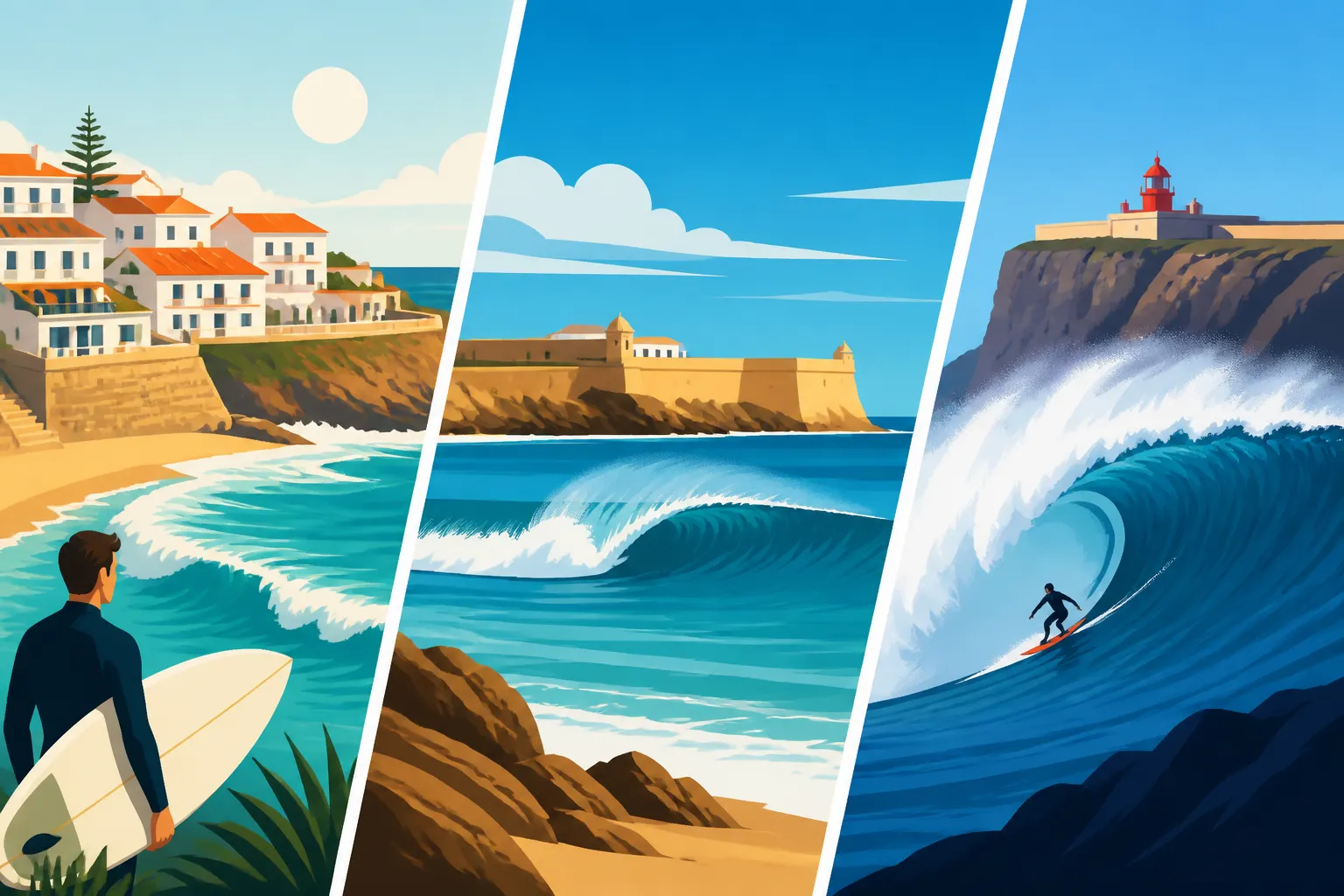
Oh, Ericeira. There's a reason this charming fishing village, just a short drive from Lisbon, captured the heart of the international surf community and became Europe's first (and only) World Surfing Reserve. It's not just the consistent waves; it’s the whole vibe, a perfect blend of laid-back surf culture and authentic Portuguese life. You’ll find families strolling the cobbled streets, local fishermen mending nets, and surfers from every corner of the globe sharing stories over bica and pastéis de nata. It's a truly special place, offering something for everyone, from absolute beginners to seasoned pros who crave technical, powerful waves.
The Waves of Ericeira: From Beginners to Pros
What makes Ericeira so unique is its incredible diversity of breaks packed into a relatively small stretch of coastline. You could spend weeks here and still discover new spots. For those just starting out, or if you're feeling a bit rusty after a long hiatus, beaches like Foz do Lizandro and São Julião are your go-to. These expansive sandy beaches offer gentle, rolling waves perfect for learning to pop up, practice your paddle, and get a feel for the ocean. Many surf schools set up shop here, offering lessons in English, which is a huge relief for many expats who might shy away from new sports due to language barriers.
Then there are the spots that challenge and delight intermediate to advanced surfers. Ribeira d'Ilhas, famous for hosting world tour events, is a consistent right-hand point break that offers long, carvable walls. It’s got a rocky bottom, so it demands respect, but on a good day, it’s absolutely epic. For something a bit heavier, you have Coxos, known as one of Europe's best and most powerful right-hand point breaks. This is strictly for experts, producing fast, hollow barrels that break over a shallow reef. It’s absolutely mesmerizing to watch the local chargers here. Other notable spots include Empa and Pedra Branca, which offer challenging reef breaks for experienced surfers seeking thrills. The beauty of Ericeira is you can scout a half-dozen different spots in under an hour, meaning there’s usually something working for your skill level, regardless of the swell size or direction.
Beyond the Boards: Life in Ericeira
Ericeira isn't just about the surf; it’s a lifestyle. After a morning session, you can wander through the picturesque village, grab a fresh seafood lunch at a local restaurant overlooking the Atlantic, or simply soak in the vibrant atmosphere. There are plenty of charming surf camps and guesthouses, many with a communal, friendly vibe that makes it easy to connect with other travelers and expats. If you’re planning to stay for a while, securing a long-term rental in this popular area can be competitive, but it's well worth the effort for the quality of life. Check out platforms like Booking.com for a wide range of accommodation, from budget-friendly hostels to boutique hotels with ocean views. You’ll find a surprising number of amenities for a small town, including excellent yoga studios, health food stores, and lively bars. It's a place where you can easily settle in and find your tribe, making it a fantastic base if you're considering a more permanent move to Portugal.
Peniche: Portugal's Wave Machine for the Adventurous
Heading north from Ericeira, you hit Peniche, a peninsula town that punches far above its weight in the surfing world. Peniche is renowned globally, especially for its consistent, powerful waves, primarily thanks to its unique geographical position. It sticks out into the Atlantic like a giant finger, which means it picks up swells from almost any direction. This makes it an incredibly reliable surf destination, often working when other spots along the coast are flat or blown out. This reliability, combined with its iconic main break, has cemented Peniche’s status as a top-tier European surf hub.
Peniche's Iconic Breaks: Power and Consistency
The undisputed king of Peniche is Supertubos, a legendary beach break that produces incredibly fast, hollow barrels. It's often compared to some of the world's best tube waves, hence the "Super" in its name. This is where the MEO Rip Curl Pro Portugal, a stop on the World Surf League Championship Tour, takes place annually. When Supertubos is firing, it's a spectacle to behold – both to surf if you're daring and skilled enough, and to watch from the beach. The sheer power and speed of these waves are not for the faint of heart, and they often draw a very competitive crowd. If you're an advanced surfer, this is a bucket-list wave.
But Peniche offers much more than just Supertubos. For days when the big show is too intense, or for those with less experience, there are numerous other options. On the opposite side of the peninsula, facing north, you'll find spots like Lagido and Cantinho da Baía. Lagido is a reef break that offers long, cruisy lefts, often more forgiving than Supertubos but still offering good push. Cantinho da Baía is another fantastic beach break, typically smaller and more sheltered, making it ideal for intermediate surfers and even beginners on smaller days. The versatility here is incredible; you can often find completely different conditions on opposing sides of the peninsula. This means that no matter the weather or your skill level, there's usually a wave waiting for you.
Surf Culture and Logistics in Peniche
Peniche has a grittier, more dedicated surf town feel compared to the quaint charm of Ericeira. It’s less about tourism and more about the raw power of the ocean. The town itself is a working fishing port, so you’ll find a bustling harbor, fresh seafood markets, and an authentic Portuguese atmosphere beneath the surf veneer. This blend creates a unique experience where you can enjoy world-class waves and then feast on the freshest catch of the day. Many surf schools and camps are concentrated around Baleal, a small island connected to Peniche by a narrow sand strip, offering lessons and rentals. Getting around Peniche is relatively easy; if you have a car, you can explore the various breaks at your leisure. Otherwise, local buses and taxis can get you to most spots, or many surf camps offer transport. If you're traveling between cities, remember that platforms like Omio can help you find bus and train connections to get you to Peniche from Lisbon or Porto with ease.
Nazaré: Where Legends Chase Giants (and How to Watch Safely)
Now, let’s talk about Nazaré. This isn't just a surf spot; it's a natural wonder, a place where the ocean demonstrates its raw, untamed power like nowhere else on Earth. Nazaré is home to the biggest surfable waves on the planet, an awe-inspiring phenomenon that has drawn big-wave surfers and thrill-seekers from across the globe. It's a different beast entirely from Ericeira or Peniche, and it's absolutely crucial to understand what you're getting into, or rather, what you're witnessing.
Conquering the Monsters: The Nazaré Challenge
The colossal waves of Nazaré are generated by the Nazaré Canyon, an underwater geological formation that's about 5 kilometers (3 miles) deep and 230 kilometers (140 miles) long. This canyon acts like a funnel, channeling ocean swells and amplifying them as they hit the shallower waters near Praia do Norte. When the conditions are right—typically during the winter months (October to March) with large Atlantic swells and strong northwesterly winds—waves can reach staggering heights of 80 to 100 feet (24 to 30 meters), sometimes even more. This isn't just regular surfing; it's tow-in surfing, where jet skis are used to pull surfers into these monstrous waves.
This is unequivocally not a spot for recreational surfing. Unless you are a highly specialized, world-class big-wave surfer with a dedicated support team, you should not even consider entering the water here when the big waves are active. The currents are treacherous, the water movement is immense, and the risks are incredibly high. For us mere mortals, Nazaré is a place of observation and immense respect. It's a chance to witness human courage and the raw force of nature collide in a truly spectacular fashion.
Visiting Nazaré: When to Go and What to Expect
If you want to experience the majesty of Nazaré, your best bet is to visit during the winter swell season, roughly from October to March. However, predicting the exact days the big waves will roll in requires careful monitoring of surf forecasts. Keep an eye on local surf websites and news outlets, as they'll often announce when a significant swell is heading towards Nazaré. The best viewing point is from the Forte de São Miguel Arcanjo, the lighthouse perched on the cliff overlooking Praia do Norte. From here, you get an unparalleled panoramic view of the action, safely distanced from the colossal waves. There’s a small museum inside the lighthouse dedicated to Nazaré’s surf history, displaying some of the boards used by the legends.
The town of Nazaré itself is a beautiful, traditional Portuguese fishing village, famous for its strong cultural traditions, including the iconic "seven skirts" worn by local women. Even on days without giant waves, it's a charming place to visit, with a stunning beach, great seafood restaurants, and a funicular connecting the lower town to the high cliffside Sítio neighborhood. Many people come for a day trip from Lisbon or Porto, and GetYourGuide offers various tours that include Nazaré, often combining it with other historical or scenic spots nearby. It’s an unforgettable experience, whether you're a surfer or just a spectator in awe of nature's power.
Planning Your Portuguese Surf Adventure: Logistics and Local Secrets
So, you've got your eyes on the waves, but how do you make the most of your Portuguese surf trip? Navigating the logistics and understanding local nuances can make all the difference. Portugal is a relatively easy country to travel through, but a little planning goes a long way, especially when you're chasing the best swell.
Getting There and Around
Portugal's main international airports are Lisbon (LIS) and Porto (OPO). From Lisbon, Ericeira is about a 45-minute drive, Peniche about an hour, and Nazaré about 1.5 to 2 hours. From Porto, the travel times are naturally longer.
While public transport can get you to these towns, having a rental car offers unparalleled freedom, allowing you to chase the best waves daily, explore hidden coves, and easily store your gear. Many expats find having a car essential for fully experiencing the country. However, if driving isn't your thing, buses connect most major towns and surf spots. Services like Omio are incredibly useful for finding and booking intercity bus and train tickets, ensuring you can hop between surf towns without a hitch. Just remember to account for potential transfers and slightly longer travel times compared to driving.
| Destination | Best For | Wave Type | Average Drive from Lisbon | Accommodation Tips |
|---|---|---|---|---|
| Ericeira | All levels (beginner to expert) | Point breaks, beach breaks, reef breaks | 45-60 min | Charming guesthouses, surf hostels, villas. Book ahead, especially in summer. Booking.com has many options. |
| Peniche | Intermediate to expert | Powerful beach breaks (Supertubos), reef breaks, sheltered beach breaks | 60-80 min | Surf camps, budget hostels, apartments. Baleal area is popular. |
| Nazaré | Spectators (giant waves), advanced on small days | Deep ocean swells, shore break (Praia do Norte) | 90-120 min | Traditional hotels, guesthouses. Quieter in winter outside big swell events. |
Essential Gear and Local Tips
When it comes to gear, you'll find plenty of surf shops in Ericeira and Peniche where you can rent boards and wetsuits. Wetsuits are generally a must, as even in summer, the Atlantic can be quite cool. A 3/2mm wetsuit is usually sufficient for summer, while a 4/3mm is recommended for winter sessions. If you're bringing your own board, consider its suitability for the types of waves you plan to surf.
Don't forget local surf etiquette. This is vital everywhere, but especially in crowded spots. Always respect the lineup, don't drop in on someone else's wave, and be mindful of your fellow surfers. A simple "bom dia" (good morning) and a friendly attitude go a long way. Beyond surfing, exploring the culture is half the fun! Learn a few basic Portuguese phrases; while many people in surf towns speak English, a little effort in the local language is always appreciated. You can even find some great resources for learning European Portuguese. Indulge in the local cuisine – Portugal's fresh seafood and pastries are legendary. And perhaps most importantly, embrace the relaxed pace of life. Things might move a little slower than you're used to, but that's part of the charm.
It’s worth noting that if you’re coming from outside the EU, you might need specific travel insurance that covers surfing and any other activities. Always check the requirements for your visa, such as the D7 Passive Income Visa Portugal or the Portugal D8 Digital Nomad Visa, as many require comprehensive health coverage.
Disclaimer
The information provided in this guide is for general informational purposes only and is not intended as professional advice. While we strive to keep the information up-to-date and correct, we make no representations or warranties of any kind, express or implied, about the completeness, accuracy, reliability, suitability, or availability with respect to the website or the information, products, services, or related graphics contained in this guide for any purpose. Any reliance you place on such information is therefore strictly at your own risk. Always consult with local experts, surf instructors, or relevant authorities for specific advice regarding surf conditions, safety, or travel planning.