How to Visit Port Wine Lodges in Vila Nova de Gaia
Disclosure: This article contains affiliate links. If you buy through them, we may earn a commission at no extra cost to you. Read our full disclosure.
You stand on Porto’s Ribeira waterfront, look across the river at the rooftops spelling out Sandeman, Taylor’s and Cálem, and then the questions start. Which lodge is worth it? Do you need to book? How do you get up those steep hills? This guide covers how to choose, book, reach and enjoy the port wine lodges of Vila Nova de Gaia.
My first visit went badly. I picked the first lodge I reached, joined a tour in a language I didn’t speak, and walked out into the afternoon heat after two small glasses with no idea what made one port different from another. Over years of living in the north and taking visiting friends across the river, I’ve learned how to plan it properly. Here is what I wish someone had told me.
Understanding Vila Nova de Gaia and Its Port Lodges
Why the Lodges Are in Gaia and Not in Porto
Many first-time visitors are surprised that the famous “Porto cellars” are not in Porto. Vila Nova de Gaia is a separate municipality on the south bank of the Douro, facing the Ribeira district. For centuries this bank was where port was aged, blended, bottled and shipped.
The reasons are practical. Port is made upriver in the Douro Valley, where the grapes grow on terraced schist slopes. Historically, the young wine came downriver on flat-bottomed rabelo boats, the wooden sailing barges you still see moored along the Gaia quay with lodge names painted on their sails. On the Gaia side, the north-facing slope stays cooler and more humid than the Porto bank, which helps wine aging slowly in barrels. Thick-walled warehouses called “caves” or “armazéns” were built into the hillside, and many are still in use.
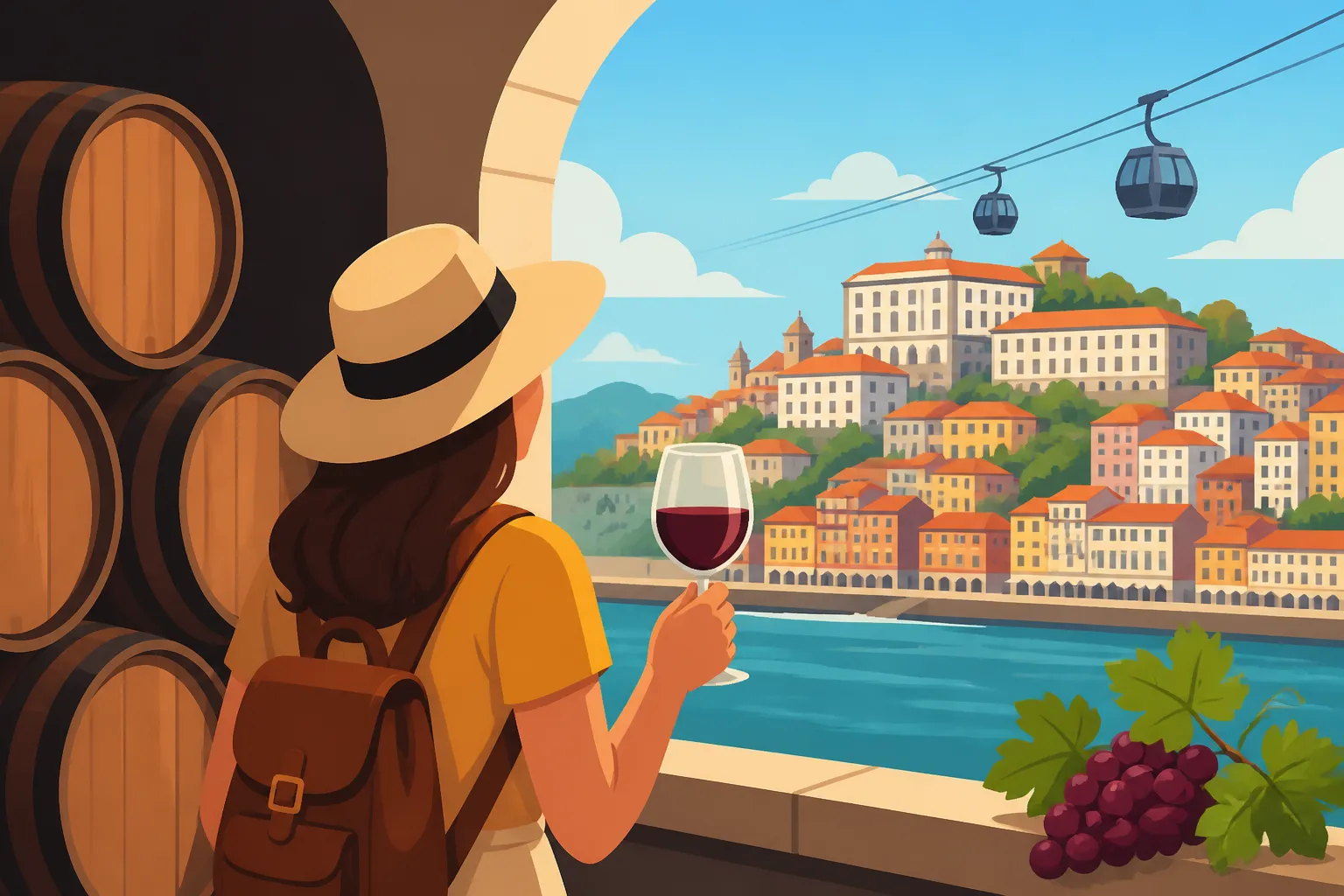
So when you walk into a lodge, you are usually walking into a working cellar. The smell of old oak and evaporating wine, which the Portuguese poetically call the angels’ share, hits you as you step out of the sunshine. It is cool, dim and atmospheric, and that atmosphere is a big part of why the visit feels special.
If you want a wider background on port before you go, Port Wine 101: Tasting and Visiting Port Lodges in Porto covers the basics of how the wine is made and why it is fortified.
Riverside Lodges Versus Uphill Lodges
This distinction matters more than most people expect, and it shapes your whole day. The lodges fall roughly into two groups.
The riverside lodges sit along the Cais de Gaia, the flat waterfront promenade running from the Dom Luís I Bridge downstream. Sandeman, Cálem, Ferreira, Porto Cruz and Kopke are all within an easy stroll of each other here. You can walk across the lower deck of the bridge from Ribeira and be at a lodge door within minutes. These are the most convenient, the most visible and, in high season, the busiest.
The uphill lodges are set back from the river, up the steep cobbled lanes behind the waterfront. Taylor’s, Graham’s and Cockburn’s are the best-known names in this group. Getting to them takes a real climb, often on uneven stone that turns slippery after rain. The reward is usually a calmer setting, gardens or terraces, and some of the best views of Porto’s skyline you will find anywhere. Graham’s in particular sits high on the hill with a sweeping panorama across the river, which is a big part of why it is one of the most popular visits in Gaia.
Your choice depends on mobility, time and patience. If you are travelling with older parents, small children or someone with knee trouble, the riverside lodges or a taxi to the uphill ones will save a lot of grumbling. If you are fit and want the view, the climb is part of the experience, as long as you go up before the tasting and not after.
What Actually Happens on a Lodge Tour
Most lodge visits follow a similar pattern, which helps when you are deciding how many to fit into a day.
- You check in at reception, often in a shop area where bottles are sold.
- A guide leads your group into the cellars and explains the history of the house, how grapes are grown in the Douro, and how fermentation is stopped by adding grape spirit.
- You walk past rows of barrels and huge wooden vats, and the guide explains how different styles of port are aged.
- Some lodges include a small museum, archive or audiovisual room.
- The tour ends in a tasting room, where you try a set number of ports, typically a white or ruby alongside a tawny.
- You are invited to buy bottles, and often to upgrade to a premium tasting of older wines.
A standard visit with tasting usually takes about an hour, sometimes a little more. Tours run in set language slots, with English the most common and Portuguese, Spanish and French widely offered. If you need a particular language, check the schedule and book that slot.
Understanding the styles makes the tasting far more rewarding. What Is the Difference Between Ruby, Tawny, and Vintage Port? is worth a quick read beforehand so you can tell your guide what you liked rather than nodding politely.
Choosing the Right Port Lodge for Your Visit
The Big Historic Names
The major lodges are popular for good reason. They have polished tours, long histories and the infrastructure to handle many visitors. Here is how the best-known ones compare in character.
Sandeman is the lodge most people notice first, thanks to its black-caped silhouette mascot, known as “The Don”. It sits right on the riverside close to the bridge, and its guides sometimes wear the cape and hat. It is a lively, theatrical, beginner-friendly choice and a good first introduction.
Cálem is also on the waterfront near the bridge and is known for its interactive museum, which explains the wine through displays and sensory exhibits. Cálem is also known for evening sessions pairing a tasting with live fado, a lovely way to combine two Portuguese traditions in one visit. Check its own schedule for which evenings these run.
Ferreira stands out because it was founded by a Portuguese family rather than the British merchants behind many port houses. Its story is tied to Dona Antónia Ferreira, a legendary nineteenth-century figure in the Douro wine trade. If you enjoy history and strong personalities, the Ferreira tour has more narrative than most.
Taylor’s is one of the uphill heavyweights, with a garden courtyard, peacocks wandering about and a well-produced self-guided audio tour. Many visitors find the audio format freeing, since you go at your own pace instead of shuffling with a crowd.
Graham’s, high on the hill, is one of the most famous names in port and among the most visited lodges in Gaia. Its tasting room and restaurant overlook the river, and the cellars are atmospheric and well kept. Expect it to be busy and book ahead, especially for afternoon slots.
Cockburn’s, also uphill, is known for its cooperage, where you may see barrel-makers at work repairing the casks that hold the wine. This hands-on craft makes it a good pick if you have already done a classic tour elsewhere.
Quieter Cellars and Wine-Focused Tastings
Not every visit needs a full guided tour. Once you have done one or two, you may prefer simply to sit down and taste.
Kopke is often described as the oldest port house. Its riverside tasting room focuses on wine rather than theatre, with a strong range of aged tawnies and colheitas, which are tawnies from a single harvest year. If you already know what you like, this is where to go deeper.
Porto Cruz, on the waterfront, has a modern multi-floor space with a rooftop terrace overlooking the river and Ribeira. It feels more like a stylish bar than a historic cellar, and it is a pleasant spot for a sunset glass, even if purists find it less traditional.
Ramos Pinto, also on the riverside, has a small museum in its historic offices and is known for its art and advertising archive. It suits travellers interested in design and history.
Many lodges also run tasting bars where you can order by the glass without joining a tour. This is my favourite way to compare houses: one proper guided tour to learn the process, then a slow tasting session somewhere else.
Comparing the Main Lodges at a Glance
| Lodge | Location | Visit Style | Best For |
|---|---|---|---|
| Sandeman | Riverside, near the bridge | Guided tour with theatrical touches | First-timers and families |
| Cálem | Riverside, near the bridge | Interactive museum, tours, evening fado sessions | Combining port with fado |
| Ferreira | Riverside | Guided tour with strong historical storytelling | History lovers |
| Porto Cruz | Riverside | Modern space with rooftop terrace | Sunset drinks and views |
| Kopke | Riverside | Tasting-focused | Exploring aged tawnies and colheitas |
| Ramos Pinto | Riverside | Museum and guided visit | Art and design fans |
| Taylor’s | Uphill | Self-guided audio tour, gardens | Independent explorers |
| Graham’s | Uphill, high on the hill | Guided tour, panoramic tasting room | Views and a premium experience |
| Cockburn’s | Uphill | Guided tour featuring the cooperage | Seeing traditional craftsmanship |
Tours, Tastings and How to Book
The lodges sell visits in tiers. The entry-level tour usually includes a cellar walk and a tasting of a few standard ports. Premium options add older tawnies, vintage ports or food pairings such as cheese, chocolate or local cured meats. Prices vary by lodge and tier and change over time, so check each lodge’s own website for current figures and what each package includes.
There are three main ways to book:
- Directly on the lodge’s own website, which usually offers the full range of time slots and languages.
- In person at the lodge reception, which can work on a quiet weekday but is a gamble in summer or on weekends.
- Through a tour platform such as GetYourGuide, which is useful if you want a guided walking route that visits several lodges with transport or a river cruise bundled in.
For the bigger names in high season, book ahead. It is common to see disappointed tourists turned away from the reception desks at Graham’s and Taylor’s on hot August afternoons because every English slot was full. A day or two of planning usually solves it. For an off-season weekday you can often walk in, but booking still guarantees your language and time.
If you want to plan a full tasting route, How to Take a Port Wine Tasting in Porto covers tasting formats and how to pace yourself across several houses.
Getting to the Lodges and Planning Your Day
Walking Across the Dom Luís I Bridge
The classic approach is on foot across the lower deck of the Dom Luís I Bridge, the iron arch linking Ribeira to Gaia. It takes only a few minutes, and the view upriver and downriver is wonderful. The lower deck carries cars as well as pedestrians, so the walkways are narrow and get crowded on summer afternoons. Keep to the side and watch for people stopping suddenly to take photos.
Once across, you are on the Cais de Gaia with the riverside lodges spread out in front of you. Sandeman and Cálem are a short walk away, and the rest follow along the promenade. From here, the uphill lodges are signposted, but the lanes twist, and your phone map is your friend.
The upper deck of the bridge is a different experience: it carries the metro and a wide pedestrian walkway high above the river. Walking it is thrilling, with sweeping views over the city, but it is very high and exposed. Anyone nervous about heights might prefer the lower deck.
Metro, Cable Car and River Options
If you want to save your legs, Porto has good alternatives. For a full overview, see Getting Around Porto: Metro, Buses, and Funiculars.
The metro’s Line D, the yellow line, crosses the upper deck of the Dom Luís I Bridge. Get off at Jardim do Morro, the first stop on the Gaia side, a park with one of the best viewpoints in the city. You can then walk downhill through the lanes to the lodges, which is far easier than climbing up from the river. Porto’s public transport uses the rechargeable Andante card. You buy it from machines at metro stations, load trips onto it and validate it before every journey, and inspectors do check. Using the Andante card in Porto: Zones, top-ups, and ticket validation fines explains how to avoid the common pitfalls.
The Teleférico de Gaia is a short cable car linking the top of the bridge, near Jardim do Morro, with the riverside at the Cais de Gaia. It is a separate attraction with its own ticket, not part of the Andante system. The ride is brief, but the views of the rooftops and lodges below are worth it, and it saves a steep walk in either direction.
From the river itself, many visitors combine a lodge visit with a “six bridges” cruise on a rabelo-style boat, departing from both the Ribeira and Gaia quays. Some lodges and tour operators bundle a cruise with a tasting, which is a relaxing way to fill an afternoon.
Taxis and ride-hailing apps work well for reaching the uphill lodges directly. The drive is short, and arriving at Graham’s or Taylor’s without a sweaty climb in summer is a small luxury you will not regret.
Getting to Porto From Elsewhere in Portugal
If you are coming from Lisbon, the train is the most comfortable option, with the fast Alfa Pendular and Intercidades services arriving at Porto Campanhã, where you can change to the metro or a local train to São Bento in the centre. Omio is handy for comparing train and bus times between cities in one search, though you can also book directly with Comboios de Portugal. Arriving by air is just as simple; How to Get From Porto Airport to the City Center walks through the metro and taxi options from the airport.
Sample Half-Day Lodge Itinerary
Here is a relaxed plan I often give friends visiting for the first time. It saves the climbs for the start, when legs are fresh and nobody has had a drink yet.
- Take the metro’s Line D to Jardim do Morro in the late morning and enjoy the view over Porto from the park.
- Walk downhill through the lanes to an uphill lodge such as Graham’s or Taylor’s for a booked tour and tasting.
- Have lunch in Gaia, either at a lodge restaurant or at one of the casual places near the waterfront.
- Continue downhill to the riverside and stroll the Cais de Gaia, looking at the rabelo boats moored along the quay.
- Do a second, shorter tasting at a riverside house such as Kopke or Ferreira, or join a river cruise instead.
- Finish with a drink at a waterfront terrace or the rooftop at Porto Cruz as the sun goes down over Ribeira.
- Walk back across the lower deck of the Dom Luís I Bridge to Porto for dinner.
Two lodges in a day is plenty for most people. Three is possible if you choose short tasting sessions, but beyond that the wines blur together and you will remember less. If you are still planning your overall trip, How Many Days Do You Need in Porto? can help you decide how much time to set aside for Gaia alongside everything else.
Insider Tips for a Better Lodge Experience
Timing, Crowds and Seasons
Gaia’s waterfront is at its busiest from late spring through early autumn, and afternoons are the peak. Cruise ship days and weekends add more crowds. If you can, book a morning tour. The cellars are calmer, the guides are fresh, and you have the rest of the day free.
Summer has its own rhythm. The cellars are cool, which is a relief on a hot day, but the walk between lodges in the sun can be draining. Carry water, wear a hat, and do not underestimate the climb to the uphill lodges. In winter it is the opposite: the cellars feel genuinely cold and damp, so bring a layer even if it seems mild outside. It is common to see many visitors shivering in short sleeves halfway through a tour.
June is special. The São João festival on the night of 23 to 24 June transforms Porto and Gaia into one huge street party with fireworks over the river, and the waterfront is packed. Lodge visits around that date need booking well in advance. How to Celebrate São João in Porto explains what to expect if your trip coincides.
Also check opening times before you set out. Hours vary between lodges, last tours may start earlier than you expect, and some houses keep reduced schedules on public holidays or in quieter months.
Tasting Etiquette and Drinking Sensibly
Port is fortified, which means it is noticeably stronger than ordinary table wine. Tasting pours are small, but they add up across several lodges, particularly in the heat. A few practical habits help:
- Eat a proper meal before or between tastings, not just a pastry.
- Drink water alongside each tasting, and ask for some if it is not offered.
- It is perfectly acceptable to leave part of a glass, especially if you are trying several wines.
- Swirl, smell and sip slowly; guides appreciate genuine interest more than speed.
- If you are driving, plan for someone else to drive, or use a taxi or public transport.
Children are generally welcome on cellar tours with an adult, but they will not be served alcohol; some lodges offer juice or grape must instead, so ask when booking. Visitors under the legal drinking age will not be served, so bring identification if you look young.
Remember that the lodges are often working spaces. Stay with your group, avoid touching barrels, and follow the guide’s instructions in areas where wine is being moved. Photography is normally allowed, but ask if you are unsure, especially in museum rooms.
Buying and Shipping Bottles
Almost every tour ends in the shop, and the temptation is real. Lodge shops often sell older tawnies, colheitas and special bottlings that can be hard to find abroad, along with gift boxes and accessories.
Before you buy, think about how you are getting home. Bottles are heavy, and if you are flying with hand luggage only, liquid rules mean you cannot carry them through security. Some lodges offer packing for checked luggage, and some can arrange shipping, though rules and costs vary by destination and change over time, so ask the lodge directly about what is possible for your country. If you are travelling within Portugal for a while, buying at the end of your trip saves carrying the weight around.
Supermarkets and wine shops on the Porto side also stock a wide range of port, often including the same big brands. The lodge shop is best for special bottles and tasting-room favourites; for a standard ruby or tawny to drink at your rental, a supermarket will do. For other things to take home, Portuguese Souvenirs Worth Buying (and What to Skip) has useful ideas beyond wine.
Staying in Gaia or Nearby
Most visitors stay on the Porto side and cross the river for the day, but staying in Gaia is an underrated choice. You wake up to the classic view of Ribeira’s colourful façades, and you can wander down to the lodges without crossing the bridge. The trade-off is that much of Gaia is hilly, and the area behind the waterfront can feel quieter in the evening than central Porto.
Booking.com lists a wide range of options on both banks, from simple guesthouses near the Cais de Gaia to upscale hotels on the hillside beside the uphill lodges. When comparing places, look closely at the location on the map. “Near the river” can mean a flat stroll or a punishing climb, and the difference matters after a day of tastings. For help choosing an area, What’s the Best Neighborhood to Stay in Porto? compares the main districts, including the riverside.
Extending Your Port Experience Beyond Gaia
The lodges are the end point of port’s journey; the beginning is upriver in the Douro Valley, where the terraced vineyards and the quintas produce the grapes. If the lodge tours spark your interest, a day or two in the valley is the natural next step, with quinta visits, river cruises and some of the most dramatic wine scenery in Europe. How to Visit the Douro Valley From Porto explains the train, tour and driving options.
On my own repeat trips, my favourite routine is simple: one guided tour at a big historic lodge to remind myself of the process, a slow tasting of aged tawnies at a quieter riverside house, then dinner back across the river in Ribeira as the lights come on in Gaia. Take your time, book the busy lodges ahead, plan your route around the hills, and you will leave knowing exactly why port has been aged on this riverbank for centuries.
Disclaimer
This article is for general informational purposes only and does not constitute professional advice. Laws, prices and regulations vary by location and change over time. Consult a qualified professional for guidance on your specific situation.