Seafood in Portugal: Bacalhau, Sardines, and More
Disclosure: This article contains affiliate links. If you buy through them, we may earn a commission at no extra cost to you. Read our full disclosure.
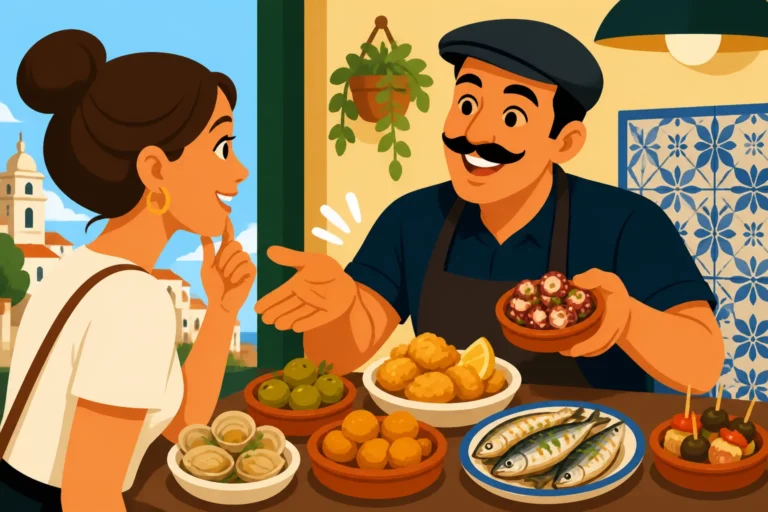
The first time I sat down at a Lisbon seafood restaurant, a plate of shrimp I never ordered appeared. The menu said “PV” where a price should be. The waiter wanted me to pick a raw fish from an ice tray. I froze. This guide explains Portugal’s seafood culture, from bacalhau and sardines to octopus and barnacles, so you can order with confidence.
Why Portugal Eats So Much Seafood
A Coastline That Shapes Every Menu
Portugal has a long Atlantic coastline and two island groups far out at sea, Madeira and the Azores. Fish and shellfish are not a special treat here. They are everyday food. A builder in Setúbal eats fried cuttlefish for lunch, and a grandmother in Viana do Castelo grills horse mackerel on a Tuesday night. On my first year in Lisbon, I was surprised to see the cheap neighborhood tasca serving fresher fish than many upscale places back home.
That freshness comes from a dense network of small fishing ports. Towns like Peniche, Nazaré, Sesimbra, Matosinhos and Olhão still have working boats that land their catch early in the morning. By lunchtime, that fish is on a charcoal grill a few streets away. This is why so many Portuguese cooks keep things simple. Olive oil, coarse salt, garlic, lemon and boiled potatoes. Nothing hides the fish.
For visitors, this means you rarely need a fancy restaurant to eat well. Some of my best meals came from family-run places with paper tablecloths and a television showing football in the corner. If you want the wider picture of what each region cooks, see Portuguese Regional Dishes Every Visitor Should Try.
The Salt Cod Paradox
Here is the strange part. The most famous Portuguese fish, bacalhau, is not caught in Portuguese waters. It is cod from the cold North Atlantic, mostly imported from places like Norway and Iceland. It arrives salted and dried, stiff as a board, and stacked in shops like firewood.
The habit goes back centuries, to when Portuguese sailors fished far north and needed food that would survive long voyages without refrigeration. Salting and drying solved that. Over time, salt cod became part of the national identity. Portuguese people call it “o fiel amigo,” the faithful friend, and there is a popular saying that there is a bacalhau recipe for every day of the year.
When you walk into a grocery store and smell that strong, salty aroma near the cod section, do not be put off. Once soaked and cooked, bacalhau is mild, flaky and comforting. It took me a few tries to love it, and now I crave it every winter.
Bacalhau: The Faithful Friend
What Salt Cod Is and Why It Gets Soaked
Dry salt cod cannot be eaten straight from the shop. It must be soaked in cold water for a day or more, with the water changed several times, to pull out the salt and plump up the flesh. Restaurants handle this for you. If you rent an apartment and want to cook it, many supermarkets also sell “bacalhau demolhado,” cod that is already soaked and often frozen. It saves a lot of stress for a first attempt.
When buying whole pieces, Portuguese shoppers look at thickness. Thick loins, called “lombos,” are the premium cut and are used for grilled or roasted dishes. Thinner pieces and flakes go into shredded recipes. You will see different grades on the labels, and the shop assistant at a market stall is usually happy to point you to the right one if you say what you plan to cook.
A small tip from my own kitchen disasters: taste a tiny piece after soaking before you cook it. If it is still very salty, give it another change of water. Over-salted bacalhau is the most common problem home cooks face, and it is easy to fix with patience.
The Bacalhau Dishes to Try First
You do not need to learn every bacalhau recipe. A handful of classics will teach you what the fuss is about. Start with these:
- Bacalhau à Brás: shredded cod mixed with thin fried potatoes, onions and soft scrambled egg, finished with black olives and parsley. It is a Lisbon favorite and a gentle introduction.
- Bacalhau com natas: cod baked with cream, onions and potatoes, like a rich gratin. Comfort food on a cold, wet evening.
- Bacalhau à Gomes de Sá: a Porto classic of flaked cod, potatoes, onions, boiled egg and olives, baked in plenty of olive oil.
- Bacalhau à lagareiro: a thick loin roasted and drowned in garlicky olive oil, served with small “punched” potatoes called batatas a murro.
- Pastéis de bacalhau: fried cod and potato croquettes, sold in cafés everywhere. Perfect as a snack with a cold beer.
If you are nervous about a full plate, order pastéis de bacalhau at a café counter first. They cost little, they are everywhere, and they let you test your taste for cod. For a step-by-step ordering guide, see How to Order Bacalhau and Try Portugal’s Cod Dishes.
Bacalhau at Christmas
If you are in Portugal over the holidays, you will see the cod shops become packed in December. On Christmas Eve, many Portuguese families eat a meal called the Consoada. The centerpiece is usually boiled bacalhau with potatoes, boiled eggs, cabbage or Portuguese greens, all dressed with generous olive oil and garlic.
It looks plain on the plate, and some newcomers are honestly underwhelmed the first time. But the meaning is in the gathering, not in the sauce. When a Portuguese colleague invited me to her family Consoada, I learned that the leftovers are often fried the next day with garlic and onions into a dish called “roupa velha,” old clothes. It was even better than the original. Read more about holiday food customs in Christmas and New Year Traditions in Portugal.
Sardines and the Summer Grill
When Sardines Are at Their Best
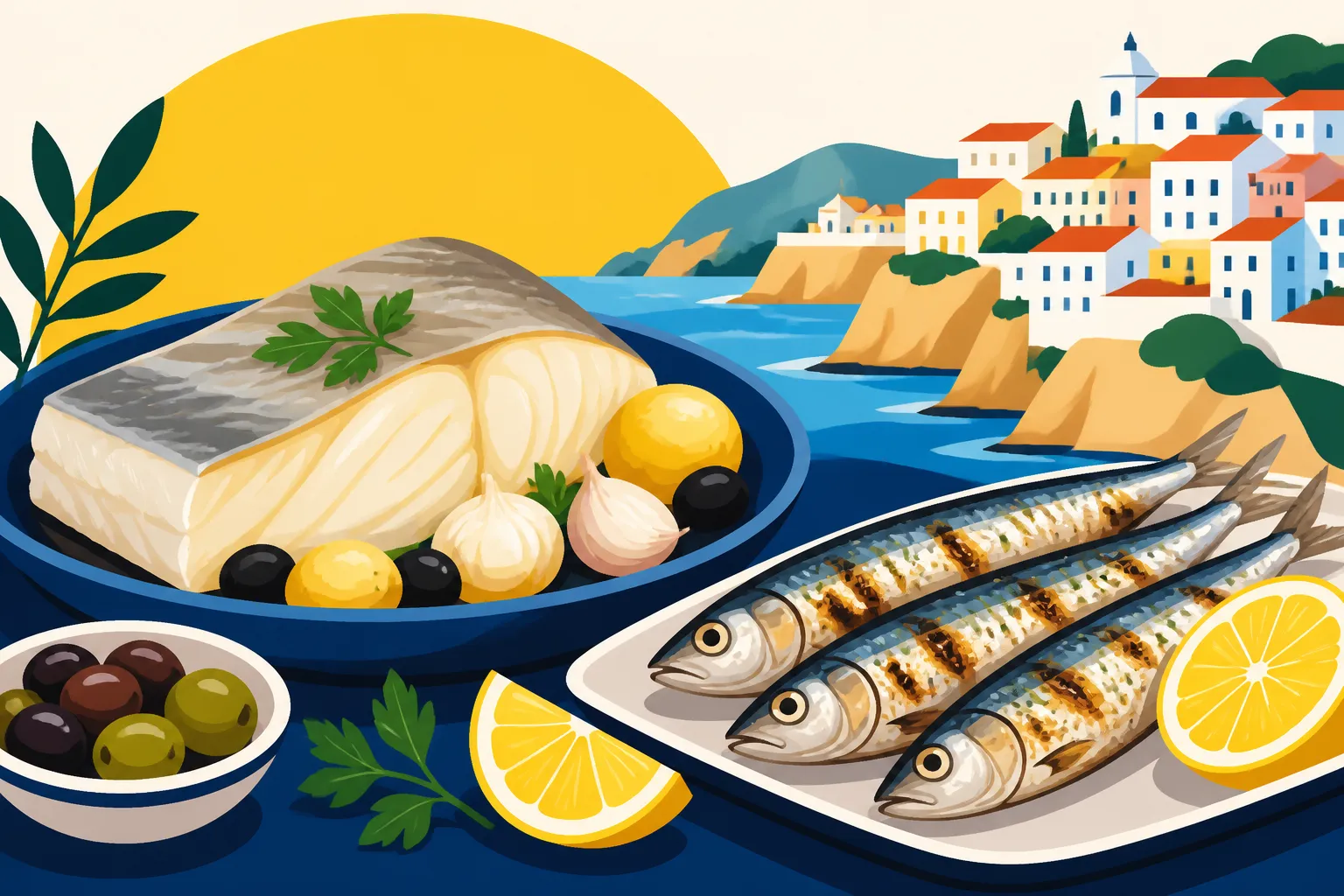
Sardines are seasonal. They are at their fattest and most flavorful in summer, when the fish have built up oil. Portuguese people sometimes say sardines are best in months without the letter R, which points to roughly May through August. In winter, you may find sardines on menus, but they are leaner and less exciting.
June is sardine heaven. During the Santos Populares festivals, especially around Saint Anthony in Lisbon and Saint John in Porto, the old neighborhoods fill with street grills and smoke. In Alfama, Mouraria and Bica in Lisbon, families set up charcoal grills on the sidewalk and sell sardines on bread with paper cups of wine. It is crowded, loud and wonderful. See Santos Populares: Lisbon and Porto’s June Street Parties for how to enjoy it without getting lost in the crowds.
If you visit outside summer, do not despair. Try carapau, horse mackerel, instead. It is grilled the same way, it is excellent year-round, and it is often what locals order when sardines are not in their prime.
How to Eat a Grilled Sardine
Grilled sardines arrive whole, with head, skin and bones. Many visitors panic at this point. I certainly did. The trick is to work along the spine. Press the fish lightly with your fork, slide the top fillet off the backbone, then lift the whole skeleton away from the bottom fillet. Most of the small bones come with it.
In the street-party style, sardines are laid on a slice of bread, which soaks up the oil and juices. Some people eat the fish right off the bread with their fingers, and then eat the flavored bread at the end. In restaurants, sardines come with boiled potatoes, a salad of tomato, peppers and onion, and sometimes grilled green peppers.
Some Portuguese eat the skin and even the small bones in summer when the fish are soft. You do not have to. Nobody will judge you for leaving the skin on the plate. For more practical tips, see How to Eat Fresh Grilled Sardines in Portugal.
Beyond Cod and Sardines: The Wider Seafood Table
Octopus and Cuttlefish
Portuguese octopus is tender and smoky in a way that often surprises visitors who have only eaten rubbery versions elsewhere. The classic dish is polvo à lagareiro: roasted octopus with garlic, olive oil and small punched potatoes. You will also find octopus salad, octopus rice and grilled octopus served with greens.
In the Algarve, the fishing village of Santa Luzia, next to Tavira, proudly calls itself the octopus capital of Portugal. Small boats there still use traditional clay pots to catch octopus, and the waterfront restaurants make it their specialty. If you love octopus, a lunch in Santa Luzia followed by a walk around Tavira is a lovely day.
Setúbal, south of Lisbon, is the home of choco frito, fried cuttlefish. Strips of cuttlefish are battered and fried, then served with fries and salad. It is cheap, filling and addictive. The town’s restaurants near the port compete for the title of best choco frito, and locals have strong opinions about which one wins.
Clams, Barnacles, and the Marisqueira Experience
A marisqueira is a shellfish restaurant, and it is one of the great Portuguese food experiences. You order by the portion or by weight: prawns, crab, lobster, clams, cockles and more. Amêijoas à Bulhão Pato is a must, clams steamed with garlic, olive oil, coriander and lemon. Dip bread into the sauce. That is the best part.
Then there are percebes, goose barnacles. They look like small dinosaur toes and frighten many first-timers. Fishermen harvest them from dangerous rocks along the wild coast, especially on the Costa Vicentina in the southwest and around Ericeira. To eat one, pinch the scaly part, twist off the tough skin, and bite the soft, briny flesh. Hold it away from you, because it can squirt sea water.
Lisbon’s Cervejaria Ramiro is one of the most famous marisqueiras, and the queue can be long. Locals often finish a shellfish feast there with a prego, a garlicky steak sandwich, as a “dessert.” Other well-loved dishes include arroz de marisco, a soupy seafood rice, and cataplana, a seafood stew cooked in a clam-shaped copper pan, especially common in the Algarve.
Island Seafood in Madeira and the Azores
The islands have their own seafood traditions. In Madeira, the signature fish is espada preta, black scabbardfish. It lives deep in the ocean and looks terrifying, with huge eyes and sharp teeth, but its white flesh is soft and sweet. It is often served fried with banana and sometimes passion fruit sauce. It sounds odd and tastes great.
Both Madeira and the Azores serve lapas, limpets, grilled in their shells with garlic butter and lemon. They arrive sizzling in a metal pan. In the Azores, you may also find cracas, a type of giant barnacle eaten mainly on some of the islands, which is more of an adventure than a meal.
Island tuna is another highlight. Fresh tuna steaks, grilled simply, appear on many menus in both archipelagos. For an island food trip, I suggest renting a place near a fishing harbor, such as Câmara de Lobos in Madeira, where you can watch boats come in before dinner.
Comparing Portugal’s Signature Seafood Dishes
This table brings together the dishes covered above so you can plan what to eat and where.
| Dish | What It Is | Where It Shines | Best Time |
|---|---|---|---|
| Bacalhau à Brás | Shredded salt cod with fried potatoes and egg | Lisbon | Year-round |
| Bacalhau à Gomes de Sá | Baked cod, potatoes, onions, egg and olives | Porto | Year-round |
| Boiled bacalhau Consoada | Cod with potatoes, greens and egg | Family homes nationwide | Christmas Eve |
| Sardinhas assadas | Whole grilled sardines | Lisbon and Porto festivals, coastal towns | Summer, especially June |
| Carapau grelhado | Grilled horse mackerel | Coastal towns nationwide | Year-round |
| Polvo à lagareiro | Roasted octopus with garlic oil | Santa Luzia and Tavira in the Algarve | Year-round |
| Choco frito | Fried cuttlefish strips | Setúbal | Year-round |
| Amêijoas à Bulhão Pato | Clams with garlic, coriander and lemon | Lisbon marisqueiras | Year-round |
| Percebes | Goose barnacles | Costa Vicentina, Ericeira | Depends on sea conditions |
| Cataplana | Seafood stew in a copper pan | Algarve | Year-round |
| Espada preta | Black scabbardfish with banana | Madeira | Year-round |
| Lapas | Grilled limpets in garlic butter | Madeira and the Azores | Year-round |
Where to Eat and How to Order Without Surprises
Reading the Menu: PV and Price by Weight
Many seafood menus list fresh fish and shellfish “ao quilo,” by the kilo. Some show “PV” or “preço variável,” which means the price changes with the daily market. This frustrated me badly at first. It feels like a trap. But it is normal in Portugal, and it is how restaurants handle fish that varies in price from day to day.
The key is simple: ask. Say “Quanto custa?” or “Quanto fica este peixe?” before you agree to a fish. A good waiter will weigh it and tell you the cost. For shellfish, ask how much a portion weighs. You will avoid that shock moment when the bill arrives.
When ordering, these phrases help:
- Point to the fish and ask “Que peixe é este?” to learn the name.
- Ask “Quanto pesa?” to hear the weight.
- Ask “Quanto fica?” to hear the total price.
- Say “Grelhado, por favor” if you want it grilled, which is the standard choice.
- Ask “Para quantas pessoas?” to check whether it feeds your table.
The Couvert and Unordered Starters
Shortly after you sit down, bread, butter, olives, sardine paste, or even prawns or cheese may land on the table. This is the couvert. It is not free. You pay for whatever you eat. If you do not want it, politely say “Não, obrigado” or “Não, obrigada,” and the waiter will take it away. Nobody is offended.
In marisqueiras, the starters can be more expensive, like small plates of shrimp or cured ham. Decide before you touch them. They were not. For a full explanation of this custom, see The Couvert Explained: Bread and Starters in Portuguese Restaurants.
Small shared plates are also part of the culture. Many tascas offer petiscos like fried horse mackerel bites, octopus salad, or clams, perfect for sharing with friends. For more on this style of eating, see Petiscos: Portugal’s Answer to Tapas.
Choosing a Fish at the Display
In many coastal restaurants, the fresh fish sits on ice near the door or inside. The waiter may invite you to choose. Look for clear, bright eyes, red gills and shiny skin. Fish that looks dull and sunken is less fresh. Common choices include dourada, sea bream, robalo, sea bass, and pargo, red porgy, as well as sole and turbot.
A grilled whole fish usually comes with boiled potatoes, vegetables or salad. Waiters often fillet the fish at your table if you ask. In casual places, you do it yourself, using the same spine method as with sardines. Do not be shy about asking “Pode limpar o peixe?” if you want help.
Tourist zones often have hosts standing outside trying to pull you in, laminated menus in five languages, and photos of every dish. These are not always bad, but the best seafood often hides on side streets. My advice for spotting genuine places is in How to Find Authentic Restaurants in Portugal (Not Tourist Traps).
Planning a Seafood Trip Along the Coast
The Best Seafood Towns to Visit
If seafood is your main reason for traveling, these places reward a dedicated visit:
- Matosinhos: just north of Porto, famous for streets of restaurants grilling fish outside on large charcoal barbecues. Easy to reach by Porto’s metro.
- Peniche: a fishing port on the Silver Coast with excellent grilled fish and caldeirada, a fish stew.
- Nazaré: known for giant waves, and also for fish drying on racks along the beach, a tradition the local women keep alive.
- Setúbal: home of choco frito, with a lively fish market.
- Sesimbra: a pretty fishing town south of Lisbon with seafront grills.
- Olhão: in the eastern Algarve, with a busy waterfront market and great shellfish.
- Santa Luzia and Tavira: the Algarve’s octopus heartland.
Many visitors combine seafood with wine. Vinho verde from the north is a natural partner for grilled fish and shellfish, thanks to its light, fresh character. Learn more in Vinho Verde and Portugal’s Wine Regions.
Getting There and Booking Your Stay
Most of these towns are reachable by train or bus from Lisbon, Porto or Faro. To compare train and bus options for trips like Lisbon to Faro before continuing to Olhão or Tavira, Omio is a handy way to see routes side by side in English. For broader transport planning, see Getting Around Portugal: Trains, Buses, Flights, and Car Hire.
For overnight stays in fishing towns like Nazaré, Peniche or Sesimbra, I usually filter guesthouses on Booking.com by distance to the harbor. Waking up early to see the boats unload is part of the experience, and the fish restaurants nearby open for lunch long before the tourist crowds arrive.
If you feel overwhelmed by ordering or want local context, a guided food walk can help. GetYourGuide lists food tours and cooking classes in Lisbon and Porto, including some focused on petiscos and seafood. Check reviews and the provider’s own page for current details, as tour content and pricing change.
Tinned Fish and Fish Markets
Portugal takes canned fish seriously. Conservas are not cheap emergency food here. They are a craft. Shops like Conserveira de Lisboa in the Baixa sell sardines, mackerel, tuna and octopus in colorful vintage packaging. They make great gifts and travel well in luggage.
At home, I serve good tinned sardines on toasted bread with a little lemon and black pepper. It is a quick taste of Portugal any time. Some restaurants even serve tinned fish as a proper dish, with bread and salad, and it is surprisingly good.
Fish markets are a joy to visit, even if you are not cooking. Mercado do Bolhão in Porto, Mercado da Ribeira in Lisbon, and the waterfront market in Olhão are lively, noisy and colorful. Go in the morning, when the stalls are full. If you have a kitchen, buy something simple and grill it yourself. For more on market visits, see Markets in Portugal: Food, Flea, and Farmers’ Markets. And when the fish course is over, finish your meal the Portuguese way with a coffee and a sweet treat, as described in Pastéis de Nata and Portuguese Pastries.
Portugal’s seafood can feel confusing at first, with weighed fish, surprise starters and bony sardines. But once you learn a few phrases and habits, it becomes one of the great joys of life here. Ask questions, try something new, and let the faithful friend win you over.
Disclaimer
This article is for general informational purposes only and does not constitute professional advice. Laws, prices and regulations vary by location and change over time. Consult a qualified professional for guidance on your specific situation.