Earthquake and wildfire risks in Portugal: How to stay informed via Prociv
Disclosure: This article contains affiliate links. If you buy through them, we may earn a commission at no extra cost to you. Read our full disclosure.
Moving to Portugal often feels like stepping into a sun-drenched dream, but that dream can be interrupted by the harsh reality of nature. I remember my first summer in a small stone cottage near Coimbra; the smell of woodsmoke wasn't a cozy fireplace, but a distant wildfire that turned the sky an eerie orange for three days. This guide solves the confusion around monitoring natural risks and shows you exactly how to use Prociv to keep your family safe.
Understanding Portugal’s Seismic Reality: Earthquakes and History
While we all love the charm of a centuries-old Pombaline apartment in Lisbon, it is essential to acknowledge that Portugal sits in a seismically active zone. The interaction between the Eurasian and African tectonic plates means that minor tremors are frequent, though most go unnoticed by the average resident. However, history casts a long shadow here, specifically the 1755 Great Lisbon Earthquake, which remains one of the most significant seismic events in European history.
When you are looking for long-term accommodation, perhaps through platforms like Uniplaces, it is worth asking about the age of the building. Modern Portuguese construction laws are incredibly strict regarding seismic resilience. Buildings constructed after the 1980s are generally designed to "sway" and absorb shock, whereas older "gaiola" structures—the famous cage-like wooden frames of the Pombaline era—were the pioneers of earthquake-proof engineering. If you are browsing the Living in Portugal Guide 2027: The Complete Relocation Manual for Expats, you will find that safety is a major factor in choosing between a historic district and a modern development like Parque das Nações.
The risk isn't uniform across the country. The Algarve and the Lisbon metropolitan area are statistically more vulnerable than the northern regions like Porto or the Minho. This is why many expats moving to the south pay closer attention to Safety and Emergency Preparedness in Portugal for Foreign Residents. In these areas, it is a standard "I've-been-there" reality to have a "go-bag" tucked away in a closet. It sounds dramatic until you feel that first slight rattle of the floorboards at 3 AM.
The Science of the "South Coast" Risk
The plate boundary lies to the south of the Algarve, meaning that coastal towns are the first to feel major offshore movements. Geologists monitor the Azores-Gibraltar Transform Fault constantly. While a catastrophic event is rare, the "small ones" happen yearly. Knowing this helps you when Buying Property in Portugal as a Foreigner: The Step-by-Step 2027 Guide, as you can factor in specific insurance costs that cover seismic phenomena.
Building Codes and Rental Safety
If you are currently Renting an Apartment in Portugal: Contracts, Fees, and Tenant Rights, you should check if the building has been retrofitted. Many landlords in Lisbon have reinforced older properties to meet modern standards. When using services like Uniplaces, prioritize listings that mention recent renovations, as these often include hidden structural reinforcements that provide peace of mind during your stay.
The Summer Shadow: Navigating Wildfire Season
Wildfires (incêndios) are, unfortunately, a recurring part of the Portuguese summer. From June to September, the combination of high temperatures (often exceeding 40°C in the interior), low humidity, and the "Nortada" winds creates a tinderbox environment. Having lived through several seasons in the Alentejo, I can tell you that the speed at which a fire can move is terrifying.
The most vulnerable areas are often those with high concentrations of eucalyptus trees, which are highly flammable due to their oils. Regions like Central Portugal—Leiria, Castelo Branco, and Coimbra—have historically faced the toughest seasons. If you are comparing Where to Live in Portugal: Lisbon, Porto, Algarve, and Silver Coast Compared, keep in mind that "rural and green" often translates to "higher fire risk" in the peak of July.
Preparation isn't just about knowing where the fire is; it's about prevention. The Portuguese government enforces strict land-clearing laws. If you own property, you must clear brush and tall grass within a specific radius of your home by April or May each year. Failure to do so can result in heavy fines, which we discuss in detail in our Money and Finance in Portugal: The Ultimate 2026 Guide for Expats.
The Fire Risk Level System
The Portuguese authorities use a five-level risk scale ranging from "Low" to "Maximum." On days of "Maximum" or "Very High" risk, certain activities are strictly prohibited, such as using machinery that could cause sparks or having any form of outdoor fire (including BBQs). It is vital to respect these rules; the locals take them very seriously, and the GNR (police) patrol rural areas specifically for this.
Protecting Your Rural Home
For those living in the countryside, investing in fire blankets or professional-grade extinguishers is a must. You can easily source these via Amazon Spain, which delivers quickly to most parts of Portugal. Additionally, consider your water supply. Many expats in the interior maintain a "depósito" (water tank) that can be used by firefighters if the main lines fail. This is a practical reality of Living in rural Portugal: How far is the nearest hospital usually?—you often have to be your own first line of defense.
How to Use Prociv and Stay Informed in Real-Time
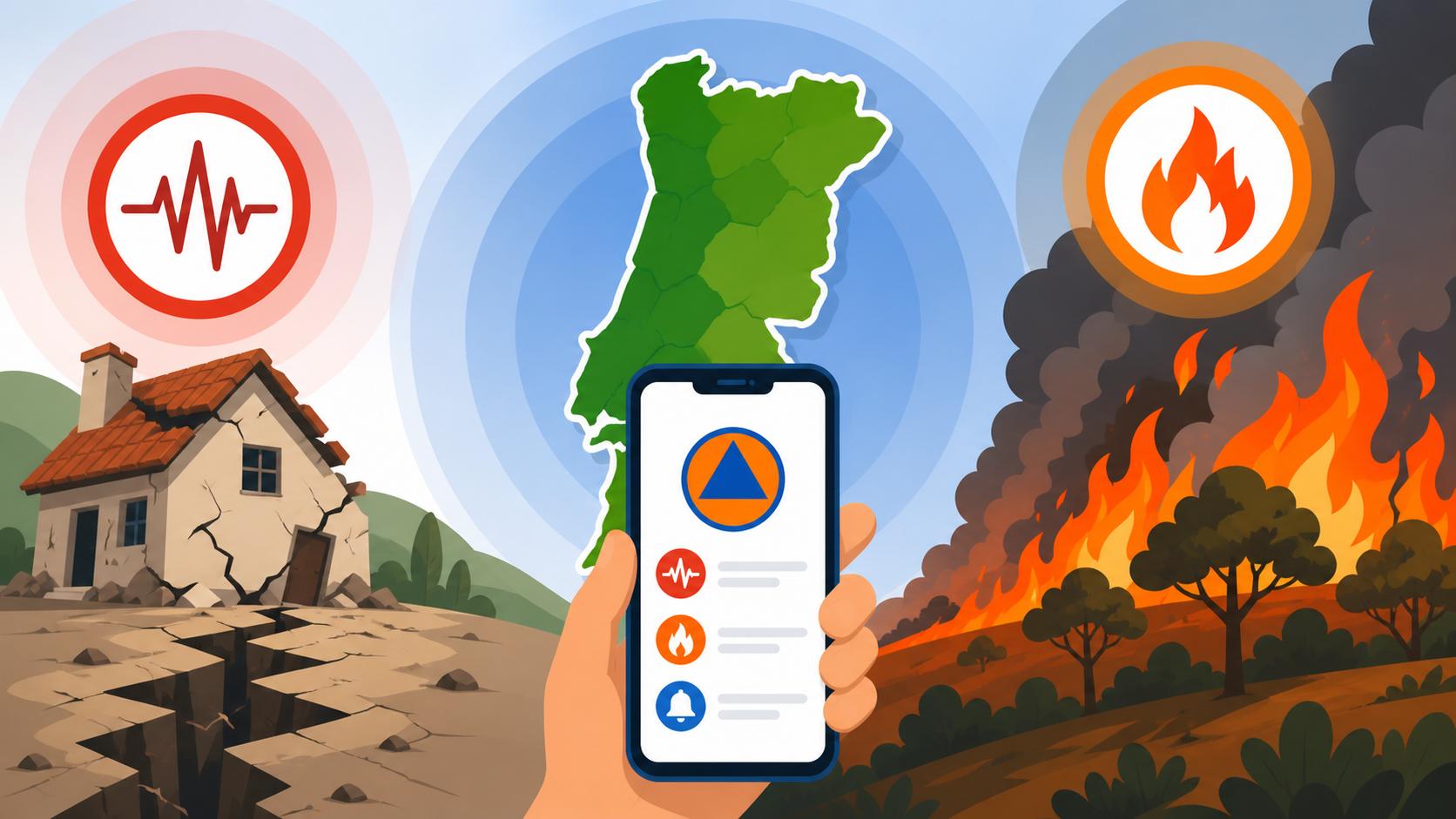
Prociv is the acronym for the Autoridade Nacional de Emergência e Proteção Civil (ANEPC). This is the single most important resource for anyone living in Portugal. Their website and app provide real-time data on every emergency incident in the country, from a minor three-car pileup on the A1 to a major wildfire in the Serra da Estrela.
The Prociv portal allows you to see exactly how many firefighters (bombeiros), vehicles, and aircraft (meios aéreos) are deployed to a specific incident. When the sky turns grey and you smell smoke, checking Prociv is the first thing every veteran expat does. It helps you distinguish between a controlled burn and a situation where you might need to evacuate.
To stay connected during an emergency, having a secondary data source is crucial. If a fire reaches a local cell tower, your home Wi-Fi might go down. It is wise to have an eSIM from Airalo as a backup. It allows you to switch to a different network provider instantly, ensuring you can still access Prociv maps or call for help even if your primary provider is struggling.
Navigating the ANEPC/Prociv Website
The interface is primarily in Portuguese, but it is very visual. Look for the "Ocorrências" (Incidents) tab.
- Red Icons: Active fires or major emergencies.
- Blue Icons: Resolved or "in conclusion" status.
- Orange/Yellow: Ongoing monitoring.
You can filter by district (Distrito) and municipality (Concelho) to see exactly what is happening in your backyard.
The SMS-Previna System
The government also operates an emergency SMS alert system. During periods of extreme weather or fire risk, you will receive an automated text message from "PROCIV" or "ANEPC." These are often in Portuguese, so it is a good idea to have a translation app ready. Understanding these alerts is part of Learning European Portuguese: Top Apps, Tutors, and Free Government Classes. If the message contains the word "Evacuação," you leave immediately. No questions asked.
Practical Preparation: Housing, Gear, and Communication
Survival in a natural disaster often comes down to the first 30 minutes of your response. Being prepared means having both the digital tools and the physical gear ready to go. If you are just arriving, follow the Health checklist for your first 30 days living in Portugal as an expat to ensure you have your medications and emergency contacts in order.
A major part of preparation is ensuring you are not isolated. Connectivity is your lifeline. Beyond using Airalo for emergency data, you should have a high-capacity power bank. I bought mine from Amazon Spain after a winter storm in the Silver Coast knocked out my power for 18 hours. Without it, I wouldn't have been able to track the storm's progress or keep my phone charged for emergency calls.
| Emergency Category | Item / Action | Source / Provider |
|---|---|---|
| Housing | Modern seismic-resistant rentals | Uniplaces |
| Connectivity | Backup eSIM / Mobile Data | Airalo |
| Supplies | Fire Extinguishers / Go-Bag Gear | Amazon Spain |
| Information | Real-time Incident Maps | Prociv / ANEPC |
| Communication | Emergency SMS Alerts | Portuguese Gov (Automatic) |
| Health | First-Aid Kit & Prescriptions | Local Farmácia |
Setting Up Your "Go-Bag"
In Portugal, your go-bag should include copies of your residency card, NIF, and health insurance papers. If you use Using Cigna Global or Allianz for international expat healthcare in Portugal, keep a printed copy of your policy and the emergency contact number. In a wildfire evacuation, you might be displaced for several days, and having your Private Health Insurance in Portugal: Costs, Coverage, and Best Providers information ready ensures you can access private clinics if public hospitals are overwhelmed by emergency triage.
Communication with Neighbors
One of the best ways to stay safe is to talk to your Portuguese neighbors. They have lived through these cycles for decades. They know which way the wind usually blows and which tracks lead to safety if the main road is blocked. Integrating into the community is more than just social; it's a safety strategy. We cover the cultural nuances of this in our guide on Portuguese greeting etiquette: When to use Beijinhos vs Handshakes. In a crisis, the neighborly bond is the strongest support system you have.
Earthquake and Wildfire Safety Summary for Newcomers
Ultimately, living in Portugal involves a pact with nature. We accept the dry heat and the tectonic history in exchange for the incredible quality of life. By monitoring Prociv, securing a safe home through Uniplaces, and maintaining digital redundancy with Airalo, you can significantly mitigate the risks.
Don't let the fear of "what if" stop you from exploring the beautiful interior or the rugged cliffs of the Sagres coast. Just do it with a plan in your pocket and the Prociv app on your home screen. Whether you are Living in the Algarve: Winter vs Summer price differences for expats or settling into a bustling Lisbon hub, staying informed is the key to a long and happy life in the Lusitanian sun.
Disclaimer
The information provided in this guide is for general informational purposes only. Natural disaster risks and government emergency procedures can change rapidly. Always follow the direct instructions of local Portuguese authorities, the GNR, and ANEPC (Prociv) during an emergency. We are not emergency medical or safety professionals; please consult with official civil protection resources for specific safety protocols.