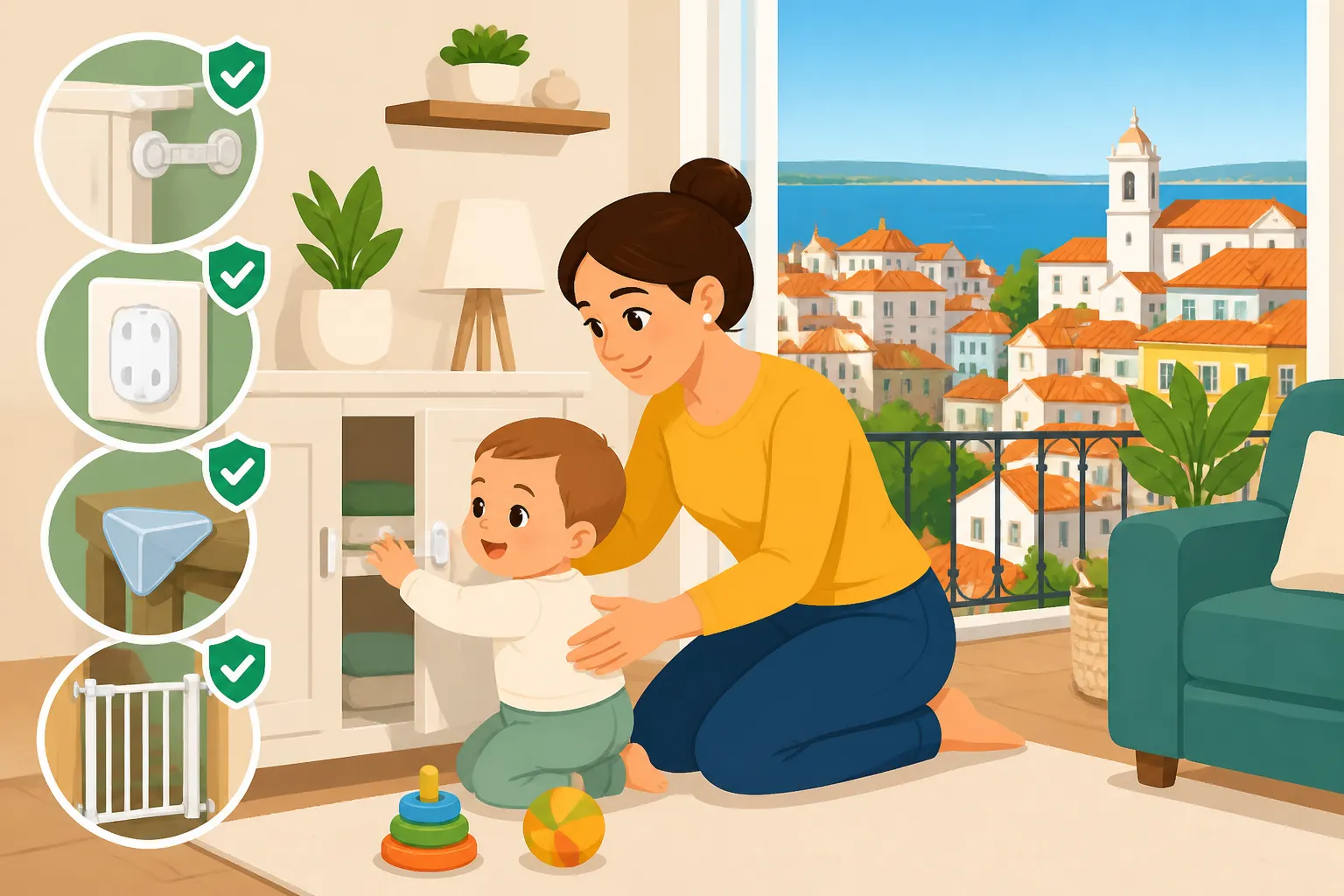
How to Childproof a Home in Portugal
Disclosure: This article contains affiliate links. If you buy through them, we may earn a commission at no extra cost to you. Read our full disclosure.
Moving into a Portuguese home with infants or toddlers introduces a unique set of safety challenges that many foreign parents rarely anticipate. From unyielding ceramic tile floors and sheer, open-air balconies to vintage electrical outlets and unvented space heaters, traditional Iberian architecture was simply not designed around modern childproofing standards. This guide provides a practical, step-by-step walkthrough to help expat families identify local household hazards, secure their living spaces, and source essential safety gear across Portugal.
Structural Safety and Architectural Hazards
Hard Tile Floors, Stone Stairs, and Unforgiving Surfaces
One of the first things you notice upon stepping into a traditional Portuguese house or apartment is the abundance of hard surfaces. Ceramic tile (mosaico), polished stone, and solid marble are standard building materials across the country due to their ability to keep homes cool during sweltering Mediterranean summers. However, for a toddler learning to pull themselves up or a wobbly crawler taking their first steps, these unyielding floors convert minor slips into serious bumps and bruises. Concrete structural subfloors mean there is zero give beneath those beautiful decorative tiles.
Mitigating these hazards requires a strategy tailored to Portuguese living. High-density EVA foam play mats are an absolute necessity for primary play zones. When arranging living space, secure area rugs with heavy-duty non-slip rug underlays to prevent sudden slides on polished tile. If you are scouting temporary housing on platforms like Spotahome before committing to a long-term lease, keep an eye out for apartments featuring original hardwood strip floors (tábua corrida) in the bedrooms, which offer a slightly softer landing than full-tile layouts. For stone staircases, installing adhesive anti-slip rubber treads along the edge of each step gives little feet much-needed traction. If you are raising young children while settling into the country, balancing safety with everyday domestic life is a constant adjustment, much like managing school admissions and local routines detailed in Moving to Portugal with Kids: Schools, Childcare, and Family Life.
Securing Windows, Balconies, and French Doors
The quintessential Portuguese apartment features charm-filled French doors, floor-to-ceiling casement windows, and picturesque balconies (varandas). While these features offer stunning streetscapes and excellent ventilation, they present severe fall risks for inquisitive toddlers. Windows in older Portuguese buildings often feature low sills, light latching mechanisms, and outward-opening shutters (persianas or portadas) that children can easily push open if left unattended.
To childproof balconies, the gold standard in Portugal is installing a specialized safety net, known locally as a rede de proteção. These UV-resistant nylon mesh nets are anchored directly into the exterior masonry and are designed to withstand significant weight without altering the building’s façade permanently. For windows, simple screw-free window restrictors can be fitted to limit openings to less than 10 centimeters, allowing cool evening air to circulate while keeping children safely inside. If you are renting your apartment, keep in mind that landlord approval is generally required before drilling into exterior walls or balcony frames, a condition you should clarify alongside other tenant duties found in Portuguese Lease Contracts (Contrato de Arrendamento): What to Look For.
BALCONY SAFETY TIP: Never place patio chairs, planters, or storage boxes near
balcony railings. Toddlers quickly use these items as improvised stepping stools
to climb over wrought-iron bars.
Electrical, Heating, and Appliance Hazards in Older Homes
Navigating Outlets, Ungrounded Wiring, and Exposed Cables
Electrical standards in Portuguese residential properties vary dramatically depending on the age of the building. Older urban flats in Lisbon, Porto, or Coimbra frequently feature wall outlets mounted exceptionally low—right at a crawling baby’s eye level. Furthermore, many older apartments lack modern circuit breakers or grounded outlets (tomadas com ligação à terra) in living areas and bedrooms, making electrical contact particularly dangerous.
Standard European Type F (Schuko) sockets require specific safety inserts. Unlike flat British or American outlets, European sockets feature a recessed cylindrical design. You will need to purchase recessed outlet caps (protetores de tomada) that fit snugly into the well. Many local varieties require a small two-pronged key to remove, ensuring curious fingers cannot pull the guard out. Cable management is equally critical: run loose appliance cords through plastic trunking glued along the baseboards, and keep heavy power strips mounted high up off the floor or locked inside ventilated cable management boxes. Before plugging in high-draw nursery devices or monitors, it helps to understand the underlying infrastructure of your flat, as outlined in Setting Up Utilities in Portugal: Electricity, Gas, Water, and Internet.
Space Heaters, Gas Boilers, and Winter Heating Safety
A surprising reality for many newly arrived expats is just how chilly Portuguese homes feel between November and March. Because central heating is rare, families rely heavily on portable heating appliances to keep living rooms and nurseries warm. Each type of portable heater introduces specific child safety concerns that require careful management:
- Butane/Propane Gas Heaters (Aquecedores a Gás): Extremely common and efficient, but they feature open or semi-exposed flames and hot metal grilles. They consume ambient oxygen and release moisture into the room, creating both burn and respiratory risks for infants.
- Electric Fan Heaters (Termoventiladores): Quick to heat small spaces, but easy for a toddler to tip over. They can burn delicate skin if touched directly at the exhaust grille.
- Oil-Filled Radiators (Radiadores a Óleo): The safest electric option for nurseries due to their stability and lack of exposed elements, though surface metal still gets hot enough to cause discomfort.
If you must use portable heating, place physical mesh fireplace gates or childproof playpens around the unit to maintain a strict clear zone. Gas water heaters (esquentadores)—frequently installed right inside Portuguese kitchens or service balconies—must be inspected annually for proper venting. Always install battery-operated carbon monoxide and smoke detectors near sleeping areas, especially when using gas-powered heat. For broader strategies on managing low indoor temperatures safely without creating fire hazards, consult Why do Portuguese houses lack central heating? Practical winter solutions. Furthermore, running electric heaters in damp rooms often exacerbates humidity shifts, making it vital to balance heating with moisture control solutions detailed in Best dehumidifiers to buy in Portugal to prevent winter wall mold.
Sourcing Childproofing Supplies and Navigating Rentals in Portugal
Where to Buy Safety Gear Locally and Online
Finding comprehensive childproofing kits in physical stores across Portugal can sometimes feel like a treasure hunt. While major hypermarkets like Continente, Auchan, and Pingo Doce carry basic socket covers and corner guards in their baby aisles, their selection is usually limited. For a broader range of hardware, local home improvement chains like Leroy Merlin and AKI stock door stoppers, heavy-duty safety gates, and cabinet straps. Furniture giant IKEA—located in major hubs like Lisbon, Porto, Matosinhos, and Loulé—offers an affordable, dedicated safety line (PATRULL) that includes socket plugs, multi-locks, and corner bumpers.
For specialized gear such as extra-wide tension gates for non-standard Portuguese doorways, magnetic cabinet locks, or high-tensile balcony mesh, ordering online is often the most convenient option. Many expat parents rely on Amazon Spain, which delivers quickly across the border into Portugal with zero import fees. Ordering home safety equipment online is straightforward once you know how to navigate local address formats and CTT delivery protocols, as explained in How to receive Amazon packages in Portugal without paying customs fees. If you have just landed in the country and lack a permanent local phone plan, setting up a temporary eSIM via Airalo ensures you stay connected to track home deliveries, locate nearby hardware stores, and communicate with installation tradespeople right from your smartphone.
Temporary Childproofing for Rental Properties
The vast majority of expats in Portugal start their journey as tenants. Portuguese rental laws and standard lease agreements strictly protect the landlord’s property, prohibiting tenants from making permanent structural alterations, drilling deep holes into walls, or painting without explicit written permission. This makes traditional screw-mounted safety gates and wall-anchored furniture brackets a point of contention during move-out inspections.
Fortunately, modern rental-friendly childproofing options allow you to protect your child without sacrificing your security deposit:
- Pressure-Mounted Gates: Ideal for hallway corridors and interior door frames. They use tension pads against the door jambs, eliminating the need to drill into wooden frames or plaster.
- Adhesive Magnetic Locks: Perfect for kitchen cabinet doors and drawers. High-strength 3M adhesive plates secure the lock internally, opening only when a magnetic key is applied from the outside. Heat the adhesive with a hairdryer upon move-out for clean removal.
- No-Drill Furniture Anchors: Heavy-duty adhesive straps designed to anchor bookshelves, dressers, and TV stands directly to tiled or painted walls without drilling expansion plugs.
- Foam Door Stoppers: C-shaped foam clamps placed high on interior doors prevent heavy Portuguese hardwood doors from slamming shut on small fingers or locking toddlers inside rooms.
Taking time to install non-invasive safety gear pays off immensely when your lease expires, helping you avoid security deposit disputes covered in Getting your rental deposit (Caução) back: Move-out cleaning tips for Portugal. Understanding what items were supplied with your apartment from day one also helps you decide which temporary modifications are needed, a distinction explored in Furnished vs Unfurnished Rentals in Portugal: What is Actually Included?.
Room-by-Room Childproofing Checklist for Portuguese Homes
To ensure no hidden hazard is overlooked, use this targeted checklist tailored specifically to the structural quirks of Portuguese residences.
| Room / Area | Common Portuguese Architectural Hazard | Recommended Safety Item | Installation / Action Tip |
|---|---|---|---|
| Living & Dining Rooms | Low-mounted Type F sockets, stone/tile floors, glass-paneled interior doors | Recessed socket caps, foam play mats, heavy door stops, anti-shatter window film | Cover all unused wall outlets; apply safety film to lower glass panels on interior doors. |
| Balconies & Windows | Wrought-iron bars with wide gaps, low sills, outward-opening shutters | Balcony net (rede de proteção), window restrictor latches | Hire a professional installer for balcony netting; ensure mesh is rated for high tensile impact. |
| Kitchen (Cozinha) | Exposed gas water heater (esquentador), low washing machine, tile floor | Gas knob covers, appliance locks, magnetic cabinet latches, carbon monoxide alarm | Keep chemical cleaning supplies in upper cabinets; fit magnetic latches to lower drawers holding cutlery. |
| Bathroom (Casa de Banho) | Slippery marble/tile, deep porcelain tubs, instant gas water heaters | Non-slip suction bath mats, toilet lid locks, thermostatic mixer valve caps | Set water heater max output to 48°C to prevent sudden scalding from fluctuating water pressure. |
| Stairs & Hallways | Open marble or polished wood steps, stone balustrades | Pressure-mounted safety gates, anti-slip rubber stair treads, net mesh for railings | Install gates at both top and bottom of staircases; weave safety netting through wide balustrade gaps. |
Deep-Dive: Kitchen and Bathroom Safety Quirks
Kitchens and bathrooms in Portuguese residences require special attention due to their heavy reliance on hard tiling, stone thresholds, and gas-powered appliances. In the kitchen, washing machines and dishwashers are routinely built into lower kitchen cabinetry rather than housed in separate utility closets. Toddlers find the low-mounted buttons, dial wheels, and glass doors of these appliances irresistible. Installing universal rotary knob covers and front-latching door locks prevents toddlers from interrupting wash cycles or opening doors mid-wash when hot water is present.
In the bathroom, floor tiles become exceptionally slick when wet. Beyond laying down non-slip rubber bathmats inside and outside the shower tray, pay close attention to water temperature control. Many traditional Portuguese homes use direct-burn gas water heaters that heat water on demand. Water pressure swings—such as someone opening a kitchen tap while a child is in the bath—can cause rapid surges in shower water temperature. Installing a anti-scald thermostatic valve or keeping the heater’s main temperature limit setting low prevents accidental burns. Keep a well-stocked emergency kit in the bathroom cabinet for minor cuts and scrapes, sourcing supplies through local farmácias as outlined in Navigating Portuguese pharmacies for common household first-aid items.
Creating a safe, secure home environment allows your children to explore freely while giving you peace of mind as your family adjusts to life in Portugal. As your household routines solidify, balancing home safety alongside broader family needs becomes second nature, whether you are managing daily play routines or arranging domestic help through services discussed in Childcare in Portugal: Creches, Nannies, and Monthly Costs. By taking a proactive approach to childproofing, you can embrace the unique charm of traditional Portuguese living while keeping your littlest family members protected.
Disclaimer
This article is for general informational purposes only and does not constitute professional advice. Laws, prices and regulations vary by location and change over time. Consult a qualified professional for guidance on your specific situation.