Why do Portuguese houses lack central heating? Practical winter solutions
Disclosure: This article contains affiliate links. If you buy through them, we may earn a commission at no extra cost to you. Read our full disclosure.
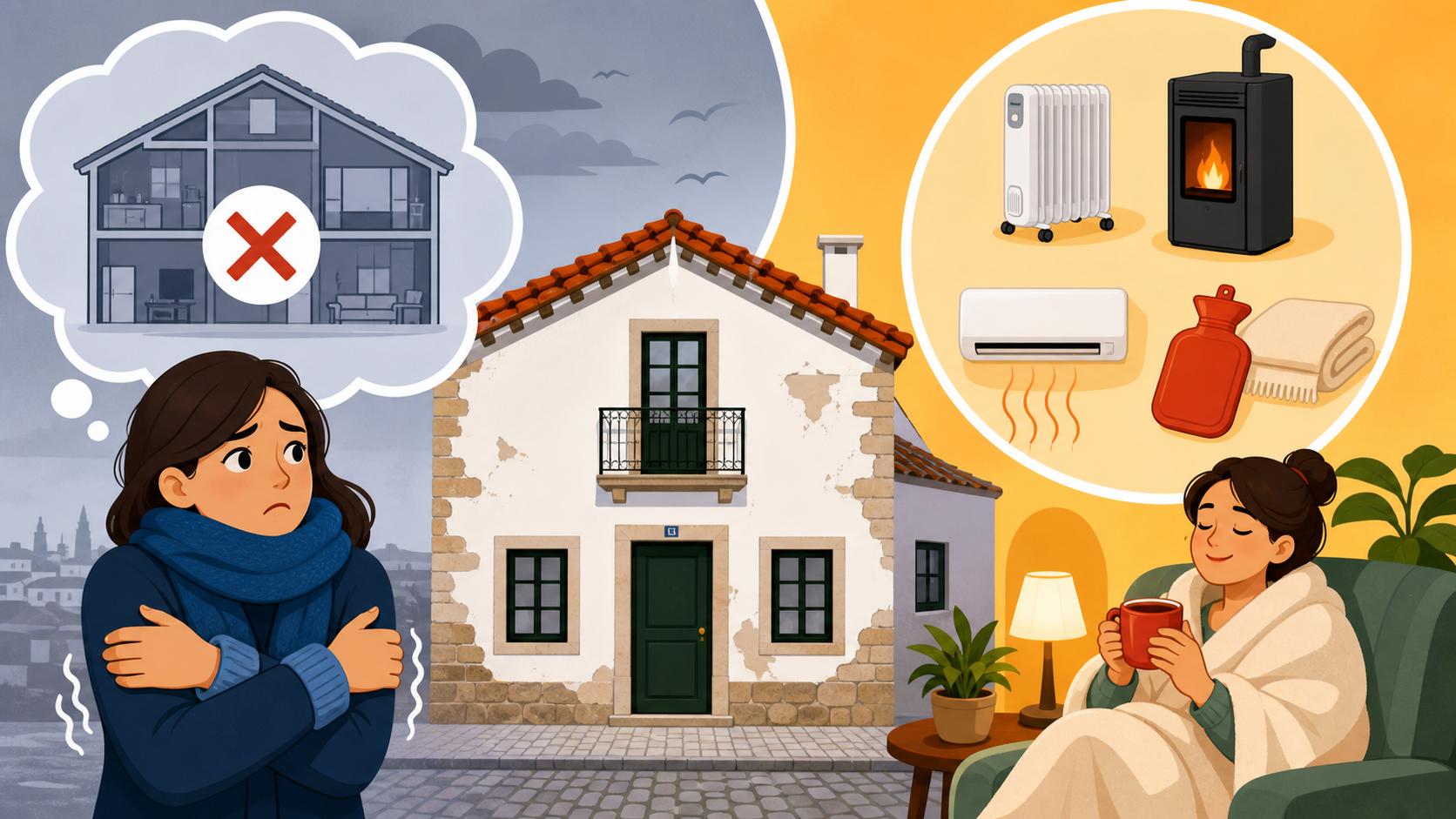
Most expats arrive in Portugal chasing the dream of 300 days of sunshine, only to be hit by a shocking reality: it is often colder inside a Portuguese house than it is outside. I remember my first winter in a charming Lisbon apartment; I found myself wearing a full outdoor coat and a beanie just to watch a movie in my living room. This guide explains why this architectural phenomenon exists and provides battle-tested, practical solutions to keep you warm.
The Architectural Paradox of Portuguese Homes
To understand why you are shivering in your beautiful tiled apartment, you have to look at how buildings here were historically designed. For centuries, the primary architectural goal in Portugal was to keep the heat out, not to keep it in. The country experiences long, blistering summers where the sun beats down on stone and concrete. Consequently, traditional Portuguese construction utilizes thick stone walls or heavy brick and concrete that provide high thermal mass.
In the summer, these walls are a godsend. They stay cool and prevent the interior from becoming an oven. However, once the Atlantic damp sets in around November, that same thermal mass becomes a liability. These thick walls absorb the cold and the humidity, acting like a giant refrigerator surrounding your living space. Without a consistent, internal heat source to "charge" those walls with warmth, the interior temperature drops and stays low, regardless of whether the sun comes out for a few hours in the afternoon.
Furthermore, many older buildings were constructed before modern insulation standards existed. It is not uncommon to find gaps under doors and around window frames that allow the "ar frio" (cold air) to whistle through your hallway. If you are currently browsing Understanding the Portuguese Rental Market: T0, T1, T2 Layouts Explained, pay close attention to the age of the building and the type of windows installed, as these factors will dictate your comfort for three months of the year.
Why Central Heating is the Exception Rather Than the Rule
If you come from Northern Europe or North America, the absence of a furnace and ductwork feels like a massive oversight. In Portugal, central heating was historically considered a luxury for the ultra-wealthy or a pointless expense for a "warm" country.
The Cultural Perspective on Winter
There is a pervasive cultural stoicism in Portugal regarding the winter. Many locals grew up in houses where the "solution" to the cold was simply to put on another "camisola" (sweater) or use a "botija de água quente" (hot water bottle). Because the period of truly uncomfortable cold is relatively short—usually from late December to early March—many landlords and developers historically felt that the high cost of installing central heating infrastructure wasn't justified.
The Energy Cost Barrier
Portugal has some of the highest electricity prices in Europe relative to the average salary. Installing a gas-powered central heating system requires significant plumbing work that many old Pombaline or regional stone houses cannot easily accommodate. For those renting through platforms like Uniplaces, you might find that while the apartment is modern and chic, it still relies on a single portable radiator or an AC unit that struggles to heat the high-ceilinged rooms.
The reliance on electricity for heating means that running a full-house system can lead to astronomical bills. This is a common pain point for new arrivals who aren't yet familiar with How to read an EDP electricity bill: Taxes, bi-hourly tariffs, and peak hours. When you see your first winter bill, you quickly understand why people are hesitant to leave the heater on all night.
The Battle Against Humidity and Mold
In Portugal, the cold is rarely "dry." It is a damp, Atlantic cold that brings high humidity levels into the home. When you combine cold, uninsulated walls with the moisture from cooking, showering, and even breathing, you get condensation. This condensation is the precursor to the expat’s greatest enemy in Portugal: black mold.
Newcomers often spend thousands on beautiful furniture only to find the back of their wardrobes covered in green fuzz by February. This happens because the air inside the house holds too much moisture, which then hits the cold walls and turns into liquid. To prevent this, you cannot simply heat the air; you must dry it.
This is where a high-quality dehumidifier becomes your best friend. Many veteran expats will tell you that a dehumidifier is actually more important than a space heater. By lowering the humidity to around 50%, the air feels warmer, and your clothes and bedsheets stop feeling perpetually "damp." You can easily find high-capacity units on Amazon Spain that can be delivered directly to your door within a few days. Using a dehumidifier in conjunction with Best dehumidifiers to buy in Portugal to prevent winter wall mold is the only way to protect your health and your security deposit during the winter months.
Practical Survival Strategies for Renters
If you are a tenant, you likely cannot install a new HVAC system or replace the windows. You have to work with what you have. Over my years here, I’ve developed a "winter survival kit" approach that makes a world of difference.
Portable Heating Options
Not all heaters are created equal in the Portuguese context.
- Oil-filled Radiators: These are the most common. They take a while to heat up but provide a steady, "silent" heat. They are great for bedrooms if you turn them on an hour before sleep.
- Convector Heaters: These heat the air quickly but the warmth disappears the moment you turn them off. They are also notoriously expensive to run.
- Ceramic Fan Heaters: Good for a quick blast in a cold bathroom before a shower, but too noisy and drying for long-term use in a living room.
- Air Conditioning (AC): If your rental has AC, use it! Most modern units in Portugal are heat pumps, which are significantly more efficient than portable electric radiators.
Sealing the Gaps
You would be surprised how much heat escapes through a "leaky" Portuguese door. Go to a local "loja de ferragens" (hardware store) or Leroy Merlin and buy self-adhesive foam weather stripping. Apply this to the frames of your doors and windows. Additionally, the "cobra" (draft stopper)—a long fabric tube filled with weighted material—placed at the base of your front door can stop the draft from the common stairwell, which is often as cold as the street.
While researching these fixes, many nomads find themselves relying on an eSIM from Airalo to keep their data running while they navigate local hardware store websites or translate technical terms for "weather stripping" (fita de calafetagem).
Long-Term Solutions for Homeowners
If you have purchased property, you have the opportunity to fix these systemic issues. While expensive, these upgrades significantly increase the value of your home and your quality of life.
External and Internal Insulation
If your home has "paredes duplas" (double walls with a cavity), you can have insulation injected into the gap. If you have solid stone walls, you might need to install internal "pladur" (drywall) with a layer of rock wool insulation behind it. This reduces the square footage slightly but stops the "refrigerator effect" of the stone walls.
High-Performance Windows
Most old Portuguese windows are single-pane with aluminum frames that act as "thermal bridges," literally conducting the outside cold into your room. Replacing these with double-glazed (vidro duplo) windows with thermal break frames is the single most effective thing you can do. It also helps with the noise of the city. For more details on these renovations, check out Heating and Insulation in Portuguese Homes: Fighting Winter Cold and Mold.
Comparing Winter Heating Solutions in Portugal
| Solution | Initial Cost | Operating Cost | Effectiveness | Best For |
|---|---|---|---|---|
| Dehumidifier | Moderate | Low | High (for comfort) | Preventing mold and "damp cold" |
| Oil Radiator | Low | High | Medium | Bedrooms and steady heat |
| AC (Heat Pump) | High | Moderate | High | Energy-efficient heating & cooling |
| Pellet Stove | High | Low | Very High | Large living areas and rural houses |
| Electric Blanket | Very Low | Minimal | High (personal) | Staying warm in bed without heating the room |
The "Portuguese Way" of Living in Winter
Beyond the hardware, there is a lifestyle adjustment required to survive a Portuguese winter. You have to learn the art of "layering" indoors. This isn't the place for t-shirts and shorts in the house during January. Invest in high-quality wool slippers (pantufas) because the tiled floors will suck the heat out of your feet instantly. You can find excellent options for winter gear and cozy home essentials on Amazon Spain, which often has a wider selection of thermal wear than local malls.
I also recommend the "sun-chasing" method. During the day, if the sun is hitting a specific room, open the shutters wide and let that natural radiation warm up the floor and walls. The moment the sun goes down, close the "estores" (heavy external shutters) immediately. These shutters act as an extra layer of insulation, trapping a pocket of air between the window and the outside world.
Lastly, don't forget the importance of proper attire. Knowing Where to buy winter clothes in Portugal when it's surprisingly cold indoors is essential, as the standard fashion often emphasizes style over the heavy-duty thermal properties needed for a house with no insulation.
Budgeting for the Winter Chill
Living in Portugal can be affordable, but winter is the one season where your budget might take a hit. Between the increased electricity usage and the purchase of heating equipment, your monthly outgoings will rise. When planning your move, ensure you've looked at the Cost of Living in Portugal 2026: Detailed Budgets for Singles and Families to account for these seasonal fluctuations.
It is also worth noting that many expats choose to use a "bi-horário" (time-of-use) electricity tariff. This allows you to run your dehumidifier and heaters at a lower rate during the night or early morning. Learning to time your energy usage is a key skill for any long-term resident. For a deeper dive into managing these logistics, refer to Setting Up Utilities in Portugal: Electricity, Gas, Water, and Internet.
Disclaimer
The information provided in this guide is for educational and informational purposes only. Building standards, energy prices, and legal requirements for rentals in Portugal can change. Always consult with a qualified professional, such as a certified electrician or a licensed contractor, before making significant structural changes to a property. Rental agreements are subject to Portuguese law, and you should verify your tenant rights with a legal professional before attempting to withhold rent or break a lease due to heating issues.