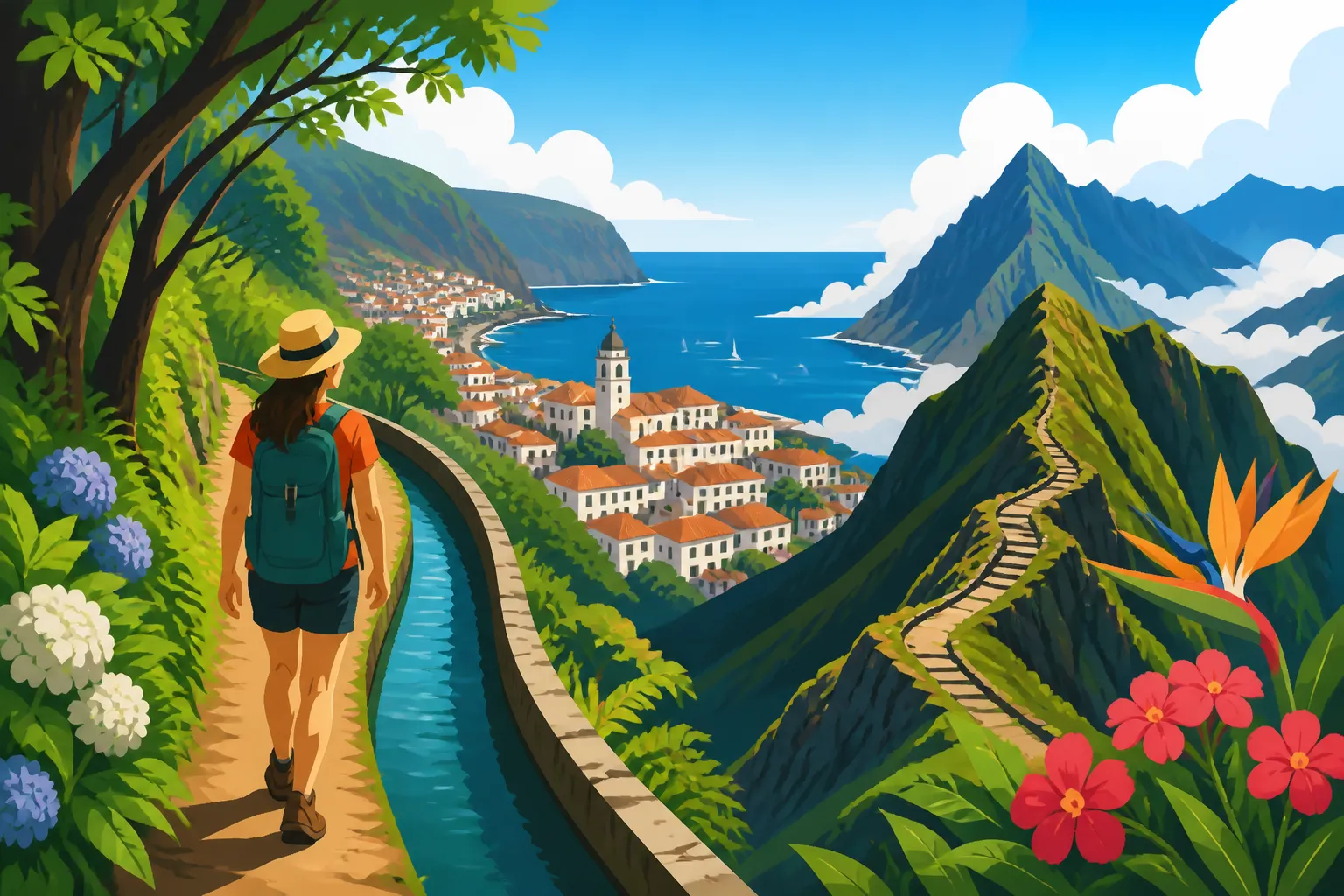
Madeira for Travelers: Levadas, Funchal, and Peaks
Disclosure: This article contains affiliate links. If you buy through them, we may earn a commission at no extra cost to you. Read our full disclosure.
Many travelers see Madeira as a daunting puzzle of sheer cliffs and unpredictable weather, often dismissing it as a destination solely for seasoned hikers or the elderly. This guide solves that by providing a realistic roadmap to navigating the island's steep terrain, choosing the right base for your stay, and mastering the microclimates that define the Atlantic's most dramatic archipelago.
Arriving and Navigating the Rugged Island Terrain
When you first touch down at Cristiano Ronaldo International Airport, you’ll notice two things immediately: the runway is built on stilts over the ocean, and the wind has a personality of its own. As someone who has spent years helping newcomers settle into the Portuguese lifestyle, I can tell you that your arrival in Madeira is unlike landing in Lisbon or Porto. The logistics here require a bit more foresight, especially if you aren’t used to island time or the sheer verticality of the landscape.
The Cristiano Ronaldo Airport Experience
The airport itself is an engineering marvel, but for travelers, it represents the first hurdle. Because of the crosswinds, flight delays or diversions to Porto Santo or even the mainland aren't uncommon. Newcomers should keep their schedules flexible on arrival day. Once you clear customs, you have a few choices for getting to Funchal, which is about 20 minutes away. The Aerobus is a reliable, budget-friendly option that stops at most major hotel zones. However, if you are arriving with a lot of luggage or as a family, a pre-booked transfer is often worth the extra few euros to avoid the taxi queue.
To compare your arrival options or even check for inter-island ferry connections, it is often worth using Omio to see how various transport schedules align with your flight. It saves a lot of the headache that comes from trying to navigate multiple local websites that may or may not have updated English versions.
The Reality of Driving and Public Transport
Driving in Madeira is an adventure that requires nerves of steel. The island is essentially a massive mountain poking out of the sea, connected by a network of "tunnels" (túneis) and "Vias Rápidas." While the main highways are modern and well-maintained, the moment you venture into the hills, the roads become incredibly narrow and steep. If you aren't comfortable with hill starts on a 30-degree incline, I strongly suggest opting for an automatic rental car.
Public transport is managed by different companies depending on where you are going. Within Funchal, the yellow "Horários do Funchal" buses are excellent. For trips across the island, you’ll look for the Rodoeste or SAM buses. Navigating these schedules can be tricky for a first-timer, and it’s a far cry from the seamless metro systems you might find when researching Public Transport and Driving in Portugal: Trains, Tolls, and Licenses. If you aren't driving, expect to spend a significant amount of time planning your movements around these bus timetables, which often favor school and work commutes over tourist needs.
Funchal and the Cultural Pulse of the South
Funchal is the heartbeat of the island, a city that manages to feel like a bustling Mediterranean port and a sleepy botanical garden all at once. For those of us who live in Portugal, Funchal represents a more relaxed pace of life compared to the frenetic energy of the capital. It’s the best place to base yourself if you want a mix of fine dining, history, and easy access to tours.
Exploring the Historic Core and Zona Velha
The "Zona Velha" or Old Town is famous for its "Arte de Portas Abertas" (Art of Open Doors) project, where local artists have transformed Rua de Santa Maria into a permanent outdoor gallery. While it has become quite touristy in recent years, walking through here in the early morning before the cruise ships empty out is still a magical experience. You’ll find the Sé Cathedral nearby, a stunning example of Manueline architecture that has stood since the late 15th century.
When looking for a place to stay in this area, you'll want to balance charm with noise levels. I recommend checking Booking.com for boutique guesthouses in the Santa Maria or Sé districts, as they often provide a more authentic vibe than the massive resort hotels in the Lido area. Staying central means you can walk to the Mercado dos Lavradores, the famous farmers' market. A word of advice: be wary of the fruit sellers offering "tastes" of exotic passion fruit hybrids; they are notoriously expensive, and you can find the same produce for a fraction of the price at smaller local groceries.
Gardens and the Heights of Monte
Above Funchal lies Monte, a lush suburb that feels worlds away from the sea-level heat. You can reach it via a cable car that offers breathtaking views of the bay. Once there, the Monte Palace Tropical Garden is a must-see. It’s not just about the plants; the garden houses a massive collection of tile art (azulejos) spanning several centuries and a museum of Zimbabwean sculpture.
Descending from Monte offers one of Madeira’s most iconic, if slightly terrifying, experiences: the wicker toboggan ride. Two "Carreiros" in straw hats will push you down the steep streets in a giant basket. It’s purely for tourists, but the history behind it as a legitimate form of 19th-century transport makes it worth the thrill. After you’ve survived the descent, take a moment to practice your Learning European Portuguese: Top Apps, Tutors, and Free Government Classes by ordering a "Bica" (espresso) at a nearby café to calm your nerves.
The Legendary Levada Trails
You cannot say you have been to Madeira without walking a levada. These are man-made irrigation channels developed to bring water from the rainy north to the parched south. Over centuries, the maintenance paths alongside them have become the island’s premier hiking network.
What is a Levada and Why Do They Exist
The levada system is a testament to the sheer grit of the Madeiran people. Imagine carving narrow stone channels into the side of a vertical cliff by hand. Today, there are over 2,000 kilometers of these paths. They offer a unique hiking experience because the elevation gain is often minimal—the water has to flow downward at a very slight grade, after all. This makes them accessible to people who might struggle with traditional mountain trekking.
However, do not mistake "flat" for "safe." Many levadas feature narrow ledges with sheer drops of hundreds of meters, sometimes with only a thin wire fence between you and the abyss. If you suffer from vertigo, you need to research specific trails before heading out. For those who want the experience without the risk of getting lost or overwhelmed, there are fantastic guided options available through GetYourGuide that provide transport and an expert who can explain the endemic flora of the UNESCO-protected Laurissilva forest.
Selecting the Right Path for Your Experience
For beginners, the Levada dos Balcões is a short, easy walk that ends at a stunning viewpoint. For something more immersive, the Levada do Caldeirão Verde is the "gold standard." It takes you through tunnels and behind waterfalls into a lush, emerald world that looks like a scene from Jurassic Park.
| Trail Name | Difficulty | Distance | Key Highlight |
|---|---|---|---|
| Levada dos Balcões | Very Easy | 1.5km | Bird watching and panoramic valley views |
| Levada do Alecrim | Moderate | 7km | Natural lagoons and mountain springs |
| Levada do Caldeirão Verde | Moderate | 12km | Tunnels and a massive hidden waterfall |
| Levada das 25 Fontes | Moderate | 9km | A wall of small springs feeding a pool |
| Vereda do Larano | Challenging | 13km | Coastal cliff-edge walking with sea views |
Remember that the weather in the mountains can change in seconds. Always pack a waterproof jacket, even if Funchal is basking in 25-degree sunshine. For more on staying safe during your adventures, refer to Safety and Emergency Preparedness in Portugal for Foreign Residents.
Conquering the High Peaks
If the levadas are about the journey through the forest, the "Veredas" are about the destination. These are mountain paths that take you to the very spine of the island, above the clouds.
The Peak-to-Peak Challenge
The most famous hike on the island is the trek from Pico do Arieiro to Pico Ruivo. Pico do Arieiro is the third-highest peak and is accessible by car, making it the most popular spot for sunrise. Watching the sun break through a sea of clouds from 1,818 meters is a spiritual experience, but it is also crowded.
The path to Pico Ruivo (the highest point) is about 7 kilometers of grueling stairs, tunnels, and narrow ridges. It is physically demanding but incredibly rewarding. Many travelers underestimate this hike; it isn't a casual stroll. You are at high altitude, and the sun is intense. If you aren't an experienced hiker, consider booking a "sunrise transfer" through GetYourGuide so you can walk one way and be picked up at the other end, saving your knees from the return journey.
Essential Safety in the High Mountains
Safety is a serious topic here. Every year, people get into trouble because they venture out without a headlamp for the tunnels or enough water. The mountain weather is notorious for "fogging in" suddenly, reducing visibility to almost zero. If you find yourself in a situation where you can't see the path, stay put.
Mobile reception is surprisingly good on most peaks, but it’s still vital to know how to access Emergency Medical Care in Portugal: Calling 112 and Going to the Hospital if things go wrong. Most trails are well-marked, but downloading an offline map is a lifesaver. Also, keep a small first-aid kit with you, including basic supplies you can pick up at any local establishment; for more info, check our guide on Pharmacies and Medication in Portugal: Prescriptions and OTC Drugs.
The Coastal Wilds and Northern Secrets
While the south is sun-drenched and populated, the north coast is wild, rugged, and breathtakingly beautiful. This is where you find the Madeira of old, where the mountains dive straight into the Atlantic.
Natural Volcanic Pools and Hidden Beaches
In the northwest, the town of Porto Moniz is famous for its natural volcanic swimming pools. These are formed by ancient lava flows and are constantly replenished by the tide. Swimming in them while the Atlantic waves crash against the outer stone walls is an experience you won't forget. Nearby, the black sand beach at Seixal is arguably one of the most beautiful in the world, framed by green cliffs and a waterfall that drops directly into the ocean.
Traveling to these remote spots can be pricey if you rely on taxis. For those planning a longer stay or looking at the Cost of Living in Portugal 2026: Detailed Budgets for Singles and Families, you’ll find that a rental car is almost mandatory for exploring the north efficiently. The tunnels have made the journey much faster than it used to be, but the old coastal roads (some now closed due to rockfalls) still offer a glimpse into how isolated these villages once were.
Ocean Life and Marine Conservation
The waters around Madeira are a sanctuary for marine life. Because the ocean floor drops off so steeply near the coast, you don't have to go far to find deep-water species. Whale and dolphin watching is a year-round activity here. Unlike some other destinations, Madeira has strict regulations about how boats interact with the animals.
If you're staying in Funchal, check Booking.com for hotels near the marina to be close to the departure points. Most tours guarantee a sighting, and if you don't see anything, they often offer a second trip for free. It’s a great way to see the island’s massive cliffs from a different perspective—Cape Girão, one of the highest sea cliffs in Europe, looks even more intimidating from a boat.
Practical Tips for the Savvy Madeira Traveler
Living in Portugal as an expat has taught me that the "fine print" of a destination is what makes or breaks a trip. Madeira is no exception. It requires a different mindset than a beach holiday in the Algarve.
Weather Mastery and Packing Lists
Madeira is known as the "Island of Eternal Spring," but that’s a bit of a marketing gimmick. In reality, it’s an island of four seasons in one day. You can be shivering in the mist at Ribeiro Frio and thirty minutes later be sunbathing in Ribeira Brava. The key is layers. Always carry a light fleece and a windbreaker.
If you do catch a cold from the damp mountain air, you should know how the healthcare system works here. It’s quite different from the mainland, though the basics are covered in our overview of Healthcare in Portugal for Expats: The Complete 2026 Medical Guide. For minor issues, a visit to a "Farmácia" is usually enough, as the pharmacists are highly trained and often speak excellent English.
Island Living Costs and Budgeting
While Madeira is part of Portugal, the prices can fluctuate. Dining out in Funchal’s tourist zones will cost you about the same as in Lisbon, but if you head into the "Teleférico" backstreets or smaller villages like Câmara de Lobos, you can find a "Menu do Dia" for a bargain. Don't leave without trying "Espetada" (beef skewers on laurel sticks) and "Bolo do Caco" (sweet potato bread with garlic butter).
When it comes to dining, remember the Portuguese Coffee Culture and Restaurant Etiquette: Ordering Like a Local. Tipping isn't mandatory, but rounding up the bill is appreciated. Madeira is a place that rewards the curious traveler—the one who isn't afraid of a little rain or a steep climb. It’s an island that demands respect for its nature, but gives back some of the most spectacular vistas on the planet.
Disclaimer
The information provided in this guide is for informational purposes only and reflects the personal experiences and research of the author. Travel conditions, local laws, and prices in Portugal can change rapidly. Always verify current requirements with official government sources or qualified professionals before making travel or relocation decisions.