How to Eat Fresh Grilled Sardines in Portugal
Disclosure: This article contains affiliate links. If you buy through them, we may earn a commission at no extra cost to you. Read our full disclosure.
Ah, the humble sardine! If you've spent any time at all in Portugal, especially during the glorious summer months, you've undoubtedly encountered the intoxicating aroma of sizzling sardinhas assadas wafting from every corner tasca and festival stall. It’s a quintessential Portuguese experience, but for many newcomers, diving into a plate of whole, grilled fish can feel a little daunting. How do you eat them without looking like a total tourist, or worse, making a complete mess? Don't fret, my friend, because this guide is here to help you savor every succulent bite like a true local.
The Sardine Season and Where to Find the Best Ones
There's a reason why the smell of grilled sardines is synonymous with summer in Portugal. These aren't just any fish; they're a cultural icon, deeply embedded in the nation's festive spirit and culinary traditions. To truly appreciate them, you need to understand when and where to seek them out.
When to Enjoy Sardines: The Peak Season
If you want the absolute best, plumpest, and most flavorful sardines, you need to be in Portugal between June and September. This is when the Atlantic waters yield their most prized catches. And let me tell you, it makes all the difference. Frozen sardines, while available year-round in some places, just don't hold a candle to the fresh ones, straight from the ocean to the grill.
June is particularly special. This month marks the Festas Populares – the beloved popular saints festivals – with Saint Anthony (Santo António) in Lisbon being the undisputed king. Imagine walking through the historic neighborhoods of Alfama, Graça, or Bica, music spilling from every doorway, grilled sardines smoke curling into the twilight sky, and people laughing, dancing, and eating to their hearts' content. It’s a sensory overload in the best possible way. The air literally thickens with the scent of charcoal and fish, a signal that you are right where you're meant to be. If you’re making your way through the country, you'll find similar vibrant celebrations for São João in Porto and São Pedro across other towns. These festivals are the prime time to indulge, offering an unparalleled atmosphere to complement the food. For a broader overview of living and immersing yourself in Portuguese culture, you might find our guide on Living in Portugal Guide 2027: The Complete Relocation Manual for Expats incredibly useful.
Choosing the Right Spot: From Tascas to Esplanadas
Finding great sardinhas assadas isn't hard, but finding truly exceptional ones requires a bit of an eye (or a good nose!). Look for places with a visibly active outdoor grill, known as a churrasqueira. The smoke is your first clue – if you can smell it, you’re probably in the right place. Traditional tascas, those small, unassuming eateries often run by families, are usually your safest bet. They pride themselves on simple, honest food cooked with care. In Lisbon, neighborhoods like Alfama, Mouraria, and Graça are riddled with these gems. In Porto, areas around Cedofeita or closer to the river often have fantastic local spots.
During the festival season, especially in June, the streets themselves become giant open-air restaurants. You'll see makeshift stalls with massive grills, piled high with glistening sardines, fresh off the boat. These are often run by local community groups, offering an authentic and lively experience. While places like the Time Out Market (Mercado da Ribeira) in Lisbon offer a more polished environment with sardine options, the true magic often happens in the smaller, smokier, less touristy joints. Don't be afraid to venture a little off the main drag. Sometimes, the best sardines are found in the most unexpected, humble settings. Keep an eye out for a place where the locals are queuing – that’s always a good sign! If you’re exploring different cities for their culinary delights, remember that our Lisbon Neighborhood Guide: Best Areas for Expats and Digital Nomads and Porto Neighborhood Guide: Where to Live for Culture, Tech, and Family can point you to areas rich in gastronomic tradition.
The Art of Ordering and Presentation
So, you’ve picked your spot, your stomach is rumbling, and the aroma is driving you wild. Now, what do you actually get when you order "sardinhas assadas"? It's a simple dish, but its beauty lies in that very simplicity.
What to Expect When You Order
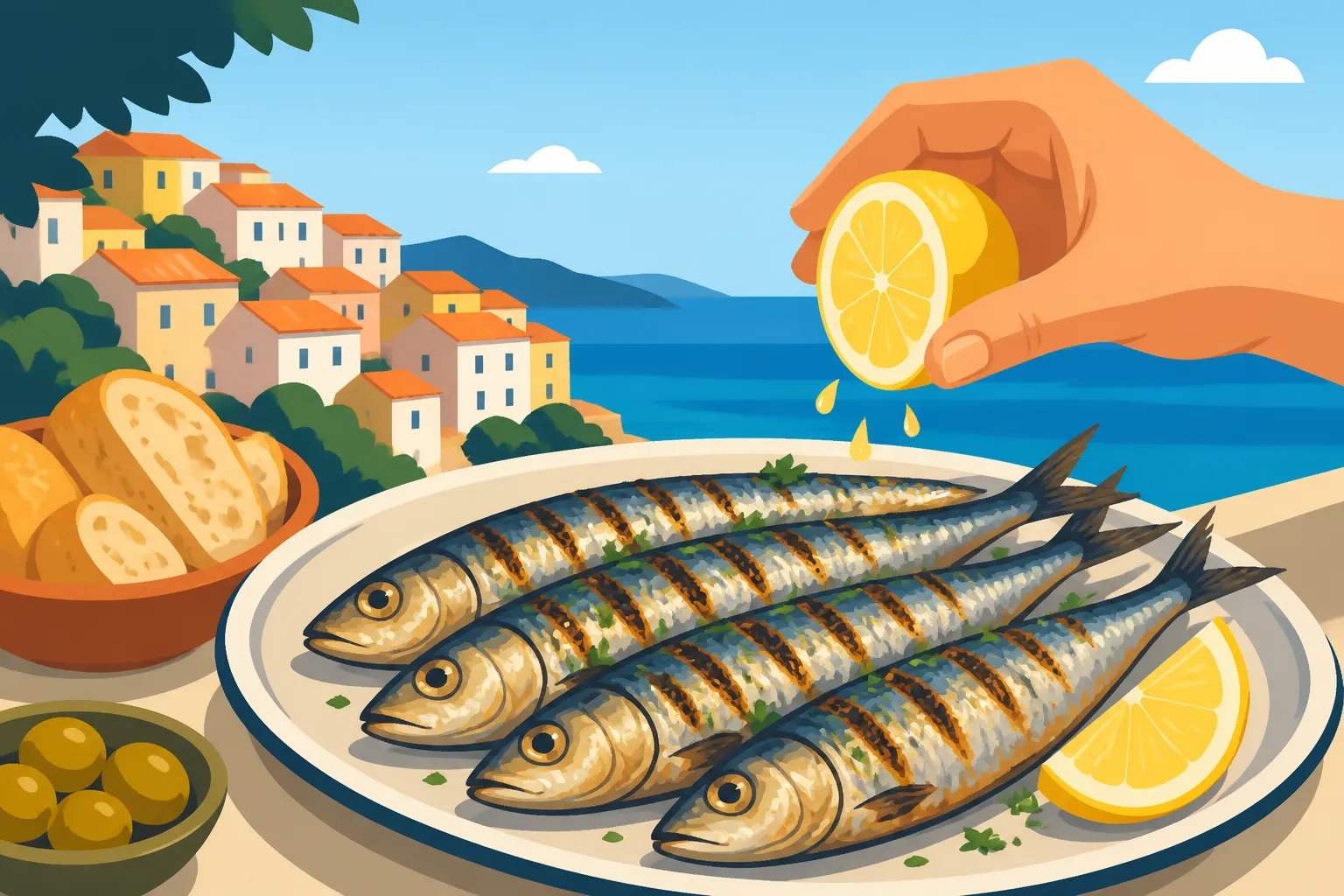
When you order sardinhas assadas, what lands on your table will be a plate of perfectly grilled, whole sardines, typically seasoned with nothing more than coarse sea salt. They arrive straight from the charcoal grill, often still glistening with juices and showing those beautiful char marks. Don't expect fancy garnishes or elaborate presentations; this is rustic food, meant to be devoured.
Accompanying your sardines, you'll almost always find two things: boiled potatoes (often unpeeled, sometimes drizzled with a little olive oil and parsley) and a simple mixed salad. The salad is usually just lettuce, tomato, and onion, dressed with olive oil and vinegar – crucial for cutting through the richness of the fish. Sometimes, you'll also get a side of salada de pimentos (bell pepper salad), which is equally delicious. Portion sizes vary, but generally, a serving will include anywhere from three to five sardines, depending on their size and the restaurant. It might seem like a lot, but believe me, once you start, they disappear quickly! It’s all about letting the natural flavor of the fresh fish shine through, enhanced only by the kiss of the charcoal and the perfect amount of salt.
Accompaniments: Bread, Wine, and Salad
The sides aren't just filler; they are integral to the experience. First up: the bread. You'll either get regular crusty pão (bread) or, even better, broa de milho (cornbread). This isn't just for appetite; it's practically a tool. The bread is essential for soaking up the glorious fish juices and olive oil left on your plate after you’ve tackled the sardines. It’s part of the ritual, a way to ensure no drop of flavor goes to waste.
To wash it all down, there are two traditional choices that simply cannot be beaten. The first is a crisp, effervescent vinho verde (green wine). This lightly sparkling, often low-alcohol wine is produced in the Minho region of northern Portugal and is the perfect counterpoint to the oily richness of the sardines. Its acidity and freshness cleanse the palate with every sip, making you eager for the next bite. If wine isn't your thing, a refreshing cerveja (beer), particularly a local lager like Super Bock or Sagres, does the job just as well. Many locals swear by it, especially on a hot summer's day.
And don't forget that simple salad! It might seem basic, but it serves a vital purpose. The crisp lettuce, juicy tomatoes, and sharp onion, lightly dressed, provide a refreshing break from the intense flavor of the grilled fish, balancing the meal beautifully. Learning a few Portuguese phrases for ordering can also enhance your experience, as detailed in our guide on Portuguese Coffee Culture and Restaurant Etiquette: Ordering Like a Local.
The Authentic Eating Technique: Getting Your Hands Dirty
Now for the part that often causes the most apprehension: how to actually eat the sardines. Forget your fancy table manners; this is a hands-on affair. Trying to tackle a whole sardine with just a knife and fork is an exercise in futility and frustration. Embrace the mess, roll up your sleeves (metaphorically, if not literally), and dive in.
How to De-Bone a Sardine Like a Local
This is where the real fun begins. The secret to eating grilled sardines like a local lies in mastering a few simple, yet satisfying, hand maneuvers. Don’t be intimidated; it’s easier than it looks, and frankly, nobody is judging your technique in a bustling Portuguese tasca.
Here’s a step-by-step guide to tackling your sardinha assada:
Step 1: The Initial Approach – Get Ready to Get Messy.
First things first: take a deep breath and accept that your fingers will get oily. This is not dainty dining. It's an earthy, primal pleasure. There might be bones, there will be juice, and your hands will smell gloriously of the sea and smoke afterwards. This is part of the charm!
Step 2: Head First – A Gentle Twist.
Hold the sardine firmly by its tail with one hand. With the other hand, you can either use a fork to gently twist the head off, or if you're feeling adventurous and the sardine is particularly fresh and well-cooked, you might even be able to just twist it off with your fingers. The head will come away relatively easily. Some very brave (or very traditional) locals might even nibble on the crispy bits of the head, but don't feel obliged!
Step 3: The Belly Slit – Opening the Fish.
Once the head is off, lay the sardine on its side. Using your thumb, gently press down along the belly of the fish, from where the head was towards the tail. This will open up the sardine, essentially filleting it in half along its natural seam. You'll expose the delicate flesh and, crucially, the spine.
Step 4: Removing the Spine – The Satisfying Lift.
This is the most satisfying part! Now that the sardine is open, locate the central spine. Starting from the head-end (which is now headless, of course), gently lift the entire spine, along with any smaller rib bones attached to it, upwards. If the sardine is cooked properly, the spine should lift away quite cleanly, leaving you with two beautiful, boneless (or mostly boneless) fillets. Sometimes a small piece of the tail might come off with it; that’s perfectly fine.
Step 5: Enjoying the Fillets – The Best Part!
Now you have two delicious fillets. You can simply pick them up and eat them. Dip them into any olive oil or juices on your plate. If you're tackling smaller sardines, some people just eat them whole, head and tail included, especially the very crispy ones. But for the average-sized sardine, de-boning is the way to go to truly savor the tender meat.
Remember, practice makes perfect. Don't worry if your first few attempts aren't Instagram-worthy. The goal is enjoyment, not perfection!
Dressing Your Sardine and Side Dishes
While sardinhas assadas are simple, there are subtle ways to enhance their flavor on your plate. Many Portuguese cooks will tell you that a drizzle of really good quality olive oil (azeite) over the hot, freshly grilled sardines just before serving, or even at the table, takes them to another level. Some tascas also serve them with a little fresh garlic and finely chopped cilantro or parsley sprinkled on top, which adds a lovely aromatic zing.
The boiled potatoes that come with the sardines are often plain, allowing you to season them to your liking. A little salt, a dash of olive oil, and sometimes some fresh parsley are common additions. They’re meant to be comforting and absorbent.
As for the salad, it's typically dressed with a simple vinaigrette: olive oil and red wine vinegar. Don't overthink it; its role is to provide a refreshing counterpoint to the richness of the fish. And that gorgeous mix of sardine juices, olive oil, and potato residue that accumulates on your plate? That’s gold. Take a piece of your broa de milho and swipe it through, soaking up all that deliciousness. It’s what we call "making a barriga" for the bread – a little tummy full of flavor!
Common Misconceptions and Expat Tips
There are a few things to keep in mind to truly enjoy this experience without any unexpected surprises.
Don't Expect Fillets and Fancy Presentations
This is crucial for newcomers. If your idea of fish involves perfectly deboned fillets, delicately plated with microgreens, you need to adjust your expectations. Sardinhas assadas are the epitome of rustic, honest Portuguese cooking. They are about the natural flavor of a fresh fish, cooked simply over charcoal. The beauty is in their imperfection, their smoky aroma, and the joy of a hands-on meal.
This isn't a Michelin-star experience; it's a cultural one. You're partaking in a tradition that dates back centuries, a straightforward, hearty meal enjoyed by everyone from fishermen to families celebrating a saint's day. Embrace the bone, the char, and the simplicity. That’s where the true magic lies. If you're looking to really dive into the local dining scene, our guide on Daily Life in Portugal: Supermarkets, Language, and Cultural Etiquette offers broader insights into Portuguese culinary customs.
Dealing with the Smell and the Mess
Let’s be real: grilled sardines have a strong, distinct smell. And when you’re in a crowded square, surrounded by dozens of grills, that smell will cling to your clothes. It's a badge of honor, really. You’ll walk away smelling like summer in Portugal, and trust me, it’s not a bad thing for locals. But for some, it can be a surprise. My advice? Wear casual clothes you don't mind airing out afterwards.
And yes, it’s a messy meal. There will be bones, bits of skin, and olive oil on your plate, possibly on your fingers, and maybe even a stray drop on the table. That’s perfectly acceptable! Don't fuss about it. Most restaurants will provide plenty of napkins, but I always carry a pack of wet wipes with me for quick hand clean-ups between sardines. It's all part of the authentic charm. If you’re touring around, perhaps consider a food tour booked through a platform like GetYourGuide, where an expert guide can introduce you to these local delights and even provide practical tips on the spot.
Seasonal Availability and Alternatives
While fresh sardines are an absolute must-try, what if you're visiting outside of the June-September window? Many restaurants will still offer sardinhas assadas, but they will almost certainly be frozen. The taste and texture won't be quite the same – they tend to be a bit softer and less flavorful than their fresh counterparts.
If you find yourself outside of sardine season, don't despair! Portugal has a wealth of other fantastic grilled fish. Ask for peixe grelhado (grilled fish) and see what's fresh that day. Carapau assado (grilled horse mackerel) is a very common and delicious alternative, with a similar rustic charm. Robalo grelhado (grilled sea bass) or Dourada grelhada (grilled sea bream) are also excellent choices, though often a bit more expensive. These offer the same simple, fresh flavors characteristic of Portuguese grilled seafood. If you're traveling across Portugal to find the best seasonal dishes or specific local markets, platforms like Omio can help you find convenient train or bus tickets between cities like Lisbon, Porto, and the Algarve, where great seafood is always abundant. Speaking of the Algarve, you can discover more about its expat life, including its culinary scene, in our The Algarve for Expats: Lagos, Faro, and Tavira Compared guide.
Remember, eating sardines in Portugal is more than just a meal; it's an experience, a connection to the culture, and a celebration of simple, fresh flavors. So next time you're here, lean into it, get your hands dirty, and enjoy every single smoky, salty bite! You’ll be glad you did.
Disclaimer
The information provided in this guide is intended for general informational purposes only and may not be applicable to all individual circumstances. While we strive to offer the most accurate and up-to-date advice based on personal experience and available resources, culinary traditions and restaurant practices can vary. We recommend verifying specific details with local establishments. This content does not constitute professional advice, and readers should exercise their own judgment.