Petiscos: Portugal’s Answer to Tapas
Disclosure: This article contains affiliate links. If you buy through them, we may earn a commission at no extra cost to you. Read our full disclosure.
Walking into a traditional tasca in Lisbon and asking for "tapas" is a surefire way to mark yourself as a tourist who hasn't quite caught the local vibe. While the world celebrates Spanish small plates, Portugal has its own deeply rooted culture of grazing known as petiscos. This guide solves the confusion between the two, helping you navigate menus, master ordering etiquette, and discover the most authentic bites across the country.
Understanding the Soul of Petiscos vs Tapas
To the untrained eye, petiscos and tapas might look like siblings, but in Portugal, the distinction is a matter of national pride. As an expat who spent my first few months accidentally offending old-school waiters by using Spanish terminology, I quickly learned that petiscos are more than just "small plates." They are a fundamental part of the Portuguese social fabric, often enjoyed over several hours in a loud, crowded tavern.
Not Just a Translation
The word "petiscar" means to snack or to nibble, usually for pleasure rather than pure sustenance. Unlike Spanish tapas, which are often (though not always) served as a free bite alongside a drink in specific regions, petiscos are almost always ordered intentionally and paid for. They tend to be slightly larger portions designed for sharing between two or three people. The flavor profiles also lean heavily into the Portuguese holy trinity: garlic, olive oil, and bay leaves.
While Spain might focus on complex montaditos or elaborate foams in modern bars, Portuguese petiscos remain stubbornly traditional. They celebrate the raw quality of the ingredients—think tinned sardines of the highest caliber, sun-drenched tomatoes, and bread that has been baked in a wood-fired oven that morning. Understanding this helps you appreciate why a simple plate of cheese and ham is treated with such reverence.
The Ritual of the Petiscada
A "petiscada" is the act of gathering friends to share a variety of these small dishes. It usually happens in the late afternoon or early evening, bridging the gap between work and a late dinner. However, on weekends, a petiscada often is the dinner. The beauty of this ritual lies in its lack of structure. There is no "starter" or "main course" logic; you simply order a few things, see how you feel, and then order a few more.
This casual approach can be frustrating for those used to rigid restaurant service. You might find that your grilled chorizo arrives ten minutes before your salad, but that is part of the charm. It encourages a slow, rhythmic pace of eating that matches the Portuguese lifestyle. You’ll find more tips on these social nuances in our guide on Portuguese greeting etiquette: When to use Beijinhos vs Handshakes.
Pairing with the Perfect Drink
You cannot talk about petiscos without talking about what’s in your glass. In the south, specifically Lisbon and the Algarve, your petiscos are almost always accompanied by an imperial—a small, 20cl glass of draught lager. In the north, specifically Porto, you’ll ask for a fino. The reason for the small glass is simple: the Portuguese heat means a large pint would get warm before you finish it. A small glass stays ice-cold until the last drop.
For those who prefer wine, a vinho verde (green wine) is the classic choice for seafood-based petiscos. Its slight effervescence and high acidity cut through the richness of fried fish or garlicky clams. If you are diving into heavier meat-based snacks, a robust red from the Alentejo or Douro regions is the way to go. If you are budgeting for your trip, check out the Cost of Living in Portugal 2026: Detailed Budgets for Singles and Families to see how much a typical afternoon of snacks and drinks will set you back.
Must Try Traditional Petiscos for Every Palate
The sheer variety of petiscos can be overwhelming. Every region has its own specialties, but there are several "greatest hits" that you will find on almost every blackboard menu from Braga to Faro. As someone who has spent years "researching" these menus, I can tell you that the best ones are often the simplest.
Seafood Gems From Amêijoas to Choco Frito
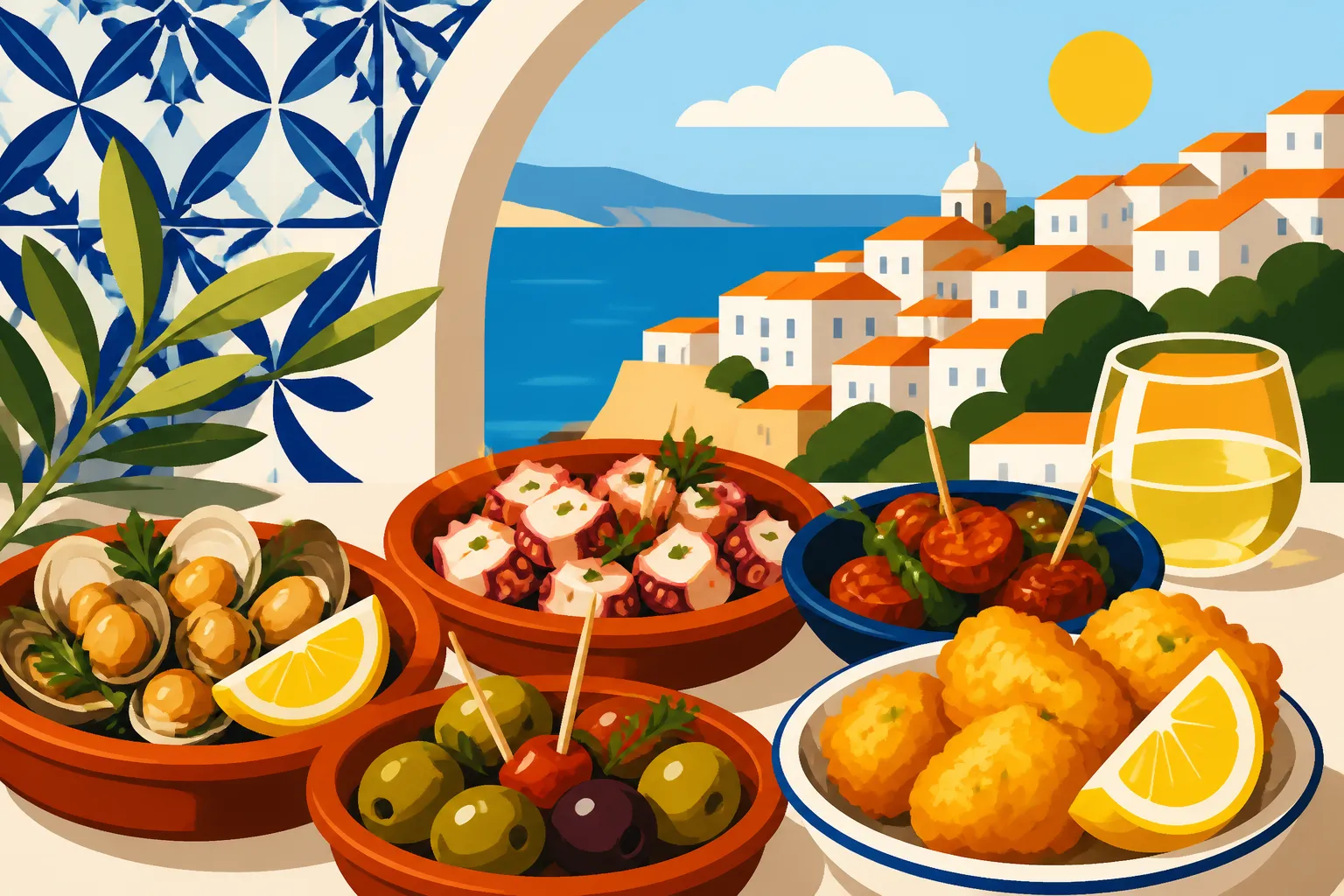
Portugal’s coastline defines its culinary identity. Perhaps the most famous petisco is Amêijoas à Bulhão Pato. These are clams sautéed in a decadent amount of olive oil, garlic, and fresh cilantro (coriander). The trick is to use the bread to soak up every last drop of the sauce—it is arguably better than the clams themselves.
Another staple is Choco Frito, particularly famous in Setúbal. This is deep-fried cuttlefish, seasoned with lemon and garlic, offering a much richer and meatier texture than standard calamari. For something lighter, look for Salada de Polvo (octopus salad), where tender chunks of octopus are tossed with finely chopped onions, peppers, parsley, and plenty of vinegar. It’s incredibly refreshing on a hot day in the Algarve.
Meat and Offal Embracing the Nose to Tail Philosophy
Traditional Portuguese cooking is remarkably sustainable, using every part of the animal. This is most evident in the petiscos menu. Moelas (chicken gizzards) are a divisive but beloved snack. They are slow-cooked in a spicy tomato and piri-piri sauce until they are tender. If you like bold, savory flavors, this is a must-try.
For something less adventurous but equally delicious, order Pica-pau. This literally translates to "woodpecker," but don't worry—it’s actually small cubes of beef or pork "pecked" at with toothpicks. The meat is sautéed with garlic, bay leaves, and white wine, topped with a generous amount of pickles (pickled vegetables). It’s the ultimate beer snack. If you’re traveling between cities to find these local varieties, I recommend using Omio to compare train and bus prices, as the regional differences in meat preparation are fascinating.
Vegetarian Options in a Meat Heavy World
Historically, Portugal hasn't been the easiest place for vegetarians, but petiscos offer some of the best meat-free options in the country. Peixinhos da Horta (little fish from the garden) are the ancestor of Japanese tempura. They are actually battered and deep-fried green beans, and they are addictive.
You should also look for Ovos com Farinheira—though be careful, as farinheira is a type of flour-based sausage that sometimes contains pork fat. However, many modern tascas offer vegetarian versions. A safer bet is Pimentos de Padrón, small green peppers fried in olive oil and coarse salt. Most are mild, but every now and then you’ll hit a spicy one. For more on navigating dietary needs, our guide on Daily Life in Portugal: Supermarkets, Language, and Cultural Etiquette offers great insights into reading labels and menus.
| Petisco Name | Main Ingredient | Flavor Profile | Recommended Region |
|---|---|---|---|
| Amêijoas à Bulhão Pato | Clams | Garlicky, Herbal | Lisbon / Coastal |
| Pica-pau | Beef or Pork | Savory, Tangy | Central Portugal |
| Peixinhos da Horta | Green Beans | Fried, Crispy | Lisbon |
| Choco Frito | Cuttlefish | Hearty, Salty | Setúbal / Alentejo |
| Moelas | Chicken Gizzards | Spicy, Rich | Nationwide |
| Salada de Polvo | Octopus | Zesty, Fresh | Algarve |
Navigating the Petiscos Etiquette Like a Local
One of the biggest culture shocks for newcomers in Portugal happens before they even order their first petisco. It involves the small plates of bread, olives, and cheese that are placed on your table the moment you sit down. Handling this correctly is the first step to becoming a savvy diner.
The Table Bread and Olives Are They Free
In many countries, bread and butter are a complimentary gesture. In Portugal, this is known as the couvert, and it is almost never free. If you eat it, you pay for it. The cost is usually small—perhaps one or two euros per person—but it can add up if the waiter brings out premium ham or specialized cheeses.
If you don't want the couvert, simply say "Não, obrigado" (No, thank you) and the waiter will take it away. Don't feel rude doing this; it’s a standard transaction. However, if the bread looks fresh and the olives are local, it’s often worth the few euros to have something to nibble on while you wait for your main petiscos to arrive. For more on how to handle the bill, check out Tipping culture in Portugal: Do you leave 10% or just round up the bill?.
Ordering Strategy How Much is Too Much
The most common mistake tourists make is ordering too much at once. Because petiscos are shared, the table can quickly become overcrowded. Start with two or three dishes for a group of two. You can always order more. In a traditional tasca, the staff prefers you to stay a while and keep the orders coming rather than doing one giant dump of food.
Keep an eye on the "Sugestão do Chefe" or the handwritten specials on the paper tablecloths. These are often seasonal and represent the best value. If you’re unsure of the portion size, you can ask "É uma dose ou meia dose?" (Is it a full portion or half portion?). Many places allow half portions, which is perfect if you want to try ten different things without needing a nap immediately afterward.
Finding the Right Spot Tabernas vs Modern Tascas
Where you eat your petiscos matters. A "Taberna" is usually an old-school, no-frills establishment with wooden barrels, fluorescent lighting, and a TV showing football. This is where you’ll find the most authentic and cheapest food. A "Modern Tasca" might have craft beer, industrial lighting, and higher prices, but they often experiment with higher-quality ingredients or fusion flavors.
Both have their place. I personally love the grit of an old Lisbon tasca, but when I want a refined experience, I use Booking.com to find boutique stays near the emerging food districts like Marvila in Lisbon or Bonfim in Porto. These areas are far away from the "tapas" signs of the main tourist squares and offer a true glimpse into the future of Portuguese gastronomy. You might also find it helpful to learn about Portuguese Coffee Culture and Restaurant Etiquette: Ordering Like a Local to understand the post-petisco espresso ritual.
Regional Variations From the Minho to the Algarve
As you travel through Portugal, you’ll notice the petiscos change with the landscape. The rocky coast of the north demands different snacks than the sun-baked plains of the Alentejo. Learning these regional variations makes your culinary journey much more rewarding.
Lisbon’s Classic Bites and Ginjinha Pairings
In the capital, petiscos are often synonymous with the city's historical neighborhoods like Alfama and Mouraria. Lisbon is the home of the Pastel de Bacalhau (codfish cake). While you can find these everywhere, the best ones are served at room temperature and have a high ratio of fish to potato.
Another Lisbon essential is the Ginjinha—a sour cherry liqueur. While technically a drink, it’s often served with a "petisco" of a booze-soaked cherry at the bottom of the glass. It’s the traditional way to end a petiscada session. If you want to dive deeper into the city's food scene, I recommend booking a walking tour through GetYourGuide. Local guides can take you into the tiny back-alley spots that don't even have signs, let alone English menus.
The Hearty Snacks of Northern Portugal
Up north in Porto and the Minho region, petiscos get significantly heartier. This is the land of the Moira (blood sausage) and Alheira (a bread-based sausage with a fascinating history related to the Jewish community during the Inquisition). You’ll also find Punheta de Bacalhau, which sounds provocative but is actually a delicious raw salt-cod salad with plenty of onions and olive oil.
The north is also famous for its Broa de Avintes, a dark, dense corn and rye bread that serves as the base for many snacks. If you’re planning a trip to the north, you’ll want to look at Using Comboios de Portugal (CP) trains and the Navegante Pass to navigate the scenic Douro line, where the vineyard-side snacks are world-class.
Alentejo’s Bread Based Delicacies
The Alentejo region is the breadbasket of Portugal, and its petiscos reflect that. Here, you’ll find Açorda, a bread-based mash flavored with garlic and cilantro, often served with a poached egg. It sounds simple, but the depth of flavor is incredible.
Another Alentejo staple is Orelha de Porco (pig's ear) salad. It’s crunchy, cartilaginous, and seasoned with a sharp vinaigrette. It might be outside your comfort zone, but in the heat of an Alentejan summer, the acidity is perfect. This region is also where you’ll find the best Presunto (cured ham) from black Iberian pigs that roam the cork forests. For more on the logistics of living or traveling in these rural areas, see Living in rural Portugal: How far is the nearest hospital usually? as it's always good to be prepared when venturing off the beaten path.
Planning Your Culinary Journey Across Portugal
Exploring Portugal through its food requires a bit of logistical planning, especially if you want to hit the regional highlights without spending all your time in transit. The country is small, but its culinary diversity is vast.
Traveling for Food Using Regional Hubs
To experience the best petiscos, I recommend setting up "hubs." Use Lisbon for the central coast, Porto for the north, and Évora for the Alentejo. By staying in these cities for a few days, you can take short trips to smaller villages where the truly old-fashioned petiscos are still made.
For instance, a quick train ride from Lisbon to Setúbal is mandatory for the Choco Frito. Using Omio allows you to see the fastest ways to get between these hubs, often saving you the headache of trying to park a rental car in the tiny, winding streets of a medieval village. If you’re considering a move here to eat like this every day, the Living in Portugal Guide 2027: The Complete Relocation Manual for Expats is a great place to start your research.
Booking Food Tours and Experiences
While exploring on your own is fun, your first few days in Portugal are much easier if you have a local to guide you. Food tours have exploded in popularity, and for good reason. A guide can explain the history of Bacalhau or show you exactly how to peel a percebe (goose barnacle) without splashing yourself with seawater.
I’ve found some of my favorite hidden tascas through GetYourGuide experiences in Porto. These tours often include wine pairings and visits to local markets like the Mercado do Bolhão, where you can see the raw ingredients before they are turned into delicious petiscos. It’s a great way to build your confidence before you head out into the rural areas where English is less common. You can learn more about communication in our guide on Navigating the public health system if you only speak English (Translation tips)—the same translation strategies work great in local taverns!
Staying Near the Best Food Districts
Location is everything when you want to enjoy a late-night petiscada. You don't want to be worrying about catching the last metro when the wine is flowing and the Chouriço Assado (flame-grilled chorizo) has just arrived. Look for accommodation in neighborhoods known for their density of tascas.
In Lisbon, the areas around Princepe Real and Graça are fantastic. In Porto, stay near Rua de Cedofeita. Use Booking.com to filter for "central" locations, but read the reviews to ensure you aren't staying directly above a fado club if you value your sleep. For those moving to the country, choosing a neighborhood based on its local "community" feel is vital, as discussed in Where to Live in Portugal: Lisbon, Porto, Algarve, and Silver Coast Compared.
Disclaimer
This guide is intended for informational purposes only. Culinary traditions and restaurant prices in Portugal are subject to change, and individual experiences may vary based on the establishment. Always check local reviews and confirm prices before ordering, especially in high-traffic tourist areas. This content does not constitute professional travel or financial advice.