Navigating Portuguese pharmacies for common household first-aid items
Disclosure: This article contains affiliate links. If you buy through them, we may earn a commission at no extra cost to you. Read our full disclosure.
Standing in front of a dark pharmacy window at 11 PM with a throbbing migraine is a rite of passage for many expats in Portugal. I remember my first week in Lisbon, squinting at a "Farmácia de Serviço" sign, feeling completely lost because I couldn't find a simple bottle of Advil on a shelf. This guide helps you navigate the unique world of Portuguese pharmacies so you never feel that helplessness again.
The Green Cross and the Balcão: Understanding the Portuguese Farmácia
When you first land in your new neighborhood, perhaps in a cozy apartment you found through Uniplaces, you will quickly notice the ubiquitous neon green crosses glowing on nearly every street corner. This is the universal sign for a pharmacy in Portugal. However, the experience inside is vastly different from what many North Americans or Northern Europeans are used to. You won't find aisles of medication where you can compare labels for twenty minutes. Instead, you face the "balcão" (the counter).
In Portugal, the pharmacist is a highly respected healthcare professional who acts as a first line of triage. Almost everything that isn't a toothbrush or a bottle of expensive French sunscreen is kept behind the counter. This means you have to talk to someone. For many of us, this is intimidating at first, especially if your Portuguese is still at the "pão faz favor" level. But there is a reason for this: the pharmacist is there to ensure you aren't self-medicating dangerously. They will often ask you about your symptoms—if you have a fever, how long you’ve felt this way, or if you are on other medications.
It is important to distinguish between a "Farmácia" and a "Parafarmácia." You will see the latter in large supermarkets or shopping malls. Parafarmácias can sell vitamins, supplements, and skin care, but they cannot sell "real" medicines, even basic ones like ibuprofen. For anything that actually treats a condition, you need the green cross. Understanding Pharmacies and Medication in Portugal: Prescriptions and OTC Drugs is essential because the classification of what is "over-the-counter" can be stricter here than in other countries. You should also make sure your Airalo eSIM is active so you can quickly use a translation app if the conversation at the counter gets technical.
Building Your Portuguese First-Aid Kit: Essential Items and Names
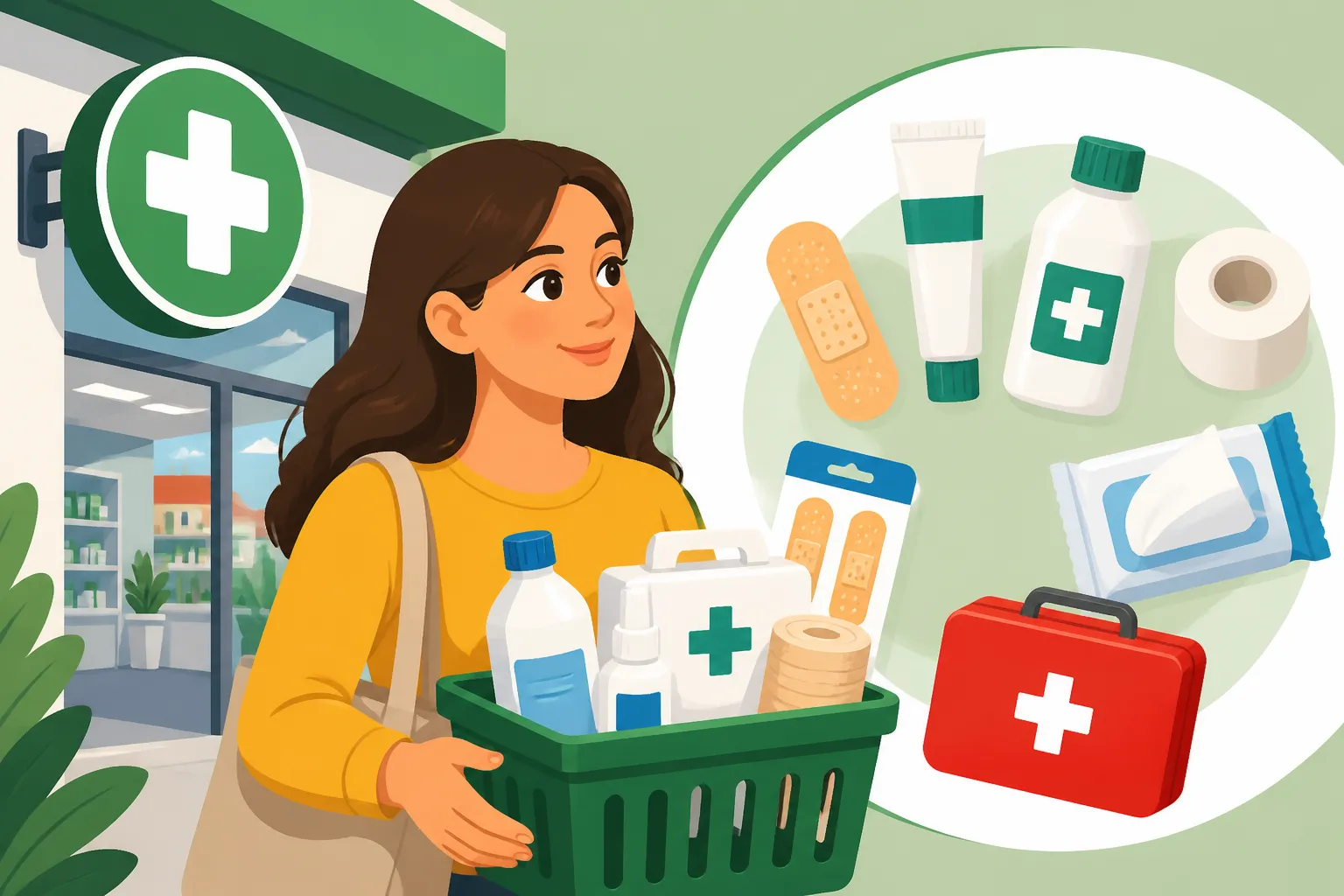
If you are coming from a country where you buy a 500-count bottle of aspirin at a warehouse club, the Portuguese approach will be a shock. Medication is sold in small boxes, usually containing 10 to 20 tablets. This is why you need to be proactive about building a "botica" (home pharmacy). When you are sick, the last thing you want to do is walk to the corner for three pills.
The two most important things to have on hand are Paracetamol and Ibuprofeno. In Portugal, the most famous brand of Paracetamol is Ben-u-ron. It is the gold standard for fevers and mild pain. For Ibuprofen, you will often hear it referred to by the brand name Brufen. You should be aware of the rules regarding Buying Ibuprofen or Paracetamol in Portugal: Why it's behind the counter; while you don't need a prescription for lower dosages, the pharmacist still has to hand them to you. If you need 600mg doses, you technically need a doctor's note, though some pharmacists may exercise discretion for long-term residents they recognize.
For wound care, discard your thoughts of simple "rubbing alcohol." In Portugal, the king of the first-aid kit is Betadine. It’s a povidone-iodine solution that every Portuguese mother has used on every scraped knee since the dawn of time. You’ll also want to ask for "Pensos rápidos" (band-aids) and "Compressas de gaze" (gauze pads). If you prefer specific international brands of high-tech bandages or niche medical organizers, you can often find a wider variety on Amazon Spain that delivers directly to your Portuguese address.
| Item Type | Common Portuguese Name/Brand | Notes |
|---|---|---|
| Pain Relief (Paracetamol) | Ben-u-ron | Usually 500mg or 1g. |
| Anti-inflammatory | Brufen / Ibuprofeno | 200mg and 400mg are OTC. |
| Antiseptic | Betadine | The classic orange/brown liquid. |
| Saline Solution | Soro Fisiológico | Used for cleaning eyes, noses, and wounds. |
| Digestive/Heartburn | Kompensan / Gaviscon | Available as chewables or liquid. |
| Muscle Pain | Reumon Gel / Voltaren | Topical creams are very popular here. |
| Cough Syrup | Bisolvon / Broncopron | Ask for "Xarope para a tosse." |
When building this kit, keep in mind your Health checklist for your first 30 days living in Portugal as an expat. Having these basics sorted before you actually need them will save you an immense amount of stress during your first winter cold.
Logistics: Prescriptions, After-Hours, and the SNS
One of the biggest hurdles for new arrivals is realizing that the pharmacy isn't just a shop; it’s part of the national health infrastructure. If you have a prescription from your doctor at the local "Centro de Saúde," it will likely be an electronic one linked to your "Número de Utente." You just hand over your ID card or the printout with the barcodes, and the system handles the rest. This often results in "comparticipação," where the government pays for a portion of your meds, making them incredibly cheap.
If you are a tourist or a new expat, you might wonder: Can I use a US or UK medical prescription at a Portuguese pharmacy? The answer is usually no for a direct fill. You will typically need to see a local doctor to get the prescription converted into the Portuguese system. This is especially true for anything considered a controlled substance. Furthermore, do not even try to talk your way into buying antibiotics without a prescription. The Antibiotics rules in Portugal: Why you absolutely need a doctor's prescription are strictly enforced to prevent antibiotic resistance, and no amount of "but I always use this for a sinus infection" will change the pharmacist's mind.
What happens if you get sick at 2 AM on a Sunday? This is where the "Farmácia de Serviço" system comes in. Every municipality has a rotating schedule where at least one pharmacy remains open all night. You can find this schedule posted on the door of any pharmacy, in the local newspaper, or via the SNS 24 website. When you arrive at a pharmacy "de serviço" late at night, the door will be locked. You must ring a bell, and often you will be served through a small window or a secure drawer. Knowing What is a Farmácia de Serviço and how to find one open at 2 AM is vital knowledge for parents or anyone with chronic conditions. If the situation is more dire than a simple medication need, you should be prepared for Emergency Medical Care in Portugal: Calling 112 and Going to the Hospital.
Digital Tools and Strategic Tips for Expats
Living in Portugal means embracing the bureaucracy, and the pharmacy is no exception. Whenever you buy medication, the pharmacist will ask if you want your "NIF" (tax identification number) on the receipt. Always say yes. These small health expenses add up and can be deducted from your annual IRS tax return. If you are unfamiliar with why this is such a big deal, check out the e-Fatura guide: Why cashiers ask for your NIF at the supermarket for a breakdown of how the Portuguese tax system rewards your healthcare spending.
If you find the language barrier too high or if you are in a rural area where the local pharmacist doesn't speak English, the SNS 24 Helpline (808 24 24 24): Triage, Advice, and Sick Notes is your best friend. You can call them, speak to an English-speaking nurse, and they can often give you advice on what to ask for at the pharmacy or even send a prescription directly to your phone if they determine it is necessary. This service is a lifesaver for expats who aren't yet comfortable navigating the system in Portuguese.
Finally, don't be afraid to ask for "o mais barato" (the cheapest one) or "o genérico" (the generic). Portuguese pharmacists are generally very honest, but they may default to a well-known brand name if you don't specify. The generic versions are identical in efficacy and can save you a significant amount of money over time. Before you can fully integrate into this system, however, you must ensure you are properly in the system by Registering with the Centro de Saúde: Getting Your SNS Número de Utente. Without that number, you are just a visitor paying full price; with it, you are a resident protected by one of the most accessible healthcare networks in Europe.
Disclaimer
The information provided in this guide is for educational and informational purposes only and does not constitute professional medical or legal advice. Always consult with a qualified healthcare professional or a licensed pharmacist in Portugal before starting any new medication or treatment. Regulation and availability of medications can change; verify current local laws with official Portuguese health authorities.