Waste, Recycling, and Utilities Admin in Portugal
Disclosure: This article contains affiliate links. If you buy through them, we may earn a commission at no extra cost to you. Read our full disclosure.
Oh, the joys of setting up life in Portugal! You've navigated the visa maze, found a place to live – maybe even through a platform like Spotahome – and now you're faced with the seemingly simple, yet oh-so-frustrating, tasks of figuring out rubbish collection, those colourful recycling bins, and getting your utilities sorted. Trust me, I've been there, scratching my head at a bill that looks like it's written in ancient runes, or wondering where on earth to dump an old armchair. It’s not just about language; it’s a whole new system. This guide is here to break down the ins and outs of waste, recycling, and getting all your essential utilities connected and managed, so you can spend less time stressing and more time enjoying that Portuguese sunshine.
Navigating Portuguese Waste Management: From Bins to Ecopontos
When you first arrive, the waste system might seem a little… different. You're used to your curbside bins or a specific collection day, but here in Portugal, it's often a communal affair. Understanding this system is key to keeping your home tidy and staying on the right side of local etiquette (and avoiding those disapproving glances from your vizinhos!).
The Ubiquitous Rubbish Bins (Contentores do Lixo)
Across Portugal, especially in residential areas, you'll find large, communal rubbish bins, known as contentores do lixo. These aren't usually assigned to a single household; rather, they serve a block or a street. You simply bag your general, non-recyclable waste and deposit it into one of these large, often green or grey, bins. They typically have a foot pedal or a handle to open the lid, which is a blessing on those hot summer days!
The frequency of collection for these general waste bins varies depending on your municipality and whether you're in a bustling city centre or a quieter rural village. In urban areas like Lisbon or Porto, collection might be daily, sometimes even multiple times a day, particularly in high-density zones or near markets. In smaller towns or rural settings, it could be every other day or a few times a week. There isn't usually a strict "collection day" for you to remember, as it's a continuous service. My best advice here is to observe your neighbours – when do they take out their trash? That’s usually the rhythm. Don't leave bags next to an overflowing bin, as this attracts pests and can lead to fines from the Câmara Municipal (city council). You can often find information about your local waste collection schedule on your specific Câmara Municipal's website, though it might require a bit of Portuguese translation!
Embracing the Ecoponto System: Recycling in Portugal
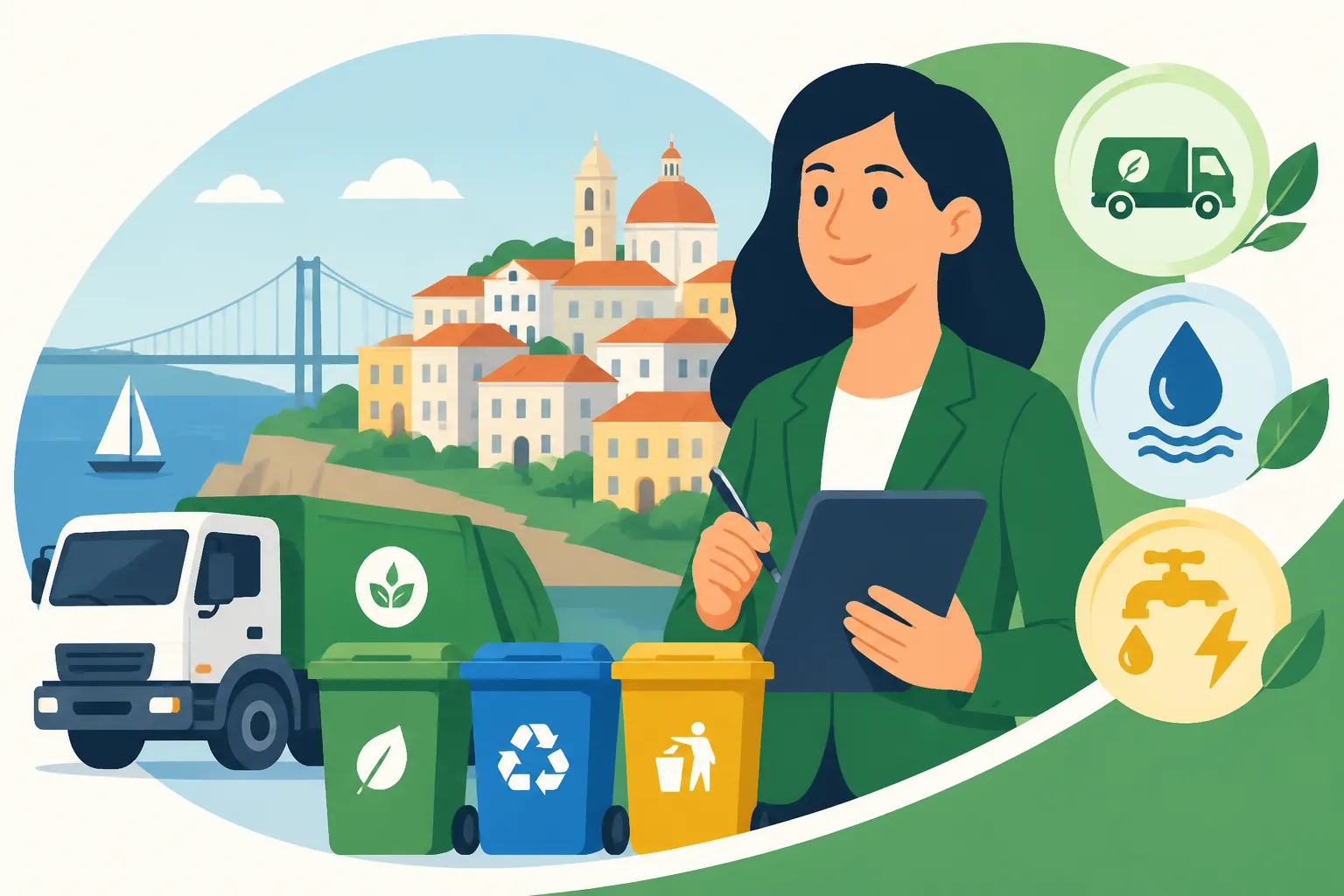
Recycling, or reciclagem, is taken quite seriously in Portugal, and you'll quickly become familiar with the Ecoponto system. These are those brightly coloured bins you see clustered together in neighbourhoods, often right alongside the general waste containers. It’s a very visual system, making it relatively easy to remember what goes where once you get the hang of it.
The main colours you'll encounter are:
- Yellow (Amarelo): This is for plastics (plásticos) and metals (metais). Think plastic bottles, yoghurt pots, food containers, milk cartons, aluminium cans, tin cans, and even plastic bags (though many prefer to reuse these). It's crucial to rinse out containers to prevent odours and contamination.
- Green (Verde): This is exclusively for glass (vidro). Wine bottles, jam jars, olive oil bottles – anything made of glass. Again, a quick rinse is appreciated, and remember to remove lids and caps (these usually go into the yellow bin if plastic/metal, or general waste if cork).
- Blue (Azul): This bin is for paper and cardboard (papel e cartão). Cereal boxes, newspaper, magazines, paper bags, egg cartons, and delivery boxes all go here. Make sure they are clean and dry, and flatten cardboard boxes to save space.
There are also less common Ecopontos for specific items. For instance, you might spot a red or white bin for used batteries (pilhas) or sometimes a brown bin for organic waste, though this is not as widespread as the other three. In some areas, particularly in larger supermarkets or specific collection points, you might also find bins for used cooking oil (óleos alimentares usados) or even clothing and textiles (roupa e têxteis). Getting into the habit of separating your waste at home makes this process much smoother. Many expats find small, multi-compartment bins for their kitchen to keep things organized.
Beyond Regular Bins: Special Waste & Bulky Items
What about those things that don't fit into the regular bins or require special handling? Portugal has systems in place for these too, but they might require a bit more proactive effort on your part.
For hazardous waste like old paints, chemicals, specific light bulbs, or small electronics, your best bet is to look for a designated Centro de Recolha in your municipality. These facilities are specifically equipped to handle items that shouldn't go into general waste due to environmental concerns. Similarly, for used batteries, many supermarkets, electronic stores, and post offices have small collection points near the entrance. Don't just toss them in the yellow bin!
Then there's the challenge of bulky waste, or monstros as they're often called – old furniture, mattresses, large appliances, or broken electronics that just won't fit anywhere else. Most Câmaras Municipais offer a collection service for these items, often free of charge, but you need to arrange it in advance. You simply call their dedicated line, explain what you have, and they'll give you a specific day and time (or a timeframe) to leave the items outside your building for pickup. Never just abandon bulky items on the street; it's unsightly, illegal, and you could face a fine. A quick search on your local Câmara Municipal's website for "recolha de monos" or "resíduos volumosos" will give you the contact details and procedures. Some private companies also offer removal services, but these will naturally come with a cost. This process highlights the importance of familiarizing yourself with your local municipal services, which can often be found under the "Ambiente" or "Resíduos" section of the Câmara Municipal website.
Essential Home Utilities: Getting Connected in Portugal
Once you've sorted your waste strategy, the next big hurdle is getting your home powered, watered, and heated. This can feel like a labyrinth of paperwork and phone calls, especially when you're dealing with new companies and unfamiliar terminology. But don't despair, it's a rite of passage for every expat!
Electricity: Powering Your Portuguese Home
Electricity in Portugal is primarily provided by EDP Comercial, though the market has opened up, and you can also choose from other providers like Endesa, Galp Energia, or Iberdrola. If you're renting, sometimes the utilities are already connected, and you just need to change the name on the contract (mudar titularidade). If you're moving into a newly built home or one where the electricity was previously disconnected, you'll need a new connection (ligação nova).
To connect or change the name, you'll typically need:
- Your NIF (tax identification number).
- A Portuguese bank account (for direct debits, which are highly recommended).
- Proof of residence (your rental contract or deed).
- The property's address and the CPE number (Código de Ponto de Entrega), which is a unique identification number for the electricity installation. It's usually found on old bills.
When choosing a plan, you'll encounter different tariffs. The most common are simples (single rate), bi-horário (two rates: cheaper at night/weekends), and tri-horário (three rates: peak, off-peak, and super off-peak). Your consumption habits will dictate which is best for you. If you work from home or do a lot of laundry during the day, simples might be better. If you’re out all day and use energy primarily in the evenings and weekends, bi-horário could save you money. You'll also need to decide on your potência contratada (contracted power), measured in kVA. Too low, and your power will trip frequently; too high, and you pay for power you don't use. For an apartment, 3.45 kVA or 4.6 kVA is common, while larger homes might need 6.9 kVA or more. When in doubt, look at previous bills for the property or ask your landlord. For a deeper dive into your electricity bill, you might want to read our guide on how to read an EDP electricity bill: Taxes, bi-hourly tariffs, and peak hours.
Water: From Tap to Toilet
Water supply (água) in Portugal is generally managed at the municipal level, meaning your provider will depend on your specific Câmara Municipal. Companies like EPAL (Empresa Portuguesa das Águas Livres) serve Lisbon and surrounding areas, while others operate regionally. The process for connecting water is similar to electricity: you'll need your NIF, proof of address, and sometimes a meter reading to ensure you're starting from zero.
Portuguese tap water is generally safe to drink across the country, though quality can vary slightly by region, and many people prefer filtered water or bottled water for taste. Unlike some countries where water bills are entirely separate, here, your water bill often includes charges for sanitation (saneamento) and solid waste collection (resíduos sólidos), which covers your general rubbish disposal. This can sometimes make the bill seem higher than just water, but remember it bundles several essential services. Bills usually come monthly or bimonthly, and you'll often have the option to provide meter readings yourself via an online portal or a phone number to ensure accurate billing, rather than estimated consumption.
Gas: Bottled vs. Piped Options
When it comes to gas (gás) for cooking and heating, you'll typically encounter two main systems in Portugal: piped natural gas or bottled gas (gás de botija or garrafão).
Piped Natural Gas: If your property is in an urban area and connected to the natural gas network, this is usually the most convenient and cost-effective option. Providers include EDP Gás, Galp Gás, and Goldenergy. The setup is similar to electricity: NIF, address, bank account, and the CUI number (Código Universal de Instalação) for the gas installation. Piped gas is often used for water heaters (esquentadores) and central heating, as well as kitchen hobs.
Bottled Gas (Garrafão): In many rural areas or older buildings, piped gas isn't available. Here, you'll rely on garrafões – large gas bottles, typically propane (red bottle) or butane (blue bottle). These are usually purchased from local supermarkets, gas stations, or dedicated vendors who often deliver directly to your home. You swap an empty bottle for a full one, paying only for the gas. It's a very common system, and many homes are set up with two bottles connected via a switch, so when one runs out, you can flip to the other while arranging a replacement. The bottles can be heavy, so consider delivery services if you don't fancy lugging them around. This is a common part of Living in Portugal Guide 2027: The Complete Relocation Manual for Expats.
Internet and Mobile Connectivity: Staying Connected
In today's world, internet and mobile access aren't luxuries; they're absolute necessities. Getting connected in Portugal is generally straightforward, but it helps to know your options.
Choosing Your Internet Provider: Fibre, ADSL, and Mobile Broadband
Portugal boasts excellent fibre optic internet coverage, especially in urban and suburban areas. Fibre (fibra ótica) offers the fastest and most reliable speeds. If fibre isn't available at your address, you might be offered ADSL (a slower, copper-based connection) or mobile broadband (using a 4G/5G router). The major players in the Portuguese internet market are MEO, Vodafone, and NOS. All three offer bundled packages (pacotes) that typically include internet, TV, and landline phone services, often with mobile phone contracts thrown in for good measure.
When choosing a provider, consider:
- Availability: Use their websites to check if fibre is available at your specific address. This is the most critical factor.
- Speed: Fibre speeds can range from 100 Mbps to 1 Gbps. Decide what you need based on your usage (streaming, remote work, gaming, number of users).
- Price and Packages: Compare bundles. Often, the best deals come with a 24-month contract. Read the fine print about installation fees and equipment rental.
- Customer Service: While all providers have English-speaking support lines, expat forums often have strong opinions on which is best.
- Installation: Fibre installation usually involves a technician visit to run a cable and set up the router.
It's common for expats to compare Home Internet and Mobile Plans: Vodafone, MEO, and NOS Compared. Be prepared for installation appointments to sometimes involve a half-day wait, as time slots are often broad.
Mobile Phone Services: SIM Cards and Data Plans
Getting a local Portuguese SIM card is one of the first things many expats do. It makes everything easier, from ordering food to connecting with new friends. You can purchase prepaid SIM cards at official stores for Vodafone, MEO, and NOS, or at many smaller electronics shops and even some supermarkets. You'll need your passport and NIF for registration.
Prepaid (Pré-Pago): This is great for short-term stays or if you prefer not to commit to a contract. You top up your credit as needed. Data plans can be generous, and some prepaid options offer bundles of calls, texts, and data.
Contract (Pós-Pago): If you plan to stay long-term, a contract often provides better value, especially when bundled with home internet and TV. These usually require a Portuguese bank account for direct debits and a 12 or 24-month commitment.
For those just arriving or traveling frequently, an eSIM might be a good interim solution. Providers like Airalo offer international eSIMs that allow you to get data connectivity immediately upon arrival without needing a physical SIM card. This can be incredibly handy for those initial days when you're navigating a new city and need GPS or translation apps. Once you're settled, switching to a local Portuguese SIM is usually more cost-effective for long-term use.
Managing Your Bills and Payments: The Portuguese Way
Understanding and paying bills in Portugal can be a bit of an administrative dance, especially with the unique Multibanco system. But once you get the rhythm, it's quite efficient.
Understanding Your Utility Bills
Portuguese utility bills, regardless of whether they're for electricity, water, or gas, follow a fairly consistent format. They will always include:
- Client Information: Your name, address, and NIF.
- Consumption Details: The period the bill covers, your meter readings (actual or estimated), and the amount consumed (e.g., kWh for electricity, m³ for water).
- Charges Breakdown: This is where it gets detailed. You'll see charges for consumption, fixed monthly fees (potência contratada for electricity), taxes (like IVA – Value Added Tax), and other services (e.g., solid waste tax on your water bill).
- Payment Information: Crucially, this section will contain the entidade (entity), referência (reference), and montante (amount). These three pieces of information are vital for paying your bill via Multibanco or online banking.
- Contact Information: Helplines and customer service details.
Don't be surprised if your first few bills are estimations (estimativa). It's always a good idea to submit your actual meter readings (leituras) when prompted by the utility company, either online, via their app, or by phone, to ensure you're only paying for what you've used. This is particularly important for your electricity bill, where inaccurate estimates can lead to surprisingly high true-up bills down the line.
Payment Methods: Multibanco, Direct Debit, and Online
Portugal's Multibanco network is truly impressive and is the backbone of financial transactions for many daily services. You can pay virtually any bill using the entidade, referência, and montante at any ATM (Caixa Automática) across the country. It’s incredibly convenient once you understand it. Simply select "Pagamentos," then "Pagamento de Compras e Serviços," input the three codes, and confirm. You’ll get a receipt, which is your proof of payment.
However, for recurring utility bills, setting up a Débito Direto (direct debit) is the easiest and most hands-off approach. This authorizes the utility company to automatically deduct the bill amount from your Portuguese bank account each month. It's widely used and highly recommended to avoid missing payments or needing to remember to go to a Multibanco. You can usually set this up when you first sign up for the service, or later through your online banking portal or by filling out a form provided by the utility company.
Most utility providers also offer online payment options directly through their websites, often using a credit card or by generating Multibanco payment details you can then use with your bank's app. While convenient, Débito Direto is generally preferred for its automation. If you're a US expat, you might find managing US Expats in Portugal: FATCA, FBAR, and Avoiding Double Taxation a higher priority, but getting your local bills sorted is equally important.
Here's a quick comparison of common recycling categories:
| Ecoponto Color | What Goes In | Examples | What NOT to Put In |
|---|---|---|---|
| Yellow (Amarelo) | Plastics & Metals | Plastic bottles, yoghurt pots, food containers, milk cartons, aluminum cans, tin cans, plastic bags | Batteries, electronic waste, disposable masks, glass |
| Green (Verde) | Glass | Wine bottles, jam jars, olive oil bottles, glass food jars | Ceramics, light bulbs, mirrors, broken glass (general waste for safety) |
| Blue (Azul) | Paper & Cardboard | Newspaper, magazines, cereal boxes, paper bags, egg cartons, delivery boxes | Greasy pizza boxes, used tissues, plasticized paper, metal/plastic bindings |
| Special Bins | Batteries, Used Oil, Clothes | Used AA/AAA batteries, cooking oil in sealed bottles, old clothes/textiles | Household waste, hazardous chemicals, construction debris |
Troubleshooting Common Expat Utility Issues
Even with the best preparation, things can go wrong. Welcome to expat life! Knowing how to handle common hiccups with utilities in Portugal can save you a lot of grief.
Dealing with Outages and Service Interruptions
Power outages (falta de luz) or internet disruptions (falha de internet) happen. The first step is always to check if it's just your property or a wider area. Look outside – are your neighbours' lights on? Is their internet working? Many utility providers, particularly for electricity (EDP Distribuição, now E-Redes, for the network itself, not your commercial provider) and internet (MEO, Vodafone, NOS), have online portals or apps where you can check for reported outages in your area. They also have dedicated customer service lines.
If it's just your house, check your circuit breaker (quadro elétrico). If it's tripped, it might be due to an overloaded circuit or a faulty appliance. If it's a wider outage, avoid calling immediately unless it's an emergency (like downed power lines). Wait a little, check online for updates, and then call if the issue persists or if you need an estimated repair time. Be patient; these things can take time, especially in more rural areas. Always have a few emergency candles or a charged power bank handy!
Language Barriers and Customer Service
This is often the biggest pain point for expats. While major utility companies do have English-speaking customer service lines, accessing them or explaining complex issues can still be challenging. Here are some tips:
- Be Prepared: Before calling, have all your account details (NIF, client number, CPE/CUI number) ready. Write down your issue in simple English, and if possible, use a translation app to get the key Portuguese terms ready.
- Politeness Goes a Long Way: Even if you're frustrated, a calm and polite tone is always more effective.
- Ask for an English Speaker: Don't hesitate to politely ask, "Fala inglês, por favor?" (Do you speak English, please?). Most larger companies will transfer you to an agent who can assist.
- Use Online Channels: Many companies have online chat support or email, which can be less stressful than a phone call if your Portuguese isn't strong.
- Ask for a Friend's Help: If it's a critical issue and you're really struggling, don't be afraid to ask a Portuguese-speaking friend or neighbour for help. They can often cut through the red tape much faster.
- Use Google Translate: For reading bills or navigating websites, Google Translate (especially with its camera function for physical documents) is an invaluable tool.
Navigating medical billing and insurance reimbursements in Portugal can also present similar language challenges. For any purchases you might make online for your home, like appliances or other necessities, remember that Amazon Spain often offers good deals and reasonable shipping to Portugal, which can be a relief compared to hunting for specific items in local stores if you’re still getting oriented. And once you've truly settled, remember to register with the Centro de Saúde: Getting Your SNS Número de Utente to access public healthcare services.
Disclaimer
The information provided in this guide is intended for general informational purposes only and does not constitute legal, financial, or professional advice. While we strive to keep the information up-to-date and accurate, systems and regulations in Portugal can change rapidly. Always consult with official government sources, utility providers, or qualified professionals for the most current and personalized advice relevant to your specific situation. We cannot be held responsible for any errors or omissions, or for any actions taken based on the information provided herein.