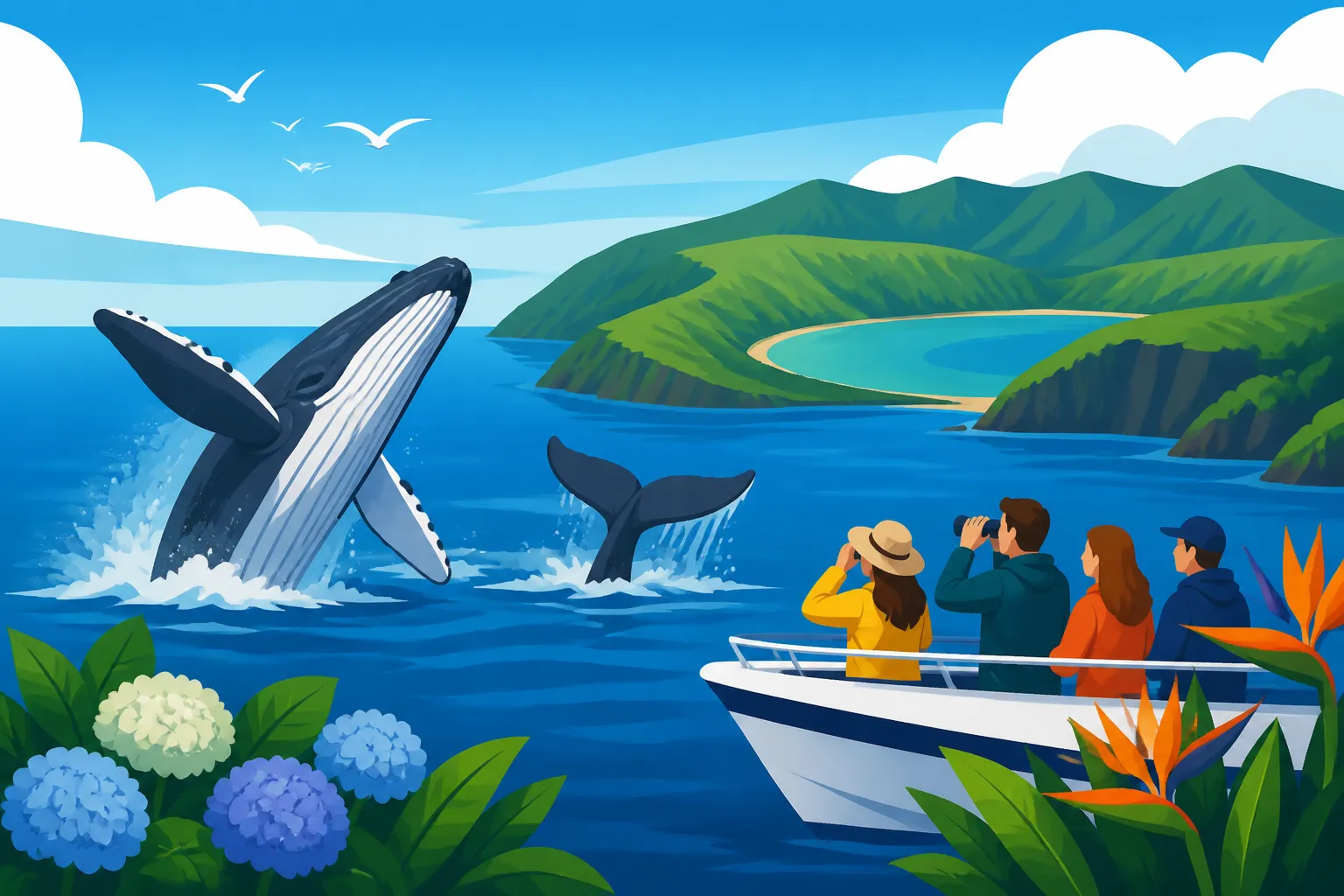
Whale Watching and Nature in the Azores
Disclosure: This article contains affiliate links. If you buy through them, we may earn a commission at no extra cost to you. Read our full disclosure.
Planning a trip to the Azores can feel like trying to solve a complex puzzle, especially when you are navigating the unpredictable Atlantic weather and the logistics of nine different islands. Many travelers struggle with deciding which island offers the best sightings and how to respect the local ecosystem while doing so. This guide provides a veteran expat’s perspective on the best spots, timing, and ethical practices for whale watching and exploring the raw nature of the Azores.
The Best Islands for Whale Watching in the Azores
While you can technically see whales from almost any island in the archipelago, the "Triangle" islands and the largest island of São Miguel are the heavy hitters. As someone who has spent years hopping between these volcanic peaks, I can tell you that each island offers a distinct vibe. In the mainland, you might be focused on Where to Live in Portugal: Lisbon, Porto, Algarve, and Silver Coast Compared, but out here in the Atlantic, the focus shifts entirely from urban sprawl to the vast, deep blue.
São Miguel: The Gateway to the Atlantic
São Miguel is the largest and most accessible island, and for many, it serves as the perfect introduction to the Azores. Most tours depart from the marina in Ponta Delgada or the smaller harbor in Vila Franca do Campo. Because the island is so large, the tour operators here have access to a wide range of lookouts, or vigias, who scan the horizon for "blows" from their land-based towers. This traditional method, once used for hunting, is now the backbone of the conservation-led tourism industry.
The infrastructure on São Miguel is the most developed, which is a blessing if you are worried about amenities. You can easily find a spot on a large, stable catamaran if you have a sensitive stomach, or a nimble RIB (Rigid Inflatable Boat) if you want to be closer to the water. When booking through platforms like GetYourGuide, you can often find tours that include a marine biologist on board to explain the complex behaviors of the pods you encounter. It is a fantastic way to turn a simple boat ride into a deep dive into marine science.
However, because it is the most popular island, the waters can sometimes feel a bit more crowded during the peak months of July and August. If you prefer a quieter experience, it is wise to look for early morning departures. There is something truly spiritual about seeing a Sperm whale fluke against the backdrop of a rising sun with no other boats in sight. It makes the logistical hurdles of getting here feel entirely worth it.
Pico: The Heart of Whale Culture
If you are a true enthusiast, Pico is non-negotiable. This island is the historic heart of the Azorean whaling industry, and that legacy has been beautifully transformed into a world-class observation hub. The town of Lajes do Pico was the first place in the Azores to start commercial whale watching, and the depth of knowledge here is unparalleled. The deep waters just off the coast of Pico make it a prime feeding ground, meaning you don't have to travel far from the shore to find the giants.
The experience on Pico is often more intimate and focused on education. Many of the operators here are former whalers or the children of whalers, and their ability to spot a fin a mile away is nothing short of supernatural. You’ll find that the tours here are heavily influenced by the presence of Mount Pico, Portugal’s highest peak. The weather can change in a heartbeat as the mountain creates its own microclimate, so flexibility is key.
Living here or visiting for an extended period requires a different mindset than the mainland. You won’t find the same Cost of Living in Portugal: Detailed Budgets for Singles and Families metrics as you would in Porto; everything on Pico is governed by the sea and the seasons. When you are sitting in a small RIB, looking up at the towering volcano while a 40-ton Sperm whale dives nearby, you realize that Pico is the place where the power of the earth and the power of the ocean truly meet.
Faial: The Historic Port of Horta
Faial is the third vertex of the "Triangle" and is famous for the city of Horta, a legendary stopover for sailors crossing the Atlantic. The marina is covered in colorful paintings left by mariners for good luck, and this international, nautical energy permeates the entire island. Whale watching from Faial often overlaps with the same territory as Pico, but the perspective from Horta offers a unique view of the channel between the two islands.
Horta is home to some of the most prestigious marine research centers in Europe. If you take a tour from here, there is a high chance your guide is involved in active research, photo-identifying individuals or recording acoustic data. The atmosphere is less about "ticking a box" and more about contributing to a global understanding of cetaceans. It’s the perfect place to practice your Portuguese Coffee Culture and Restaurant Etiquette: Ordering Like a Local while waiting for the morning fog to lift so the boats can head out.
One of the highlights of choosing Faial is the ability to easily hop to the other islands. Using a service like Omio to check ferry schedules can help you plan a multi-island itinerary that maximizes your chances of sightings. If the weather is rough on the north side of Faial, the south side might be perfectly calm, and the experienced skippers in Horta know exactly how to play the currents to find the best conditions for their passengers.
Essential Species and the Best Time to Visit
Timing is everything in the Azores. While the islands are a year-round destination for nature lovers, the stars of the show—the great whales—have their own strict schedules. If you arrive in the dead of winter expecting to see a Blue whale, you will likely be disappointed. Understanding the migratory patterns is the first step in ensuring your trip is a success.
Resident vs. Migratory Giants
The Azores are unique because they host both resident species and migratory giants. The Sperm whale (Cachalote) is the resident king of these waters. They are present year-round, as the deep underwater canyons provide a steady supply of their favorite food: giant squid. Seeing a Sperm whale is the quintessential Azorean experience, and their distinctive angled blow is usually the first thing a vigia will spot from the shore.
In addition to the Sperm whales, you will almost certainly see various species of dolphins. Common dolphins, Bottlenose dolphins, and Risso’s dolphins are residents, and they often play in the wake of the boats. It’s not uncommon to find yourself surrounded by hundreds of Atlantic spotted dolphins, especially in the warmer summer months. They are incredibly social and offer a high-energy contrast to the slow, methodical movements of the larger whales.
The real "bucket list" moment for many occurs in the spring, specifically from late March to early June. This is when the great baleen whales—the Blue whale, the Fin whale, and the Sei whale—pass through the Azores on their northward migration to the feeding grounds of the North Atlantic. Witnessing a Blue whale, the largest animal to ever live on Earth, is a humbling experience that puts all your Safety and Emergency Preparedness in Portugal for Foreign Residents concerns into perspective. Their sheer scale is impossible to capture on camera; you have to feel the vibration of their breath in your chest to truly understand it.
Understanding the Seasonal Calendar
While the spring is best for the migratory giants, the summer months (July to September) offer the most stable weather and the warmest water temperatures. This is the peak season for tourists, and while the Blue whales may have moved on, the variety of species remains high. Pilot whales and even the occasional Orca can be spotted during this time. The seas are generally calmer, which makes for a much more comfortable experience for those who aren't seasoned sailors.
Autumn (October and November) can be a bit of a gamble. The weather begins to turn, and the "August Shutdown" energy of the mainland is replaced by the arrival of Atlantic storms. However, if you get a clear day, the light is spectacular, and the crowds have vanished. It’s a great time for those looking for a more solitary connection with nature. Just be sure to have your Health checklist for your first 30 days living in Portugal as an expat in mind if you’re planning a longer stay, as some services on the smaller islands begin to scale back during the low season.
Winter (December to February) is the quietest time. While you can still go whale watching on the rare days when the sea is calm, many operators close for maintenance. This is the time to focus on the land-based nature of the Azores, like the thermal baths and the hiking trails. If you do manage to get out on the water, the sightings will likely be limited to Sperm whales and the resident dolphin pods, but the raw, moody atmosphere of the winter Atlantic is something every true adventurer should experience at least once.
The Role of the Vigia (Lookouts)
One of the most fascinating aspects of Azorean whale watching is the continued use of land-based lookouts. Scattered along the coastlines of the islands are small white towers where men spend their days staring at the ocean through powerful binoculars. These are the vigias. Without them, whale watching in the Azores would be much more difficult and far less successful.
The vigias communicate with the boat skippers via radio, directing them to the exact location of the whales. This system minimizes the amount of time boats spend "searching" aimlessly, which reduces noise pollution and fuel consumption. It is a high-pressure job; the vigia must be able to distinguish between a whitecap and a whale's blow from miles away. They are the unsung heroes of the industry, and their expertise ensures a success rate that often exceeds 95% on clear days.
Many expats find that visiting one of these vigia towers (where allowed) is a great way to connect with the local culture. It’s a slow, methodical practice that stands in stark contrast to our fast-paced digital lives. If you’re hiking in the Azores and see a small tower with a man and a pair of binoculars, give a polite "Bom dia" and stay quiet. You are witnessing a tradition that has spanned generations, evolving from a hunt into a watchful protection of these magnificent creatures.
Practical Tips for a Responsible Whale Watching Experience
The Azores pride themselves on having some of the strictest whale-watching regulations in the world. As a visitor, it is your responsibility to choose operators who follow these rules to the letter. This isn't just about the law; it's about the long-term survival of the species that make these islands so special.
Choosing the Right Tour Operator
When looking for a tour, don't just go for the cheapest price. Look for companies that emphasize their commitment to conservation. A good operator will have a marine biologist or a specialized guide on board who provides a thorough briefing before you even leave the dock. They should explain the rules: no approaching closer than 50 meters, no more than three boats at a time around a single group of whales, and a maximum observation time of 15 to 30 minutes.
Platforms like Booking.com often list accommodation that can help connect you with reputable local guides. In my experience, the smaller, family-run companies often provide a more educational and respectful experience than the large-scale "tourist factories." Ask if they contribute data to research projects or if they participate in local environmental initiatives. Supporting these companies ensures that your money goes back into protecting the Atlantic.
The type of boat you choose also matters. RIBs are fast and get you close to the water, but they can be jarring on the back if the sea is choppy. Catamarans and larger motorboats are much more stable and offer better viewing platforms for photography, but they move more slowly. If you have mobility issues or are traveling with young children, the larger vessels are definitely the way to go.
Dealing with Motion Sickness and Ocean Conditions
The Atlantic is not a lake. Even on a seemingly calm day, there is often a significant "swell"—a long, rolling wave that can play havoc with your inner ear. If you are prone to motion sickness, don't try to "tough it out." Take a preventative measure at least an hour before you board. Most local pharmacies (Farmácias) sell effective over-the-counter remedies.
Dress in layers, even if it feels warm on land. The temperature drops significantly once you are out on the open water, and the wind chill can be biting. A waterproof jacket is essential, as salt spray is inevitable, especially in a RIB. I also recommend wearing polarized sunglasses; they cut the glare on the water's surface, making it much easier to see the shape of a whale swimming just beneath the waves.
If you find yourself feeling ill during the trip, the best thing to do is keep your eyes on the horizon. Don't go into the cabin or look down at your camera or phone. Most skippers are very sympathetic and will offer advice, but the reality is that the boat cannot always return to shore immediately just for one person. Prepare ahead of time so you can enjoy the experience rather than counting the minutes until you reach dry land. In a worst-case scenario, remember that Emergency Medical Care in Portugal: Calling 112 and Going to the Hospital is available, but for sea sickness, a bit of ginger and fresh air is usually the best medicine.
Respectful Observation Rules
Once you are near the whales, the excitement is palpable, but it’s crucial to remain calm. Avoid shouting or making sudden movements. The skippers will keep the engines in neutral or at a very low idle to minimize noise. If a whale chooses to approach the boat—which they often do, especially the curious juveniles—that is fine, but the boat should never "chase" or cut off the path of a whale.
Be patient. Whale watching is not a movie; there are long periods of waiting and searching. A Sperm whale can dive for 45 minutes or longer, and you might only see them for 10 minutes while they recover at the surface. Use this time to appreciate the vastness of the ocean and the beauty of the island coastlines. The Azores are one of the few places left where you can feel the raw power of nature without the filter of heavy commercialization.
| Island | Primary Benefit | Best Species | Infrastructure Level |
|---|---|---|---|
| São Miguel | Accessibility & Variety | Sperm Whales, Dolphins | High |
| Pico | Expert Knowledge | Migratory Giants (Spring) | Medium |
| Faial | Research & History | Sperm Whales, Blue Whales | Medium |
| Terceira | Diverse Sightings | Fin Whales, Pilot Whales | Medium |
| Santa Maria | Warm Water Species | Whale Sharks (Summer) | Low |
Beyond the Deep Blue: Must-Visit Nature Spots on Land
While the whales are the main draw, the terrestrial nature of the Azores is equally breathtaking. The islands are essentially the tops of massive underwater volcanoes, and the landscape is a riot of emerald green, deep blue lakes, and steaming geothermal vents. If you spend all your time on a boat, you are missing half the story.
Sete Cidades and the Volcanic Lakes
On São Miguel, the twin lakes of Sete Cidades are an absolute must. Legend says the blue and green lakes were formed from the tears of a princess and a shepherd who were forbidden from being together. From the "Vista do Rei" viewpoint, the scale of the caldera is staggering. It is one of the most iconic images of Portugal, and for good reason.
Hiking around the rim of the caldera provides perspectives that you simply can't get from a car. The trails are well-marked, but be prepared for the "Azorean fog" to roll in at any moment. It is wise for visitors to check the "SpotAzores" webcams before heading up the mountain. It can be sunny in Ponta Delgada and completely invisible at Sete Cidades.
If you’re feeling adventurous, you can rent a kayak and paddle on the lakes themselves. Being inside the caldera, surrounded by 300-meter-high green walls, is a silent, meditative experience. It’s also a good time to remember that while the water looks pristine, you should check Is it safe to drink tap water in Portugal? Water quality by region before filling your bottle from any mountain streams, as agricultural runoff can be an issue in certain areas.
Furnas: Geothermal Wonders and Tea Plantations
Furnas is a place that engages all your senses—including your sense of smell. The town is located inside a volcanic crater and is famous for its "caldeiras," bubbling pits of sulfurous steam and boiling water. This is where the locals cook "Cozido das Furnas," a rich meat and vegetable stew that is buried in the hot earth and left to slow-cook for hours using nothing but volcanic heat.
The Terra Nostra Garden in Furnas is one of the most beautiful botanical parks in the world. It features a massive thermal pool filled with iron-rich, orange-tinted water. It is naturally heated to about 38°C (100°F), making it the perfect place to soak your muscles after a long boat trip or a day of hiking. Just don't wear a white swimsuit; the iron will stain it permanently!
Nearby, you’ll find the Gorreana and Porto Formoso tea plantations. These are the only industrial tea plantations in Europe. The sight of the neatly manicured tea hedges rolling down toward the blue Atlantic is surreal. You can walk through the fields and then visit the factory to see the 19th-century machinery still in use. It’s a peaceful, timeless corner of the world that feels a thousand miles away from the administrative stress of Public Transport and Driving in Portugal: Trains, Tolls, and Licenses.
Mount Pico: Portugal's Highest Peak
For those with the physical stamina, climbing Mount Pico (Piquinho) is the ultimate Azorean challenge. Standing at 2,351 meters, it dominates the landscape of the central group of islands. The hike is strenuous and requires a permit, as the number of daily climbers is strictly regulated. I highly recommend hiring a guide, especially for the final scramble up the "Piquinho" cone at the summit.
The view from the top is incomparable. On a clear day, you can see Faial, São Jorge, Terceira, and Graciosa stretching out across the ocean. It feels like you are standing on the spine of the world. However, the weather on the mountain is notoriously fickle. It is not uncommon for hikers to start in sunshine and end up in a freezing rainstorm.
The volcanic soil of Pico also supports a unique form of viticulture. The vineyards are protected by thousands of small stone walls (currais) made of black basalt, which shield the vines from the salt spray and wind. This landscape is a UNESCO World Heritage site and produces a distinct, salty white wine that is the perfect accompaniment to a plate of fresh Azorean cheese. It’s a reminder that in the Azores, nature isn't just something to look at—it’s something the people have learned to work with for centuries.
Logistics: Getting Around and Staying in the Azores
The "Azores Factor" means that everything takes a little more planning than on the mainland. You cannot simply wing it, especially during the summer months when car rentals and flights sell out weeks or months in advance.
Inter-Island Flights and Ferries
The regional airline, SATA (Air Azores), connects all nine islands. If you are flying into the Azores from international destinations like Boston, Toronto, or Lisbon, you can often get a "gateway" fare that includes a free inter-island flight if certain conditions are met. Check the latest rules on the SATA website, as they change frequently.
For the central group (Pico, Faial, São Jorge), the Atlanticoline ferry is a fantastic and much cheaper alternative to flying. The "Triangle" route between Horta, Madalena, and Velas runs several times a day and is very reliable. Using Omio to compare travel times between the islands can save you a lot of headache. However, for the longer routes (like São Miguel to Flores), the ferry can take many hours and is only for those with very strong stomachs.
Keep in mind that the weather dictates everything. Flights are frequently delayed or canceled due to high winds or low visibility. Always build a "buffer day" into your itinerary, especially if you have an international flight to catch. Don't book your return flight from São Miguel for the same day you are supposed to fly in from a smaller island like Corvo. It is a recipe for stress that no amount of volcanic thermal bathing can fix.
Car Rentals and Infrastructure
Outside of the main towns, public transport in the Azores is limited. To truly explore the nature spots I’ve mentioned, you will need a car. Be warned: many rental cars in the Azores are manual transmission. If you can only drive an automatic, you need to book very far in advance and be prepared to pay a premium.
The roads are generally in excellent condition, but they are often narrow and winding, with cows frequently having the right of way. Driving here is a lesson in patience. You’ll find yourself stopping every few kilometers because the view is simply too beautiful to pass by. Make sure your rental agreement covers the steep inclines and the occasional gravel road.
When it comes to parking, it’s usually free and easy, except in the center of Ponta Delgada or Angra do Heroísmo. Most people here are incredibly helpful, and the "slow life" mentality means that road rage is virtually non-existent. Just remember that if you’re planning a move here, the process of importing a car is a nightmare of paperwork, much like the hurdles discussed in our guide on Public Transport and Driving in Portugal: Trains, Tolls, and Licenses.
Accommodation Options
From boutique eco-lodges to traditional stone cottages (adegas), the Azores offer some of the most unique accommodation in Portugal. Booking.com is the best resource for finding these hidden gems. Consider staying in an "Aldeia da Cuada" style village if you are on Flores, or a converted winery on Pico.
If you are visiting for whale watching, staying near the marinas in Ponta Delgada, Horta, or Lajes do Pico will save you a lot of time in the mornings. However, if you want a true nature experience, look for stays in the interior of the islands. Waking up to the sound of the "Cagarros" (Cory’s Shearwaters) and the smell of wild ginger is an experience you won't get in a city hotel.
As the islands grow in popularity, sustainable tourism is becoming a priority. Look for accommodations that have the "Miosótis" award, which is a local certification for environmentally friendly lodgings. These places often use solar power, recycle rainwater, and serve locally sourced breakfasts, ensuring that your stay has a minimal impact on the fragile island ecosystems.
Disclaimer
The information provided in this guide is for informational purposes only. Nature and weather conditions in the Azores are unpredictable, and sightings of specific marine species are never guaranteed. Always follow the instructions of professional guides and local authorities to ensure your safety and the protection of the environment. Prices and schedules mentioned are subject to change based on seasonal availability and local regulations.