How to Order a Bifana and Portuguese Street Food
Disclosure: This article contains affiliate links. If you buy through them, we may earn a commission at no extra cost to you. Read our full disclosure.
Stepping into the vibrant, aromatic chaos of a Portuguese tasca or cervejaria for the first time can be exhilarating, but let's be honest, it can also be a little intimidating. You're keen to try the legendary bifana, that iconic pork sandwich, or delve into other local street food, but the bustling counter, the rapid-fire Portuguese, and the sheer number of options can make ordering feel like an Olympic sport. Fear not, fellow food adventurer! This guide is here to strip away the mystery, arm you with the knowledge, and confidently lead you to your next delicious bite of authentic Portuguese street food.
The King of Portuguese Street Food: The Bifana
Ah, the bifana. It's more than just a sandwich; it's a cultural institution, a quick bite that fuels a nation. Every Portuguese person has their favourite spot and their preferred style, and once you dive in, you'll soon develop your own loyalties. But what exactly is this revered snack, and how do you even begin to order one?
What Exactly is a Bifana?
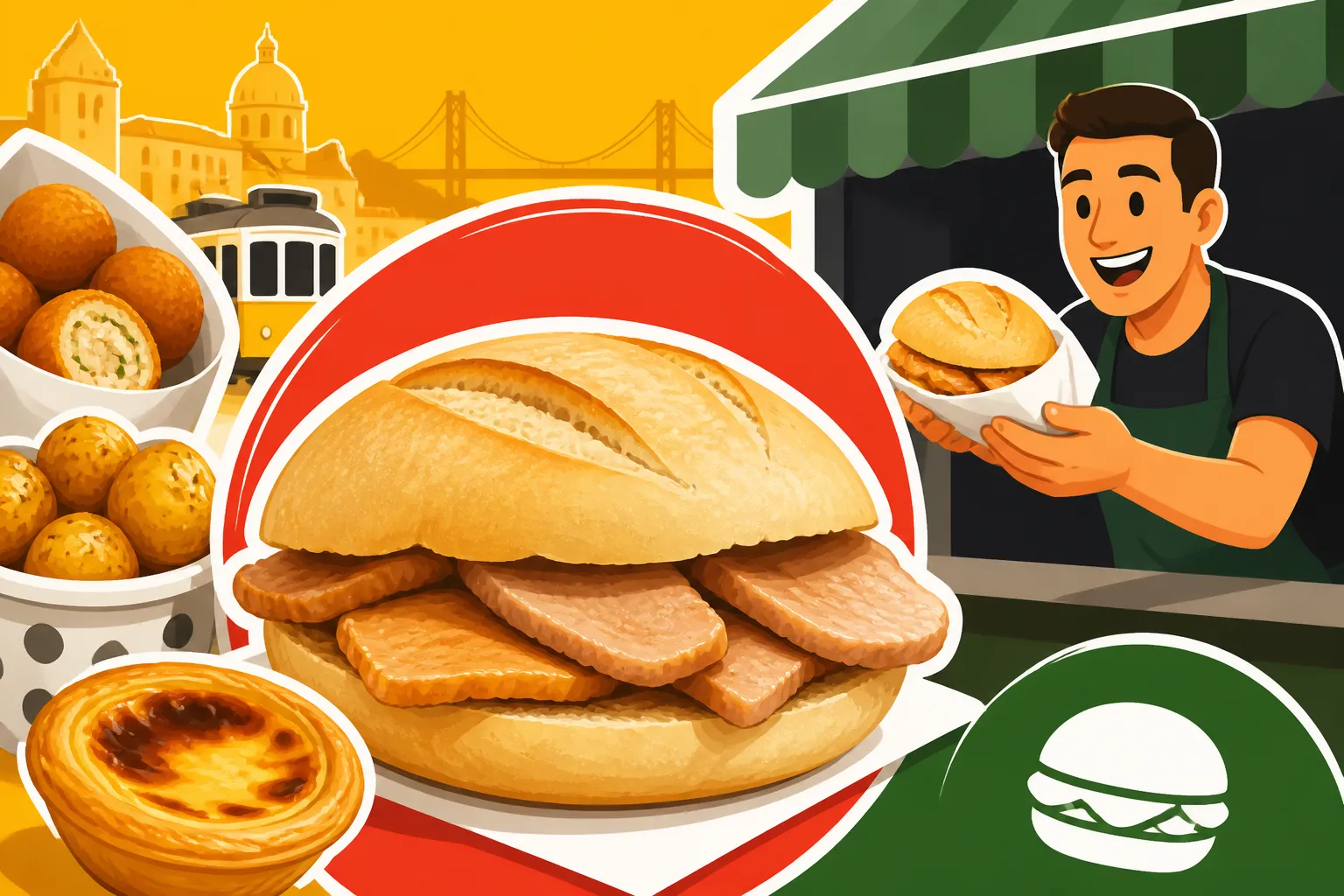
At its heart, a bifana is simply thin slices of pork that have been marinated and then quickly fried or simmered in a rich, garlicky sauce, typically served on a crusty bread roll (the papo seco). Sounds simple, right? Well, the magic lies in that sauce. This isn't just plain pork; it's pork infused with garlic, white wine, bay leaves, and often a secret blend of spices that each establishment guards jealously.
The experience of a bifana varies significantly by region, and this is where it gets interesting.
- Lisbon and Porto Style: In the major cities, you'll often find bifanas where the pork is marinated and then pan-fried or griddled. The sauce is then spooned over the pork and the bread, making for a wonderfully messy, flavour-packed sandwich. The pork itself tends to be thinner and more tender.
- Vendas Novas Style: Venture outside the main urban centers, particularly to places like Vendas Novas, a town famous for its bifanas, and you'll encounter a different beast. Here, the pork is typically stewed for a longer period in the marinade, becoming incredibly succulent and falling apart. The sauce is richer, more integrated, and the bread often soaks up all that delicious liquid. It's a true gastronomic pilgrimage if you find yourself passing through.
Regardless of the regional nuances, the essence remains the same: tender, flavourful pork, nestled in fresh, crusty bread, designed to be eaten quickly, usually standing up at a counter, with a cold beer or a sumo in hand. It’s the perfect quick lunch, late-night snack, or anytime pick-me-up.
Where to Find the Best Bifanas
Finding a good bifana isn't about fancy restaurants; it's about knowing where the locals go. You won't typically find an authentic bifana on a fine-dining menu. Instead, you need to seek out the humble, unpretentious establishments that have perfected this art over decades.
- Cervejarias: These are classic Portuguese beer halls, often lively and bustling, serving not just beer but also a range of traditional snacks and full meals. Many cervejarias take immense pride in their bifanas and pregos (another popular steak sandwich). Look for one that's busy during lunch or after work, filled with chatter and clinking glasses. A good cervejaria will often have a visible counter where the bifanas are being assembled right in front of you.
- Tascão and Tascas: The tasca is the quintessential Portuguese tavern, a no-frills spot serving honest, home-style cooking and strong, cheap coffee. A tascão is simply a larger version. Many tascas will feature bifanas or pregos as a staple on their menu, or often as a special of the day. They are the heart and soul of Portuguese culinary tradition, often family-run for generations.
- Snack-Bars: These are casual cafés that serve light meals, sandwiches, pastries, and coffee. While some might be more modern and generic, many traditional snack-bars are excellent places for a quick, authentic bifana. They're often found on street corners, identifiable by their glass display counters filled with various pastries and toasted sandwiches.
Don't be afraid to step into a place that looks a bit worn around the edges. Often, these are the hidden gems with the most flavour and the deepest history. Ask a local – they'll be more than happy to point you to their favourite bifana spot, usually with a passionate explanation of why it's the best in town. Exploring these local spots is part of the true immersion into Portuguese Coffee Culture and Restaurant Etiquette: Ordering Like a Local
Your Step-by-Step Guide to Ordering a Bifana
Okay, you've found your spot, the counter is bustling, and you're ready to order. Here's how to do it with confidence:
- Catch Their Eye: In a busy Portuguese snack bar or tasca, there's often no formal queue. Just stand at the counter and make eye contact with the person serving. A friendly "Olá!" and a patient smile will work wonders.
- Place Your Order: Simply say, "Uma bifana, por favor" (Ooh-mah bee-fah-nah, por fah-vor). If you want more than one, say "Duas bifanas, por favor" (Do-ahs bee-fah-nahs, por fah-vor).
- To Condiment or Not to Condiment: This is where you personalize your experience.
- Mustard: The most common addition. Many Portuguese bifana enthusiasts swear by a squirt of mostarda (mustard), usually a mild, slightly sweet variety. If you want it, you can say, "Com mostarda, por favor" (Kong moosh-tahr-dah, por fah-vor).
- Piri-Piri (Hot Sauce): If you like a kick, ask for "Com piri-piri, por favor" (Kong pee-ree-pee-ree, por fah-vor). Be warned, Portuguese piri-piri can pack a punch, but it’s delicious!
- No Condiments: If you want to savor the pure pork and sauce flavour, simply say nothing or "Sem nada, obrigado/a" (Sen nah-dah, oh-bree-gah-doo/gah-dah – male/female for "without anything, thank you").
- Order Your Drink: A bifana is almost always accompanied by a drink.
- Beer: A small draught beer, a imperial (Lisbon) or fino (Porto), is the classic pairing. Say, "E uma imperial/fino, por favor."
- Soft Drink: "Um sumo de laranja" (Oom soo-moo jee lah-ran-jah – orange juice), "Uma Coca-Cola" (Oomah Coh-kah Koh-lah).
- Water: "Uma água, por favor" (Oomah ah-gwah, por fah-vor).
- Coffee: If it's a quick breakfast or afternoon snack, a café (espresso) or bica (Lisbon term for espresso) is common.
- Pay Up: Once you’ve devoured your bifana, you usually pay at the counter. You might need to ask "Quanto é?" (Kwan-too eh? – How much is it?) or just wait for them to tell you the total. Many places accept card payments, but cash is always king in smaller establishments. You can always use The Multibanco System and MB Way: Portugal's Unique Payment Network for easy payments.
It’s an informal ritual, a delightful dance of quick service and delicious reward. Just relax, enjoy the moment, and don't worry too much about perfect pronunciation. The effort is always appreciated!
Beyond the Bifana: Essential Portuguese Street Foods to Try
While the bifana rightly holds a place of honour, Portuguese street food is a diverse and delicious world worth exploring. From savory fried delights to flaky sweet pastries, there's a snack for every craving.
Savory Delights: Prego, Pão com Chouriço, Bolinhos de Bacalhau, and More
Once you’ve mastered the bifana, it's time to expand your horizons. Portugal’s savory street food scene offers an incredible array of flavours and textures.
- Prego no Pão: The prego is the bifana's beefy cousin. It's a thin, tender steak, often pounded flat, quickly fried with plenty of garlic, and served on a papo seco roll. Like the bifana, you can add mustard or piri-piri. The word "prego" literally means "nail," referring to the garlic cloves often "nailed" into the meat before cooking. It’s a fantastic alternative if you prefer beef over pork, equally juicy and satisfying.
- Pão com Chouriço: This rustic snack is pure comfort. It's a simple, hearty bread roll baked with slices of chouriço (a smoked sausage similar to chorizo) nestled inside. Often cooked in a wood-fired oven, giving the bread a slightly smoky flavour and a wonderfully chewy crust. You'll find these at street festivals, local markets, and sometimes even at bakeries. They're particularly good when the chouriço fat has rendered into the bread, creating a moist, flavourful bite.
- Bolinhos de Bacalhau (Pastéis de Bacalhau): These ubiquitous fried codfish cakes are a must-try. Made from a mixture of shredded codfish, potatoes, eggs, and parsley, they're deep-fried until golden and crispy on the outside, soft and fluffy on the inside. They're perfect as a snack on their own, often served with a squeeze of lemon, or as a starter before a meal. They’re a testament to Portugal’s love affair with codfish. Some places even serve them with a creamy queijo da serra (sheep's cheese) inside for an extra treat!
- Empadas: These are small, savoury pies, typically filled with chicken (empada de galinha), pork (empada de porco), or sometimes even duck (empada de pato). They have a rich, flaky pastry crust and a creamy, flavourful filling. They're a fantastic, handheld snack that can be surprisingly filling. You'll find them in most snack bars and bakeries across the country.
- Rissóis: Similar to empanadas or croquettes, rissóis are crescent-shaped pastries with a crispy breaded exterior and a creamy filling. The most common varieties are rissóis de camarão (shrimp) or rissóis de carne (meat). They are deep-fried and utterly addictive, perfect for a quick bite or an appetizer.
When you're out and about, especially during local festivals or feiras (fairs), keep an eye out for stalls selling these items. It's often the best way to try them fresh and hot. You can also explore local markets, like Mercado da Ribeira in Lisbon or Mercado do Bolhão in Porto, where you can find these and other regional specialities. If you're planning on travelling between cities to explore different culinary traditions, services like Omio can help you find the best train or bus connections to reach those gastronomic destinations.
Sweet Indulgences: Pastéis de Nata, Travesseiros, and Other Pastries
Portuguese people have a legendary sweet tooth, and their pastries are truly something special. Many are perfect for a quick sweet fix on the go.
- Pastel de Nata: We couldn't talk about Portuguese street food, or any food, without mentioning the pastel de nata. This iconic custard tart, with its flaky crust and caramelized top, is famous worldwide for a reason. Best eaten warm, perhaps dusted with cinnamon (canela) and icing sugar (açúcar em pó). While you can find them everywhere, seeking out a renowned pastelaria for the freshest ones is always recommended. There's nothing quite like biting into a warm, creamy pastel de nata that just came out of the oven.
- Travesseiro de Sintra: If you're ever in Sintra, you must try a travesseiro. "Travesseiro" means "pillow," and these soft, flaky puff pastry tubes filled with a sweet almond cream are indeed pillow-like in their delicate texture. The most famous place to get them is Casa Piriquita in Sintra, where they've been making them for generations. It’s a wonderful treat to enjoy after exploring the palaces.
- Queijada de Sintra: Another Sintra specialty, the queijada is a small, round cheesecake-like tart made with fresh cheese, sugar, eggs, and cinnamon, baked in a thin, crispy pastry crust. It's less sweet than many other pastries and offers a delightful tanginess.
- Bolo de Arroz: A simple yet beloved rice cake, often found in cafés for breakfast or an afternoon snack. It has a slightly crumbly texture, a subtle sweetness, and a distinctive paper wrapper. It’s comforting and not overly sweet, perfect with a café.
- Pão de Deus: Literally "Bread of God," this is a soft, sweet bread roll topped with a generous layer of shredded coconut mixed with egg yolk, giving it a golden, slightly chewy topping. It’s heavenly with a coffee.
You'll find these sweet treats in almost any pastelaria or snack bar. The sheer variety can be overwhelming, but don't hesitate to point at something that catches your eye and ask, "O que é isto?" (Oh kay eesh-too? – What is this?). The staff are usually happy to explain, even with gestures.
Pairing Your Snacks: Drinks and Coffee Culture
No Portuguese street food experience is complete without the right beverage. Portugal has a rich drinking culture, from its renowned wines to its robust coffee and refreshing beers.
- Coffee: The backbone of daily life. A small, strong espresso (café or bica) is the default. If you prefer something milder, try a meia de leite (half coffee, half milk, like a flat white) or a galão (a larger, milkier coffee served in a tall glass). Understanding the nuances of coffee ordering is key to feeling like a local.
- Beer: Portugal's two main beer brands are Sagres and Super Bock. A small draught beer, an imperial (Lisbon) or fino (Porto), is the perfect accompaniment to any savory snack, especially a bifana. It's light, crisp, and refreshing.
- Ginjinha: A traditional Portuguese liqueur made from sour cherries, often served in a small chocolate cup (which you then eat!). It's sweet, potent, and a delightful after-dinner treat or a quick pick-me-up. You'll find Ginjinha bars, especially in Lisbon and Óbidos.
- Sumos Naturais: Freshly squeezed juices, especially orange juice (sumo de laranja natural), are incredibly popular and refreshing, particularly in warmer months. You can often find other fruit juices too.
- Refrigerantes: Standard soft drinks like Coca-Cola or Sumol (a Portuguese fruit soda).
Remember, Portuguese culture often involves lingering over a coffee or a drink, even with a quick snack. It’s about savoring the moment.
Navigating the Street Food Scene Like a Local
Feeling comfortable in Portuguese eateries comes with practice, but a few insider tips can make a world of difference.
Overcoming the Language Barrier and Reading Menus
Let’s be real, the language barrier can be a huge hurdle. While many younger people in tourist areas speak English, in a small, traditional tasca, you might be met with a friendly but blank stare. Don't let this deter you!
- Basic Portuguese Phrases: Learning a few key phrases like "Olá" (hello), "Obrigado/a" (thank you – male/female), "Por favor" (please), and "Quanto é?" (how much is it?) goes a long way.
- Point and Smile: Seriously, this is your secret weapon. Most food establishments have items displayed, especially pastries and savory snacks behind a glass counter. Don't be shy; point to what you want. A simple "Este, por favor" (Esh-teh, por fah-vor – This one, please) with a smile and a nod can communicate volumes.
- Google Translate: Have it ready on your phone. You can use the camera feature to translate menus on the fly. It's not always perfect, but it's a lifesaver.
- Common Menu Words: Knowing a few common food terms will help:
- Pão – Bread
- Queijo – Cheese
- Carne – Meat
- Frango – Chicken
- Bacalhau – Codfish
- Sopa – Soup
- Salada – Salad
- Arroz – Rice
- Batatas Fritas – French fries
- Peixe – Fish
- Bebida – Drink
- Café – Coffee (espresso)
- Cerveja – Beer
The Portuguese are generally very patient and appreciate any effort to speak their language. Don't stress about perfection; just try. If you're keen to really get to grips with the language, you might consider Learning Portuguese for Career Growth: Certificates and Business Language or simpler conversational courses.
Finding Authentic Spots and Food Safety Tips
How do you find those truly authentic, hole-in-the-wall places that serve the best food? And once you're there, how do you ensure you're eating safely?
- Follow the Locals: This is the golden rule. If a place is packed with Portuguese people, especially older generations, you've hit the jackpot. They know where the good, affordable food is.
- Look for Simplicity: Authentic street food spots are rarely fancy. Simple decor, paper napkins, and bustling counters are good signs.
- Visible Kitchen/Preparation: If you can see the bifanas being prepared or the pastries lined up, it's a good sign of freshness and transparency.
- Food Tours: If you're feeling overwhelmed, a guided food tour is an excellent way to get an introduction. Many tours offered by companies like GetYourGuide focus specifically on street food, taking you to local favourites and explaining the dishes and culture. This can be a fantastic learning experience and build your confidence for solo exploration.
- Food Safety: Portugal has high food safety standards, but a few common-sense rules apply:
- Hot Food Hot, Cold Food Cold: Ensure hot items are served hot and cold items are kept chilled.
- Busy is Best: High turnover means fresh food. A busy spot is usually a safe bet.
- Cooked Through: Meats and fish should be thoroughly cooked.
- Trust Your Senses: If something smells or looks off, politely decline.
- Water Safety: Tap water is generally safe to drink across Portugal, but if you have a sensitive stomach, stick to bottled water.
Embracing the local food scene is an incredible way to experience Portuguese culture. Don't be afraid to try new things and engage with the vendors.
Tips for Expats and Tourists: Embracing the Experience
As an expat or tourist, you're not just eating; you're immersing yourself.
- Slow Down: Portuguese meal times, even for snacks, are often a social affair. Don't expect American-style fast food service. Enjoy the pace.
- Embrace the Noise: Traditional tascas and cervejarias are often loud, vibrant places. This is part of their charm.
- Don't Expect Vegetarian/Vegan Options Everywhere: While vegetarianism is growing in Portugal, many traditional street food items are meat or fish-based. If you have dietary restrictions, it's best to research specific restaurants or bring snacks, especially outside major cities. In larger urban centers, you'll find more diverse options, but for classic street food, it can be a challenge.
- Cash is King (but cards are common too): While credit/debit cards are widely accepted, especially with the convenient MB Way app, it’s always a good idea to have some cash on hand for smaller purchases or very traditional establishments.
- No Rush to Clear Plates: Unlike some cultures, servers won't rush to clear your plate the moment you take your last bite. It’s polite to finish and signal when you're ready for the bill.
- Ask for Recommendations: Whether it's the person behind the counter or a friendly local at the next table, people are usually delighted to share their favourite dishes and tips. This is where you might find your own hidden gem, maybe even an apartment near the best pastelaria using sites like Booking.com.
- Be Polite and Patient: A little patience and a friendly attitude go a long way, especially if there's a language barrier. A warm "Bom dia!" (Good morning!), "Boa tarde!" (Good afternoon!), or "Boa noite!" (Good evening!) when you enter an establishment is always appreciated.
Venturing into the world of Portuguese street food is one of the most rewarding aspects of living in or visiting Portugal. It's affordable, delicious, and a direct link to the heart of the country's culture. So go on, order that bifana, try that pastel de nata, and savour every authentic bite!
Disclaimer
The information provided in this guide is for general informational purposes only and does not constitute professional advice. While we strive to keep the information up-to-date and correct, we make no representations or warranties of any kind, express or implied, about the completeness, accuracy, reliability, suitability, or availability with respect to the website or the information, products, services, or related graphics contained on the website for any purpose. Any reliance you place on such information is therefore strictly at your own risk. Prices, opening hours, and specific offerings of establishments can change without notice. Always exercise caution and use your best judgment when trying new foods or visiting new establishments.