The Age of Discoveries: Maritime History Sites in Portugal
Disclosure: This article contains affiliate links. If you buy through them, we may earn a commission at no extra cost to you. Read our full disclosure.
Many travelers arrive in Portugal expecting just sunshine and sardines, only to find themselves overwhelmed by the sheer weight of history etched into every stone wall and harbor. This guide decodes the Age of Discoveries, showing you exactly where to find the soul of maritime Portugal so you can move beyond the surface-level tourism and truly understand the nation’s explorer heart.
Lisbon: The Epicenter of Global Exploration
When you first land in Lisbon, it is easy to get distracted by the yellow trams and the steep hills of Alfama. However, to truly understand the Portuguese psyche, you have to head west toward the district of Belém. This was the launchpad for the caravels that changed the map of the world. Standing on the riverbank, looking out toward the Atlantic, you can almost feel the nervous energy of the sailors who left these shores in the 15th and 16th centuries, often not knowing if they would ever see land again.
If you are staying in the capital, checking our Lisbon Neighborhood Guide: Best Areas for Expats and Digital Nomads will help you find a base near these monuments without being stuck in the middle of the noisiest tourist traps. Belém is a bit of a trek from the city center, but it is the most concentrated area of maritime history in the country. It is where the river Tejo meets the ocean, and it served as the final frontier for explorers like Vasco da Gama and Pedro Álvares Cabral.
The Jerónimos Monastery: A Prayer for Sailors
The Mosteiro dos Jerónimos is perhaps the most impressive example of Manueline architecture in the world. Built on the site of a small chapel where Vasco da Gama and his crew spent their final night in prayer before departing for India in 1497, this structure was funded by the "pepper tax"—the massive wealth generated from the spice trade. When you walk through the cloisters, look closely at the columns. You will see stone-carved ropes, sea monsters, and exotic plants, all reflecting the new worlds the Portuguese were discovering.
Inside the church, you will find the tomb of Vasco da Gama himself. It is a somber place, usually filled with a hushed reverence. We recommend going as early as possible. The lines can be grueling, and the heat in the summer makes the wait feel even longer. You can often skip the worst of the queues by checking availability on GetYourGuide for skip-the-line tickets or guided historical walks that provide context you simply won't get from the plaques on the wall.
Padrão dos Descobrimentos: The Monument to the Discoveries
Directly across from the monastery stands the massive Padrão dos Descobrimentos. This monument was built in the mid-20th century to celebrate the 500th anniversary of the death of Prince Henry the Navigator. It is shaped like the prow of a ship, with Prince Henry leading a group of explorers, cartographers, and monks toward the sea. It is a powerful piece of iconography, though it is worth noting it was built during the Estado Novo regime, so it carries a certain nationalist weight that is interesting to discuss with local history buffs.
Don't just look at the monument from the outside. Take the elevator to the top for one of the best views in Lisbon. From here, you can see the giant compass rose inlaid in the pavement below, a gift from South Africa, which maps out the dates and routes of the primary Portuguese voyages. It gives you a literal birds-eye view of how a tiny nation on the edge of Europe managed to reach Brazil, Africa, India, and Japan in a relatively short span of time.
Torre de Belém: The Last Sight of Home
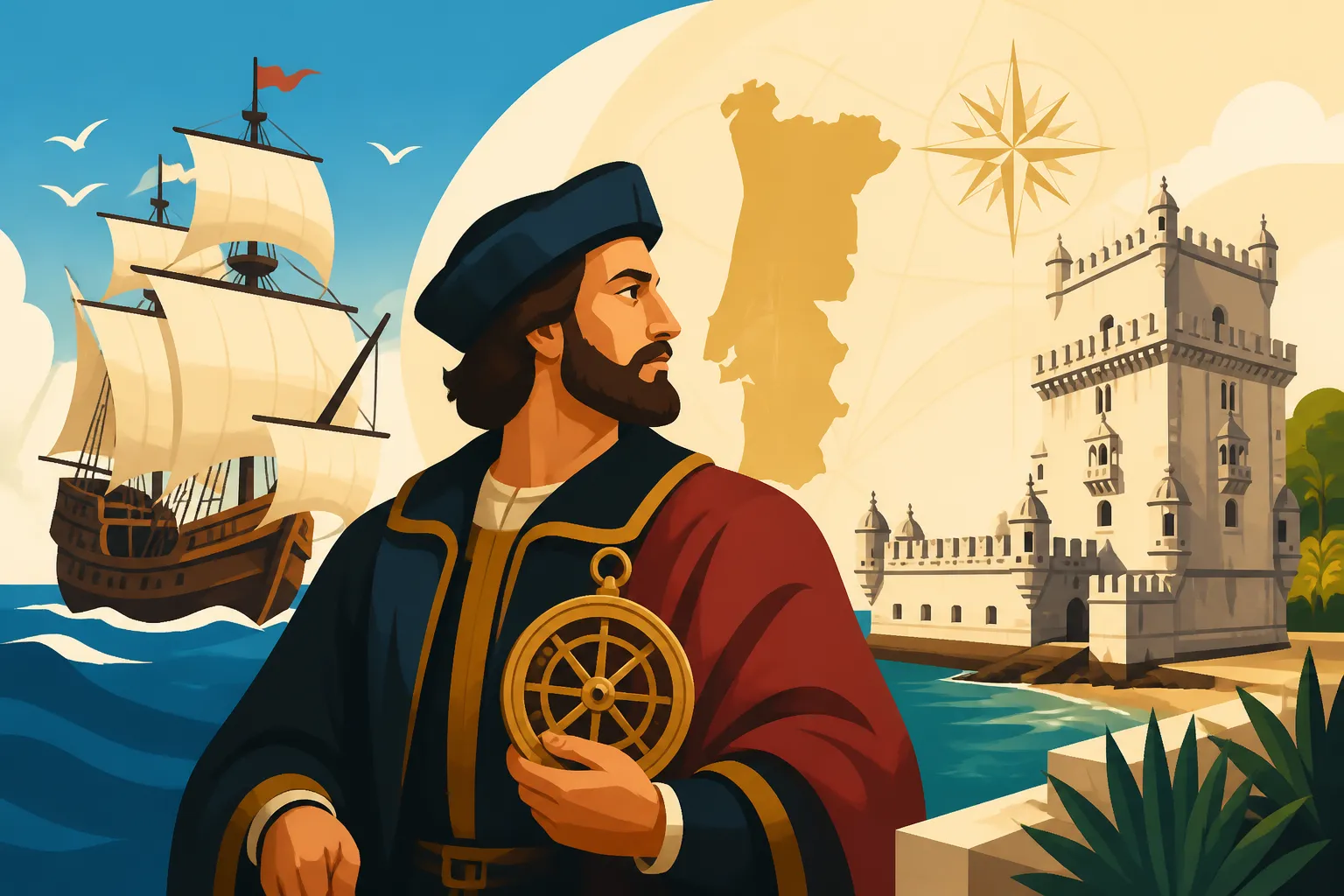
The Tower of Belém is the most iconic image of Portuguese maritime history. Originally built as a fortress in the middle of the river to protect the city from pirate raids, it eventually served as a ceremonial gateway to the city. For sailors returning from years-long voyages, the sight of this tower meant they had finally made it home. For those leaving, it was the last piece of Portuguese soil they would see.
The architecture here is remarkably delicate for a defensive structure. You’ll notice the Moorish influence in the watchtowers and the intricate ribbing of the balconies. Because the tower is right on the water, the tides play a role in your visit; sometimes the walkway is partially submerged, which adds to the drama. It is a small space inside, so if you are claustrophobic, you might prefer admiring it from the grassy park nearby while enjoying a coffee. Just make sure you've mastered Portuguese Coffee Culture and Restaurant Etiquette: Ordering Like a Local before you try to order a complex latte at the nearby kiosks.
Sagres and the Algarve: Where the World Began
To the south, the Algarve offers a different kind of maritime history—one that is rugged, windswept, and arguably more authentic than the polished monuments of Lisbon. This is where the legendary "School of Sagres" was said to have been founded by Prince Henry the Navigator. While historians debate whether a formal school actually existed, there is no denying that Sagres was a hub for the greatest minds in navigation, cartography, and astronomy during the 1400s.
When exploring the south, understanding The Algarve for Expats: Lagos, Faro, and Tavira Compared is essential for navigating the coast, as each town has a very different relationship with its maritime past. Sagres, in particular, feels like the end of the world. The cliffs are sheer, the wind is relentless, and the ocean feels significantly more powerful here than it does in the sheltered bays of the central coast.
The Sagres Fortress: Fortaleza de Sagres
The fortress itself is a massive plateau surrounded by walls on one side and 60-meter-high cliffs on the others. Inside the enclosure, you’ll find the Rosa dos Ventos, a giant wind rose marked out in stones on the ground. Walking across this vast, empty space, you can understand why Prince Henry chose this location. It is a place of isolation and focus. There are no distractions here, only the constant roar of the Atlantic and the sight of the horizon.
One of the highlights of the fortress is the small chapel of Nossa Senhora da Graça. It is simple and white-washed, standing in stark contrast to the opulence of the Jerónimos Monastery in Lisbon. This was a place of practical faith—a place where sailors prayed for survival rather than for the glory of the empire. For a more immersive experience, I suggest using Booking.com to find a stay in a local "Pousada" or a cliffside hotel so you can witness the sunset over the Cape; it is a spiritual experience that connects you to the explorers of old.
Cape Saint Vincent: The Sacred Promontory
Just a few kilometers from the Sagres fortress is Cabo de São Vicente, the southwesternmost point of mainland Europe. To the ancients, this was the "Sacred Promontory" where the sun sank into the ocean, marking the boundary of the known world. The lighthouse that stands there today is one of the most powerful in Europe, its beam visible for nearly 60 kilometers out to sea.
Standing at the edge of these cliffs is a humbling experience. It is often incredibly windy, so hold onto your hat and your phone. Many visitors come here just for the "Last Hot Dog before America" stand, but the real draw is the museum inside the lighthouse complex. It details the evolution of naval signaling and the strategic importance of this point during the naval battles of the 18th and 19th centuries, including the famous Battle of Cape St. Vincent.
Lagos: The Slave Market and the Caravels
Lagos was the primary port for the early voyages of discovery. It was here that the first caravels were built—the light, maneuverable ships that allowed the Portuguese to sail against the wind and explore the African coast. However, the history here is not all about glorious discovery. Lagos was also the site of the first overseas slave market in post-medieval Europe.
The Mercado de Escravos museum, located in the building that stands where the original market was held, is a necessary and sobering visit. It provides a crucial counter-narrative to the celebratory tone of many other maritime sites. It reminds us that the Age of Discoveries also ushered in centuries of human suffering and exploitation. Validating this part of history is essential for anyone who wants a complete picture of Portugal's global impact.
Porto and the North: The Birthplace of Prince Henry
While Lisbon is the face of the Discoveries, Porto is its birthplace. Infante Dom Henrique, known to the world as Prince Henry the Navigator, was born in Porto in 1394. The city's maritime history is inextricably linked to the Douro River and the shipyards that lined its banks. The northern region was also responsible for the "fiel amigo"—the salted cod or bacalhau—that sustained sailors on their long voyages and remains a staple of the Portuguese diet today.
To get from Lisbon up to these northern sites, you'll likely use the Using Comboios de Portugal (CP) Trains and the Navegante Pass system. The Alfa Pendular train is the fastest way to travel, and you can easily compare prices and book through Omio to ensure you get a seat with a view of the coastline as you head north. Once in Porto, our Porto Neighborhood Guide: Where to Live for Culture, Tech, and Family can help you find a spot near the Ribeira district, where the maritime history is most palpable.
Casa do Infante: The Royal Mint and Customs House
The Casa do Infante is the traditional birthplace of Prince Henry. Over the centuries, the building has served as the city's royal palace, the customs house, and the mint. Today, it is a museum that houses the city’s archives. The archaeological excavations inside show that the site has been a center of trade since Roman times, proving that Porto’s maritime DNA goes back much further than the 15th century.
Walking through the ancient rooms, you see maps, coins, and weights that tell the story of a city that lived and died by the river. It was here that the logistics of the empire were managed—where the taxes were collected and the wealth of the colonies was processed. It is a much more "bureaucratic" look at the Age of Discoveries, but it is fascinating for those who want to understand how the empire was actually funded and governed.
World of Discoveries: An Interactive Deep Dive
If you are traveling with family, the World of Discoveries in Porto is a must. Unlike the more traditional museums, this is an interactive theme park and museum that uses touchscreens and life-sized recreations to tell the story of the voyages. The highlight is a boat ride that takes you through different "worlds," from the jungles of Brazil to the courts of China.
While it might seem a bit "touristy" for some, it is actually quite well-researched. It does a great job of explaining the technological leaps in shipbuilding and navigation that made the voyages possible. For kids, seeing a full-scale replica of a caravel's interior—and realizing how cramped and dirty life on board was—is much more impactful than reading it in a textbook.
Viana do Castelo: Shipbuilding and the Cod Trade
Further north, the town of Viana do Castelo remains a center of Portuguese shipbuilding. It is the best place to learn about the "White Fleet"—the ships that sailed every year to the Grand Banks of Newfoundland for cod. The Navio Hospital Gil Eannes, a former hospital ship that supported the fishing fleet, is permanently moored in the harbor and open for tours.
Exploring the operating rooms, the kitchens, and the crew quarters of the Gil Eannes gives you a visceral sense of the hardships faced by Portuguese mariners well into the 20th century. It bridges the gap between the 15th-century explorers and the modern maritime identity of the country. If you plan to drive to these more remote northern towns, our guide on Public Transport and Driving in Portugal: Trains, Tolls, and Licenses will save you from expensive toll mistakes on the A28 highway.
Tomar and Central Portugal: The Knights Templar Legacy
It is impossible to talk about the Age of Discoveries without mentioning the Order of Christ. When the Knights Templar were suppressed across Europe, they found refuge in Portugal, rebranding themselves as the Order of Christ. They were the primary financial and ideological backers of the early voyages. In fact, the red cross you see on the sails of the Portuguese caravels is the Cross of the Order of Christ.
Convento de Cristo: The Spiritual Headquarters
The Convent of Christ in Tomar is a UNESCO World Heritage site and served as the headquarters for the order. Prince Henry was the Grand Master of the Order of Christ for decades, using their vast wealth to fund his expeditions. The convent is a sprawling complex of cloisters and chapels, but the most famous feature is the Janela do Capítulo (Chapter House Window).
This window is the pinnacle of the Manueline style. It is decorated with stone-carved masts, anchors, seaweed, and even the "Order of the Garter" as a nod to Portugal’s alliance with England. It is a literal manifesto of maritime power carved into stone. Standing in the courtyard and looking up at this window, you realize that the Discoveries were seen not just as a commercial venture, but as a holy crusade to spread Christianity and find the legendary Prester John.
The Manueline Style: Architecture of the Sea
The Manueline style is unique to Portugal and is the visual language of the Age of Discoveries. Beyond Tomar and Belém, you can find traces of it in small churches throughout central Portugal. It was a short-lived style, lasting only as long as the reign of King Manuel I (1495–1521), but it perfectly captured the optimism and wealth of the era.
Look for the armillary sphere—a navigation tool that became the personal emblem of King Manuel I and is still featured on the Portuguese flag today. Learning to spot these symbols can make even a simple walk through a village square feel like a treasure hunt. While these sites are generally very safe, it’s always wise to review Safety and Emergency Preparedness in Portugal for Foreign Residents before a long road trip into the interior.
| Site | Location | Primary Significance | Must-See Feature |
|---|---|---|---|
| Jerónimos Monastery | Lisbon | Spiritual center of the Discoveries | Manueline Cloisters |
| Torre de Belém | Lisbon | Defensive gateway and icon of return | Waterfront views/Bastion |
| Fortaleza de Sagres | Sagres | Navigation and cartography hub | Giant stone Wind Rose |
| Casa do Infante | Porto | Birthplace of Prince Henry | Archaeological excavations |
| Convento de Cristo | Tomar | Templar/Order of Christ funding | The Manueline Window |
| Gil Eannes Ship | Viana do Castelo | 20th-century cod fishing history | Hospital and engine rooms |
Planning Your Maritime Pilgrimage
To see all these sites in one trip, you need to be strategic. Portugal is a small country, but the infrastructure can be quirky. While the trains are excellent between major hubs, reaching places like Sagres or Tomar often requires a car or a very specific bus schedule.
Best Ways to Travel Between History Hubs
The easiest way to see the maritime sites is to start in Lisbon, spend three days exploring the city and Tomar (which is a 1.5-hour train ride away), and then head south or north. For the south, you can take a train to Lagos and then a local bus or taxi to Sagres. For the north, the Alfa Pendular to Porto is your best bet. Using a platform like Omio allows you to see all the bus and train options in one place, which is helpful because the Portuguese national rail site (CP) can sometimes be a bit temperamental with foreign credit cards.
Finding Accommodation with a Historic View
If you want to stay in a place that feels connected to the past, look for "Pousadas de Portugal." These are government-run (now managed by the Pestana group) hotels located in historic buildings like castles, convents, and palaces. There is a magnificent one in Sagres that overlooks the cliffs and another in the heart of Porto. Booking.com usually has the best rates for these, and you can read reviews from other travelers who can tell you if the "authentic" experience includes old-school plumbing (it sometimes does).
Booking Guided Tours vs. Solo Exploration
While I am a big fan of wandering solo, maritime history is one area where a guide is invaluable. The symbolism in Manueline architecture is so dense that you will miss 90% of it without someone to point it out. GetYourGuide offers several "Age of Discoveries" themed walking tours in Lisbon that include the interior of the monuments. This is often better than just using an audio guide because you can ask questions about the current Portuguese perspective on their colonial past—a topic that is increasingly being debated in local circles.
Disclaimer
The information provided in this guide is for informational purposes only. While every effort has been made to ensure accuracy, opening hours, ticket prices, and travel regulations in Portugal can change without notice. Always check official government websites or contact local tourism offices before planning your visit. This guide does not constitute legal or professional travel advice.