Cash vs Card in Portugal and Using Multibanco
Disclosure: This article contains affiliate links. If you buy through them, we may earn a commission at no extra cost to you. Read our full disclosure.
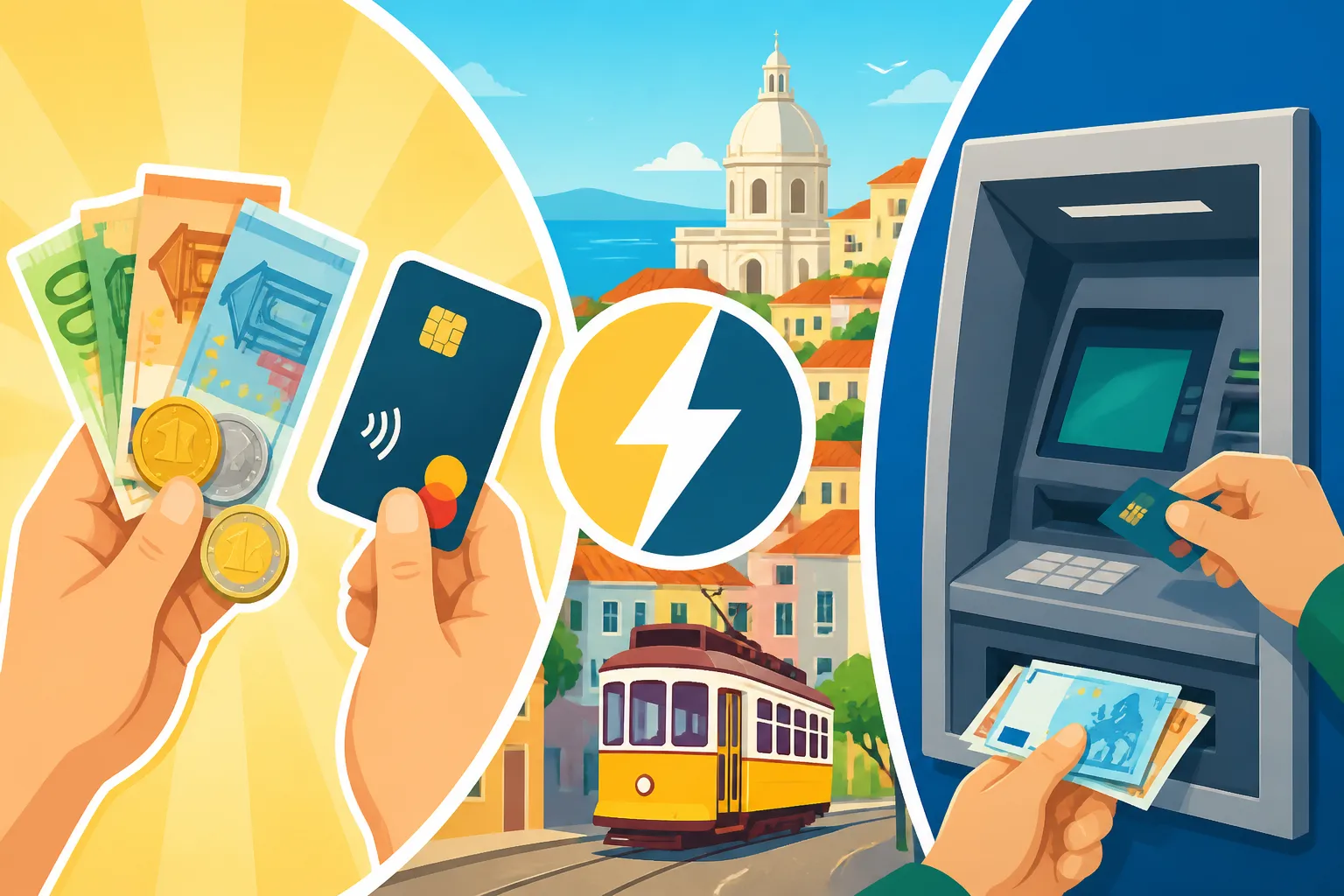
Arriving in Portugal with a pocket full of foreign credit cards often leads to unexpected friction at local pastelarias, family-run tascas, and rural ticket counters. Navigating the balance between physical money and plastic can be confusing for newcomers. This comprehensive guide breaks down the true cash versus card reality in Portugal, explains how the domestic payment infrastructure works, and gives you actionable strategies to avoid fees while paying effortlessly.
Cash vs Card in Portugal: The Real Daily Reality
When moving to or traveling around Portugal, one of the first cultural adjustments you will encounter is how money changes hands. Coming from countries where physical cash has virtually disappeared, many expats and travelers assume they can tap their smartphone or credit card for a single espresso or a loaf of bread. While Portugal is rapidly digitalizing, the reality on the ground is nuanced, blending cutting-edge electronic banking with deeply rooted cash habits.
Understanding when to tap a card and when to reach for coins will save you from embarrassing moments at checkout counters. Depending on whether you are sipping a flat white in a trendy Lisbon neighborhood or buying fresh peaches at a weekly market in the Alentejo, payment expectations shift dramatically.
When You Can Rely Entirely on Cards
In major urban centers like Lisbon, Porto, and popular tourist hubs across the Algarve, card acceptance is widespread. Modern supermarkets, national retail chains, department stores, gas stations, and mid-to-high-end restaurants will process credit and debit cards without a second thought. Foreign Visa and Mastercard products are universally accepted in these establishments, and contactless payment technology is standard at almost every modern point-of-sale terminal.
If you are booking accommodations in advance through platforms like Booking.com, paying for dinner at established urban restaurants, or buying clothing at major shopping centers, you will rarely need physical cash. Furthermore, ride-hailing services, toll booths on major highways, and modern ticket kiosks at central train stations accept credit cards seamlessly. For tech-savvy travelers, digital wallets integrated with smartwatches or phones work flawlessly in these high-traffic commercial environments.
Where Cash Remains King Across Portugal
Step outside the cosmopolitan bubble, or simply step into a traditional neighborhood establishment in a big city, and cash instantly regains its crown. The small neighborhood cafe, known locally as a pastelaria or café, operates on tiny profit margins. Expecting a shopkeeper to process a digital card payment for a sixty-cent espresso (bica) creates operational friction and merchant fees that eat directly into their livelihood.
Beyond small cafes, cash is essential at traditional open-air markets, small mom-and-pop grocery shops (mercearias), neighborhood barbershops, and traditional family-run eateries (tascas). If you travel into rural regions, such as the interior mountain villages or quiet coastal stretches, card terminals become scarce. Many municipal buses, local taxis outside of ride-hailing app coverage, and historic monument entry booths only accept physical Euros. To avoid getting stuck, always carry a small pouch of physical bills and coins.
When enjoying a meal out, physical currency also plays a key role in tipping. While service charges are rarely forced onto a bill, leaving a modest token of appreciation in cash directly on the table is standard practice. To better understand local customs surrounding gratuities, reading up on Tipping culture in Portugal: Do you leave 10% or just round up the bill? can clear up common misconceptions before you sit down for your first meal.
Minimum Spend Requirements and Local Nuances
Even in venues that possess card terminals, you will frequently encounter minimum spend thresholds. It is common to see signs posted near registers declaring a minimum limit, often ranging between five and ten Euros, for card transactions. Merchants put these rules in place because local transaction processing fees can make small card payments financially unviable for low-cost items.
Additionally, some merchants utilize card machines that are strictly tied to the domestic banking network rather than international payment processors. You might see a card reader on the counter, attempt to tap your foreign Visa or Mastercard, and have the transaction immediately declined. This is rarely an issue with your bank account; rather, it is a mismatch between your international card network and the shop’s payment system.
TYPICAL PAYMENT PREFERENCES IN PORTUGAL
| Location / Merchant Type | Preferred Payment Method |
|---|---|
| Major Supermarkets & Malls | Card / Contactless / Mobile Wallet |
| Trendy Urban Restaurants | Card / Mobile Wallet |
| Traditional Tascas & Cafes | Cash (Small Bills / Coins) |
| Open-Air Farmers Markets | Cash Only |
| Highway Tolls & Fuel Stations | Card / Via Verde Electronic Tag |
| Rural Sightseeing & Local Buses | Cash Only |
Understanding Portugal’s Multibanco System
To navigate payments in Portugal like a seasoned local, you must understand the domestic financial engine known as Multibanco. Developed and managed by the interbank services provider SIBS, Multibanco is not merely an ATM network; it is a highly integrated, multi-functional electronic payment framework that connects every bank in the country. It is widely considered one of the most advanced banking networks in the world, allowing users to perform dozens of administrative and financial tasks directly from an ATM or mobile screen.
For foreigners, however, Multibanco can be a source of temporary confusion. The system operates on a dual-network logic that separates domestic debit processing from international credit and debit routing, which directly impacts how and where your foreign payment cards function.
What Makes Multibanco Different From Standard ATM Networks
In many countries, an ATM is simply a machine where you insert plastic to draw out paper currency or check your account balance. In Portugal, a Multibanco terminal is a comprehensive self-service administrative portal. Using a Portuguese debit card at a standard Multibanco terminal allows you to pay utility bills, settle state taxes, buy concert tickets, top up pre-paid mobile phone SIM cards, transfer money directly to another local account, pay fishing licenses, and even donate to charities.
Because the system is fully centralized, every traditional institution—including major banking entities like those covered in Traditional Portuguese Banks: Millennium, CGD, Santander, and Novobanco—is connected to the exact same interface. The experience at an ATM in central Lisbon will be functionally identical to one in a remote village in the Azores, offering consistent reliability and zero domestic usage fees for local cardholders.
How Locals Use Multibanco for Everything from Taxes to Tickets
When living in Portugal, you will quickly notice that invoices, government notices, and online shopping checkouts often feature a small section titled Pagamento por Multibanco. This block contains three pieces of data: an Entity code (Entidade), a Reference number (Referência), and an Amount (Montante).
Locals take these numbers to any Multibanco ATM or enter them into their home banking app to settle payments instantly. From paying monthly electricity bills to purchasing long-distance train journeys, the system eliminates the need to share sensitive credit card details online. If you are arranging regional travel across the Iberian peninsula, using online booking services like Omio allows you to pay via standard international methods, bypassing the need for a local bank account when organizing your trips.
Why Foreign Credit and Debit Cards Sometimes Fail at Local Terminals
The most frustrating technical barrier foreign visitors face is the dreaded “Transaction Declined” message at a shop counter, despite having plenty of funds in their home bank account. This occurs because of how merchant terminals are configured. A significant number of small, traditional businesses use point-of-sale terminals that operate strictly on the domestic Multibanco card scheme.
When a terminal is configured exclusively for Multibanco, it can only read cards issued by Portuguese banks that carry the proprietary domestic debit chip. When you present an international card operating on standard Visa, Mastercard, or American Express networks, the terminal simply cannot route the transaction. Understanding Credit cards in Portugal: Why debit cards (Cartão de Débito) are preferred provides deeper insights into why local merchants lean heavily toward domestic debit networks over international credit processors.
To avoid payment failures, look at the terminal or ask the shopkeeper if they accept international cards before ordering. If the terminal displays standard Visa and Mastercard logos alongside the blue-and-green Multibanco symbol, your foreign card will work smoothly. If it only displays the domestic logo, you will need physical cash.
Navigating MB Way and Digital Payments as a Foreigner
Alongside physical Multibanco terminals, Portugal has embraced mobile payments through a proprietary application called MB Way. Designed by SIBS, this digital ecosystem has altered daily commerce across the country, allowing users to send money instantaneously using mobile phone numbers, pay online securely, and make contactless purchases at point-of-sale terminals without carrying physical plastic.
While MB Way is ubiquitous among Portuguese residents, accessing it as an international traveler or newly arrived expat can present several unexpected hurdles.
What Is MB Way and Why Everyone Uses It
MB Way functions as a hybrid of instant peer-to-peer money transfers, contactless digital wallets, and online payment security. If a group of friends goes out for dinner, splitting the bill does not involve messy cash calculations or multiple card terminal swipes; one person pays, and the rest instantly transfer their exact share via MB Way using just a mobile phone contact.
Furthermore, small independent vendors who choose not to rent a traditional payment terminal will often display a printed QR code or a phone number at their register. Customers simply scan the QR code within the app or type in the phone number to complete the purchase in seconds. It has become so popular that traditional street markets, artisan stalls, and coastal surf shacks frequently rely on MB Way as their primary digital payment method.
The Struggle of Registering Foreign Phone Numbers and Cards
Despite its incredible utility, MB Way has historically been a closed ecosystem reserved for holders of Portuguese bank accounts. To link a card to the application, the card must generally be issued by a financial institution participating in the SIBS network, and it must be linked to an active phone number.
Expats frequently run into roadblocks when trying to configure the app with foreign cards or non-Portuguese mobile numbers. If you are struggling with setting up this local service, reading about Linking your foreign phone number to MB Way (and why it usually fails) will save you hours of troubleshooting. Until you establish a formal local bank account and secure a Portuguese phone number, accessing full MB Way functionality remains difficult for short-term visitors.
For a broader look at how this proprietary app integrates with the national banking system, review The Multibanco System and MB Way: Portugal’s Unique Payment Network to see how digital and physical payment channels work together across the country.
Contactless Payments, Apple Pay, and Google Pay Expectations
If you cannot access MB Way, you might wonder whether standard contactless solutions like Apple Pay or Google Pay will suffice. The answer depends heavily on the backend card tied to your device.
If your digital wallet is backed by an international Visa or Mastercard, it will function at any merchant terminal that accepts international Visa or Mastercard payments. The contactless feature on the terminal will read your phone or smartwatch effortlessly. However, tapping Apple Pay backed by a foreign card will still fail at a merchant terminal that is locked exclusively to the domestic Multibanco network.
For short-term tourists booking day trips, wine tastings, or walking excursions online through platforms like GetYourGuide, digital wallet payments and foreign credit cards process online without issue, guaranteeing your spot without worrying about local terminal compatibility upon arrival.
PAYMENT APP COMPATIBILITY FOR FOREIGN VISITORS
| Payment App / Wallet | Requires Local Bank? | Works at Domestic POS? |
|---|---|---|
| MB Way | Yes | Yes (100% Coverage) |
| Apple Pay (Int’l) | No | Only Int’l Capable POS |
| Google Pay (Int’l) | No | Only Int’l Capable POS |
| Wise / Revolut Card | No | Only Int’l Capable POS |
ATM Traps, Fees, and Currency Exchange Tips
Withdrawing paper Euros from an automated teller machine is a necessary routine for anyone traveling or living in Portugal. However, inserting an international card into an ATM can expose you to steep, unnecessary transaction fees if you do not pay close attention to the machine’s branding and on-screen prompts.
Knowing which ATMs to use, which options to decline, and how currency conversion works is essential to keep your bank balances intact.
Euronet vs Bank-Owned ATMs: Avoiding Predatory Fees
Not all ATMs in Portugal are created equal. When walking through historic city centers, airport arrival halls, or popular beach resorts, you will spot bright yellow-and-blue machines branded under the name Euronet. While these machines are legal and convenient, they are third-party, commercial ATMs targeted directly at foreign tourists.
Euronet machines often apply high direct transaction fees for foreign card withdrawals and employ aggressive user interfaces designed to trick you into accepting poor exchange rates. In contrast, official bank-owned ATMs—identifiable by the clear blue-and-green Multibanco logo or the branding of major commercial banks—do not charge direct usage fees for standard international debit card withdrawals.
To keep your costs down, always look for physical banking branches or standalone terminals carrying the official Multibanco logo. For a detailed breakdown of how to identify safe machines and protect your wallet, check out our guide on How to avoid ATM withdrawal fees from Euronet machines in tourist areas.
Dynamic Currency Conversion (DCC): Always Pay in Euros
Whether you are withdrawing cash from an ATM or paying for a meal with a foreign credit card, the payment terminal will frequently present you with a choice. It will ask if you wish to be charged in your home currency (e.g., USD, GBP, CAD) or in the local currency (EUR). This process is known as Dynamic Currency Conversion (DCC).
DCC sounds like a convenient feature because it allows you to see the exact amount being deducted in your home currency instantly. However, it is essentially an expensive financial trap. When you accept DCC, the merchant’s payment processor sets the exchange rate, applying a massive markup that can add anywhere from 5% to 15% to the cost of your transaction.
THE GOLDEN RULE OF CURRENCY CONVERSION
| Terminal Screen Prompt | Correct Choice to Select |
|---|---|
| “Charge in USD/GBP with DCC?” | DECLINE / NO |
| “Charge in EUR (Local)?” | ACCEPT / YES |
| “With Conversion or Without?” | WITHOUT CONVERSION |
Always choose to be billed in Euros (EUR). This forces the transaction to be routed through your home bank or digital card provider, which will calculate the conversion at official interbank market rates rather than the inflated rate offered by the local ATM or payment terminal.
Safe Cash Management for Expats and Travelers
Carrying physical money requires common-sense safety strategies, particularly in high-density tourist areas like Lisbon’s Tram 28 route or Porto’s Ribeira district, where opportunistic pickpocketing can occur.
- Avoid Carrying Massive Sums: Withdraw modest amounts of cash (e.g., €50 to €100) at a time to cover small daily expenses like coffee, snacks, and tips.
- Request Small Denominations: ATMs in Portugal often dispense €20 and €50 notes. Try to break €50 notes at large supermarkets or department stores. Handing a traditional cafe owner a €50 bill for a sixty-cent coffee will cause genuine operational stress due to limited cash drawer change.
- Separate Your Financial Assets: Never keep all your credit cards, debit cards, and physical cash in one wallet. Keep a primary spending card and small cash in your pocket or front pouch, while storing backup cards and emergency currency in a secure location at your accommodation.
- Leverage Digital Multi-Currency Accounts: Using modern multi-currency accounts makes holding and spending Euros significantly cheaper. If you are weighing up your account options, reviewing Online and Neobanks in Portugal: ActivoBank, Moey!, Revolut, and N26 will help you choose financial tools that bypass international transaction surcharges entirely.
Financial Toolkit Comparison for Visitors and Residents
Whether you are visiting Portugal for a week-long vacation, moving for remote work, or settling down as a long-term resident, picking the right combination of payment tools will streamline your day-to-day transactions.
The following comparative table breaks down the main payment channels available, evaluating their acceptance levels, potential traps, and ideal use cases across Portugal.
Comparing Payment Options in Portugal
| Payment Method | Acceptance Rate | Key Advantages | Major Disadvantages / Risks | Best Use Case |
|---|---|---|---|---|
| Physical Cash (EUR) | ~99% Nationwide | Accepted everywhere, vital for small cafes, rural areas, and tipping. | Risk of loss/theft; change issues with high-denomination notes (€50+). | Small purchases (<€10), rural travel, traditional markets, tipping. |
| Multibanco Debit Card | 100% Nationwide | Total domestic coverage; full access to ATM bill payments and MB Way. | Requires a local Portuguese bank account and resident tax registration. | Long-term residents, paying local utility bills, daily domestic shopping. |
| Int’l Credit Card (Visa/MC) | High (~85% Urban) | Rewards points, buyer protection, accepted at major hotels and shops. | May fail at domestic-only POS terminals; potential foreign transaction fees. | Booking accommodations, rental cars, high-end dining, major retail. |
| Digital Multi-Currency Card | High (~85% Urban) | Interbank FX rates; easy management via smartphone apps; low fees. | Still subject to terminal network limits (fails on domestic-only terminals). | Daily urban spending for tourists, expats, and digital nomads. |
| MB Way App | Very High (Urban/Local) | Instant transfers, phone number payments, loved by local vendors. | Difficult to set up without a local bank account and domestic phone number. | Peer-to-peer splitting, shopping at artisan stalls, casual local payments. |
Practical Tips for Smooth Transactions Across Regions
To ensure you never face payment deadlocks during your time in Portugal, adopting a layered payment strategy is the smartest approach:
- Always Maintain a €20 Emergency Stash: Keep a twenty-Euro note tucked away separately from your primary wallet. If an unexpected terminal breakdown occurs or a small eatery does not accept plastic, you will always have a safety net.
- Test Cards Early in the Day: If you are traveling to a new city or region, test your payment card at a standard bank ATM early in the morning. This confirms your card issuer hasn’t flagged your location for suspicious activity while ensuring you have cash on hand before shops close.
- Use Modern Multi-Currency Debit Cards as Your Primary Buffer: Before traveling, load funds onto an international multi-currency card. This insulates your primary home bank account from potential fraud at physical terminals while avoiding dynamic currency conversion markups.
- Adopt Local Payment Methods If Moving Long-Term: If you are transitioning from visitor status to long-term resident, prioritize opening a local bank account. Obtaining a domestic debit card unlocks full access to the Multibanco ecosystem, making utility payments, online shopping, and peer-to-peer transactions completely frictionless. If you are exploring digital payment apps locally, consult Using the MB Way app: Why it’s better than carrying cash in Portugal to see how mobile payments simplify everyday administrative life.
What to Do in Emergency Payment Scenarios
If you find yourself stuck at a merchant counter where your card is declined and you carry no physical cash, stay calm. Portuguese service staff are generally patient, helpful, and accustomed to payment terminal quirks.
First, ask the merchant if they have an alternative terminal, as many businesses maintain multiple devices operating on different network gateways. Second, check if there is an official bank ATM nearby; withdrawing Euros from a physical machine using your card often succeeds even if the shop’s individual card terminal fails. Finally, if you are dining out with local friends or fellow travelers, offer to send them an instant digital payment in exchange for covering your portion of the physical cash bill.
By balancing cash and cards while understanding the inner workings of the Multibanco network, you can enjoy everything Portugal has to offer without running into financial roadblocks.
Disclaimer
This article is for general informational purposes only and does not constitute professional advice. Laws, prices and regulations vary by location and change over time. Consult a qualified professional for guidance on your specific situation.