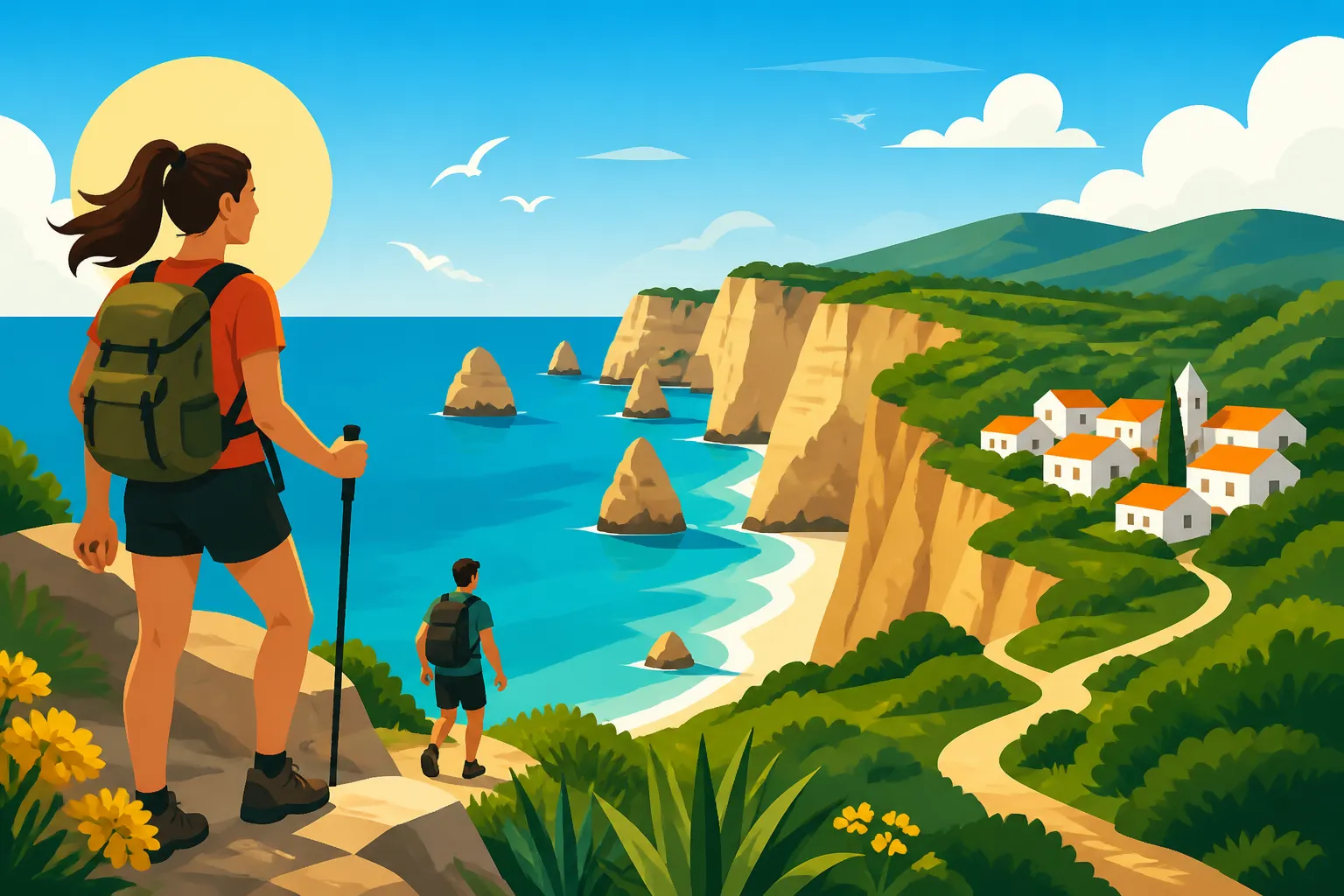
Outdoor Adventures and Nature in Portugal
Disclosure: This article contains affiliate links. If you buy through them, we may earn a commission at no extra cost to you. Read our full disclosure.
Most visitors and new residents quickly fall in love with Portugal’s sun-drenched plazas and historical urban alleyways, yet many remain stuck in the concrete bubble of major cities without ever experiencing the raw, untamed wilderness waiting just beyond the suburban train lines. Navigating rural transport, deciphering vague trail markers, and timing outdoor activities around intense seasonal shifts can feel genuinely overwhelming for foreign explorers. This comprehensive guide solves those hurdles by delivering an insider look at Portugal’s diverse natural landscapes, detailed regional breakdowns, practical logistics, and essential survival strategies for every outdoor enthusiast.
Hiking National and Natural Parks in Portugal
Exploring Peneda-Gerês National Park
Tucked away in the far northwestern corner of the country bordering Spain, Parque Nacional da Peneda-Gerês stands as Portugal’s sole designated national park. For those of us who settled in Portugal expecting nothing more than coastal sand dunes, stepping into Gerês feels like entering an entirely different continent. The region is defined by granite mountain ranges, ancient oak forests, deep valleys, and wild Iberian horses known as Garranos roaming free across high-altitude plateaus. The administrative complexity of Gerês can catch newcomers off guard, as the park is split into different protection zones ranging from human-inhabited rural villages to strictly controlled wilderness areas where off-trail hiking requires special permissions from the institute for nature conservation.
Planning a day hike here requires careful attention to topography and sudden weather shifts. Starting a trek near the traditional granite village of Lindoso or Soajo gives you direct access to centuries-old stone granaries (espigueiros) before the trail climbs into the alpine terrain of Serra do Soajo. A popular route takes hikers toward the Cascata do Arado and the famous Poço Azul, a natural granite basin filled with striking turquoise water. While the water looks inviting after a steep climb, it remains bone-chillingly cold year-round because it originates from high-altitude mountain springs. Navigating these trails requires proper footwear; granite surfaces can become treacherous when wet, and moss-covered paths near mountain streams present constant slip hazards.
Logistically, visiting Gerês without personal transport can present a hurdle, as local buses between remote mountain villages run infrequently. Many expats choose to arrange regional train connections or intercity coaches via Omio to reach larger gateway towns like Braga or Viana do Castelo before renting a car for the mountain roads. Driving through Gerês demands caution, as narrow mountain passes lack guardrails in certain stretches and cattle frequently block the road around sharp bends. Preparing for a full day out means carrying adequate supplies, as small village taverns may close unexpectedly outside the peak summer season.
Settling in for an extended trekking trip in Gerês also means respecting local community customs and private agricultural lands. Paths often cross through communal grazing grounds (veigas) where local shepherds manage livestock using centuries-old communal rules. If you run into trouble or suffer an injury on these remote mountain slopes, help can take hours to arrive. Understanding how emergency services operate in isolated rural regions is crucial, which is why reading up on Emergency Medical Care in Portugal: Calling 112 and Going to the Hospital can save precious time during an unexpected crisis in the backcountry.
Trekking the Rota Vicentina and Fisherman’s Trail
Moving down to the southwestern coastline of mainland Portugal, the landscape transitions into the Parque Natural do Sudoeste Alentejano e Costa Vicentina. This protected coastal corridor stretches over one hundred kilometers from the southern Alentejo down into the western Algarve, offering some of the most dramatic coastal cliff walking in Western Europe. The Rota Vicentina network is divided into two primary routes: the Historical Way, which winds through inland rural villages, cork oak forests, and agricultural valleys, and the Fisherman’s Trail, which clings strictly to the rugged Atlantic edge along single-track paths used for generations by local anglers.
The Fisherman’s Trail has gained international acclaim for its dramatic scenery, but it poses distinct physical challenges that many casual walkers underestimate. A significant portion of the trail consists of deep, loose beach sand that doubles the effort required for every kilometer covered. Trekking from Porto Covo to Vila Nova de Milfontes, for instance, exposes hikers to continuous coastal winds, blazing sun exposure, and steep descents into rocky coves. High cliffs carved from schist and sandstone plunge directly into roaring Atlantic surf, where white storks famously build their nests on isolated offshore sea stacks—the only place in the world where this behavior is regularly documented.
Sun protection and hydration are non-negotiable on this coastal network. Shade is practically non-existent along the cliff tops, and high cliff winds often mask the intense heat, leading to rapid dehydration and severe sunburns. Hikers should pack wide-brimmed hats, high-factor sunscreen, and AT LEAST two to three liters of water per person, as coastal springs along the trail are non-potable and salty. The local fishing villages along the route offer incredible culinary rewards after a long day on the trail, serving fresh octopus, barnacles (percebes), and grilled sardines in small family-run tascas.
When organizing multi-day point-to-point hikes along the Vicentine Coast, managing luggage and overnight stays requires advance preparation. During the peak spring and autumn trekking seasons, small coastal guesthouses fill up quickly, making it wise to reserve accommodations along the route ahead of time using Booking.com. Carrying a lightweight daypack while arranging local luggage transfer services between overnight stops allows you to navigate the sandy single-track sections without the strain of a full expedition backpack.
Conquering the High Peaks of Serra da Estrela
Dominating the landscape of central Portugal, Serra da Estrela is home to the highest peak on the Portuguese mainland, reaching exactly 1,993 meters above sea level at the point known as Torre. To push the summit to a round 2,000 meters, King João VI commissioned a stone tower atop the plateau in the early nineteenth century. This massive granite massif presents a dramatic alpine ecosystem characterized by glacial valleys carved during the last ice age, crystal-clear mountain lagoons, and massive boulder fields that look like something out of a fantasy novel.
The Zêzere Glacial Valley is arguably the most breathtaking geological feature in the park. Extending over thirteen kilometers from the high plateau down to the historic town of Manteigas, hiking along the valley floor or along its upper ridges reveals dramatic U-shaped glacial contours, traditional stone shepherd huts (murna), and terraces cultivated with rye. The trail leading to Nossa Senhora da Estrela or the loop around the Covão dos Conchos—a famous lake where an artificial spillway funnel creates the surreal illusion of a sinkhole in the middle of the water—draws high numbers of adventurers seeking unique mountain photos.
However, the high plateau of Serra da Estrela is notorious for erratic microclimates. It is not uncommon to start a hike under clear blue skies in Manteigas only to encounter dense, freezing fog, high-velocity winds, or sudden blizzards near the top. Winter snowfall turns the plateau into Portugal’s only ski area, but during shoulder seasons, icing on granite trails creates severe fall hazards. Hikers must carry layered thermal clothing, waterproof outer shells, and physical maps alongside GPS devices, as cellular network coverage frequently drops in deep granite ravines.
For long-term residents and active expats exploring the interior mountains, preparing for extreme physical exertion in remote areas requires a solid understanding of local support systems. Before heading into high-altitude zones, reviewing the overall framework of Living in Portugal Guide 2027: The Complete Relocation Manual for Expats provides invaluable context regarding regional infrastructure, emergency coordination, and seasonal living realities across mainland Portugal.
River Adventures, Canyoning, and Inland Waterways
Navigating the Paiva Walkways and Suspension Bridges
In northern Portugal near the town of Arouca, the Paiva River cuts through a deep, wild canyon recognized as a UNESCO Global Geopark. The Passadiços do Paiva (Paiva Walkways) have completely transformed how locals and tourists experience this pristine river ecosystem. Stretching roughly eight kilometers along the left bank of the river, this engineered wooden boardwalk system allows visitors of varying fitness levels to descend into a rocky gorge that was previously accessible only to hardcore kayakers and local anglers.
Walking the boardwalk takes you past dramatic quartzite rock formations, rushing rapids, and secluded river beaches like Praia Fluvial do do Vau. The highlight for adrenaline seekers is crossing the 516 Arouca, one of the world’s longest pedestrian suspension bridges, hanging over 175 meters above the rushing waters of the Paiva River. Walking across the open steel mesh walkway while the bridge sways gently in the canyon wind is an unforgettable experience, but it requires advance ticket bookings and a head for heights.
The physical demands of the Paiva Walkways lie primarily in the steep staircases that climb out of the gorge at either end of the trail. The wooden steps at the Espiunca and Areinho trailheads test your calves, particularly during the scorching afternoon heat of July and August. Entering the walkways requires buying an entry permit online prior to arrival, as local authorities limit daily foot traffic to preserve the fragile river valley and prevent overcrowding on narrow boardwalk stretches.
During hot summer months, taking a refreshing dip in the clean mountain waters of the river beaches is a major highlight. The water quality in the Paiva River is generally exceptional, but rural river swimmers should remain aware of natural water safety. If you have concerns about waterborne bacteria or general sanitation while exploring inland rivers, checking Is it safe to drink tap water in Portugal? Water quality by region helps clarify regional water standards and safety precautions for open water activities.
Canyoning and White-Water Rafting in Northern Portugal
For those who find scenic boardwalks a bit too tame, the mountainous rivers of northern Portugal offer world-class canyoning and white-water rafting opportunities. Rivers such as the Rio Minho, Rio Lima, Rio Caima, and the upper reaches of the Rio Paiva feature deep gorges, waterfalls, and technical rock chutes carved into solid granite bedrock. Canyoning involves rappelling down thunderous waterfalls, jumping off rocky ledge outcrops into deep natural plunge pools, and sliding down natural water toboggans smoothed by centuries of river flow.
The Freita mountain range (Serra da Freita) and the rivers surrounding Castro Laboreiro in northern Gerês serve as the primary epicenters for commercial canyoning. Beginners can opt for gentler trips featuring small abseils and fun water slides, while advanced canyoners tackle technical routes requiring forty-meter rappels beside roaring cascades like the Frecha da Mizarela—one of the highest waterfalls in continental Europe. High-volume spring runoff fed by winter rain makes March through June the absolute prime season for thrilling high-water canyoning trips.
White-water rafting on the Rio Paiva offers varying difficulty levels depending on seasonal water flow. During late autumn and spring, class III and IV rapids emerge along stretches like Gola do Lirom and Rapid do Frade, requiring synchronized paddling and experienced river guides. During the dry summer months, water levels drop significantly, shifting the focus from intense rafting to scenic river trekking and inflatable kayaking.
Participating in technical river sports requires legitimate safety equipment, including thick neoprene wetsuits to protect against cold mountain water, high-impact helmets, and certified harness systems. Foreign visitors booking local adventures through platforms like GetYourGuide should ensure that operator safety certifications, insurance coverage, and professional guide accreditations are verified before heading into technical canyons.
Kayaking and Stand-Up Paddleboarding in the Zêzere and Douro Basins
Inland Portugal features an impressive network of massive dammed reservoirs and majestic river valleys that offer tranquil conditions for flatwater paddling, long-distance kayaking, and stand-up paddleboarding (SUP). The Douro River Valley, celebrated for its terraced vineyards and UNESCO heritage wine estates, offers an incredible backdrop for flatwater touring. Paddling a kayak along smaller tributaries like the Rio Pinhão or Rio Tua lets you escape the large cruise boats operating on the main river trunk and explore quiet, vine-draped canyons.
Further south in central Portugal, the Zêzere River weaves through dramatic mountain valleys before feeding into the massive Albufeira de Castelo de Bode. This reservoir stretches for over sixty kilometers, creating a paradise of calm freshwater bays, pine-covered islands, and hidden inlets. Stand-up paddleboarders can spend hours exploring undisturbed shorelines where forest canopy meets crystal-clear water, completely removed from coastal crowds. River beaches (praias fluviais) dotting the perimeter offer launch ramps, kayak rentals, and small café facilities.
Paddling on large reservoirs requires awareness of local weather conditions, particularly sudden afternoon thermal winds that can turn a calm glass surface into choppy water within minutes. When paddling long distances on lakes like Castelo de Bode or the massive Alqueva reservoir in the Alentejo, always chart your route relative to shoreline landmarks and keep a close eye on the horizon.
| Outdoor Region | Primary Activities | Best Season | Difficulty Level | Access Gateway |
|---|---|---|---|---|
| Peneda-Gerês | Alpine Hiking, Canyoning, Wildlife Watching | May to October | Moderate to Strenuous | Braga / Porto |
| Vicentine Coast | Coastal Trekking, Surfing, Sea Kayaking | September to May | Easy to Moderate | Faro / Lisbon |
| Serra da Estrela | High-Altitude Hiking, Skiing, Bouldering | May to October (Hiking) | Strenuous | Covilhã / Seia |
| Arouca / Paiva | Boardwalk Hiking, Suspension Bridge, Rafting | March to November | Easy to Moderate | Porto / Aveiro |
| Ericeira / Nazaré | Ocean Surfing, Bodyboarding, Coastal Walks | Year-Round (Autumn for big waves) | Moderate to Extreme | Lisbon |
| Azores (São Miguel) | Volcanic Trekking, Thermal Baths, Canyoning | April to October | Moderate | Ponta Delgada |
| Madeira | Levada Walking, Trail Running, Coasteering | Year-Round | Easy to Strenuous | Funchal |
Ocean Sports, Surfing, and Coastal Exploration
Surfing the Atlantic Waves from Ericeira to Nazaré
Portugal is widely recognized as the surfing capital of Europe, featuring an incredibly dense concentration of world-class beach breaks, point breaks, and reef setups along its Atlantic coastline. The town of Ericeira holds the prestigious designation of being Europe’s first World Surfing Reserve, protecting an eight-kilometer stretch of coastline that includes legendary breaks like Ribeira d’Ilhas, Coxos, and Cave. The coastal geology here creates remarkably consistent wave setups that cater to everyone from first-time soft-top boarders to seasoned barrel hunters.
Further north along the Silver Coast, the fishing town of Peniche sits on a peninsula jutting out into the ocean, creating a unique geographic advantage: regardless of wind direction, one side of the peninsula almost always offers offshore conditions. The famous Supertubos beach break produces fast, heavy, hollow barrels that host international professional surfing competitions every spring. For beginners, the sheltered sand spit at Baleal provides gentler rolling waves protected from massive Atlantic swells.
Then there is Nazaré, home to the infamous Praia do Norte. Here, a massive underwater canyon reaching depths of over five thousand meters channels deep-ocean swell energy directly toward the shoreline, where it collides with shallower coastal shelf waves to generate mind-boggling giant waves during winter months. Watching tow-in surfers tackle hundred-foot walls of water from the clifftop fort of SÃO Miguel Arcanjo is an awe-inspiring spectacle that highlights the raw power of the Atlantic Ocean.
Taking up surfing or ocean swimming in Portugal requires healthy respect for Atlantic rip currents, shorebreak power, and low water temperatures. The ocean along the Portuguese coast stays chilly even in mid-summer due to upwelling, rarely rising above eighteen degrees Celsius on the central and northern coasts. Investing in a quality 4/3mm neoprene wetsuit with sealed seams is an absolute necessity if you plan to spend extended hours in the surf zone.
Coasteering and Sea Kayaking in the Algarve Caves
Along the southern coast of the Algarve, the dramatic golden limestone cliffs, sea arches, and hidden marine grottoes present an entirely different water sports environment. Coasteering—an adrenaline-fueled activity that combines coastal climbing, cliff jumping, sea swimming, and cave exploration—has exploded in popularity along the rugged coastline between Sagres and Lagos. Outfitted in thick wetsuits, helmets, and life jackets, participants traverse the tidal zone, scaling rock faces and leaping from seaside cliffs into deep coastal rock pools.
For a slightly less intense but equally immersive coastal adventure, sea kayaking through the sea caves of Ponta da Piedade near Lagos or the famous Benagil cave near Lagoa allows paddlers to navigate through narrow rock tunnels illuminated by golden sunlight. Entering these natural cathedral-like caves from the water offers a perspective that land-based tourists completely miss. Paddling under massive natural stone arches carved over millions of years by tidal erosion showcases the dynamic coastal geology of the region.
Navigating limestone caves and cliff bases demands close attention to ocean swells, tides, and marine traffic. The popularity of Benagil Cave, in particular, has led to heavy traffic from commercial motorboats, tour boats, and paddleboarders during peak summer hours. Early morning launches are strongly recommended to enjoy quiet waters and avoid marine congestion inside narrow cave entrances.
Exploring rocky shorelines also carries minor risks of marine stings from sea anemones or unexpected encounters with sea urchins in rocky shallows. If you sustain minor cuts, scrapes, or stings while playing along the coast, having access to local pharmacy advice or basic medical care is straightforward once you know how the healthcare system operates. For detailed steps on getting non-emergency care, check Finding Doctors and Specialists in Portugal: English-Speaking Medical Care.
Marine Life Encounters and Scuba Diving in Mainland Reserves
Beyond the surf zone, Portugal’s coastal marine reserves protect rich underwater ecosystems shaped by the collision of cold Atlantic currents and warmer Mediterranean waters. The Parque Natural da Arrábida, located just an hour south of Lisbon near Sesimbra, protects a sheltered marine reserve known as Luís Saldanha. Here, dramatic limestone cliffs drop straight into calm, clear turquoise waters, creating pristine habitats for octopus, cuttlefish, seahorses, and over three hundred species of marine life.
Scuba diving off Sesimbra and Peniche provides access to fascinating underwater topography, including deep rock walls, submerged cavern systems, and historic shipwrecks. Off the coast of Peniche lie the Berlengas Islands, a granite archipelago designated as a UNESCO Biosphere Reserve. The crystal-clear waters surrounding the islands offer some of the best diving on the Portuguese mainland, with incredible underwater visibility, large schools of sea bass, octopus hiding in granite crevices, and dramatic wreck sites like the Andreos.
Diving conditions in the Atlantic can be challenging, requiring good buoyancy control, thermal protection, and comfort with ocean surge. Water temperatures require thick 7mm wetsuits or drysuits year-round. Diving operators run daily charter boats out of Sesimbra, Cascais, and Peniche, offering certification courses and guided wreck dives for certified open-water divers.
Snorkeling is also fantastic in sheltered coves along the Arrábida coastline, such as Praia dos Coelhos or Praia da Ribeira do Cavalo. Marine life enthusiasts should always respect seasonal fishing bans within marine park boundaries and refrain from touching or disturbing delicate marine ecosystems, particularly sensitive seahorse populations found in sheltered coastal bays.
Island Ecosystems: Adventure Travel in Madeira and the Azores
Navigating the Levada Trails and Peaks of Madeira
Rising sharply from the sub-tropical Atlantic Ocean roughly one thousand kilometers southwest of the Portuguese mainland, the volcanic island of Madeira is an outdoor playground defined by dramatic vertical topography. The island’s most famous hiking feature is its vast network of levadas—narrow irrigation channels constructed over centuries to carry water from the rainy, mountainous north to the drier agricultural slopes of the south. Walking alongside these stone water channels provides unique access deep into native Laurissilva (Laurel) forests, a prehistoric vegetation type recognized as a UNESCO World Heritage site.
Trails like Levada do Caldeirão Verde and Levada das 25 Fontes take hikers through lush green mossy tunnels, under thunderous waterfalls, and across narrow cliffside footpaths carved directly into sheer rock faces. Many levada routes pass through long, pitch-black water tunnels cut through volcanic rock, making a reliable, high-lumen headlamp an indispensable piece of gear. While most levada walks follow gentle downward gradients alongside flowing water, the steep drop-offs along un-railed stretches require a steady head and careful footing.
For high-altitude alpine thrills, Madeira’s central mountain ridge offers the legendary trek from Pico do Arieiro (1,818 meters) to Pico Ruivo (1,862 meters). This high-wire trail climbs over narrow knife-edge ridges, passes through mountain tunnels, and ascends thousands of carved stone steps above cloud level. The panoramic views of volcanic peaks rising out of a sea of clouds at sunrise attract mountain runners and serious hikers from across the globe.
Given Madeira’s mountainous roads and steep village inclines, getting around requires confident driving skills. Foreign residents planning long trips across the island often look into vehicle purchasing or long-term rentals; understanding local vehicle ownership costs and tax obligations via Buying a Car in Portugal: IUC Tax, Inspections (IPO), and High Vehicle Costs helps clear up administrative questions before buying a car in Portugal.
Crater Lakes, Geothermal Springs, and Volcanic Hikes in the Azores
Located in the middle of the North Atlantic, the nine volcanic islands of the Azores archipelago represent one of the world’s premier eco-tourism destinations. The landscape here feels primordial, characterized by emerald-green volcanic crater lakes, steaming geothermal fumaroles, dramatic coastal waterfalls, and black-sand beaches. São Miguel, the largest island, is famous for the stunning twin crater lakes of Sete Cidades and the geothermal valley of Furnas, where hot springs bubble directly out of the ground.
Hiking on São Miguel includes trekking along the rim of the Sete Cidades caldera, where trail overlooks give you panoramic views of one blue lake and one green lake sitting side-by-side inside a giant volcanic crater. On the island of Pico, outdoor enthusiasts face the ultimate Portuguese trekking challenge: ascending Montanha do Pico, a stratovolcano that rises 2,351 meters above sea level, making it the highest mountain in all of Portugal. Climbing Pico is a grueling, five-to-six-hour vertical scramble over loose volcanic rock and lava tubes, requiring mandatory registration with the mountain guide office and carrying GPS tracking beacons provided at the trailhead.
The island of Flores offers breathtaking coastal hikes past dozens of roaring waterfalls dropping down sheer basalt cliffs, such as Poço da Alagoinha. The weather in the Azores is notoriously unpredictable, often experiencing “four seasons in one day.” Sudden torrential rain showers, thick fog, and blazing sunshine can cycle through within an hour, making high-quality waterproof shells, breathable base layers, and sturdy waterproof hiking boots essential gear.
Soothing tired muscles in natural geothermal hot springs after a long day of crater trekking is an absolute must in the Azores. Hot thermal bathing spots like Poca da Dona Beija and Terra Nostra Park in Furnas, or the ocean-fed thermal pool at Ponta da Caldeira in Ferraria, offer natural mineral baths heated by subterranean volcanic energy.
Offshore Whale Watching and Island Logistics
The deep ocean waters surrounding the Azores archipelago serve as one of the world’s primary sanctuaries for marine mammals. Located along Atlantic migration routes, over twenty-eight different species of whales and dolphins can be observed off the islands throughout the year. Resident species like sperm whales, bottlenose dolphins, and Risso’s dolphins inhabit the deep underwater trenches between the islands year-round, while massive baleen whales—including blue whales, fin whales, and sei whales—pass through during their spring migrations between April and June.
Whale watching tours depart regularly from harbors in Ponta Delgada (São Miguel), Lajes do Pico (Pico), and Horta (Faial). Operators utilize rigid inflatable boats (RIBs) or larger catamarans, guided by shore-based lookouts called vigias who spot whale blows from coastal towers using high-powered binoculars—a modern adaptation of historic Azorean whaling traditions that shifted entirely to marine conservation decades ago.
Navigating island logistics requires coordinating inter-island flights or ferry connections. While flights link all nine islands, seasonal ferries operate heavily between the central island group (Pico, Faial, São Jorge). When planning an outdoor adventure itinerary across the Azores, booking local activities through GetYourGuide or securing car rentals well in advance is essential, as rental vehicle fleets on smaller islands like Flores or São Jorge are limited and sell out completely during summer.
Because the Azores sit far out in the open Atlantic, flight delays due to high winds, fog, or storm fronts are relatively common. Building flexible buffer days into your travel itinerary ensures that flight disruptions won’t derail your outdoor trekking plans or force you to miss scheduled island departures.
Mountain Biking, Cycling, and Eco-Trails
Cycling the Ecotravessias and Eco-Vias Network
Portugal has invested heavily in converting disused railway lines and coastal corridors into smoothly paved, dedicated greenways known as Ecovias or Ecopistas. These long-distance, vehicle-free paths offer an ideal setting for touring cyclists, casual bike riders, and families looking to explore rural scenery without battling automobile traffic. The Ecopista do Dão in central Portugal stands out as one of the finest examples, stretching nearly fifty kilometers along a former railway line between Viseu and Santa Comba Dão.
Riding the Dão greenway takes cyclists through oak forests, terraced vineyards, and granite villages, crossing historic iron bridges designed by the engineering studio of Gustave Eiffel. The smooth asphalt surface and gentle rail-line gradients make it accessible for riders of all fitness levels. Bike rental shops at both ends of the trail provide standard touring bikes, helmets, and e-bikes, along with shuttle pickup services to return you to your starting point.
Further north, the Ecovia do Lima follows the banks of the Lima River from the Atlantic coast at Viana do Castelo inland through the historic towns of Ponte de Lima and Ponte da Barca. Riding alongside wide river bends, ancient stone bridges, and lush agricultural land provides a serene, flat cycling experience surrounded by green mountain valley views.
Along the southern coast, the Ecovia do Litoral forms part of the EuroVelo 1 route, running across the entire length of the Algarve from Cape St. Vincent in the west to the Spanish border town of Vila Real de Santo António in the east. While certain sections share country roads with light motor traffic, large portions follow dedicated paths through the coastal salt pans and coastal lagoons of the Ria Formosa natural park.
Downhill and Enduro Mountain Biking in Central Portugal
For mountain bikers seeking technical single-track, high-speed descents, and rugged terrain, the mountain ranges of central and northern Portugal feature an incredible network of trail centers (Centros de Cyclin’Portugal). Regions like the Serra da Lousã, Serra do Caramulo, and the Sintra hills offer world-class downhill, enduro, and cross-country mountain biking routes maintained by local trail crews and municipal cycling associations.
The Serra da Lousã is world-renowned among gravity mountain bikers. Thick pine forests, dense chestnut groves, and historic schist villages (Aldeias do Xisto) line steep mountain slopes crisscrossed by technical single-track trails featuring rock gardens, steep berms, wooden drop-offs, and natural root gaps. The town of Lousã regularly hosts international downhill racing events, drawing professional riders for winter training thanks to mild seasonal temperatures and reliable dirt conditions.
In the hills of Sintra near Lisbon, dense coastal fog nourishes lush ferns and giant mossy trees, creating a surreal backdrop for technical mountain biking. Single-track trails weave through dense forest canopy, offering technical rock chutes and flowy loam lines. However, riders must share Sintra’s mountain trails respectfully with hikers, trail runners, and nature enthusiasts, adhering strictly to designated multi-use path rules.
Riding technical terrain in remote Portuguese mountain ranges requires self-sufficiency. Always carry spare tubes, chain tools, tire plugs, and a comprehensive first-aid kit. Cellular signal can drop out completely inside deep mountain ravines, so downloading offline maps via trail apps before hitting the trailhead is essential.
Long-Distance Bikepacking Across the N2 Highway Route
For long-distance road cyclists and touring enthusiasts, tackling the Estrada Nacional 2 (N2) represents the ultimate Portuguese road cycling journey. Spanning 738 kilometers from Chaves near the northern Spanish border all the way down to Faro on the southern Algarve coast, the N2 is Portugal’s equivalent of America’s Route 66, cutting directly through the mountainous heart of the country.
Bikepacking or credit-card touring along the N2 exposes cyclists to the incredible geographical and cultural diversity of interior Portugal. The northern third of the route climbs through challenging mountain passes in the Trás-os-Montes region and drops into the steep terraced vineyards of the Douro Valley. The central segment rolls through granite hills, river basins, and pine forests, while the southern leg stretches across the wide, sun-drenched plains of the Alentejo before climbing over the Serra de Monchique into Faro.
Completing the full N2 route on a bicycle typically takes between six to ten days depending on daily elevation gain targets and individual fitness. Cyclists can collect commemorative rubber stamps (carimbos) in a official N2 passport booklet at local tourist offices, cafés, and guesthouses along the route, creating a cherished keepsake of their journey across the country.
Riding long distances on inland Portuguese roads requires high-visibility gear, daytime running lights, and active awareness of vehicle traffic. While Portuguese drivers are generally polite to cyclists on rural roads, narrow paved corridors lack shoulder lanes in many interior stretches. When cycling long distances, understanding highway rules and toll corridors for support vehicles is handy; reading up on Navigating the Portuguese Toll System: Via Verde and Electronic Tolls helps keep your trip support logistics running smoothly.
Seasonal Planning, Safety, and Practical Outdoor Logistics
Dealing with Summer Heat, Wildfire Risks, and Weather Microclimates
Understanding Portugal’s seasonal weather patterns and regional microclimates is crucial for planning safe, enjoyable outdoor adventures. While coastal areas benefit from cooling Atlantic sea breezes, interior regions like the Alentejo, the Douro Valley, and central river gorges regularly experience summer temperatures exceeding forty degrees Celsius between late June and early September. Hiking during heatwaves poses severe heatstroke and dehydration risks, making early morning starts mandatory.
Wildfires present a serious safety threat in interior forests during dry summer months. High summer temperatures, low humidity, and dry summer winds can fuel forest fires that spread rapidly across pine and eucalyptus plantations. The Portuguese Civil Protection agency (Prociv) issues color-coded weather and fire risk alerts, temporarily banning public entry into certain forest zones and mountain parks during high-risk periods.
PORTUGUESE OUTDOOR SAFETY CHECKLIST
[ ] Check Prociv Fire Risk Levels before entering forest zones
[ ] Download offline GPS trail maps (AllTrails / Wikiloc)
[ ] Pack minimum 2.5L water + oral rehydration salts
[ ] Verify emergency contact numbers (National Emergency: 112)
[ ] Wear high-factor SPF 50+ sun protection and wide-brim hat
[ ] Notify guesthouse or contact of your planned hike route
Staying informed about environmental hazards, air quality alerts, and active fire warnings is part of responsible outdoor recreation in southern Europe. To learn more about tracking emergency warnings and civil protection updates, refer to Earthquake and wildfire risks in Portugal: How to stay informed via Prociv for essential safety resources.
Spring (April to June) and Autumn (September to November) offer the ultimate seasons for outdoor activities across mainland Portugal and the islands. Spring brings roaring waterfalls, lush green hillsides, and blooming wildflowers across mountain plateaus. Autumn offers comfortable daytime temperatures, stable weather patterns, and grape harvest energy in wine valleys.
Transporting Gear and Navigating Rural Transport Links
Reaching remote trailheads, river bases, and mountain national parks often presents a logistical puzzle if you rely strictly on public transportation. Major cities like Lisbon, Porto, Coimbra, and Faro are connected by modern high-speed trains (Alfa Pendular) and express buses, but rural transport into mountain villages like Soajo, Manteigas, or Piódão operates on limited schedules geared toward local school runs and morning market commutes.
For long-distance connections between regional hubs, searching options through Omio makes comparing train and intercity bus routes straightforward. However, to reach remote hiking trailheads or transport bulky equipment like bicycles, surfboards, or camping gear, renting a vehicle or owning a car provides far greater freedom and reliability.
When flying into Portugal with oversized sports equipment like surfboards, mountain bikes, or heavy camping gear, check airline baggage regulations carefully. TAP Air Portugal and major international carriers handle oversized equipment regularly, but regional island hoppers between Azorean islands have strict weight and dimension limits on smaller turboprop aircraft.
If you end up needing extra medical supplies, joint supports, specialized rehydration salts, or travel vaccinations before heading into remote regions, Portuguese pharmacies (farmácias) offer excellent over-the-counter advice. For tips on managing pre-trip health preparations and preventive care, check Expat Guide to Portuguese Vaccinations: Flu Shots and Travel Vaccines.
Camping Laws, Wild Camping Restrictions, and Eco-Etiquette
Understanding local land use regulations and camping laws prevents costly fines and protects sensitive natural ecosystems. Wild camping (overnighting outside certified campsites or municipal motorhome parks) is strictly regulated across Portugal under environmental protection laws (Código da Estrada and nature conservation regulations). Wild camping is completely illegal in all National and Natural Parks, nature reserves, and coastal zones managed by the maritime authority.
Outside protected areas and coastal strips, overnight stays in campervans or tents may be permitted for brief periods (often up to 48 hours) in designated municipal areas, provided no waste is left behind. However, rules are strictly enforced by the Guarda Nacional Republicana (GNR) and environmental police units (SEPNA). Violators face steep spot fines ranging from hundreds to thousands of euros, particularly along the Vicentine Coast and within Gerês boundaries.
Practicing Leave No Trace principles is mandatory whenever exploring the Portuguese countryside. This includes packing out all trash, staying on marked trails to prevent soil erosion, respecting private agricultural land gates, and avoiding open fires under any circumstances. Fire bans are strictly enforced statewide throughout the summer months, and lighting outdoor campfires outside designated stone fire pits in official parks is a serious criminal offense.
If you ever encounter an emergency or need to report a forest fire while out on the trail, calling the national emergency line is your first line of defense. Operators can connect you with local municipal fire brigades (Bombeiros Voluntários) who handle both fire suppression and wilderness search-and-rescue. For advice on communicating during emergencies, review Calling 112: Do Portuguese emergency dispatchers speak fluent English?.
Comparing Portugal’s Top Outdoor Destinations
Region-by-Region Adventure Profile
To help you choose the right base for your next outdoor trip, comparing regional geography, primary sports, and travel considerations helps narrow down the choices:
- Northern Portugal (Minho & Trás-os-Montes): Characterized by granite peaks, deep river gorges, ancient oak forests, and cooler mountain temperatures. Ideal for alpine hiking, canyoning, white-water sports, and cultural trekking through traditional stone villages.
- Central Portugal (Serra da Estrela, Lousã, Dão): Features the country’s highest mountain ranges, slate/schist mountain villages, pine forests, and major river basins. Best for high-altitude trekking, downhill mountain biking, long-distance cycling, and river beach swimming.
- Lisbon Coast & Silver Coast (Ericeira, Peniche, Sintra, Arrábida): Combines dramatic ocean cliffs, world-class surf beaches, sheltered limestone marine parks, and misty coastal forests. Perfect for surfing, sea kayaking, coasteering, and coastal day hikes close to major urban amenities.
- Alentejo & Vicentine Coast: Defined by rolling cork oak plains, golden ocean cliffs, vast sand dunes, and pristine coastal single-track. Premier destination for long-distance coastal walking, bird watching, flatwater kayaking, and quiet rural cycling.
- The Algarve: Known for golden limestone sea caves, coastal walking paths, sheltered sea kayaking, and mountain bike trails in the Serra de Monchique. Excellent for year-round water sports, coastal cliff walks, and winter training trips.
- Madeira & Azores Islands: Sub-tropical ocean paradises featuring volcanic caldera hikes, levada irrigation walks, geothermal hot springs, high-altitude alpine ridges, offshore whale watching, and technical canyoning.
Choosing the Right Terrain for Your Skill Level
Matching your physical conditioning and outdoor experience to Portugal’s terrain prevents exhaustion and safety issues on the trail. Novice hikers, families, and casual cyclists will thrive on the smooth wooden boardwalks of the Paiva Walkways, flat levada walks in Madeira, or paved greenways like the Ecopista do Dão. These routes offer gentle gradients, clear trail markers, and easy access to amenities without demanding technical navigation skills.
Intermediate adventurers ready for greater physical exertion can tackle multi-day treks along the Fisherman’s Trail, day hikes in Peneda-Gerês, crater lake loops in the Azores, or flatwater kayak expeditions along the Zêzere River reservoirs. These activities require good cardiovascular fitness, proper gear, and basic trail navigation, but follow clear paths with regular access to local towns.
Advanced thrill-seekers and experienced outdoor sports enthusiasts will find endless excitement climbing Montanha do Pico, mountain biking steep downhill lines in Lousã, tackling technical white-water rapids on the Rio Paiva, canyoning thunderous cascades in Gerês, or surfing heavy reef breaks in Ericeira. These technical pursuits demand high physical fitness, specialized safety gear, professional guide support, and thorough emergency preparation.
Whether you are spending a weekend exploring coastal sea caves or embarking on a multi-week bikepacking journey across the interior, Portugal’s wilderness offers incredible outdoor rewards. Taking time to plan your routes, respect local environmental regulations, prepare for seasonal weather shifts, and immerse yourself in rural community life ensures an unforgettable outdoor journey through one of Europe’s most dynamic natural landscapes.
Disclaimer
This article is for general informational purposes only and does not constitute professional advice. Laws, prices and regulations vary by location and change over time. Consult a qualified professional for guidance on your specific situation.