Pharmacies in Portugal: Farmácia vs Parafarmácia
Disclosure: This article contains affiliate links. If you buy through them, we may earn a commission at no extra cost to you. Read our full disclosure.
Walking into a Portuguese street and seeing neon crosses everywhere is confusing enough, but then you notice some are green and some are blue, and neither seems to sell the heavy-duty ibuprofen you’re used to back home. I remember my first week in Porto, desperately searching for a specific allergy nasal spray only to be told I was in the "wrong kind" of pharmacy. This guide finally clears up the Farmácia vs Parafarmácia confusion and ensures you never waste a trip again.
The Fundamental Divide Understanding Farmácia vs Parafarmácia
When you first arrive in Portugal, you’ll notice that health shops are almost as common as pastelarias. However, they are not created equal. The distinction between a Farmácia and a Parafarmácia is legally mandated and strictly enforced by INFARMED, the Portuguese National Authority of Medicines and Health Products. This isn't just about branding; it’s about what is allowed to go into your body and who is allowed to give it to you.
What Defines a Farmácia
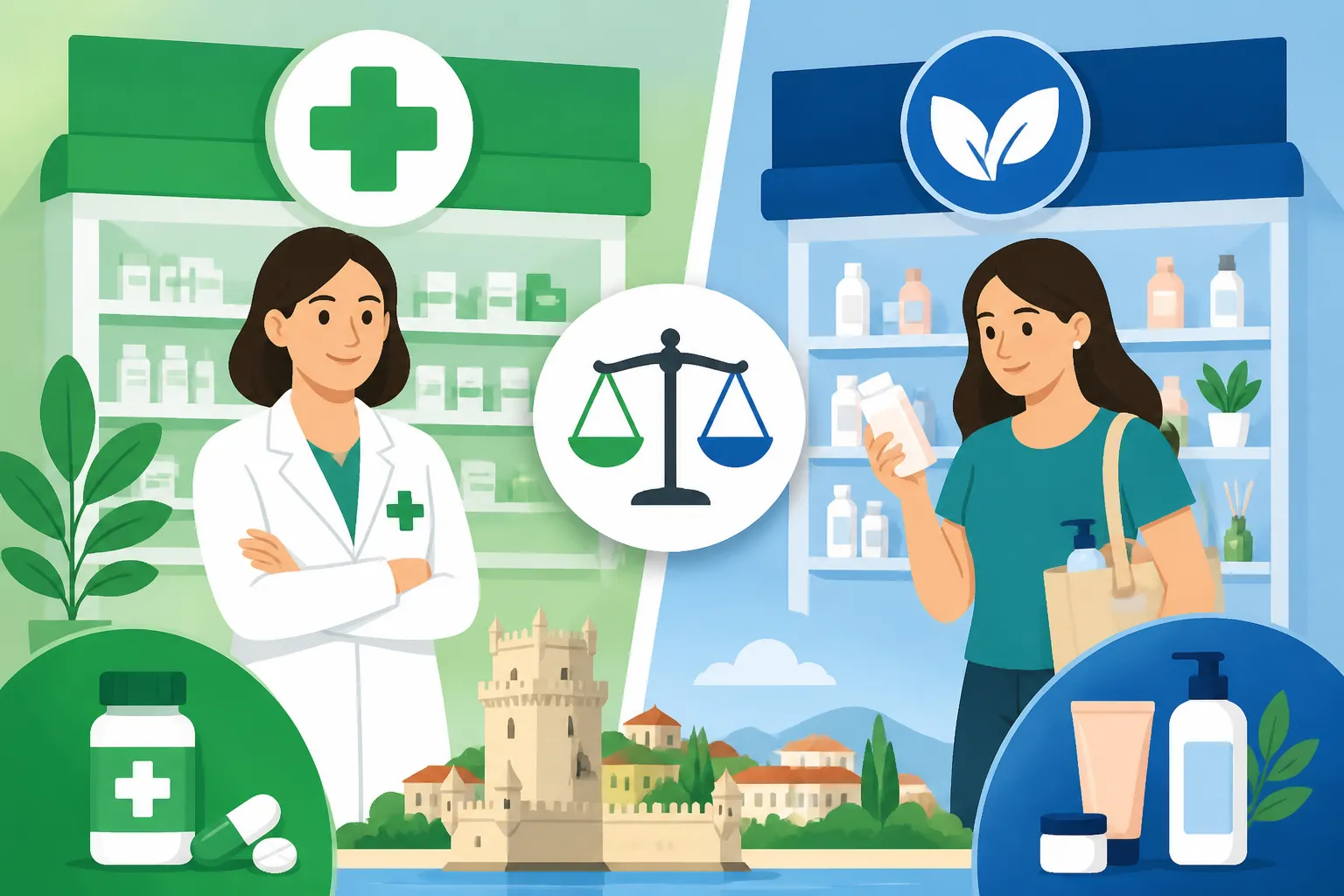
A Farmácia is a fully licensed clinical pharmacy, traditionally identified by a bright green neon cross. This is the only place in Portugal where you can obtain prescription-only medications (MSRM – Medicamentos Sujeitos a Receita Médica). Every Farmácia must have a Technical Director who is a registered pharmacist with a degree in Pharmaceutical Sciences.
These establishments are integrated into the national healthcare network. When you go here, you aren't just a customer; you are a patient. They have access to the national electronic prescription system. If you’ve recently visited a doctor and were told your prescription was "sent to your phone," the green cross is where you take that SMS or email. They also stock a wider range of clinical-grade dermatological products and medical devices that require professional fitting or explanation.
What Defines a Parafarmácia
A Parafarmácia, often identified by a blue or white cross, is technically a "Space for Health" (Espaço de Saúde). You will find these inside supermarkets like Continente or Pingo Doce, or as standalone shops in shopping malls. They are restricted to selling Non-Prescription Medications (MNSRM – Medicamentos Não Sujeitos a Receita Médica).
While a Parafarmácia must still have a qualified technician or pharmacist on-site, they cannot sell anything that requires a doctor's signature. This includes antibiotics, strong painkillers, birth control (in most cases), and chronic disease medications. They focus heavily on wellness, supplements, basic first aid, and "dermocosmetics" like Vichy, La Roche-Posay, or Avène. If you just need a band-aid, some vitamin C, or a moisturizing cream, the Parafarmácia is often faster and more convenient.
Which One Should You Choose
Choosing where to go depends entirely on the severity of your ailment and the legal status of the medicine you need. If you are managing a chronic condition and need your monthly supply of insulin or blood pressure meds, don't even bother with a Parafarmácia; they simply do not have the legal authority to stock them.
However, if you have a mild headache, a small scrape, or you’ve run out of sunscreen, a Parafarmácia is perfectly fine. The pricing for over-the-counter items is generally competitive between the two, though supermarkets often run promotions on wellness products. For anything involving a fever, a deep cough, or suspected infection, always head to a green-cross Farmácia where the staff can provide more clinical advice and potentially direct you to the SNS 24 Helpline (808 24 24 24): Triage, Advice, and Sick Notes if your symptoms sound serious.
Navigating the Prescription System in Portugal
The Portuguese prescription system is almost entirely digital, which is a dream once you’re set up but a bit of a nightmare when you’re first navigating the bureaucracy. Unlike some countries where you walk away with a physical piece of paper with a doctor's scrawl, here you’ll likely receive a "Guia de Tratamento" via email or a code via SMS.
How Electronic Prescriptions Work
Once you have had a consultation—whether at a public Centro de Saúde or a private clinic like Hospital da Luz and CUF: Navigating Portugal's Biggest Private Hospitals—your doctor enters your medication into the national system. This is tied to your Registering with the Centro de Saúde: Getting Your SNS Número de Utente.
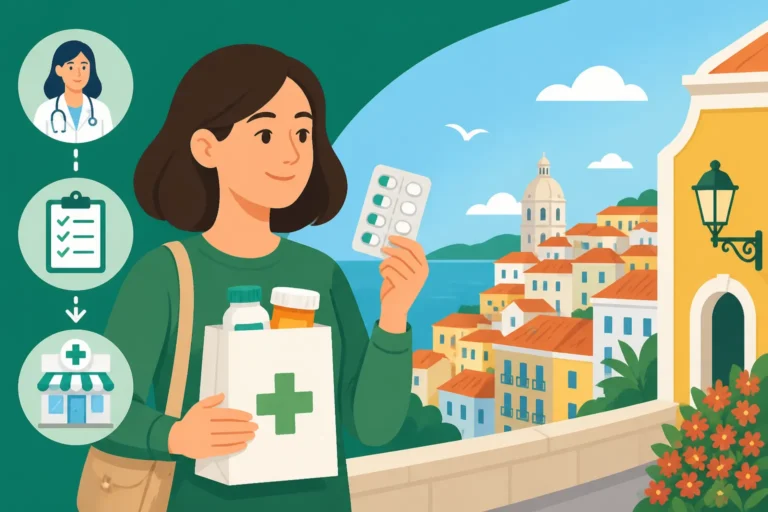
When you arrive at the Farmácia, you show the pharmacist the barcode on your phone. They scan it, and the system tells them exactly what you need and how much of the cost is covered by the government. It is incredibly efficient, but it does mean you must have your identification and your health number ready. If you are an expat still waiting on your permanent residency, you might find that private insurance like Cigna Global helps bridge the gap for these costs, especially if you are using private doctors who prescribe outside the public system's deep subsidies.
Bringing Medications from Abroad
Many expats worry about Bringing Prescription Drugs to Portugal: Customs and Import Rules when they first move. Many people try to pack a six-month supply of everything from antidepressants to ADHD meds. While you are generally allowed to bring a reasonable amount for personal use (usually a 90-day supply), you must have the original packaging and a copy of the prescription translated into English or Portuguese.
Be particularly careful with controlled substances. Medications that are common in the US or UK, such as certain stimulants or strong opioids, are very strictly regulated in Portugal. You cannot simply walk into a pharmacy with a foreign prescription and expect them to fill it. Most pharmacists will tell you that you need to see a local doctor to "convert" that prescription into the Portuguese system. For this, Finding an English-Speaking General Practitioner (Médico de Família) is your first step to ensuring your treatment continues without a hitch.
The Truth About Antibiotics and Restrictions
One of the biggest culture shocks for expats from certain regions is that you cannot buy antibiotics over the counter in Portugal. There was a time, years ago, when the rules were a bit more relaxed, but today it is strictly "no prescription, no pills." This is part of a national effort to combat antibiotic resistance.
If you suspect you have a urinary tract infection or strep throat, do not waste your time asking a pharmacist for Amoxicillin. They legally cannot give it to you. You will need a consultation. If you’re in a rush, Telehealth and Online Doctors: Using TravelDoctores and Doctorsa can often provide a digital prescription after a video call, which you can then take to any green-cross Farmácia. This is a life-saver when you’re stuck in a rural village and the nearest hospital is miles away.
Costs and Subsidies What You Will Pay
Portugal’s healthcare system is built on a "co-payment" model. This means the government pays for a portion of your medication, and you pay the rest. The amount you pay depends on the "Escalão" (tier) the medicine falls into.
Understanding the Escalão System
The Portuguese government subsidizes medicine based on its essential nature. Lifesaving drugs for chronic illnesses often have a high subsidy (Escalão A), meaning the state might pay 90% or even 100% of the cost. More "lifestyle" or non-essential medications might fall into Escalão C or D, where the subsidy is much lower.
| Category | Typical Medications | State Subsidy % |
|---|---|---|
| Escalão A | Insulin, Oncology, HIV meds | 90% – 100% |
| Escalão B | Serious heart meds, Asthma | 69% |
| Escalão C | Basic antibiotics, some painkillers | 37% |
| Escalão D | Minor ailments, some creams | 15% |
| Non-Subsidized | Vitamins, Most OTC meds | 0% |
To benefit from these prices, you must be registered in the public system. If you are using Private Health Insurance in Portugal: Costs, Coverage, and Best Providers, you may pay the full price at the counter and then submit the receipt for Navigating Medical Billing and Insurance Reimbursements in Portugal. Always keep your "fatura" (invoice) and ensure it has your NIF on it.
Buying Ibuprofen and Paracetamol
You might be used to picking up a 100-pack of Ibuprofen for a few dollars at a drugstore. In Portugal, you won’t find massive tubs of painkillers. Most "over-the-counter" drugs like Paracetamol (often called Ben-u-ron here) or Ibuprofen (Brufem) are kept behind the counter. You have to ask the pharmacist for them.
While these are Pharmacies and Medication in Portugal: Prescriptions and OTC Drugs, the dosage is strictly controlled. For example, 600mg Ibuprofen usually requires a prescription, while 400mg does not. If you are used to higher doses, the pharmacist might suggest you take two 200mg pills or see a doctor. This "gatekeeper" role of the pharmacist is very common here; they are highly trained and will often ask you questions about your symptoms before handing over even a basic aspirin.
The Role of Private Insurance
If you are here on a Health Insurance Requirements for the D7 and D8 Visa Application, you likely have a private policy like SafetyWing for travel-style coverage or something more robust like Cigna Global. Many private plans in Portugal have partnerships with pharmacy chains (like Farmácias Holon or others).
By showing your insurance card, you might get an immediate 10% to 20% discount on non-subsidized items. This is particularly helpful for expensive dermatological treatments or specialty supplements that aren't covered by the public SNS. Always ask, "Tem parceria com a minha seguradora?" (Do you have a partnership with my insurance?) before they ring up your total.
Practical Logistics of Using a Pharmacy
Pharmacy culture in Portugal is rooted in the community. Your local pharmacist often knows your name and your medical history, especially in smaller neighborhoods. However, there are some logistical quirks you need to know.
Finding an Open Pharmacy at Night
Most pharmacies close around 7:00 PM or 8:00 PM and are often closed on weekends. If you have an emergency at 2 AM, you need to find a "Farmácia de Serviço." Every pharmacy is required to post a list on their door showing which nearby location is on duty for the night.
You can also check the What is a Farmácia de Serviço and how to find one open at 2 AM online portals or the SNS 24 app. Be aware that during "service hours," the pharmacy door will be locked. You have to ring a bell, and they will serve you through a small window or a secure hatch. In some cases, if you don't have a "Urgente" (urgent) marked prescription, they might charge a small service fee (a few euros) for opening the door for a non-essential item.
Language and Communication
In major cities like Lisbon, Porto, and the Algarve, most pharmacists speak excellent English. They are used to dealing with the expat community and tourists. However, if you are Living in rural Portugal: How far is the nearest hospital usually?, you might find that the local pharmacist only speaks Portuguese.
It’s helpful to know the Portuguese names for your ailments. For example, "gripe" for the flu, "tosse" for a cough, and "dor de cabeça" for a headache. If you have a complex condition, having your Accessing your medical records in Portugal: Using the SNS Portal do Utente open on your phone can help show them your history or current medications to avoid language barriers. Most pharmacists will go out of their way to help you, even if it involves a lot of miming and Google Translate.
Specialty Items and Services
Portuguese Farmácias offer much more than just pills. Most have a small room in the back where they can perform basic clinical tasks. For a few euros, you can have your blood pressure checked, your blood glucose measured, or even get a professional piercing for earrings.
They are also the primary point of contact for Expat Guide to Portuguese Vaccinations: Flu Shots and Travel Vaccines. During the winter, many people get their flu shots directly at the pharmacy rather than waiting for an appointment at the health center. You buy the vaccine at the counter, and the pharmacist administers it right there. It’s an incredibly convenient system that takes about ten minutes.
Common Expat Pain Points
The transition to a new medical system is never 100% smooth. There are a few recurring issues that expats face when dealing with Portuguese pharmacies that can cause genuine stress if you aren't prepared for them.
The "No Family Doctor" Problem
A major issue in Portugal right now is that many residents, including expats, do not have an assigned Finding an English-Speaking General Practitioner (Médico de Família). Without a family doctor in the public system, getting a "public" prescription for chronic meds is difficult.
The solution is usually to go private. While a consultation at a private hospital might cost €50-€80 without insurance, they can issue prescriptions that are valid at any Farmácia. While you won't get the state subsidy on the medicine unless the doctor is linked to the SNS, you will at least get your medication. This is why many expats choose to maintain Private Health Insurance in Portugal: Costs, Coverage, and Best Providers even while they have access to the public system.
Generic vs. Brand Name
In Portugal, pharmacists are legally required to inform you if a cheaper generic version of your medication exists. Don't be offended if they try to switch you from a brand you know to something you've never heard of. The active ingredients are regulated and identical.
If you absolutely insist on the brand name, you can have it, but you will pay significantly more. The state subsidy is usually calculated based on the price of the generic version. If the generic costs €5 and the brand name costs €15, the state might pay 50% of the €5, and you pay the rest of the €15. It adds up quickly, so embracing "Genéricos" is a key part of Money and Finance in Portugal: The Ultimate 2026 Guide for Expats.
Returning and Disposing of Meds
Unlike in some countries where you just throw old pills in the trash (please don't!), Portugal has a fantastic system called VALORMED. Every Farmácia has a white bin specifically for old or expired medications and their packaging.
You simply bring your old boxes and bottles to the pharmacy and drop them in the bin. This ensures that chemicals don't end up in the water supply and that packaging is recycled correctly. It’s a small cultural detail, but following Portuguese Hospital Etiquette: Visiting Hours and Patient Rights and general health norms like this goes a long way in integrating into the local community.
Navigating Medical Complaints and Rights
If you ever feel you have been treated unfairly or given the wrong advice, Portugal has a very transparent system for complaints. Every pharmacy (and every business, for that matter) is required to have a "Livro de Reclamações" (Complaint Book).
The Yellow Book and Your Rights
If a pharmacist refuses to fill a valid prescription or treats you poorly, you can ask for the "Livro de Reclamações." However, there is also an electronic version today. Understanding the 'Livro Amarelo' (Yellow Book) for Medical Complaints is important for any long-term resident.
The authorities take these complaints very seriously. INFARMED reviews pharmacy-related entries, and the establishment must respond within a set timeframe. Most of the time, simply mentioning the book is enough to resolve a misunderstanding. Most pharmacists are proud professionals, however, and these situations are rare. Usually, a quick "com licença" and a polite explanation of your needs will get you exactly what you need.
Disclaimer
This guide is for informational purposes only and does not constitute medical or legal advice. Regulations regarding medication and healthcare in Portugal can change. Always consult with a qualified medical professional or a licensed pharmacist regarding your specific health needs and the legality of medications. For official government information, refer to the INFARMED or SNS portals.