How to Transfer Your Medical Records to Portugal
Disclosure: This article contains affiliate links. If you buy through them, we may earn a commission at no extra cost to you. Read our full disclosure.
Navigating a new country is hard enough without having to explain twenty years of chronic migraines or a complex knee surgery in broken Portuguese. I sat in a CUF waiting room once, desperately trying to translate "ligament tear" on my phone because I forgot my scans in London. This guide covers how to transfer your medical records to Portugal so you never face that stress.
Why Your Medical History Does Not Automatically Follow You
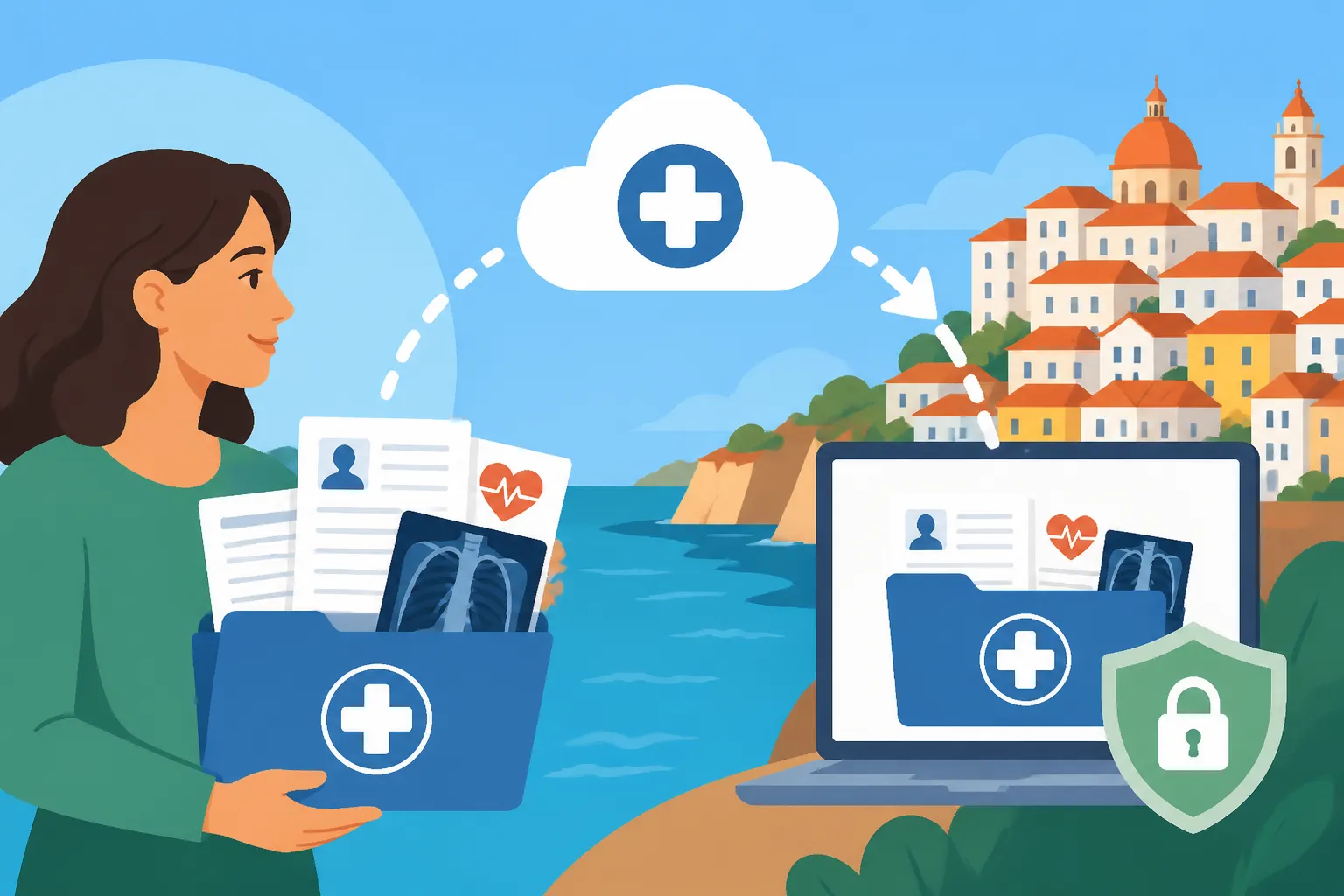
One of the biggest shocks for new arrivals in Lisbon or Porto is the realization that there is no "global health database." Even if you are moving from another EU country, your data is likely siloed within your home country’s national health system. When you register with Portugal's National Health Service (SNS): How the Public System Works, you start with a completely blank slate. The Portuguese system won't "pull" your records from the UK, US, or Canada. You have to be the bridge.
In the public sector, doctors are often under immense time pressure. If you walk into a consultation at a Centro de Saúde without a clear summary of your history, the doctor has to spend the entire 15-minute appointment just trying to understand your background rather than treating your current issue. Having your records organized and ready to present can be the difference between getting a referral and being told to "wait and see."
For those using the private system, having these records is even more critical. If you are using international coverage like Cigna Global, they may require your medical history to process claims or to determine if a condition is pre-existing. Without a clear paper trail, you might find yourself in a bureaucratic loop where the insurer refuses to pay because they cannot verify when a condition first appeared.
Step One: Requesting the Right Documents from Home
Before you even pack your bags, you need to contact your current General Practitioner (GP) or specialist. Don't just ask for "my medical records"—you’ll end up with a 500-page PDF of every cold and flu you’ve had since 1998. Instead, ask for a "Health Summary" or a "Patient Briefing."
Specifically, you want a document that lists your current medications (with dosages), a list of diagnosed chronic conditions, your immunization history, and any recent blood work or imaging reports from the last 24 months. If you have had major surgeries, you need the operative notes and the discharge summary. These are the documents that Finding Doctors and Specialists in Portugal: English-Speaking Medical Care will actually want to see.
If you are coming from the US, you may need to navigate the HIPAA release forms. In the UK, you can often request a "Summary Care Record" through the NHS app, but for more detailed histories, you’ll need to make a formal Subject Access Request (SAR). Make sure you receive these in a digital format, ideally a searchable PDF. Physical copies are a nightmare to carry and even harder for a Portuguese doctor to quickly scan into their local system.
Types of Records and Their Use in Portugal
| Record Type | Why You Need It in Portugal | Priority Level |
|---|---|---|
| Vaccination Records | Required for school enrollment and SNS registration | High |
| Chronic Illness Summaries | Necessary for Managing Chronic Illnesses: Diabetes and Hypertension Care in Portugal | High |
| Prescription List | To get equivalent medications at a Portuguese pharmacy | High |
| Imaging (MRI/CT Scans) | Prevents the need to pay for repeat scans in the private system | Medium |
| Routine Blood Work | Gives your new doctor a baseline for your health | Low |
Step Two: Translation and Legalization
This is where the "administrative hurdle" becomes real. Most doctors in the private sector (like those at Hospital da Luz or CUF) speak excellent English and can read a medical summary in English without much trouble. However, if you are strictly using the public SNS system, your Médico de Família may officially require a Portuguese version of your records, especially if they are making a formal referral to a state hospital.
You don't need to translate every page. Focus on the most recent summary. Using a certified translator is better than a generic agency, as medical terminology is highly specific. For example, "Bilateral" or "Subcutaneous" must be translated accurately to ensure your treatment in Portugal remains consistent. If you are moving with a nomad-specific plan like SafetyWing, their claims team is usually fine with English documents, but local Portuguese pharmacies or public clinics might be more rigid.
Another key detail is your immunization record. If you have children, their Boletim de Vacinas (vaccination book) is sacred in Portugal. You should have your home country's vaccination record translated or at least clearly transcribed. When you are Registering with the Centro de Saúde: Getting Your SNS Número de Utente, the administrative staff will look for these to ensure your child is up to date with the Portuguese National Vaccination Plan.
Step Three: Integrating Records into the Portuguese Systems
Once you arrive, you have two main ways to "upload" your history into the local ecosystem. The first is through the public system's digital infrastructure. After you get your number, you should start Accessing your medical records in Portugal: Using the SNS Portal do Utente. This is a digital health locker. While you can't easily upload old foreign PDFs yourself, you can bring them to your first appointment and ask the doctor or the administrative clerk to enter the most critical data points into your profile.
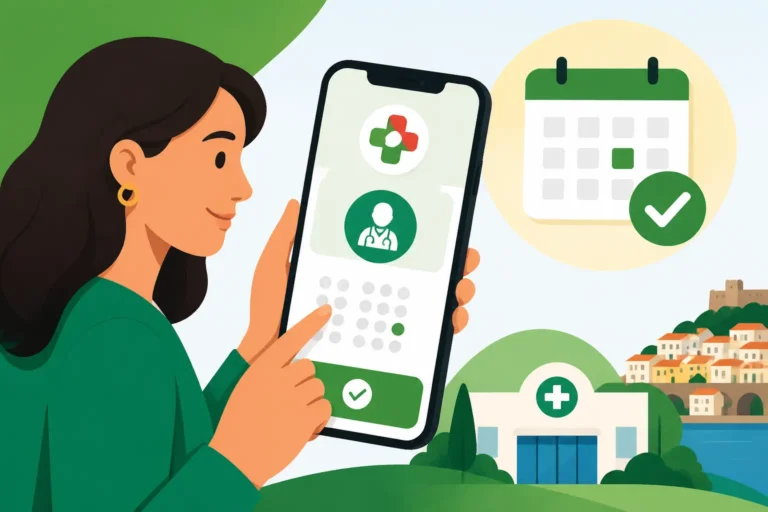
In the private sector, most hospitals have their own proprietary apps (like MyCUF or the Hospital da Luz app). These apps allow you to upload PDFs of previous exams. This is incredibly helpful because it means that when you see a specialist, they can see your foreign MRI right on their screen alongside your new Portuguese results. This continuity of care is one of the main reasons why Public vs Private Healthcare in Portugal: Which One Should Expats Choose is such a common debate; the digital integration in private hospitals is often miles ahead of the local health centers.
If you are managing complex conditions, I highly recommend finding a "Case Manager" or a private GP who can act as your central point of contact. They can take all your foreign records, synthesize them into a Portuguese medical report, and ensure that every specialist you see in Lisbon or the Algarve is working from the same set of facts.
Dealing with Insurance and Pre-existing Conditions
When you apply for Private Health Insurance in Portugal: Costs, Coverage, and Best Providers, the insurer will ask you to fill out a health questionnaire. This is where your transferred medical records become your legal protection. If you declare a condition and provide a record of its current status, the insurer cannot later claim you "hid" a pre-existing condition.
Be aware that most local Portuguese plans (like Médis or Multicare) have strict waiting periods and exclusions for pre-existing conditions. However, international plans like Cigna Global or SafetyWing often have different underwriting processes. Having your records ready allows you to negotiate "moratorium" or "full medical underwriting" more effectively. If you can prove through your records that a condition has been stable for five years with no treatment, some insurers might be willing to cover it after a certain period.
If you are arriving on a D7 or D8 visa, your initial insurance is often just for the application. But once you are on the ground, you’ll want a policy that actually pays out. Your records are the proof the insurance company needs to verify that your "emergency" wasn't actually a long-standing issue you forgot to mention.
The Physical vs. Digital Dilemma
While Portugal is becoming increasingly digital, there is still a deep-seated love for the "carimbo" (the official stamp). If you have major surgical reports or life-saving allergy information, keep a physical folder in your home in addition to your cloud storage. If the power goes out or a hospital’s server is down, having that physical folder can be a lifesaver.
It is wise to have a "Health Kit" on your phone. This should include:
- A PDF of your health summary.
- A photo of your Número de Utente card.
- A scan of your private insurance card (Cigna Global or local).
- A list of your medications in both their brand name (e.g., Advil) and generic name (e.g., Ibuprofen), as brand names differ in Portugal.
This digital kit is the first thing you should show if you ever end up in Emergency Medical Care in Portugal: Calling 112 and Going to the Hospital. In a high-stress situation, you won't remember your dosage or the exact date of your last surgery. Letting the triage nurse look at a clear, translated PDF on your phone can shave 30 minutes off your wait time.
Final Practical Tips for a Smooth Transfer
Don't wait until you are sick to deal with this. One of the items on every Health checklist for your first 30 days living in Portugal as an expat should be "Establishing a local GP." Book a "check-up" appointment even if you feel fine. Use this first appointment specifically to hand over your records and ensure the doctor has updated your local file.
If you find that your Finding an English-Speaking General Practitioner (Médico de Família) is struggling to understand your foreign records, offer to email them the digital version so they can use a translation tool at their desk. Portuguese doctors are generally very collaborative, but they appreciate it when you make their job easier by having your data organized.
Lastly, remember that your health data is yours. If you move between a public health center and a private clinic, don't assume they share data. They don't. You are the "human folder" that carries the information between the two systems. Every time you get a result from a private lab (like Joaquim Chaves or Germano de Sousa), download the PDF and save it. Keeping your own meticulous record is the only way to ensure your medical history remains intact while living in Portugal.
Disclaimer
This guide is for informational purposes only and does not constitute medical or legal advice. Healthcare regulations and insurance policies in Portugal can change frequently. Always consult with a qualified medical professional or a licensed insurance broker to discuss your specific health needs and legal requirements for residency.