Sunscreen and skin cancer checks: Visiting a dermatologist in Portugal
Moving to Portugal usually involves a romanticized vision of endless golden afternoons, but the reality of the Iberian sun can be a harsh wake-up call for your skin. I remember my first summer in the Algarve, mistakenly thinking my northern European sun habits would suffice, only to realize that the UV index here plays by entirely different rules. This guide solves the confusion around navigating the Portuguese healthcare system for skin cancer screenings and choosing the right protection for this specific climate.
Understanding the Portuguese Sun and the UV Reality
The Portuguese climate is deceptive, especially along the Atlantic coast where the refreshing "Nortada" breeze masks the actual intensity of the heat. You might feel cool and comfortable while your skin is literally cooking under a UV index that frequently hits 9 or 10 during the summer months. For many expats coming from cooler climates, the cumulative damage happens not during a beach day, but during simple errands, outdoor lunches, or gardening. It is vital to understand that skin health in Portugal is not a seasonal concern but a year-round commitment to preventive care.
The intensity of the sun here requires a shift in mindset. In many northern countries, we wait for the "hot" days to apply protection. In Lisbon, Porto, or Funchal, the sun is potent even in February. This constant exposure increases the risk of basal cell carcinoma and melanoma, making regular checkups a non-negotiable part of your Healthcare in Portugal for Expats: The Complete 2026 Medical Guide. Many locals grew up with a "bronze is healthy" mentality that is only now being challenged by modern dermatology, so as an expat, you often have to be your own advocate when it comes to screening.
If you find yourself reacting to the sun more intensely than usual, or if you have a history of many moles, you shouldn't wait for a suspicious spot to appear. Integrating a skin check into your Preventive Care: Annual Checkups, Blood Tests, and Cancer Screenings is the smartest move you can make in your first year of residency. The Portuguese sun is beautiful, but it demands a level of respect that your home country might not have required.
How to Find a Dermatologist in Portugal
Navigating the search for a specialist can be one of the most frustrating administrative hurdles for a newcomer. You have two main paths: the public National Health Service (SNS) or the private sector. If you are looking for an English-speaking doctor and want to avoid months of waiting, the private sector is generally the preferred route for most expats. You can find highly qualified dermatologists at major private clusters like CUF, Hospital da Luz, or HPA Health Group in the Algarve.
For those relying on the public system, the process starts at your local health center. You cannot simply walk into a public hospital and ask for a dermatologist. You must first have a consultation with your family doctor, who will then issue a referral. To understand the nuances of this path, you should read about Specialist Referrals: The Process in Public SNS vs Private Clinics. Be warned that for non-urgent skin checks, the public waitlist can stretch from six months to over a year, depending on your region. If you have a high-risk profile, this delay is often unacceptable.
Private dermatology appointments are much easier to secure, often within a week or two. Most private doctors in the larger cities speak excellent English, which is a massive relief when you are trying to describe a subtle change in a mole's texture. When booking, you can use apps like "MyCUF" or "Lusíadas" to see doctor bios and available slots. If you are concerned about the financial side of these frequent visits, having a plan from a provider like Cigna Global can ensure that these specialist consultations are covered without the stress of out-of-pocket surprises.
Skin Cancer Screenings: What to Expect in the Clinic
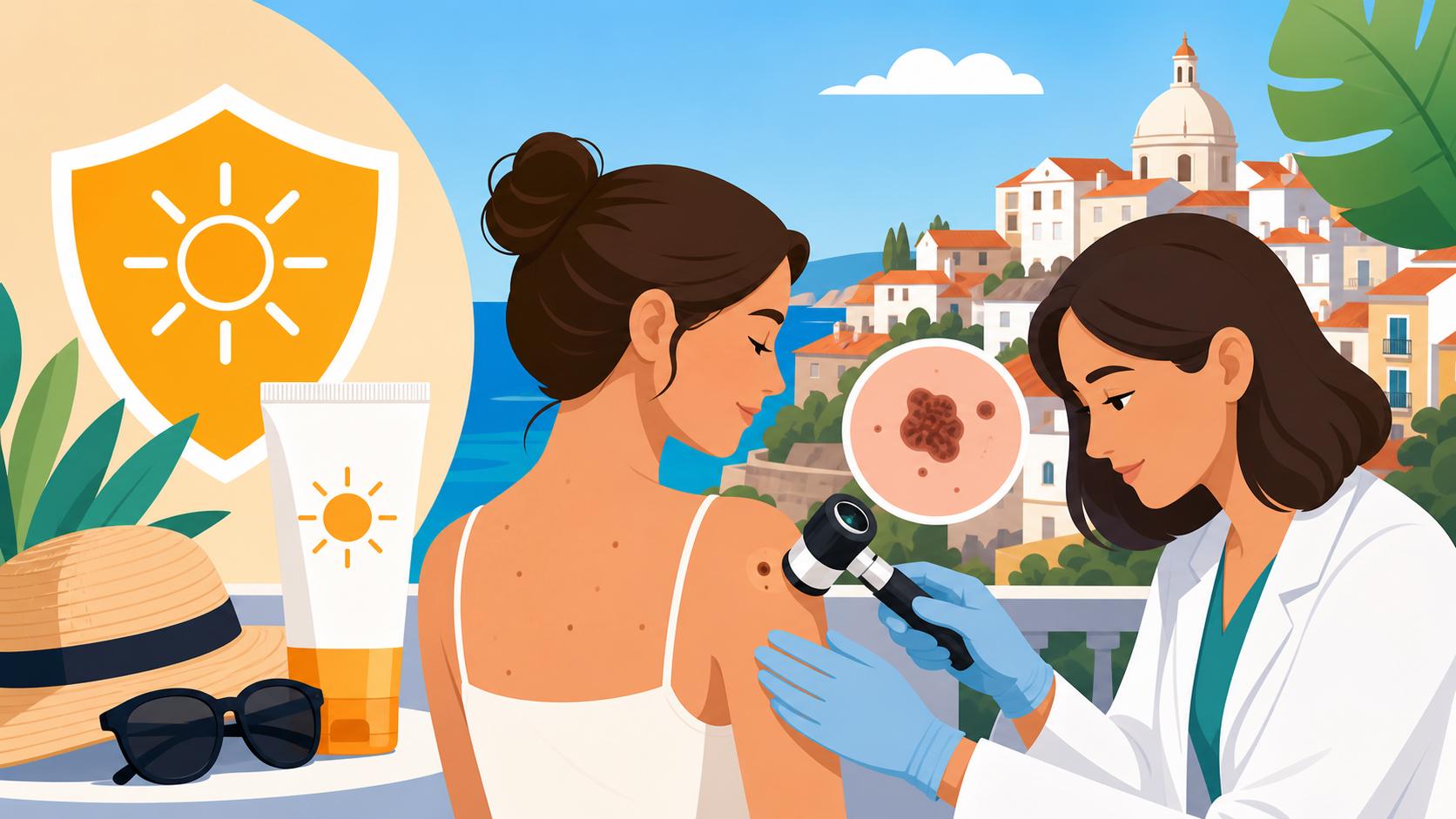
A standard skin cancer screening in Portugal is known as a "Rastreio de Cancro da Pele" or simply a "Consulta de Dermatologia" for a checkup. When you arrive, the doctor will likely perform a full-body examination. Do not be surprised if they ask you to strip down to your underwear; a thorough dermatologist will check between your toes, your scalp, and even behind your ears. They use a tool called a dermatoscope—a handheld device with a magnifying lens and a powerful light—to look deep into the structure of your "sinais" (moles).
If the dermatologist finds something suspicious, the next step is usually a biopsy or a digital mapping of your moles. Digital dermoscopy is particularly popular in private Portuguese clinics for patients with "Atypical Mole Syndrome." They take high-resolution photos of every single spot on your body to compare them during your next visit. This meticulous approach is the gold standard for early melanoma detection. If you are worried about the logistics of these procedures, Finding Doctors and Specialists in Portugal: English-Speaking Medical Care offers more tips on selecting the right professional for your needs.
Costs for a private dermatology consultation typically range from €70 to €120 if you are paying entirely out of pocket. However, if you are using Private Health Insurance in Portugal: Costs, Coverage, and Best Providers, your co-payment might be as low as €15 or €30. It is always worth checking if your specific policy requires a pre-authorization for procedures like mole removal or biopsies. Navigating these bureaucratic layers can be tricky, so it helps to be familiar with Navigating Medical Billing and Insurance Reimbursements in Portugal before you head to your appointment.
Sourcing the Best Sunscreen and Skin Care in Portugal
The availability of high-quality sun protection in Portugal is excellent, but where you buy it matters. You will see sunscreen in every Pingo Doce and Continente supermarket, but for clinical-grade protection, you should head to the "Farmácia" or "Parafarmácia." Portuguese pharmacies carry "cosmecêuticos" from brands like ISDIN, La Roche-Posay, and Heliocare. These brands offer specific formulations for the face that are non-greasy and designed for the high-intensity Iberian sun, often including "DNA repair" enzymes.
If you are a fan of specific organic or international mineral sunscreens that aren't common in local shops, online retailers are your best friend. Many expats use iHerb to stock up on specific zinc-based sunscreens or skin-supportive vitamins that can be harder to find in traditional Portuguese retail outlets. iHerb is particularly useful for those with sensitive skin who need very specific ingredient profiles that the mainstream European brands might not offer.
In addition to topical creams, remember that the Portuguese pharmacy system is quite robust. You can get a lot of advice directly from the pharmacist, though for a cancer check, a doctor is mandatory. For more on how these shops function, see Pharmacies and Medication in Portugal: Prescriptions and OTC Drugs. Using a combination of local pharmacy finds and specialized products from iHerb ensures your skin barrier remains intact through the blistering July and August heat.
| Feature | Public System (SNS) | Private System (CUF/Luz/HPA) |
|---|---|---|
| Access Speed | 6-12 months for routine checks | 1-2 weeks usually |
| Referral Needed | Yes, from a Family Doctor | No, direct booking allowed |
| Average Cost | Small co-payment (€5-€10) | €70-€120 (without insurance) |
| English Language | Not guaranteed | Very common |
| Technology | Standard Dermoscopy | Often includes Digital Mapping |
Practical Sun Safety Tips for the Portuguese Lifestyle
Living in Portugal means embracing the outdoors, but it requires a tactical approach. The "hours of fire" are generally between 11:00 AM and 4:00 PM. During this time, even if you are wearing SPF 50, the sheer heat and UV bounce-back from the limestone pavements (Calçada Portuguesa) can lead to damage. You will notice that locals often close their shutters and stay indoors during these peak hours—a tradition born out of necessity rather than laziness.
Invest in high-quality UV-rated clothing if you plan on hiking the Trilho dos Pescadores or playing golf in the Algarve. A wide-brimmed hat is essential, as the sun hits the top of the ears and the scalp with surprising ferocity. If you do happen to get a bad burn, don't ignore it. The SNS 24 Helpline (808 24 24 24): Triage, Advice, and Sick Notes can provide immediate advice on whether you need to visit an urgent care center or how to treat a severe reaction at home.
Lastly, remember that sun protection is a budget item. High-quality sunscreen is not cheap in Portugal, often costing €20-€30 per bottle at the pharmacy. This is where having a comprehensive international health plan like Cigna Global can be a lifesaver, as some premium plans may offer wellness benefits or at least give you the peace of mind to spend your "health budget" on high-end prevention rather than expensive treatments later. Don't forget that consistency is more important than the brand name; the best sunscreen is the one you actually enjoy wearing every single morning.
Important Disclaimer
The information provided in this guide is for educational and informational purposes only and does not constitute professional medical advice, diagnosis, or treatment. Always seek the advice of a qualified dermatologist or healthcare provider in Portugal with any questions you may have regarding a medical condition or skin concern. Reliance on any information provided in this article is solely at your own risk. This content is based on the expat experience and current healthcare landscape in Portugal and should be verified with official sources.