Choosing a Family Doctor (Médico de Família) in Portugal
Disclosure: This article contains affiliate links. If you buy through them, we may earn a commission at no extra cost to you. Read our full disclosure.
You walk into your local Centro de Saúde with your brand-new residency permit, ready to get assigned a family doctor, only to be told there is a waiting list that stretches into the next decade. I remember that sinking feeling in my gut when I first moved to Lisbon; I realized that having access to healthcare and actually seeing a doctor are two very different things. This guide breaks down exactly how to navigate the Portuguese system to secure your Médico de Família and what to do when the system fails you.
Understanding the SNS and the Role of the Family Doctor
The Serviço Nacional de Saúde (SNS) is Portugal’s public healthcare backbone. It is designed to provide universal coverage to all residents, regardless of their nationality or economic status. At the heart of this system is the Médico de Família, or family doctor. This individual is your primary point of contact for everything from a persistent cough to long-term chronic disease management. They are the gatekeepers of the system; without a family doctor, getting a referral to a public specialist or obtaining subsidized prescriptions becomes significantly more complicated.
What is a Médico de Família?
In the Portuguese public system, a family doctor is a specialist in General and Family Medicine. They are not just "GP"s in the way some expats might expect; they are responsible for the holistic health of their assigned "list" of patients. This includes preventative care, such as annual screenings and vaccinations, as well as managing the medical history of entire families. Having a family doctor means you have a specific person in the public records who knows your history, your allergies, and your previous surgeries.
When you have a family doctor, you can book routine appointments (Consultas de Planeamento) through the SNS portal or directly at your local health center. These doctors work within a local unit called a USF (Unidade de Saúde Familiar). If you are lucky enough to be assigned to a USF type B, you are entering one of the most efficient parts of the Portuguese state, where doctors are incentivized based on patient outcomes and service quality. However, the experience can vary wildly depending on which neighborhood you call home.
The Public vs Private Dichotomy
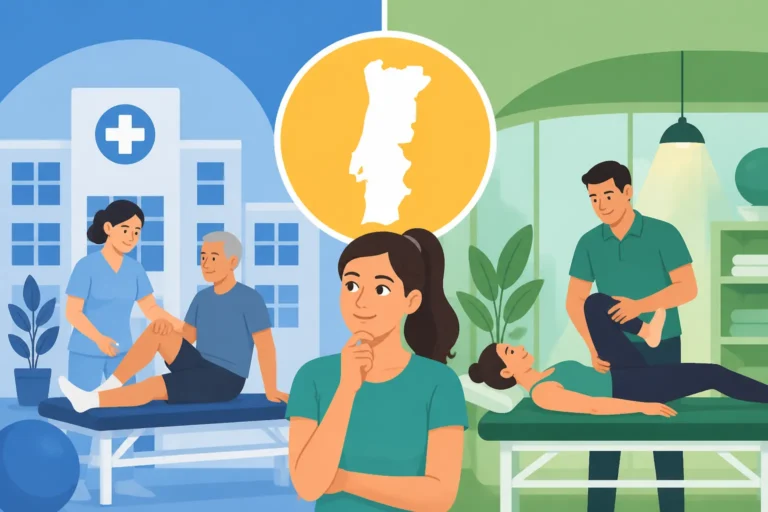
One of the first things you will learn as an expat is that Portugal operates on a dual-track system. While the public system is excellent for major traumas, life-threatening emergencies, and complex surgeries, the primary care level (where family doctors live) is under immense pressure. This is why many foreigners find themselves asking Public vs Private Healthcare in Portugal: Which One Should Expats Choose? almost immediately after arrival.
The private system offers much faster access to primary care. If you cannot get a family doctor in the public system, you can effectively "buy" one by using private clinics like CUF or Hospital da Luz. In the private sector, you don't have an "assigned" doctor in the same bureaucratic sense; instead, you choose a General Practitioner (Clínica Geral) and stick with them. To make this affordable, most expats utilize international plans like those from Cigna Global, which allow for shorter wait times and English-speaking staff.
The Reality of the Médico de Família Shortage
I need to be brutally honest with you: as of 2026, over 1.5 million people in Portugal are still without an assigned family doctor. This is a systemic issue fueled by an aging workforce of physicians and a struggle to keep young doctors in the public sector when private clinics and foreign countries offer higher salaries. When you move here, you must prepare for the possibility that you will be "on the list" (em lista de espera) for months or even years.
Why the SNS is Struggling
The struggle isn't due to a lack of medical talent; Portuguese doctors are world-class. The issue is volume and administration. As the population ages, the demand for primary care has skyrocketed. Furthermore, the administrative burden on public family doctors is significant, often requiring them to spend more time on paperwork than on patient interaction. This has led to a bottleneck where new residents, particularly in high-density areas, find the doors of their local Centro de Saúde effectively closed to new assignments.
For a veteran expat like me, seeing the evolution of this crisis has been frustrating. You will often hear the phrase "não há vagas" (there are no vacancies) when you try to register. This is a common hurdle covered in our deep dive into Why does my Centro de Saúde say they have no Médico de Família available? which I highly recommend reading if you’ve already been turned away once. It’s not a personal rejection; it’s a reflection of a system at its breaking point.
Regional Variations: Lisbon vs the Interior
Where you choose to live in Portugal will dictate your healthcare experience more than almost any other factor. In Lisbon, Cascais, and the Algarve, the shortage is acute. The high cost of living in these areas makes it difficult for public sector nurses and doctors to reside there, leading to understaffed health centers. You might find yourself in a situation where you live 500 meters from a health center but are told the nearest doctor with an open list is three towns away.
Conversely, if you move to the interior—places like Castelo Branco, Beja, or parts of the Alentejo—you might find the process much smoother. These regions are part of government initiatives to attract residents, and sometimes the local Centros de Saúde are actually looking for new patients to justify their funding. If you are still in the planning stages of your move, consider checking out the Healthcare in Portugal for Expats: The Complete 2026 Medical Guide to see how regional health access might impact your choice of location.
Step-by-Step: How to Register for a Family Doctor
Even with the shortages, you must register. You cannot get into the queue if you aren't in the system. The process is bureaucratic, but it is the only way to eventually access subsidized care and the public specialist network.
Getting Your Número de Utente First
Before you can even talk about a family doctor, you need your National Health Service number, known as the Número de Utente. This is a nine-digit number that identifies you within the SNS. Without it, you are essentially a ghost to the Portuguese medical system. You generally need your residency permit (or proof that you have applied for one), your NIF (tax number), and a proof of address (atestado de morada) from your local Junta de Freguesia.
For many, the physical trip to the health center to get this number is a rite of passage involving long queues and early mornings. However, there are modern workarounds. I always suggest expats look into How to get your Número de Utente online without visiting the health center to save themselves a day of frustration. Once you have this number, you are officially a "patient" of the SNS, even if you don't have a doctor assigned yet.
The Registration Process at the Centro de Saúde
Once you have your number, you must visit the Centro de Saúde that corresponds to your specific catchment area. You cannot just pick a health center that looks "nice" or has a shorter line; it is strictly based on your registered address. You will go to the reception (Secretaria) and ask to be "inscrito" (enrolled).
If they have a vacancy, they will assign you a doctor on the spot. If not, they will place you on the waiting list. This is a critical moment: ensure you ask for a "comprovativo de inscrição" (proof of enrollment). This document proves you are in the system and can be used to access Emergency Medical Care in Portugal: Calling 112 and Going to the Hospital or temporary consultations if you fall ill before a permanent doctor is found.
Online Registration and the Portal do Utente
The Portuguese government has made strides in digitalization. The "Portal do Utente" is your digital health hub. Once you have your Número de Utente and a way to authenticate your identity (like the Chave Móvel Digital), you can log in to see your health records, your prescriptions, and your status regarding a family doctor.
In some rare cases, you can see if other nearby health centers have open lists, though the system usually locks you to your home parish. Understanding how to navigate this portal is essential for modern life here, and we have a full breakdown in Registering with the Centro de Saúde: Getting Your SNS Número de Utente that covers the digital nuances.
What to Do While You Are on the Waiting List
So, you’ve registered, but you’re one of the 1.5 million without a doctor. What now? You aren't just left to fend for yourself; there are safety nets designed to provide care to those in the "limbo" of the waiting list.
Using the SNS 24 Helpline
The first line of defense is the SNS 24 helpline (808 24 24 24). This is a 24/7 service staffed by qualified nurses. If you are sick, you call them first. They can perform a "triage" over the phone and, if necessary, give you a referral for a consultation at your local health center that same day or the next.
This is a life-saver for expats who don't have a family doctor yet. The nurses often speak English, and they can even issue "baixas médicas" (sick notes) for your employer. For more details on how to use this service effectively, check out our guide on the SNS 24 Helpline (808 24 24 24): Triage, Advice, and Sick Notes. It’s the single most important phone number to have saved in your contacts.
Consultas de Recurso and Emergency Care
If you don't have a family doctor but need a face-to-face consultation for something non-urgent (like a prescription renewal or a non-emergency infection), you can use the "Consulta de Recurso" (Resource Consultation) at your Centro de Saúde. These are usually "walk-in" slots available to those registered at the center who do not have an assigned doctor.
You usually have to show up very early—think 7:30 AM—to secure one of these limited slots. While it’s not as convenient as having a scheduled appointment with a doctor who knows you, it ensures you can still access public prices for blood tests and medication. If your situation is more serious, you head to the "Urgências" (ER), but be prepared for a wait. Understanding Public vs Private Healthcare in Portugal: Which One Should Expats Choose? can help you decide when it's time to skip the public queue and pay for a private urgent care visit instead.
| Feature | Public Family Doctor (SNS) | Private GP (CUF/Luz/HPA) |
|---|---|---|
| Cost | Free or small co-pay (€0 – €5) | €40 – €100 (without insurance) |
| Wait Time for Appointment | Weeks to Months | Days or same-day |
| Language | Mostly Portuguese | Often English-speaking |
| Referrals | Direct to public specialists | Direct to private specialists |
| Availability | Subject to heavy shortages | Widely available |
| Prescriptions | Subsidized (up to 90% off) | Full price (unless SNS mirrored) |
Transitioning to Private Medical Care
Because of the wait times I've described, many expats choose to bypass the public primary care struggle entirely. This doesn't mean you "leave" the public system—you still pay for it through your taxes—but you use the private system for your day-to-day needs.
Why Expats Choose Private Insurance
The peace of mind that comes with being able to book an appointment on an app and see a doctor within 48 hours is worth the monthly premium for most of us. Private insurance in Portugal is remarkably affordable compared to the US or even the UK. Plans from Cigna Global or local providers like Médis offer a bridge to a network of high-end hospitals where English is common.
If you are a digital nomad or just arriving, you might also consider SafetyWing for your initial months. It’s designed for the transition period while you are still figuring out your residency and don't yet have your Número de Utente. Once you are settled, you can look into more permanent solutions like Private Health Insurance in Portugal: Costs, Coverage, and Best Providers to ensure your family's routine health needs are met without the stress of the public waiting list.
Finding English-Speaking Specialists
One of the biggest hurdles in the public system is the language barrier. While many young doctors speak excellent English, the administrative staff at the health centers often do not. In the private sector, specifically at chains like CUF or Hospital da Luz, you can filter doctors by the languages they speak directly on their booking portals.
This is a game-changer when you are trying to explain complex symptoms or mental health concerns. We've compiled a resource for Finding an English-Speaking General Practitioner (Médico de Família) that focuses on the private sector, as that is where you will have the most luck finding a doctor who can communicate fluently in your native tongue.
Essential Tips for Navigating the Portuguese Health System
After years of dealing with the "Finanças" and the "Centros de Saúde," I’ve picked up a few tricks that aren't in the official brochures. These "expat hacks" can be the difference between getting a prescription and going home empty-handed.
Language Barriers and the "Power of Please"
If you don't speak Portuguese, the public system will be twice as hard. My advice? Learn the basics of medical Portuguese—"tenho uma dor" (I have a pain), "preciso de uma receita" (I need a prescription). Even a small effort goes a long way with the staff. If you are struggling, don't be afraid to use a translation app on your phone.
Furthermore, remember that the administrative staff have a lot of power. Being polite, patient, and persistent is key. If you are told "there are no doctors," ask politely when the list might open or if there is another center in the municipality you should check. For more complex interactions, you might even consider Navigating Medical Billing and Insurance Reimbursements in Portugal to understand the paperwork you'll be handling.
Moving Between Regions and Updating Data
If you move house within Portugal, you must update your address with the SNS. This isn't automatic when you change it at the Tax Office (Finanças). You need to take your new atestado de morada to your new local health center. This will trigger a move of your file, but it also means you might lose your assigned family doctor in your old neighborhood and go to the back of the queue in the new one.
This is a "hidden" frustration of moving. Many expats keep their old address on file if they have a doctor they love, but this is technically not allowed and can cause issues with home visits or local emergencies. Always weigh the pros and cons of "switching" before you make your move official in the healthcare database.
Final Thoughts on Family Care in Portugal
Finding a Médico de Família in Portugal is a marathon, not a sprint. It requires bureaucratic diligence and, quite often, a backup plan in the form of private insurance. Don't let the horror stories about waiting lists scare you away from the country—the healthcare here is high-quality and the doctors are deeply committed. But do yourself a favor: register for the public system today, but keep a policy from a provider like Cigna Global or SafetyWing in your back pocket so you never have to choose between your health and your sanity.
Navigating the system gets easier with time. Once you have that Número de Utente and a basic understanding of how to use the SNS 24 helpline, you'll find that Portugal is actually a very safe and supportive place to raise a family or retire. Just remember to bring your patience, your paperwork, and maybe a good book for the waiting room.
Disclaimer
This guide is for informational purposes only and does not constitute medical or legal advice. Healthcare regulations and wait times in Portugal can change frequently. Always consult with the official SNS portal or a qualified healthcare professional regarding your specific medical needs.