Preventive Care: Annual Checkups, Blood Tests, and Cancer Screenings
Navigating a new medical system often feels like trying to read a map in the dark, especially when you realize that "preventive care" isn't always a standardized package in Portugal. I remember sitting in my local health center for three hours just to ask for a basic blood panel, only to realize I was asking the wrong person. This guide clarifies exactly how to secure your annual checkups, screenings, and diagnostic tests without the typical expat headache.
Understanding the Portuguese Approach to Preventive Health
The first thing you realize as an expat in Portugal is that healthcare is a dual-track journey. You have the Serviço Nacional de Saúde (SNS), which is the public system, and an incredibly robust private sector. Preventive care is approached differently in each. In the public system, prevention is often integrated into the "Médico de Família" (Family Doctor) model. However, because the system is under heavy strain, "preventive" often takes a backseat to "acute" unless there is a national screening program in place.
If you are Registering with the Centro de Saúde: Getting Your SNS Número de Utente, you are officially in the door for public screenings. The SNS is phenomenal at population-wide health, meaning they will proactively invite you for certain screenings based on your age and risk factors. But if you want a "comprehensive executive checkup" just because it’s January and you want peace of mind, the public system might tell you to wait. This is where many of us turn to the private sector to fill the gaps.
Private healthcare providers like CUF or Hospital da Luz offer dedicated "Check-up" packages that are streamlined and efficient. For many of us, having Private Health Insurance in Portugal: Costs, Coverage, and Best Providers is the only way to ensure these annual checkups happen on our timeline rather than the government's. A company like Cigna Global can be particularly helpful here, as their coverage often mirrors the high-standard preventive expectations we bring from our home countries, ensuring you aren't paying out of pocket for every single vial of blood drawn.
The Role of the Médico de Família
In an ideal world, your Médico de Família is the gatekeeper of your health. They are the ones who should order your blood tests and keep track of your screenings. However, the reality for many expats is that they are assigned to a health center but remain "sem médico atribuído" (without an assigned doctor). When this happens, you have to request a "consulta de recurso" (resource consultation) just to get a prescription for preventive tests. It’s a frustrating hurdle that I personally navigated for two years before finally going private.
The Private System Advantage
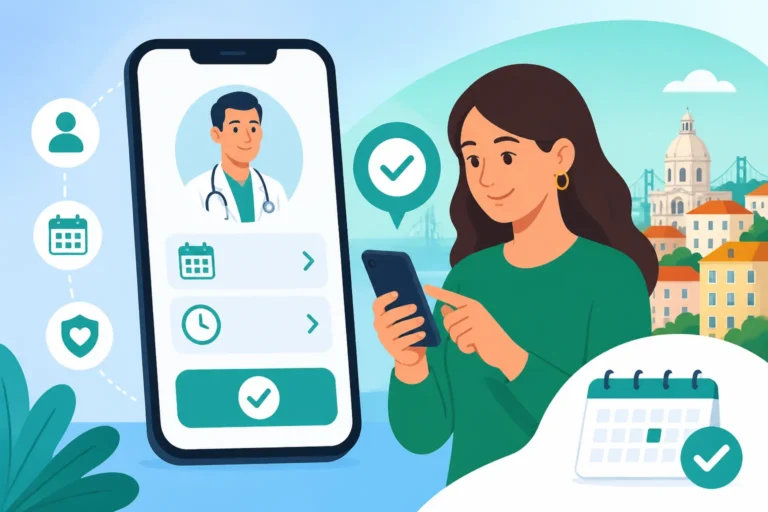
The private system operates with a consumer-mindset. You can literally book a "Check-up Geral" online via an app. These packages usually include a consultation with an internal medicine specialist, a full blood panel, an EKG, and sometimes a chest X-ray or abdominal ultrasound. If you are using Cigna Global, you can often find clinics within their network that handle the billing directly, which saves you the nightmare of navigating Portuguese reimbursement forms.
Cultural Attitudes Toward Prevention
Portuguese culture is traditionally more reactive than proactive when it comes to health, but this is changing rapidly. You will find that younger Portuguese doctors are very keen on lifestyle medicine and early intervention. While your older neighbor might only go to the doctor when they can’t walk, the medical infrastructure—especially in cities like Lisbon, Porto, and Coimbra—is fully equipped for world-class preventive diagnostics.
The Annual Checkup: What to Expect and How to Book
When you book an annual checkup in Portugal, it is usually referred to as a "Check-up Geral" or "Consulta de Rotina." In the public system, this is a standard appointment with your family doctor. In the private system, it’s a more formal, multi-test event. It is essential to know that "annual" is a suggestion; the SNS may only suggest a full checkup every two years if you are young and healthy.
If you are Finding an English-Speaking General Practitioner (Médico de Família), the process becomes significantly easier. They will understand the nuance of your medical history and won't look at you strangely when you ask for a Vitamin D or B12 check—tests that aren't always standard in the basic Portuguese public panel. I often supplement my health routine with high-quality nutrients from iHerb, especially since the "Atlantic diet" here, while healthy, can sometimes be low in specific minerals depending on your lifestyle.
Standard Tests in a Routine Checkup
A typical preventive screening in Portugal will start with "análises" (blood and urine tests). You’ll be asked to fast for 8 to 12 hours. Beyond the blood work, a routine checkup often includes a physical exam where the doctor checks your blood pressure, BMI, and lung function. In private hospitals, they almost always include an EKG (Electrocardiograma) to check your heart rhythm as a baseline, even if you have no symptoms.
Booking Logistics and Wait Times
For a public checkup, you should book months in advance. You can do this through the "Portal do Utente" or by going to your Centro de Saúde at 8:00 AM. In the private system, wait times are usually less than a week. Many expats find that the cost of a private checkup—which can range from €150 to €500 without insurance—is a small price to pay for the speed and the ability to speak with a doctor who has more than ten minutes to spare for you.
Preparing for Your Appointment
Always bring your "Boletim de Saúde" or any previous records from your home country. Portuguese doctors love data. If you have had previous cancer screenings or major surgeries, having those translated into Portuguese (or at least English) is vital. Most doctors in the private sector speak excellent English, but having a written summary helps avoid any "lost in translation" moments regarding your family history.
Navigating Blood Tests and Diagnostic Centers
Blood tests, or "Análises Clínicas," are a way of life in Portugal. Unlike some countries where you get blood drawn at the doctor’s office, in Portugal, you usually go to a specialized lab. Even if you see a doctor at a major hospital, they might send you to a dedicated "Posto de Colheitas" (Collection Point) down the street.
The two giants in this field are Blood tests (Análises Clínicas) in Portugal: Joaquim Chaves and Germano de Sousa. These labs are everywhere—literally in almost every neighborhood. They are incredibly efficient. You walk in with your "P1" (the public prescription) or your private insurance card, take a number, and you're usually out in 20 minutes.
The P1 System vs. Private Prescriptions
The "P1" is a specific form used by public doctors to order tests. When you have a P1, the tests are either free or heavily subsidized (costing just a few euros in "taxas moderadoras"). If you see a private doctor, they will give you a private prescription. You can still use this at Joaquim Chaves, but you will pay the insurance rate or the "tabela particular" (private rate). Understanding Navigating Medical Billing and Insurance Reimbursements in Portugal is key here so you don't end up paying the full retail price for a simple cholesterol check.
Specialized Panels and Bio-Markers
If you’re interested in more than just the basics, you can request specialized panels. For example, many of us in the expat community are conscious of thyroid health or hormonal balance. You can often add these to your lab order by simply asking the lab receptionist, though you’ll pay the private rate for any test not specifically on your doctor's prescription. I’ve found that using iHerb to source specific supplements after getting these results is the most cost-effective way to manage minor deficiencies that show up in the blood work.
Accessing Your Results
One of the best things about the Portuguese lab system is the digital integration. Both Joaquim Chaves and Germano de Sousa have excellent apps. You usually receive a code via SMS, and your results are available online within 24 to 48 hours. You can then download the PDF and send it to your doctor or upload it to your SNS "Portal do Utente" so it’s part of your permanent public record.
| Test Type | Public (SNS) Cost | Private (Insurance) | Frequency Recommended |
|---|---|---|---|
| Basic Blood Panel | €0 – €15 | €5 – €30 | Annual |
| EKG (Heart) | €0 – €5 | €10 – €40 | Every 1-2 years |
| Abdominal Ultrasound | €0 – €10 | €20 – €60 | Every 2-3 years |
| Mammogram | Free (Screening) | €15 – €50 | Every 2 years (Age 50+) |
| Colonoscopy | Free (Screening) | €50 – €150 | Every 5-10 years |
Cancer Screenings and Early Detection Programs
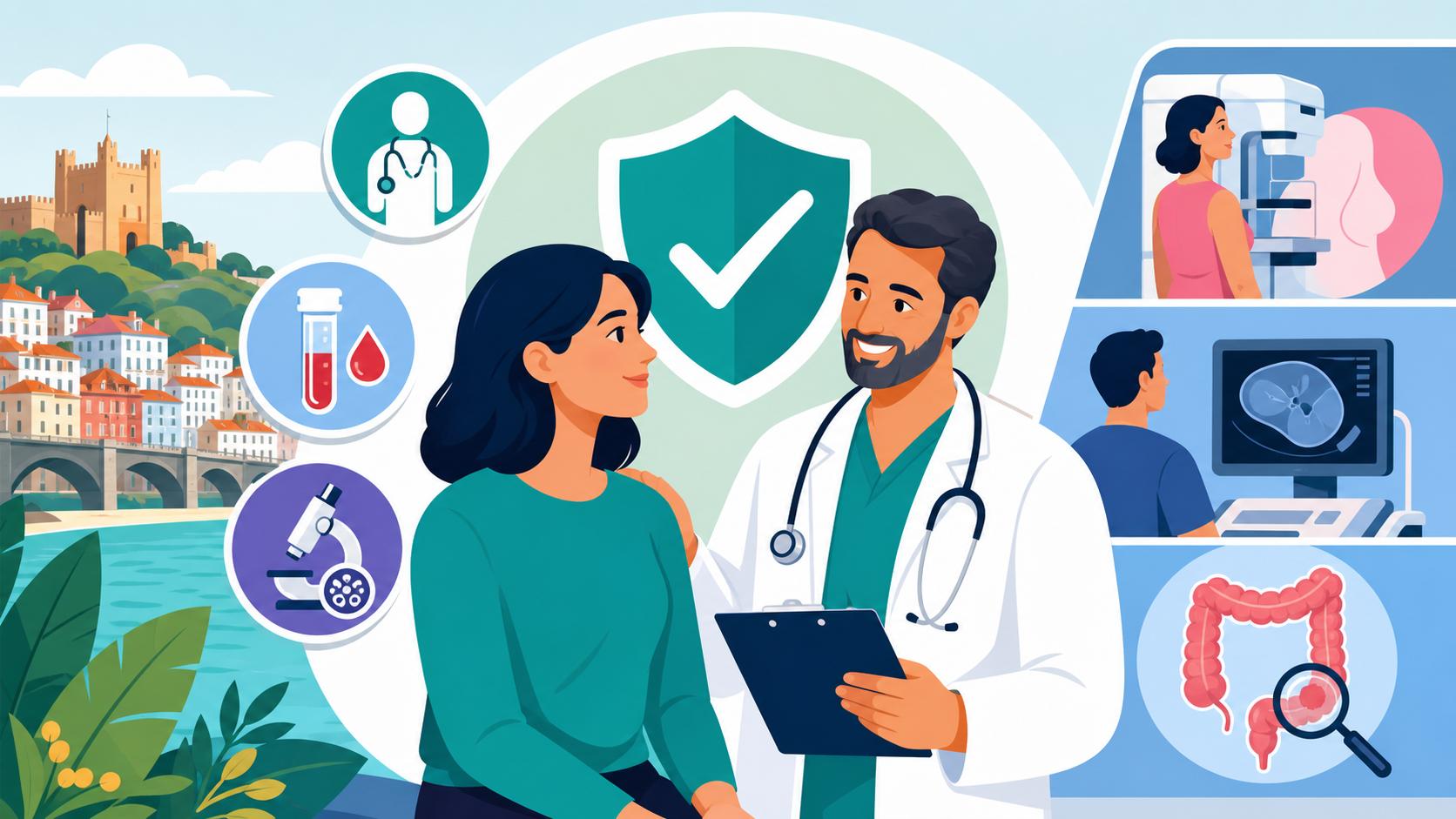
Portugal has excellent national screening programs, known as "Rastreios." These are population-based and specifically target breast, cervical, and colorectal cancers. If you are registered in the SNS, you will receive an invitation (often by letter or SMS) when it is your turn. It is vital not to ignore these, as they are well-organized and entirely free.
However, many of us prefer to supplement these with more frequent screenings in the private sector. For women, Women’s Health and Maternity Care in Portugal: Pregnancy and Birth involves regular gynecological exams that include Pap smears (Citologia) and breast exams. In the private system, these are often done annually, whereas the public system may follow a three-year or five-year interval depending on your age.
Breast Cancer Screening (Cancro da Mama)
The national screening program usually targets women between 50 and 70 years old, offering a mammogram every two years. If you are younger but have a family history, you will need to be proactive. Your doctor can order a "Mamografia" and a "Ecografia Mamária" (Breast Ultrasound). In Portugal, it is very common for these two tests to be ordered together for a more comprehensive look.
Colorectal Cancer Screening (Cancro Colorretal)
The SNS provides screening for people aged 50 to 70, usually starting with a fecal immunochemical test (FIT) sent to your home or collected at the Centro de Saúde. If the result is positive, a colonoscopy is scheduled. In the private sector, many doctors suggest a baseline colonoscopy at 45 or 50 regardless of the FIT results. Insurance providers like Cigna Global typically cover these screenings as part of their preventive care modules, which is a massive relief given the complexity of the procedure.
Cervical Cancer Screening
The "Rastreio do Cancro do Colo do Útero" is one of the most successful programs in Portugal. If you are between 25 and 65, you are eligible. Even if you aren't using the public system for your daily needs, staying on their radar for this screening is a good "safety net." For those who prefer a private gynecologist, ensure you ask for the "HPV DNA test" alongside the cytology, as this is becoming the gold standard in Portuguese private clinics.
Specialized Preventive Care for Expats
Living in Portugal means dealing with specific environmental factors, the most prominent being the sun. Portugal has one of the highest UV indices in Europe, making Sunscreen and skin cancer checks: Visiting a dermatologist in Portugal an absolute necessity. Many expats from northern climates underestimate the Portuguese sun, leading to a "wait and see" attitude toward moles that really shouldn't wait.
Heart health is another major focus. The Portuguese diet can be high in sodium (hidden in that delicious bread and bacalhau), so monitoring blood pressure is something your pharmacist can actually do for you for free or a very small fee. Most Pharmacies and Medication in Portugal: Prescriptions and OTC Drugs have a station where you can check your weight and blood pressure, which is a great way to stay on top of things between doctor visits.
Skin Cancer Screenings (Dermatologia)
You should aim for a "Rastreio de Sinais" (Mole Mapping) once a year. A dermatologist will use a dermatoscope to check every spot on your body. In the public system, getting a dermatology referral for a "routine check" can be difficult unless you have a suspicious lesion. This is one area where I strongly recommend using your private insurance. It’s fast, thorough, and gives you peace of mind while you enjoy those Algarve beaches.
Cardiovascular Prevention
Hypertension is a "silent killer" in Portugal. In addition to blood pressure checks, you might want to request a "Prova de Esforço" (Stress Test) if you are over 40 and starting a new exercise regime. Portuguese private cardiologists are very accessible. If you ever feel palpitations or shortness of breath, you can also use the SNS 24 Helpline (808 24 24 24): Triage, Advice, and Sick Notes to get immediate advice on whether you need an urgent screening.
Dental and Vision Prevention
Don't forget the eyes and teeth! Dental care is almost entirely private in Portugal. For vision, it’s common to see an "Oftalmologista" (Ophthalmologist) for your annual checkup rather than just an optometrist at a glasses shop. They check for glaucoma and retinal health, which is especially important as we age. Most private health insurance plans in Portugal have "add-ons" for dental and vision that make these preventive visits much more affordable.
Managing Your Records and Follow-ups
One of the biggest mistakes expats make is keeping their health data fragmented. You might have blood tests from a lab in Porto, a mammogram from a clinic in Lisbon, and a public record at your local health center. In 2026, the goal is "interoperability," but we aren't quite there yet. You must be the curator of your own medical file.
Use the "SNS 24" app. It is surprisingly good. It allows you to see your medication history, your vaccine records, and your scheduled appointments. If you get tests done privately, ask for the digital files (usually on a CD or a downloadable link) and keep them in a secure cloud folder. When you go for your annual checkup, you can show the doctor your trends over time, which is far more valuable than a single snapshot of your health.
The Importance of the "Boletim de Saúde"
In Portugal, everyone has a "Boletim de Saúde" (Health Booklet). While it’s often associated with children, having a physical or digital folder with your immunizations and major screenings is a cultural norm. If you ever have to go to the emergency room, having this information ready can save vital time.
Following Up on "Minor" Findings
If your blood work shows a slight deficiency—say, low Ferritin or Vitamin D—don't just ignore it. Portuguese doctors might say "it's a bit low" and not prescribe anything. This is where you can take charge by ordering specific, high-quality supplements from iHerb to bring those levels back into the optimal range. Just make sure to re-test in 3 to 6 months to ensure your strategy is working.
Coordinating Between Systems
If you find a problem in the private system, you can often "bridge" back to the public system for long-term treatment. For example, if a private screening detects a chronic issue, your family doctor can take over the long-term prescriptions, which will be much cheaper under the SNS. It’s all about knowing how to play the "two-system game" to your advantage.
Disclaimer
This guide is for informational purposes only and does not constitute professional medical advice, diagnosis, or treatment. Always seek the advice of your physician or another qualified health provider in Portugal with any questions you may have regarding a medical condition. Never disregard professional medical advice or delay in seeking it because of something you have read in this article. Healthcare regulations and the availability of screenings in Portugal are subject to change; always verify current procedures with the SNS or your insurance provider.