How to set up direct debit (Débito Direto) for your utility bills using Multibanco
Disclosure: This article contains affiliate links. If you buy through them, we may earn a commission at no extra cost to you. Read our full disclosure.
Your first EDP or water bill has arrived as a paper letter full of Portuguese, and you are standing at a Multibanco ATM unsure which menu leads anywhere useful. Missing a payment can mean late fees or, eventually, a supply cut. This guide shows how to set up débito direto, Portugal’s direct debit system, through Multibanco, so your utility bills pay themselves every month.
Why Direct Debit Is Worth Setting Up in Portugal
The Monthly Bill Shuffle Gets Old Quickly
When I first moved to Lisbon, I paid every bill by hand. Electricity, water, gas and internet each arrived on a different day, each with its own Multibanco payment reference: an entity number, a long reference number and an amount. I would type all three into an ATM or my banking app, and I did this four times a month. It works, but it is fiddly.
Then I travelled for three weeks, forgot the water bill, and came home to a reminder letter with a late charge. Portuguese utilities are not quick to cut you off, but reminders, interest and the occasional threat of suspension are stressful when you can barely read them. Direct debit removes that problem. Once the authorization exists, the utility collects the amount from your account on the due date with no action from you.
If you are still at the stage of getting contracts in your own name, read Setting Up Utilities in Portugal: Electricity, Gas, Water, and Internet first. Direct debit only makes sense once a contract exists and bills are being issued to you.
How Débito Direto Actually Works
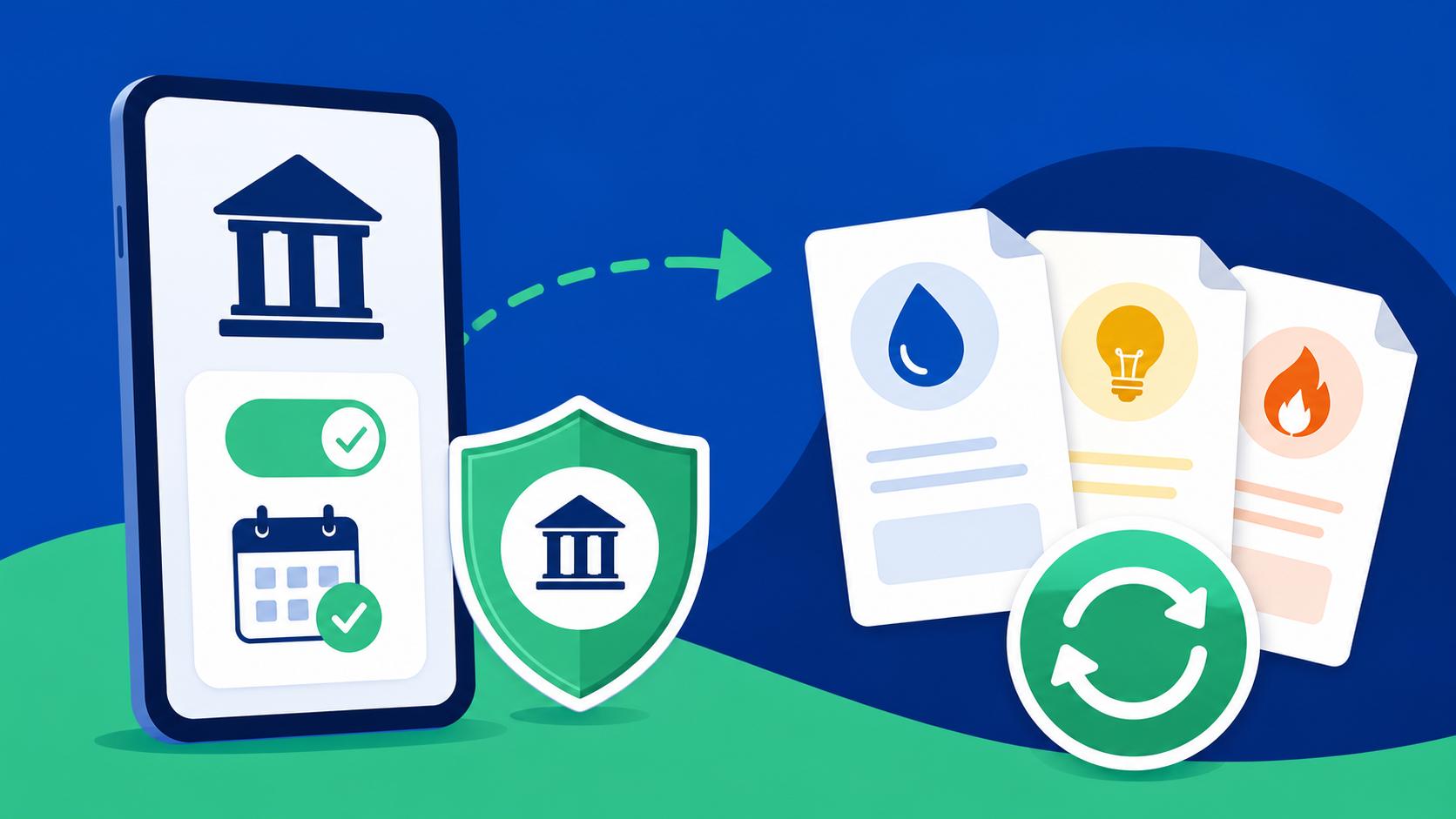
Portugal uses the SEPA direct debit scheme, the same framework used across the eurozone. There are three parties: you, as the debtor, your bank, and the utility, which is the creditor. The utility needs a valid authorization, called an Autorização de Débito em Conta, before it can pull money from your account.
That authorization can be created in two ways. Either the utility collects your IBAN and registers the mandate itself, or you create the authorization yourself through your bank, via an ATM or homebanking. The Multibanco route is the second option. It lets you control the details directly, including the maximum amount the creditor can take and how long the authorization stays valid.
The real advantage is control. Setting a cap on the authorization means that if an estimated electricity reading produces an absurd bill, the debit can be rejected rather than emptying your account. Many expats skip this protection. You should not.
Who Can Use the Multibanco Route
You need a debit card issued by a Portuguese bank that runs on the Multibanco network. Foreign cards, including most neobank cards issued from other countries, can withdraw cash at Multibanco machines but cannot reach the service menus where direct debits are managed. If you do not have a local account yet, see Opening a Bank Account in Portugal: Best Banks for Foreigners and Expats.
You also need to be the holder or co-holder of the account being debited. The utility contract and the bank account do not have to be in the same name, but the person creating the authorization must have authority over that account.
What You Need Before You Go to the ATM
The Creditor Details From Your Utility
This is where most people get stuck. To create the authorization at the ATM, you need two pieces of information from the utility:
- The creditor identifier, sometimes printed as “Identificação do Credor” or a number linked to direct debit payments
- The authorization reference, which is often tied to your customer or contract number and is sometimes labelled “Referência da Autorização” or “Nº de Autorização”
These usually appear on your bill in a box about payment methods, or in the customer area of the utility’s website or app under a section like “Débito Direto” or “Formas de Pagamento”. Some providers only issue the reference after you tell them you want to pay by direct debit, so you may need to request it through their website or app, or by phone.
Do not mix this up with the regular Multibanco payment reference on the bill. The “Entidade” and “Referência” used for one-off payments change every month and will not work for direct debit. You need the fixed creditor details.
Understanding the Bill Layout
Portuguese utility bills are dense. EDP bills in particular contain contracted power, consumption periods, taxes and audiovisual contributions, all in small print. Before setting up anything automatic, make sure you understand what you are being charged, because automatic payment makes it easy to stop checking. For a full breakdown, see How to read an EDP electricity bill: Taxes, bi-hourly tariffs, and peak hours.
Look closely at whether the bill is based on a real reading (“leitura real”) or an estimate (“estimativa”). Estimated bills can swing high or low, and setting a sensible maximum debit amount protects you from the high ones.
Getting Your Phone and Accounts Ready
Most utilities send SMS codes for account access or confirmations, and banks rely heavily on SMS verification. A Portuguese number makes life much easier. In the first few weeks, when I was waiting on contracts, I used an Airalo eSIM for data so I could log in to utility portals and translate bills on my phone, and I got a local SIM for the SMS side. See Getting a Portuguese SIM Card as a New Arrival for options.
If you are living in a room booked through Uniplaces or a similar platform where bills are bundled into rent, you may not need any of this. Your landlord holds the contracts. Before going further, check what your rental listing covers. What does “Despesas Incluídas” mean in a Portuguese rental advertisement? explains what “bills included” really means and where its limits are.
Step-by-Step: Creating the Direct Debit at a Multibanco ATM
The ATM Process
The menu wording can differ slightly depending on the machine’s software and your bank, but the structure is the same at every Multibanco ATM. Most machines let you switch the interface to English when you insert your card, but service menus sometimes stay partly in Portuguese, so the Portuguese terms are included below.
- Insert your Portuguese debit card, choose your language and enter your PIN.
- From the main menu, select the services option, usually labelled “Outros Serviços” or a similar “other services” heading, rather than withdrawals or payments.
- Choose “Débitos Diretos” (Direct Debits).
- Select the option to manage authorizations, often “Autorizações”, then choose to create a new one, labelled something like “Criar”, “Adesão” or “Nova Autorização”.
- Enter the creditor identifier exactly as provided by the utility.
- Enter the authorization reference. Double-check every digit, because a single typo will either be rejected or link to the wrong record.
- When prompted, set a maximum amount per debit (“Montante Máximo”). Choose a figure comfortably above your typical bill but low enough to stop an absurd charge.
- Set an expiry date if asked, or leave it open-ended if you plan to stay long-term.
- Review the summary screen carefully and confirm.
- Take the receipt and keep it. It is your proof that the authorization was created.
When you get to step 7, do not leave the limit blank to save time. A friend in Porto received a catch-up gas bill after months of estimates, and because she had set no cap, the whole amount was debited at once a few days before rent was due. A sensible cap would have bounced it, given her time to dispute the reading, and kept her rent money where it was.
What Happens After You Confirm
The authorization is registered with your bank almost straight away, but the utility does not always start collecting on its next bill. Depending on its billing cycle, the first bill or two may still arrive with a regular Multibanco payment reference. Pay those manually. Once the debit is active, bills usually show a line saying payment will be made by direct debit, along with the collection date.
Some utilities also want you to tell them in their customer area that you have switched payment method. If your next bill does not mention direct debit, log in or call to confirm they have picked up the authorization. Ask, in Portuguese if you can manage it: “Já tenho a autorização de débito direto criada, podem confirmar?” (I have already created the direct debit authorization, can you confirm?)
Managing, Changing and Cancelling Authorizations
The same “Débitos Diretos” menu lets you view existing authorizations, change the maximum amount or expiry date, and cancel them. This is useful when you move house. When I left my first Lisbon flat, I cancelled the water and electricity authorizations at the ATM on the same day I ended the contracts. That prevented a final bill from landing on an account I was about to close. For the full move-out sequence, see How to Cancel Utilities When Leaving a Portuguese Rental.
You can also block a specific creditor completely, or restrict debits so that only authorized creditors can collect. Under SEPA rules, you can also dispute an authorized debit with your bank for a set period after it is taken. Ask your bank how its dispute process works before you ever need it.
Comparing Your Payment Options and Avoiding Common Problems
Multibanco Direct Debit vs Other Payment Methods
| Method | Who creates the authorization | Control over limits | Best for | Main drawback |
|---|---|---|---|---|
| Direct debit created at a Multibanco ATM | You, through your bank | High, since you set the cap and expiry | Expats with a Portuguese bank card who want maximum control | Requires the correct creditor details from the utility |
| Direct debit created in your bank’s homebanking app | You, through your bank | High, similar to the ATM | People who prefer doing everything from their phone | Menu location varies by bank and app updates |
| IBAN given directly to the utility | The utility | Lower, unless you add limits later via your bank | People who want the fastest setup during signup | Less visibility into the mandate details |
| Manual payment by Multibanco reference each month | Nobody, since this is not automatic | Full, since you approve each payment | Short stays or people with unpredictable bills | Easy to forget, with risk of late charges |
| Bills included in rent | The landlord | None, since you pay rent only | Room rentals and short-term stays | You cannot see or control actual consumption |
If you would rather skip the ATM entirely, most Portuguese banking apps include a direct debit section with the same functions. See Paying utility bills automatically: Setting up SEPA Direct Debits on your bank app for that route. For a wider look at how the network functions, including MB Way, read The Multibanco System and MB Way: Portugal’s Unique Payment Network.
Problems Expats Run Into Most Often
The ATM rejects the reference. This almost always means the wrong number was used, usually the monthly payment reference instead of the fixed authorization reference. Go back to the utility’s customer area or call and ask specifically for the direct debit details: “os dados para débito direto”.
The utility keeps sending payment references. The authorization may exist on your bank’s side without the utility having linked it to your contract. Contact them, quote your contract number, and say the authorization is already created.
A debit bounces. If the bill exceeds your cap, or the account lacks funds, the debit fails and the utility typically reissues the bill with a payment reference. Pay it promptly. Repeated failures can lead the utility to cancel direct debit on its side.
Internet and mobile contracts behave differently. Telecom providers such as MEO, NOS and Vodafone often push direct debit as the default during signup and sometimes tie it to promotional pricing. If you are still choosing a provider, see Home Internet and Mobile Plans: Vodafone, MEO, and NOS Compared. Read the contract to see whether cancelling direct debit changes your monthly price.
Keeping an Eye on Bills Once Payments Are Automatic
The downside of automatic payment is that you stop noticing what you are paying. Make a habit of opening every bill email, even if you only skim the total. I check whether the reading is real or estimated and compare the total with the previous month. If the electricity bill jumps without a reason, I submit a meter reading through the provider’s app.
Some expats like a small smart plug or plug-in energy monitor to spot which appliances drain power, especially during Portugal’s chilly, damp winters, when electric heaters run constantly. These are easy to find on Amazon Spain, which delivers to mainland Portugal. A cheap monitor on your heater or dehumidifier helps you predict your bill before it arrives, so you can set your direct debit cap with confidence.
Finally, keep a simple record, whether a notes file or a spreadsheet, listing each utility, its creditor identifier, your authorization reference, the cap you set and the date you created it. When you move, change banks or need to dispute a charge, having everything in one place saves an afternoon of digging through emails and ATM receipts. For the wider picture on getting each service connected in the first place, Step-by-Step: Connecting Electricity (EDP) and Water in Your Name covers the contract side in detail.
Disclaimer
This article is for general informational purposes only and does not constitute professional advice. Laws, prices and regulations vary by location and change over time. Consult a qualified professional for guidance on your specific situation.