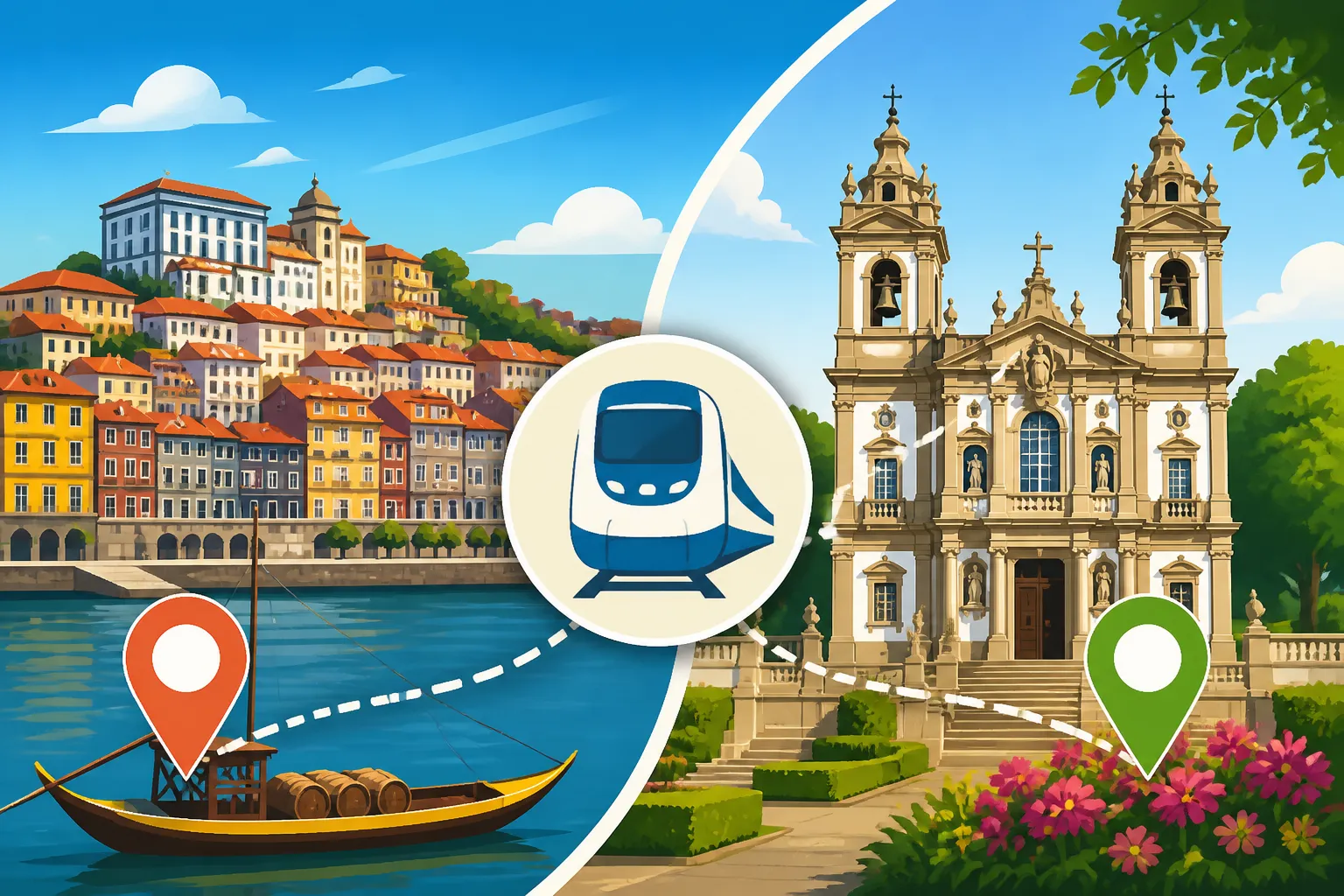
How to Visit Braga From Porto
Disclosure: This article contains affiliate links. If you buy through them, we may earn a commission at no extra cost to you. Read our full disclosure.
Ah, the charm of Porto is undeniable, isn't it? But sometimes, as expats, we get that little itch to explore beyond our immediate comfort zone, to see more of this beautiful country without the hassle of a major move or a complicated overnight trip. Many of you might be wondering about a day trip to Braga from Porto – how to get there, what to see, and whether it’s worth the journey. Trust me, it absolutely is, and navigating the logistics is far simpler than, say, getting your NIF sorted! This guide is going to walk you through everything you need to know to make that trip happen smoothly and enjoyably.
Why Venture North to Braga?
Braga often gets overlooked in the shadow of its more famous neighbors, Porto and Lisbon, but that's a real shame. Braga offers a distinct, almost ethereal charm that feels centuries apart from the bustling coastal cities. It’s Portugal's oldest city, often called the "Rome of Portugal" due to its rich religious history and abundance of churches – over 300, in fact! Imagine walking through cobbled streets where history whispers from every stone, surrounded by stunning Baroque architecture, and experiencing a slower, more traditional pace of life. It’s a fantastic contrast to the vibrant, often tourist-heavy energy of Porto.
For many of us who've grown accustomed to the rhythms of Portuguese life, Braga feels like stepping into a beautifully preserved postcard. It's a place where tradition holds strong, whether it's the elaborate Easter celebrations or the daily rituals of its devout community. The locals are incredibly welcoming, and while English might be less prevalent than in Porto, a few basic Portuguese phrases will go a long way and often be met with genuine smiles and helpful gestures. Plus, the food scene is distinctly Minho region, meaning heartier, richer fare – think Bacalhau à Braga (codfish Braga-style) or Pudim Abade de Priscos, a rich bacon pudding, which is far more delicious than it sounds. It’s a fantastic opportunity to deepen your understanding of Portuguese culture beyond the typical tourist traps.
Getting to Braga: Your Transport Options
Navigating public transport in a new country can feel like solving a particularly tricky Físicas problem, but I promise you, getting from Porto to Braga is wonderfully straightforward. You have a few excellent options, each with its own perks.
By Train: The Scenic and Stress-Free Route
For many expats, especially those of us who appreciate a good book and a gaze out the window, the train is the way to go. Portugal's train system, Comboios de Portugal (CP), is generally reliable, clean, and quite affordable.
The Journey from Porto Campanhã to Braga
Your journey will almost certainly start at Porto's Campanhã station. This is the main hub, easily accessible from anywhere in Porto via metro (the Campanhã stop is right there) or local buses. If you’re staying closer to the Ribeira or São Bento area, you can take a quick local train from São Bento to Campanhã (which is usually included in your ticket price to Braga, just confirm when buying). The trains that run to Braga are part of the urban lines (urbanos), making them frequent and commuter-friendly.
Buying tickets is simple. You can head to the ticket office at Campanhã station, use one of the self-service machines (which often have English language options), or, for maximum convenience, purchase them online through the CP website or platforms like Omio. A one-way ticket typically costs around €3.50 to €4.00, making it a very budget-friendly option. Children and seniors usually get discounts, so always ask!
The train ride itself is quite pleasant, winding through the Portuguese countryside. It takes approximately 1 hour and 15 minutes to 1 hour and 30 minutes, depending on the number of stops. You’ll see glimpses of smaller towns, lush green fields, and perhaps even some traditional Portuguese homes along the way. Trains usually run every 30 minutes to an hour, so you won't be left waiting long. It is wise to check the latest schedules on the CP website before you go, just to avoid any surprises, especially on weekends or public holidays. Remember, Portugal, like many places, tends to slow down a bit on these days!
Once you arrive at Braga train station, you're just a short walk from the city center. It’s well-located, meaning you can step off the train and immediately start exploring.
By Bus: An Affordable and Direct Alternative
If you're on a tighter budget or prefer a more direct route that avoids potential transfers within Porto, the bus is another fantastic choice. Portugal has a comprehensive bus network, and services between major cities like Porto and Braga are frequent and efficient.
Catching Your Bus from Porto
The main bus terminal in Porto is typically Campo 24 de Agosto, which is also a metro stop, making it easy to reach. Major bus companies like Rede Expressos offer regular services to Braga. Similar to train tickets, you can purchase bus tickets directly at the terminal, online via the bus company's website, or again, through integrated booking platforms like Omio. Prices are comparable to train tickets, usually in the €4-€7 range, and the journey takes about an hour.
What I appreciate about the bus is that sometimes it can be slightly quicker if you hit the right traffic, and it often drops you right in the heart of Braga, though the train station is also very central. The buses are comfortable, usually equipped with air conditioning, and offer a smooth ride. It’s worth noting that while the train offers a slightly more rustic, perhaps picturesque view, the bus usually sticks to the main highways.
Here’s a quick comparison of the two main public transport options:
| Transport Type | Travel Time (approx.) | Cost (one-way, approx.) | Departure Station (Porto) | Arrival Station (Braga) | Frequency | Notes |
|---|---|---|---|---|---|---|
| Train | 1h 15m – 1h 30m | €3.50 – €4.00 | Campanhã (or São Bento with transfer) | Braga Train Station | Every 30-60 mins | Scenic, comfortable, city center arrival. |
| Bus | 1h | €4.00 – €7.00 | Campo 24 de Agosto | Braga Bus Terminal | Multiple per hour | Direct, slightly wider range of departure times. |
By Car: Flexibility for the Adventurous
For those of you who've embraced the challenge of Driving in Portugal: Exchanging Your Foreign License to a Portuguese One, driving offers the ultimate flexibility. It allows you to explore Braga and its surroundings at your own pace, including some of the incredible sites just outside the city that public transport might not reach as easily.
The Drive and Tolls
The drive from Porto to Braga is relatively short, typically around 45-60 minutes via the A3 highway. The road quality is excellent, but do remember that Portuguese highways often have tolls. If you're renting a car, make sure it has a Via Verde transponder (or equivalent electronic toll payment system) to avoid headaches. If you've been living here for a while and have your own car, you're likely already familiar with Navigating the Portuguese Toll System: Via Verde and Electronic Tolls. The tolls for this route are not excessive, usually a few euros each way.
Parking in Braga city center can be a bit tricky, especially on busy days. There are underground car parks available (e.g., Parque da Praça do Município, Parque Central) which are convenient but come with hourly fees. For a day trip, this is a perfectly viable option, giving you the freedom to explore at leisure and maybe even pop over to the stunning Bom Jesus do Monte sanctuary without relying on taxis or local buses.
Navigating Braga Once You Arrive
Okay, you've made it to Braga! Now what? Don't fret; this city is incredibly walkable and manageable, even for those who prefer to wander aimlessly rather than follow a rigid itinerary.
On Foot: The Best Way to See the City Center
Braga's city center is relatively compact, making it a joy to explore on foot. From the train station, it’s a straightforward walk to the main attractions like the Braga Cathedral (Sé de Braga), Santa Bárbara Garden, and Praça da República (also known as The Arcada). Put on your comfy shoes, grab a coffee (or a meia de leite if you're feeling fancy, as you might know from Portuguese Coffee Culture and Restaurant Etiquette: Ordering Like a Local), and just let yourself get lost in the charming streets.
You'll discover hidden courtyards, artisan shops, and countless beautiful churches around every corner. It's often in these unexpected detours that you truly soak in the local atmosphere. The main pedestrian streets are lined with shops and cafes, making it a pleasant experience.
Local Buses and Taxis: Venturing Further Afield
While the city center is walkable, some of Braga's most iconic landmarks, like the Bom Jesus do Monte and Sameiro sanctuaries, are located on hills just outside the city. This is where local buses or taxis come in handy.
The local bus network in Braga is run by TUB (Transportes Urbanos de Braga). Buses to Bom Jesus do Monte (line 2) and Sameiro (line 88, often less frequent) are readily available from the city center, particularly near the bus terminal. A bus ticket is usually a couple of euros, and the ride up to Bom Jesus, in particular, is an experience in itself, offering great views as you ascend.
Alternatively, taxis and ride-sharing apps like Uber and Bolt are available in Braga. While more expensive than the bus, they offer convenience, especially if you're traveling with a group or have limited mobility. A taxi ride to Bom Jesus will likely set you back around €8-€12, which can be worthwhile for the direct route and saving your energy for climbing the famous staircase!
Making the Most of Your Day Trip to Braga
A day in Braga gives you ample time to see its highlights without feeling rushed. Here’s how to structure your day for maximum enjoyment.
Morning: Dive into History and Architecture
Start your day by heading straight to the heart of Braga: the Braga Cathedral (Sé de Braga). This magnificent structure is the oldest cathedral in Portugal, with parts dating back to the 11th century. You could spend a good hour exploring its various architectural styles, chapels, and the impressive treasury museum.
From there, wander through the historic center, making your way to the Praça da República. This bustling square is a great spot to people-watch and admire the Arcada, a beautiful neoclassical building. Grab a pastry and an espresso at a local pastelaria. Don't forget to meander through the Santa Bárbara Garden, a lovely baroque garden adjacent to the Archbishop's Palace, perfect for a moment of tranquility.
If you’re keen on exploring deeper, consider a guided walking tour. You can often find excellent local guides or even look into options through platforms like GetYourGuide, which often feature cultural tours that help you uncover the hidden gems and stories of Braga. These tours can add so much context to what you're seeing, truly enriching your experience.
Afternoon: Spiritual Heights and Panoramic Views
After a hearty lunch (perhaps some Arroz de Pato – duck rice!), dedicate your afternoon to Bom Jesus do Monte. This iconic sanctuary is Braga’s crown jewel and a UNESCO World Heritage site. You can reach it by local bus, taxi, or, if you're driving, directly to the top car park.
The main attraction is the monumental Baroque staircase, which zigzags up the hillside. Each level represents a different stage of the Stations of the Cross, adorned with fountains and allegorical statues. While many choose to climb the stairs for a spiritual or physical challenge, you can also take the funicular (an old-school water-powered elevator) to the top for a small fee – a novel experience in itself! The views from the top, overlooking Braga and the surrounding valley, are simply breathtaking.
Just a short distance from Bom Jesus (and often accessible by the same local transport routes) is the Sameiro Sanctuary, another significant pilgrimage site with equally stunning vistas. While perhaps less dramatic than Bom Jesus, it offers a serene atmosphere and beautiful gardens. If you're passionate about grand religious sites, it’s worth the detour.
Evening: Savor Braga's Culinary Delights
Before heading back to Porto, indulge in a delicious Braga dinner. The city is known for its traditional Minho cuisine. Seek out a local tasca (a traditional tavern) or a slightly more upscale restaurant for an authentic experience. As mentioned, Bacalhau à Braga is a must-try, but don't shy away from other regional specialties like Cabrito Assado (roasted kid goat) or Rojões à Moda do Minho (fried pork in a rich sauce).
After dinner, if you have time, take a final stroll through the illuminated city center. The Braga Cathedral and other historic buildings take on a magical glow at night, offering a different perspective than your daytime explorations.
Should you decide that a single day isn't enough to soak it all in – and many expats find themselves wanting more – Braga also has charming hotels and guesthouses. You could easily extend your stay for an overnight trip, perhaps booking something cozy on Booking.com to fully immerse yourself. This might be a tempting thought, especially if you're contemplating a deeper dive into the region, perhaps even exploring Where to Live in Portugal: Lisbon, Porto, Algarve, and Silver Coast Compared for a more permanent relocation in the future.
Practical Tips for Your Day Trip
- Footwear is Key: Seriously, those cobbled streets are charming but can be tough on your feet.
- Embrace Portuguese: While many tourist-facing staff might speak some English, a little Portuguese goes a long way. Download a translation app or keep a phrasebook handy. It’s part of integrating into Daily Life in Portugal: Supermarkets, Language, and Cultural Etiquette.
- Check Opening Hours: Especially for churches and museums, verify their opening and closing times, as they can vary and often close for lunch.
- Sun Protection: If visiting in warmer months, bring sunscreen, a hat, and plenty of water, especially if you plan to climb the Bom Jesus stairs.
- Flexibility: While planning is good, allow for spontaneity. Some of the best discoveries are made when you let yourself wander.
- Budgeting: Keep in mind that while Braga might be slightly less expensive than Lisbon or Porto, especially regarding Cost of Living in Portugal 2026: Detailed Budgets for Singles and Families, transportation and dining out still add up. Have some euros ready for smaller purchases or local markets.
- Internet Access: Make sure your mobile data plan works well, or consider an eSIM for seamless navigation and quick searches. This is where an Airalo eSIM can be a lifesaver, ensuring you always have connectivity without racking up huge roaming charges.
Going from Porto to Braga is more than just a trip between two cities; it’s an opportunity to experience another rich layer of Portugal's history and culture. It’s a wonderfully accessible adventure that I highly recommend to any expat looking to broaden their horizons here.
Disclaimer
The information provided in this guide is for general informational purposes only and is based on typical experiences and public data available as of the last update. While we strive to keep it accurate and up-to-date, details such as prices, schedules, and regulations in Portugal can change without notice. Always verify specific information, especially transport times and ticket costs, with official sources like Comboios de Portugal (CP), Rede Expressos, or local tourism boards before making your plans.