How to Pay With Multibanco and Cards in Portugal
Disclosure: This article contains affiliate links. If you buy through them, we may earn a commission at no extra cost to you. Read our full disclosure.
Stepping into Portugal, you're quickly enchanted by the vibrant culture, delicious food, and stunning landscapes. But then comes the moment you need to pay for something, and you're confronted with a system that might feel completely alien, especially if you're used to swiping a credit card everywhere. The famed Multibanco network, while incredibly efficient for locals, can be a source of real head-scratching for new expats and tourists. This guide will demystify the payment landscape in Portugal, helping you confidently navigate everything from ATMs to card acceptance and knowing when cash is king.
The Ubiquitous Multibanco: Your New Best Friend (or Foe)
Ah, Multibanco. For many of us who've lived here a while, it represents a certain rite of passage. It’s ingrained in Portuguese daily life in a way that’s hard to grasp until you experience it. You'll see those distinctive red and green machines everywhere, and they're far more than just cash dispensers.
What Exactly Is Multibanco?
Think of Multibanco not just as an ATM, but as an entire national interbank network. It’s a collective brand of the Portuguese interbank network, owned and operated by SIBS, a company that manages the country's payment system. This system allows for a staggering array of financial operations, not just cash withdrawals. While you might be accustomed to paying everything with a credit card from Visa or MasterCard, Portugal's local banking system, via Multibanco, offers functionalities that other countries typically separate across various services or platforms.
When you see a small shop, café, or even a local market stand displaying a sticker that simply says "MB" or "Multibanco," it means they accept payments directly through this local network. This is crucial because it doesn't automatically mean they accept your international Visa or MasterCard, even if it looks like a card machine. The system streamlines everything from paying utility bills and taxes to topping up your mobile phone, buying concert tickets, or even making online purchases via a unique reference number. It’s designed for efficiency within Portugal, and once you get the hang of it, you’ll find yourself relying on it for nearly everything. It’s a truly integrated system that dates back to the 1980s, evolving to meet the specific needs of Portuguese consumers and businesses.
Navigating the Multibanco ATM (Caixa Multibanco)
The physical Multibanco ATM, or Caixa Multibanco, is probably where you’ll first encounter the system. These aren't just for pulling out cash. In fact, they're mini-financial service centers. Beyond cash withdrawals and balance inquiries, you can perform dozens of operations at these machines. When you first arrive, it can feel overwhelming because the screens are usually in Portuguese by default, though many now offer an English option.
Let's walk through some common tasks. To withdraw cash (Levantamentos), it's straightforward: insert your card, choose "English" if available, select "Withdrawal," choose your amount, and take your cash and card. But where Multibanco truly shines is for payments. You’ll often hear a landlord or a service provider give you an "Entidade" (entity), "Referência" (reference), and "Montante" (amount) to pay a bill. You would navigate to Pagamento de Serviços (Service Payments), input these three numbers, and confirm. This is how many expats pay their rent, utility bills, or even government fees. It's incredibly efficient once you're used to it, allowing you to pay almost any bill at any ATM, any time. Another common use is topping up your mobile phone credit (Carregamento de Telemóvel). You select the option, choose your operator, enter your phone number, and the amount, and just like that, you're topped up.
It's a common frustration for newcomers: imagine trying to pay your internet bill, and the only method provided is a Multibanco reference. You need to understand that this isn't a ploy to inconvenience you; it's simply the way things are done here. For a deeper dive into this, check out our guide on How to use the Multibanco ATM network to pay taxes, tolls, and utility bills. It helps bridge that gap between what you expect and what's available.
MB Way: Multibanco for the Digital Age
If the physical Multibanco ATM is your new best friend, then MB Way is its incredibly convenient younger sibling. This app-based service has revolutionized how many Portuguese residents interact with the Multibanco network, bringing its powerful functionalities directly to your smartphone. MB Way allows you to pay for purchases in stores by scanning a QR code or entering a phone number, make instant transfers to other MB Way users (even if they bank with a different institution), and generate virtual cards for online shopping. It's fantastic for splitting restaurant bills with friends, paying small vendors who might not have a traditional card machine but do accept MB Way, or even confirming certain online transactions without needing your physical card details.
Setting it up requires a Portuguese bank account and a Multibanco card linked to it, along with a Portuguese phone number. You’ll typically activate it at a Multibanco ATM. Once activated, you link your bank card to the app. The benefit is immense: no more fumbling for cash or worrying if a small café accepts your international card. Many younger generations and even traditional comércio (commerce) now readily accept MB Way. However, the catch for many expats is often the "Portuguese bank account and phone number" part. While some online banks might integrate, traditionally, it requires local banking. If you've been wondering Linking your foreign phone number to MB Way (and why it usually fails), you're hitting one of the common expat hurdles right there. It truly is designed for local integration first. Ultimately, Using the MB Way app: Why it’s better than carrying cash in Portugal is a sentiment many residents share once they get it set up.
Credit and Debit Cards: A Familiar but Fickle Friend
You've got your trusty Visa, MasterCard, or perhaps an American Express. In most parts of the world, these are your golden tickets. In Portugal, they're widely accepted, but sometimes with a few caveats that can catch you off guard.
Acceptance of International Cards Visa, MasterCard, American Express
Generally, major international credit and debit cards like Visa and MasterCard are accepted at most larger establishments, supermarkets (Continente, Pingo Doce, Auchan), larger chain restaurants, and hotels. You'll usually see the logos displayed prominently. However, don't assume universal acceptance, especially in smaller, traditional businesses. It's not uncommon to walk into a charming local tasca, a tiny corner shop, or even some independent pharmacies and see a sign that says "Multibanco" with no mention of Visa or MasterCard. Or, even more subtly, they might have a card machine, but it’s configured only for the Multibanco network, meaning your foreign card simply won't work.
American Express users, I feel your pain. While Visa and MasterCard are fairly common, American Express acceptance is significantly lower. Many smaller businesses simply don't want to pay the higher processing fees associated with Amex. Always have a backup, preferably a Visa or MasterCard, and some cash if you rely on Amex. It's a hard lesson learned the first time you're stuck at the counter with a full basket and a card that won't process. Also, keep an eye on foreign transaction fees charged by your home bank. While not a Portuguese issue, it impacts your overall cost of using international cards.
The Preference for Debit (Cartão de Débito) over Credit
The Portuguese generally prefer debit cards (cartão de débito) over credit cards. This preference is deeply rooted in local banking culture, where consumers are accustomed to direct access to funds in their accounts. You'll notice that many card terminals in stores are designed primarily for debit transactions. While they often process international credit cards, sometimes the system defaults to debit, or the clerk might ask crédito ou débito? (credit or debit?). For locals, "Multibanco" is often synonymous with their debit card.
This preference stems from a system built on direct deductions rather than accumulating debt. For expats, this means that while your international credit card should work where Visa/MasterCard are accepted, sometimes the process might feel a little clunky compared to a local debit card. You might find some older terminals struggle with newer contactless credit cards, requiring a chip and PIN, or even occasionally a swipe (rare, but it happens). Don't be surprised if your credit card is treated more like a debit card transaction by the machine. This is one of the reasons why understanding Credit cards in Portugal: Why debit cards (Cartão de Débito) are preferred can save you some frustration.
Here's a quick comparison of common payment methods in Portugal:
| Payment Method | Acceptance | Ideal Use Cases | Pros | Cons |
|---|---|---|---|---|
| Local Multibanco Debit Card | Very High | Daily expenses, bill payments, small shops, online | Versatile, fast, local acceptance, MB Way | Requires Portuguese bank account |
| MB Way App | High | QR payments, peer-to-peer, online, small businesses | Convenient, secure, instant transfers | Requires Portuguese bank account/phone |
| International Visa/MasterCard Debit | High (Major shops, restaurants) | General spending, withdrawals | Widely accepted, familiar system | Foreign transaction fees, occasional refusal in small shops |
| International Visa/MasterCard Credit | High (Major shops, restaurants) | General spending, hotel/car rentals | Familiar, fraud protection | Foreign transaction fees, less favored than debit |
| American Express | Low | High-end hotels, select international retailers | Rewards programs | Very limited acceptance, higher fees |
| Cash (Numerário) | Universal | Small purchases, markets, tips, emergencies | Always accepted, no fees | Less secure, inconvenient for large sums |
Contactless Payments and Mobile Wallets
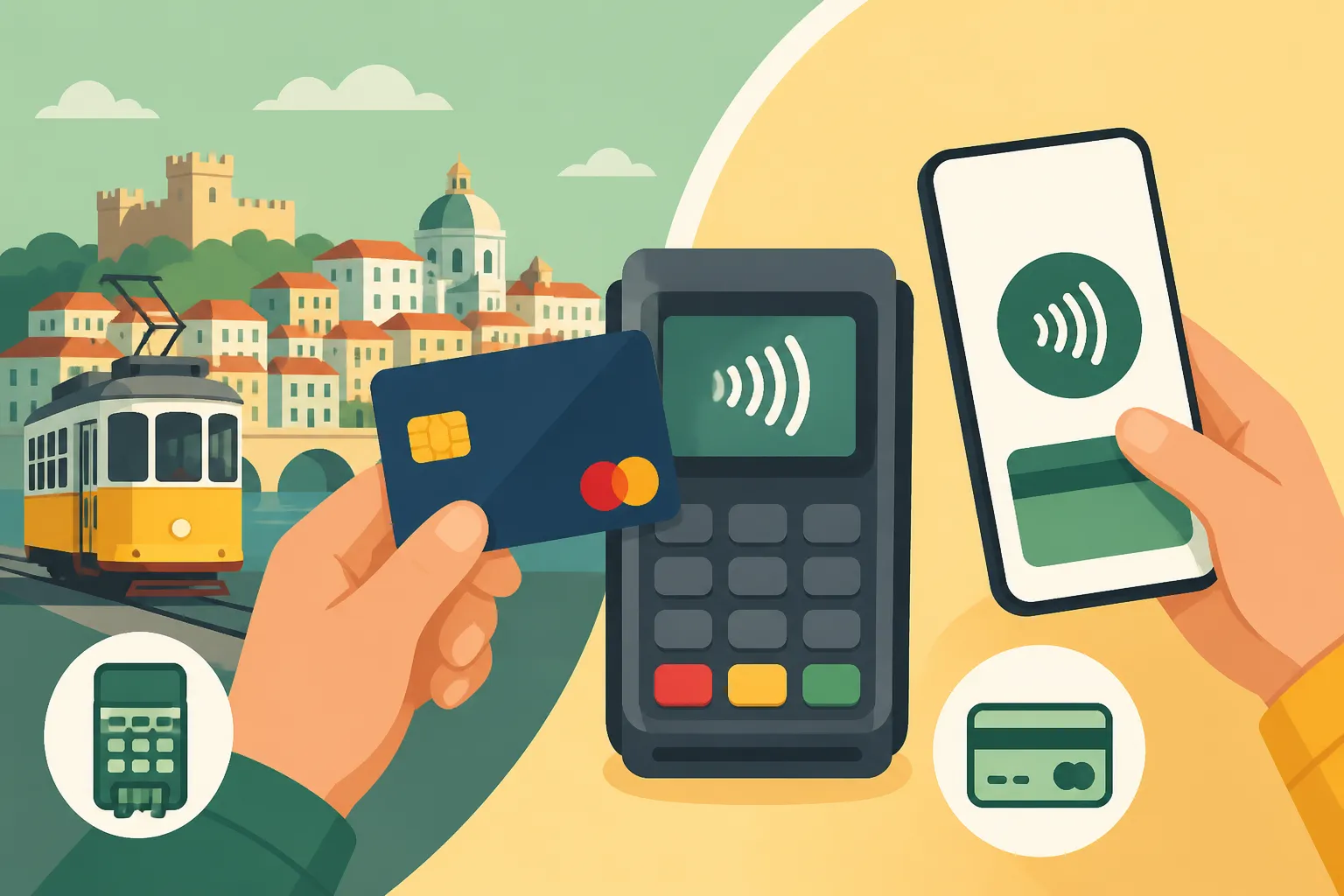
Portugal is catching up with contactless payments and mobile wallets like Apple Pay and Google Pay, but it's not as universally adopted as in some other European countries. Many newer card terminals in supermarkets, pharmacies, and larger retail chains now support tap-to-pay. You'll often see the contactless symbol. This is fantastic for convenience, and once you see it, you'll feel a little piece of home.
However, venture into smaller, more traditional shops, and you might find they either don't have the technology or don't have it activated. So, while it's great when it works, don't rely on it exclusively. Always be ready to insert your card and use your PIN, or even better, have some cash ready. It’s a bit of a patchwork, but the trend is definitely towards more contactless options, which makes those quick stops for coffee a breeze when available.
Cash is Still King (Sometimes): When to Have Numerário
Despite the rise of digital payments and the omnipresence of Multibanco, cash (numerário) still holds a significant place in Portuguese daily life. Ignoring this can lead to awkward moments or missed opportunities.
Scenarios Where Cash is Essential
There are definitive situations where having physical Euros in your pocket isn't just convenient, it's absolutely necessary. Imagine grabbing a freshly grilled sardine at a local feira (market), buying vegetables from a street vendor in a tiny village, or stopping for a €0.80 coffee and a pastel de nata at a generations-old café in Lisbon or Porto. Many of these charming, authentic spots operate on a cash-only basis. Their profit margins are slim, and the cost of card processing fees simply isn't worth it for small transactions.
Rural areas are another prime example. While larger towns will have ATMs, smaller villages might not, and many local businesses there may not even have a card machine. Even in cities, some taxis (especially independent ones, not app-based services like Bolt or Uber which do accept cards) might prefer cash, or their card machine might be "broken" (a common refrain). Tips in restaurants, cafes, or for service staff are almost always given in cash. It allows the money to go directly to the individual without any deductions. Don't let your reliance on cards prevent you from experiencing the true local flavors and interactions that often happen in cash-based environments.
Exchanging Currency and Avoiding ATM Fees
If you're bringing foreign currency, it's best to exchange it at a bank or a reputable currency exchange office, especially if you have a significant amount. Avoid exchanging money at airports or major tourist hubs unless absolutely necessary, as the exchange rates are usually unfavorable.
For withdrawing cash from an ATM, using a Multibanco machine (the red and green ones from SIBS) is generally the safest bet for fair fees, as long as your home bank doesn't charge exorbitant foreign ATM fees. However, you'll also see many independent ATMs, most notably Euronet, particularly in tourist-heavy areas. These machines are notorious for high fees and poor exchange rates. They'll often present you with a dynamic currency conversion option, asking if you want to be charged in your home currency. Always decline this and choose to be charged in EUR, as it usually results in a better exchange rate from your own bank. Our post on How to avoid ATM withdrawal fees from Euronet machines in tourist areas provides essential tips to save you money. Wise (formerly TransferWise) is a popular option for expats to manage their money internationally, offering good exchange rates for transfers to EUR, which you can then withdraw from a Portuguese bank account once set up.
Practical Tips for Expats and Tourists
Navigating payments in a new country can be tricky, but a few strategies will make your life in Portugal much smoother.
Always Have Multiple Payment Options
The golden rule in Portugal is: never put all your eggs in one basket. Always carry a combination of a local Multibanco debit card (once you have a Portuguese bank account), at least one international Visa or MasterCard (both debit and credit if possible), and a decent amount of cash. For daily living, a local debit card linked to MB Way will be your primary workhorse. Your international credit card serves as a backup for larger purchases and online transactions, and a small stash of Euros will get you through those cash-only moments or emergencies.
Picture this: you're trying to book a train ticket from Lisbon to Porto through Omio, or a local experience via GetYourGuide, and for some reason, your usual credit card isn't going through. Having a second card, or knowing you can generate a virtual MB Way card, can save the day. Similarly, when booking accommodations on Booking.com, while they widely accept international cards, it’s always good to have alternatives.
Language and Communication at Point of Sale
A little bit of Portuguese goes a long way. Learning basic phrases like Com cartão, por favor (With card, please) or Em dinheiro (In cash) will make transactions smoother. If they ask Débito ou Crédito? and you're using an international credit card, usually say Crédito, although often the machine will process it as a direct payment anyway. When you see an "MB" sign, understand that it signifies the local Multibanco network, and be prepared for potential issues with non-Portuguese cards if no other international card logos are visible. Don't be shy about clarifying if they accept cartão internacional (international card) or specifically mention Visa/MasterCard.
Online Purchases and Booking Services
For online purchases, especially for services within Portugal, you'll often encounter the Multibanco reference payment system. This requires you to receive an Entidade, Referência, and Montante for your purchase, which you then pay via a Multibanco ATM or the MB Way app. This is common for purchasing tickets for local events, paying for government services, or even some smaller e-commerce sites.
International platforms like Omio for train and bus tickets, GetYourGuide for tours and activities, and Booking.com for accommodation are generally well-equipped to handle international credit and debit cards. They are designed for a global audience, so they typically offer more familiar payment gateways. However, if you find yourself using a purely Portuguese website, be prepared for the Multibanco reference option. For instance, when buying train tickets directly through Comboios de Portugal (CP), you might use your credit card or be given a Multibanco reference to pay. It’s another example of how the local system is interwoven even with modern digital services. Knowing these nuances will help you navigate your new life in Portugal with much less stress.
Disclaimer
The information provided in this guide is intended for general informational purposes only and does not constitute financial or legal advice. While we strive to keep the information up-to-date and accurate, payment systems and regulations in Portugal can change. Always verify information with official sources or consult with a qualified local professional for specific financial or legal concerns.