How to Learn Enough Portuguese for a Two-Week Trip
Disclosure: This article contains affiliate links. If you buy through them, we may earn a commission at no extra cost to you. Read our full disclosure.
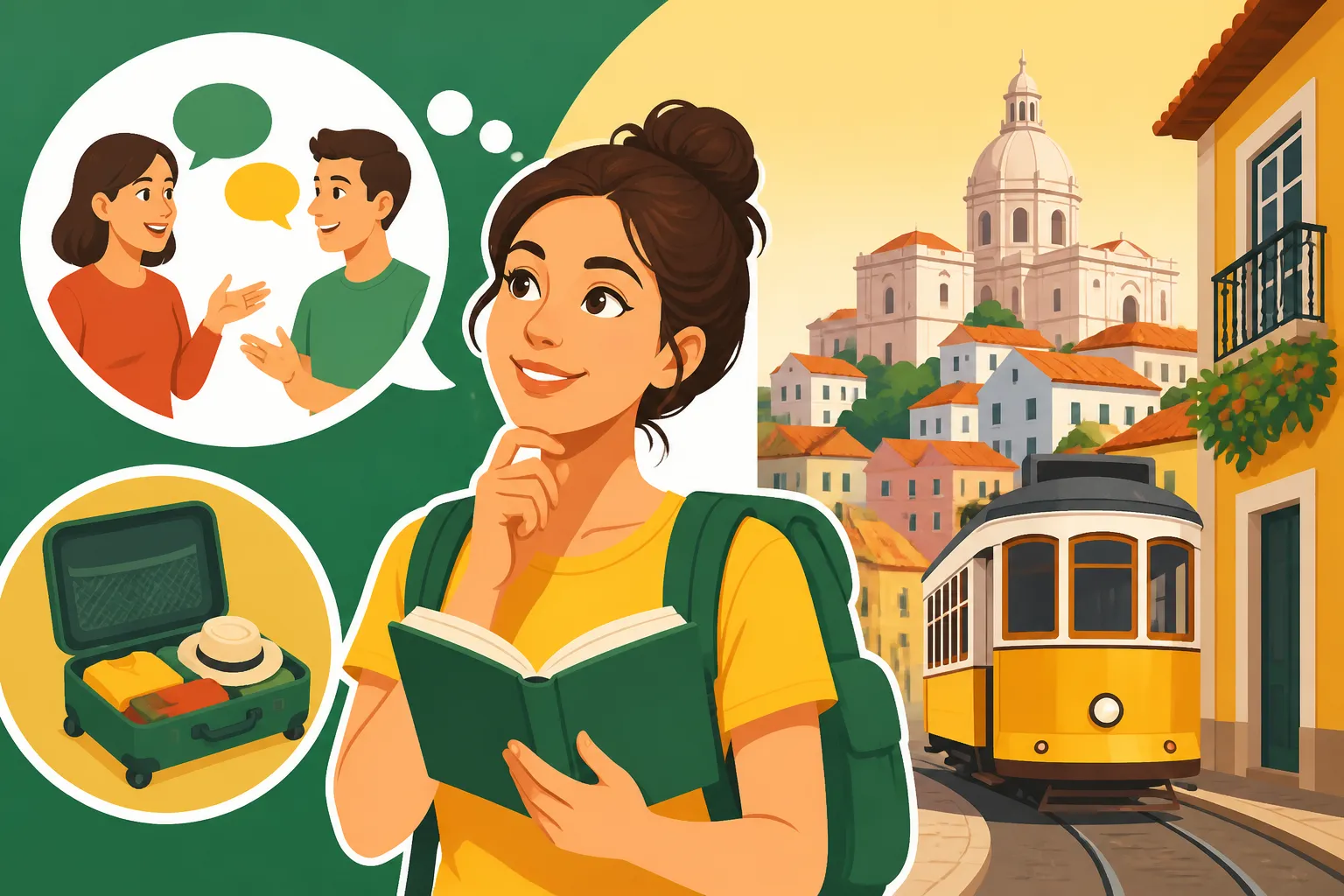
Arriving in Portugal without a word of Portuguese can feel a bit like showing up to a party where everyone’s speaking a secret code. You might manage, sure, especially in the big cities, but you'll definitely miss out on those truly special, authentic interactions. This guide isn't about becoming fluent in two weeks – that's a tall order even for the most dedicated student – but it will equip you with the essential phrases and practical strategies to navigate your trip with confidence, connect with locals, and truly enrich your experience in this beautiful country.
Why Even Bother with Portuguese for a Short Trip?
As expats who've lived here for years, we’ve seen countless visitors arrive with a mix of excitement and apprehension about the language. It’s a common misconception that everyone in Portugal speaks English, especially in tourist areas. While many do, particularly younger generations and those working directly in tourism, assuming so can really limit your experience. Trust me, the effort you put in, no matter how small, will pay dividends.
The Warmth of "Obrigado" and "Olá"
There's an undeniable charm that comes with speaking even a few words of the local language. Portuguese people are incredibly warm and welcoming, and they genuinely appreciate it when foreigners make an effort. It’s not about perfect grammar or accent; it's the gesture itself that matters. I remember my first few weeks trying to order a simple coffee. I butchered the pronunciation every single time, but the baristas at my local pastelaria would always smile, correct me gently, and sometimes even give me a little pastry on the house. That small effort transformed a transactional interaction into a genuine human connection.
Even a simple "Olá" (Hello) or "Bom dia" (Good morning) can break the ice. It shows respect and a willingness to engage, which immediately sets a positive tone. When you try, you’re often met with a genuine smile and an encouraging nod, and sometimes even a switch to English if the local is comfortable, just because you tried first. It’s a powerful tool for building rapport, even in the briefest encounters.
Navigating Beyond Tourist Bubbles
Lisbon and Porto are well-equipped for English speakers, especially in the central districts, but Portugal is so much more than its two biggest cities. Venture into a smaller town like Nazaré for fresh seafood, explore the historical wonders of Évora, or get lost in the winding streets of a less-trodden bairro in Alfama, and you'll quickly find that English becomes less prevalent. This is where your basic Portuguese will shine.
Imagine sitting in a tiny, family-run tasca where the menu is handwritten and the elderly owner doesn't speak a word of English. Being able to ask "O que é isto?" (What is this?) or point and say "Eu queria isto, por favor" (I would like this, please) can turn a potentially awkward situation into a delightful culinary adventure. This is where the real Portugal reveals itself – in the local markets, the neighborhood cafes, and the hidden gems far from the main squares. For more tips on blending in, check out our guide on Daily Life in Portugal: Supermarkets, Language, and Cultural Etiquette.
Small Efforts, Big Rewards
The reward for learning a bit of Portuguese goes beyond just practicality. It opens doors to cultural insights, humor, and a deeper understanding of the local way of life. Suddenly, that polite nod from a shopkeeper becomes a brief conversation about the weather, or a quick exchange at the market leads to trying a local fruit you’d never encountered. You’ll find yourself feeling more integrated, less like an observer, and more like a participant in your travel experience.
It can feel daunting, especially with European Portuguese's unique sounds and sometimes rapid-fire delivery. But remember, you’re not aiming for perfection. You're aiming for connection. The small phrases you pick up will not only make your two-week trip smoother but also far more memorable and enriching. They're your personal key to unlocking a layer of Portugal that many tourists unfortunately miss.
Essential Phrases to Master and How to Practice Them
Alright, let’s get down to business. You don’t need a vocabulary of a thousand words, but a solid grasp of about 20-30 key phrases can make a world of difference. Focus on these categories, and practice them out loud until they feel somewhat natural.
Greetings, Goodbyes, and Basic Politeness
This is your foundation. Politeness is highly valued in Portuguese culture, and a simple "please" and "thank you" goes a very long way.
- Olá (Oh-LAH): Hello. Use it anytime, anywhere.
- Bom dia (bohN DEE-ah): Good morning (until about lunchtime).
- Boa tarde (BOH-ah TAR-deh): Good afternoon/evening (from lunch until dusk).
- Boa noite (BOH-ah NOY-teh): Good night (used when leaving in the evening or saying goodnight).
- Adeus (ah-DEH-oosh): Goodbye (can be a bit formal, often implies a longer parting).
- Até já (ah-TEH zhah): See you soon/in a bit (very common, friendly).
- Por favor (por fah-VOR): Please. Always, always use this!
- Obrigado / Obrigada (oh-bree-GAH-doo / oh-bree-GAH-dah): Thank you. Crucially, men say obrigado and women say obrigada. It's about who is speaking, not who is being thanked. Get this right, and you'll score major points.
- De nada (dee NAH-dah): You're welcome.
- Desculpe (desh-CUL-peh): Excuse me / Sorry (use for bumping into someone, interrupting, or getting attention).
- Com licença (cohN lee-SEN-sah): Excuse me (to pass through a crowd, or to politely ask for something).
Practice these by simply saying them whenever you encounter someone. Before you even try to ask a question, greet them. Before you walk away, say thank you. It builds muscle memory and confidence. And remember, when meeting people, understanding Portuguese greeting etiquette: When to use Beijinhos vs Handshakes can be very helpful.
Ordering Food and Drinks with Confidence
Ah, the heart of Portuguese culture! Being able to order in Portuguese is not just about getting what you want; it’s about participating in the daily ritual.
- Eu queria… por favor (eh-oo kree-AH… por fah-VOR): I would like… please. This is your go-to phrase for ordering almost anything.
- Uma bica, por favor (OO-mah BEE-kah, por fah-VOR): An espresso, please. (In Lisbon. In Porto, you'd ask for um cimbalino).
- Um galão, por favor (ooN gah-LAH-ooN, por fah-VOR): A large milky coffee, please.
- Um copo de água (ooN COH-poo dee AH-gwah): A glass of water.
- A conta, por favor (ah CON-tah, por fah-VOR): The bill, please.
- O que é isto? (oo keh EH EE-shtoo?): What is this? (Point at menu items).
- Sem glúten (sayN GLOO-tehn): Gluten-free.
- Vegetariano / Vegan (veh-jeh-tah-ree-AH-noo / VEE-gahN): Vegetarian / Vegan.
Don't be shy about trying to order in Portuguese. Even if you stumble, the staff will appreciate the effort. And trust me, understanding Portuguese Coffee Culture and Restaurant Etiquette: Ordering Like a Local will make your dining experiences infinitely better. For more specific coffee orders, check out How to order coffee in Portugal: Bica, Meia de Leite, Pingado, and Galão. When it comes to paying, remember to check Tipping culture in Portugal: Do you leave 10% or just round up the bill?
Asking for Directions and Getting Around
Navigating a new city can be tricky, but knowing a few directional phrases can save you a lot of time and frustration.
- Onde é…? (OND eh…?): Where is…? (e.g., Onde é a estação? – Where is the station?).
- Direito (dee-REY-too): Straight ahead.
- À esquerda (ah es-KER-dah): To the left.
- À direita (ah dee-REY-tah): To the right.
- Perto daqui? (PER-too dah-KEE?): Near here?
- Longe daqui? (LON-jeh dah-KEE?): Far from here?
- Um bilhete para…? (ooN beel-YET-teh PAH-rah…?): A ticket for…?
When you're trying to get from A to B, especially if you're venturing out of the main tourist hubs, these phrases combined with a map app will be your best friend. For longer journeys across Portugal, you might use services like Omio to book your train or bus tickets, but even then, a little local language for initial queries at the station can be a huge help. Get more insights into Public Transport and Driving in Portugal: Trains, Tolls, and Licenses.
Shopping and Everyday Transactions
Whether you're hitting up a local mercado or just buying a souvenir, these phrases are practical.
- Quanto custa? (KWAN-too COOS-tah?): How much does it cost?
- Quero este/essa (KEH-roo ESH-teh/ESS-ah): I want this/that (este for masculine, essa for feminine).
- Tem…? (tayN…?): Do you have…? (e.g., Tem pão? – Do you have bread?).
- Sim (seeN): Yes.
- Não (nah-ooN): No.
- Muito obrigado/a (MOO-eeN-too oh-bree-GAH-doo/dah): Thank you very much.
At supermarkets like Continente or Pingo Doce, the cashier might ask "Tem NIF?" (Do you have a tax number?). As a tourist, you can just say "Não, obrigado/a" if you don't have one, or provide it if you do. Knowing about Grocery Shopping in Portugal: Continente, Pingo Doce, Auchan, and Mercados can further improve your daily transactions.
Essential Portuguese Phrases for Travelers
Here’s a quick reference table for the phrases we just covered, complete with pronunciation tips to help you get started:
| English Phrase | Portuguese Phrase | Pronunciation Tip | Context/Use |
|---|---|---|---|
| Hello | Olá | oh-LAH | General greeting |
| Good morning | Bom dia | bohN DEE-ah | Until midday |
| Good afternoon/evening | Boa tarde | BOH-ah TAR-deh | Midday to dusk |
| Good night | Boa noite | BOH-ah NOY-teh | Evening, when leaving or saying goodnight |
| Goodbye | Adeus | ah-DEH-oosh | Formal goodbye |
| See you soon | Até já | ah-TEH zhah | Informal, very common |
| Please | Por favor | por fah-VOR | Essential politeness |
| Thank you (male speaker) | Obrigado | oh-bree-GAH-doo | When a man is speaking |
| Thank you (female speaker) | Obrigada | oh-bree-GAH-dah | When a woman is speaking |
| You're welcome | De nada | dee NAH-dah | Standard response to thanks |
| Excuse me / Sorry | Desculpe | desh-CUL-peh | For apologies or getting attention |
| Excuse me (to pass) | Com licença | cohN lee-SEN-sah | To ask permission to pass |
| I would like… | Eu queria… | eh-oo kree-AH… | Ordering food/drinks, asking for items |
| The bill, please | A conta, por favor | ah CON-tah, por fah-VOR | In restaurants, cafes |
| Where is…? | Onde é…? | OND eh…? | Asking for directions |
| How much does it cost? | Quanto custa? | KWAN-toh COOS-tah? | Shopping, asking prices |
| Do you speak English? | Fala inglês? | FAH-lah een-GLESH? | When you need help in English |
| Yes | Sim | seeN | Affirmative |
| No | Não | nah-ooN | Negative |
Strategies for Quick Learning and Immersion
You only have two weeks, so efficiency is key! It’s not about intense study, but rather smart exposure and consistent, small efforts.
Leverage Language Learning Apps and Online Resources
In the weeks leading up to your trip, dedicating even 10-15 minutes a day to a language app can make a huge difference. Duolingo is a popular choice for its gamified approach, making learning feel less like a chore. Memrise is great for memorizing phrases and vocabulary, often with native speaker audio and video clips, which is crucial for getting the specific sounds of European Portuguese right. Babbel offers more structured lessons if you prefer that approach. The key is consistency. Focus on the travel-related topics they offer, like "Greetings," "Restaurant," or "Directions."
Remember that not all apps distinguish between European and Brazilian Portuguese. Make sure you're getting European Portuguese! Some online resources like Practice Portuguese or Pimsleur specifically focus on the European dialect, offering fantastic audio lessons that help with pronunciation and intonation. These tools will be your best friends for building a foundational vocabulary and getting your ear attuned to the language. If you're really serious about language learning beyond a two-week trip, check out Learning European Portuguese: Top Apps, Tutors, and Free Government Classes.
Dive into Portuguese Media and Music
Before you even step on the plane, start exposing yourself to Portuguese sounds. On Netflix, search for Portuguese shows (there are many great ones, like "Glória" or "Rabo de Peixe") and watch them with Portuguese subtitles turned on. You don't need to understand every word; just let the rhythm and sounds wash over you. This helps train your ear and makes it less jarring when you hear it spoken in real life.
Listen to Portuguese music, especially Fado, which is rich in emotion and often has clear pronunciation. Even if you don’t grasp the lyrics, you’ll start to internalize the cadence of the language. Spotify and YouTube are excellent for this. The goal here isn't comprehension but familiarity, so that when you arrive, the language doesn’t feel entirely alien. This passive immersion is surprisingly effective for short-term learning.
Embrace Mistakes and Local Interactions
This is perhaps the most important piece of advice: do not be afraid to make mistakes. Portuguese people are incredibly understanding and patient, especially with foreigners who are trying. In fact, they often find it endearing. You will mispronounce words, you will use the wrong gender, and you will mix up phrases. It's all part of the process!
Use your few phrases at every opportunity. Order your coffee in Portuguese, ask for the bill, greet the hotel staff (you might have booked through Booking.com), or thank your tour guide (perhaps from GetYourGuide). Even if they switch to English, you initiated the interaction in Portuguese, and that's what counts. These small wins build confidence and make the whole experience more rewarding. The more you try, the more comfortable you'll become, and the more locals will engage with you.
Carry a Phrasebook or Digital Translator
While the goal is to speak, having a backup is always smart. A small, pocket-sized phrasebook can be invaluable, especially if your phone battery dies or you're in an area with no signal. Highlight the most crucial phrases so you can quickly flip to them.
Even better, download Google Translate and its offline Portuguese dictionary before you leave home. This allows you to translate words or even entire sentences on the fly, without needing an internet connection. It’s perfect for those moments when you’re completely stumped or need to understand a complicated response. Just use it as a tool, not a crutch. Try to articulate your question first, and only pull out the translator if you truly hit a wall.
Beyond the Words: Cultural Nuances and Gestures
Language isn't just about vocabulary and grammar; it's deeply intertwined with culture. Understanding a few cultural nuances will help your phrases land better and prevent misunderstandings.
Understanding the Art of the Portuguese Pause
One thing you might notice in conversations with Portuguese people is that they sometimes take their time to respond. Unlike some cultures where silence might be quickly filled or seen as awkward, in Portugal, a pause can simply mean someone is listening, processing what you've said, and formulating their thoughts. Don't rush to fill the silence or assume they haven't understood you. Give them a moment.
This isn't about being slow; it's about being thoughtful and sometimes a bit indirect, especially compared to more fast-paced conversational styles. If you're asking a question and there's a slight delay, resist the urge to rephrase it immediately. Wait for their response. This patience will be appreciated and can help you avoid unintentionally interrupting someone.
The Power of Body Language and Hand Gestures
While you're focusing on words, don't forget the universal language of body language. A warm smile, open posture, and direct eye contact (but not overly intense) can convey friendliness and approachability, even if your Portuguese isn't perfect. Portuguese people tend to be quite expressive with their hands in conversation, so observe and adapt if it feels natural to you.
There are also a few specific gestures that can be handy. For example, a quick nod with an upward flick of the head often means "no" or "what do you want?" and can be confusing at first. Don't be afraid to ask for clarification if a gesture leaves you scratching your head. Generally, a genuine smile and an eager-to-learn attitude will smooth over any gestural mishaps.
Navigating the "Yes, No, Maybe" of Portuguese Conversation
Portuguese politeness can sometimes lead to indirectness, especially when it comes to saying "no." A direct "não" might sometimes be softened with "talvez" (maybe), "logo se vê" (we'll see), or a more vague "pois é" (that's how it is/indeed). This isn't about being evasive, but rather a cultural preference for maintaining harmony and avoiding blunt refusal.
If you're asking for something, and you get a non-committal answer, it's often a polite way of saying no or that it's difficult. It can be frustrating if you're used to more direct communication, but understanding this nuance can help you interpret responses more accurately and adjust your expectations. Don't press too hard if you sense resistance; a polite "ok, obrigado/a" will always be a gracious response. This is just one of many Expat life hacks: Never rush a coffee, and other daily cultural adjustments that will make your time in Portugal easier.
Disclaimer
The information provided in this guide is intended for general informational purposes only and does not constitute professional advice. While we strive to offer accurate and up-to-date content, administrative procedures, regulations, and recommendations in Portugal can change rapidly. Always cross-reference information with official sources or consult with relevant professionals for specific circumstances. Relying solely on the information presented here is at your own risk.