Best Day Trips From the Algarve
Disclosure: This article contains affiliate links. If you buy through them, we may earn a commission at no extra cost to you. Read our full disclosure.
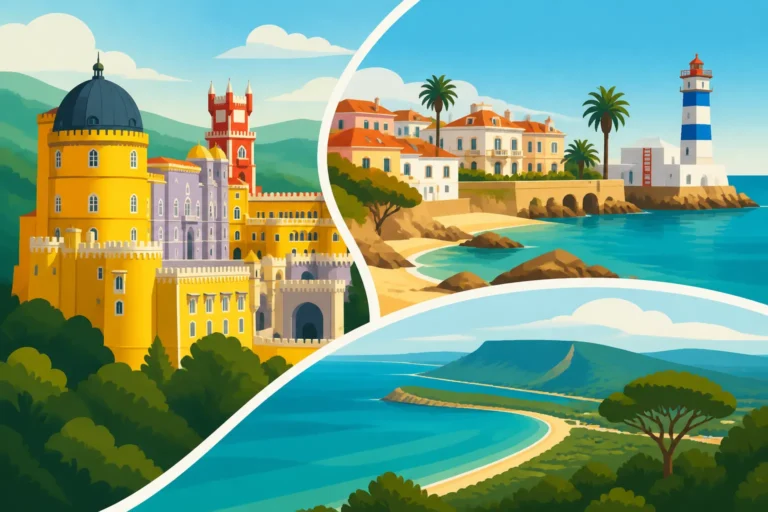
When spending time in southern Portugal, it is remarkably easy to get caught in the relaxed bubble of beach resorts, golden cliffs, and seaside cocktails. However, limiting your itinerary to the immediate coastline means missing out on centuries of Moorish history, dramatic mountain ranges, pristine nature reserves, and authentic market towns tucked away in the countryside. This guide covers the best day trips from the Algarve, offering detailed itineraries, practical travel advice, and hyper-local insights to help you experience the full breadth of this captivating region.
Historical and Cultural Escapes into the Algarve Hinterland
While the coast has transformed dramatically over recent decades, heading just twenty to thirty minutes inland brings you into the heart of traditional Portuguese life. The interior landscape, known locally as the Barrocal, is marked by rolling hills, limestone outcrops, olive groves, and ancient towns that have maintained their historical rhythm despite the march of modern tourism.
Silves: Moorish History and Red Sandstone Castles
Silves stands as a monumental reminder of the region’s medieval past, when it served as the Moorish capital of the Kingdom of the Algarve (Al-Gharb). Approaching the town, the first thing you notice is the imposing Castelo de Silves, constructed from striking red sandstone (silves sandstone). Wandering up the narrow, cobbled streets toward the castle, you pass whitewashed cottages adorned with intricate azulejo tiles and Bougainvillea draping over stone walls.
Inside the castle walls, you can walk along the restored ramparts for breathtaking 360-degree views of the Arade River valley and surrounding citrus orchards. Just below the fortress lies the Silves Cathedral, built on the site of a former grand mosque following the Christian Reconquest. After exploring the historical sites, head down to the riverfront plaza to sit at a shade-covered café. Ordering a freshly squeezed local orange juice or a strong bica (espresso) while watching storks nest atop ancient chimneys is an essential local ritual. For those considering settling down in this region, comparing interior towns with coastal hubs is a vital step, which is explored thoroughly in The Algarve for Expats: Lagos, Faro, and Tavira Compared.
Loulé: Artisan Markets, Golden Altars, and Local Heritage
Loulé is the bustling cultural and commercial engine of the Algarve interior. Famous across Portugal for its neo-Moorish municipal market building, Loulé offers an extraordinary window into regional gastronomy and traditional craftsmanship. Visiting on a Saturday morning reveals a vibrant atmosphere as local farmers bring fresh figs, carobs, almonds, goat cheeses, and newly harvested olives to sell alongside daily catches from Atlantic fishermen.
Beyond the main market hall, spend time getting lost in the labyrinth of old pedestrian streets. Loulé has made a concentrated effort to preserve traditional crafts through community workshops where you can observe artisans weaving palm leaves (empreita), hammering copper copperware, and throwing clay pottery. Don’t miss the Castle of Loulé, which houses an archæological museum, and the nearby Church of São Clemente, whose bell tower was originally a Moorish minaret. If you plan to extend your day trip into an overnight stay to experience Loulé’s atmospheric evening dining scene, checking accommodation options on Booking.com gives you access to converted boutique townhouses tucked inside the old city walls.
Alte and Querença: Traditional Whitewashed Villages of the Barrocal
For a complete escape from urban life, driving into the quiet villages of Alte and Querença offers a gentle glimpse into rural Portuguese traditions. Alte is frequently cited as one of the most picturesque villages in the entire country. Built around two natural spring-fed pools—Fonte Pequena and Fonte Grande—it was historically the central gathering place for local women to wash clothes and draw fresh water.
Today, Fonte Grande serves as a tranquil park where locals and visitors submerge their feet in the cool mountain waters on hot afternoons. The surrounding streets feature pristine whitewashed facades with colorful window trims and intricate lattice-patterned chimneys, an architectural signature unique to the region. A short drive away, the village of Querença sits perched on a hilltop overlooking deep valleys. It is renowned for its production of cured meats, particularly farinheira and chouriço, as well as high-quality local honey. Walking through these villages feels like stepping back decades, providing an authentic counterweight to the developed resort corridors along the coast.
| Destination | Region / Zone | Key Highlights | Ideal For |
|---|---|---|---|
| Silves | Central Hinterland | Red Sandstone Castle, | History lovers, cultural walk, |
| Gothic Cathedral | scenic views | ||
| Monchique | Western Mountains | Foia Peak, Thermal | Hiking, mountain air, local |
| Springs, Medronho | gastronomy | ||
| Sagres & Ponta | Far West Coast | Dramatic Headlands, | Ocean vistas, maritime history, |
| da Piedade | Historic Fortress | sunset watching | |
| Ria Formosa | Eastern Coast | Barrier Islands, | Birdwatching, boat tours, fresh |
| Salt Pans, Olhão | seafood | ||
| Mértola | Lower Alentejo | Islamic Museum, | Deep history, quiet river scenery, |
| Guadiana River | off-the-beaten-path travel |
Mountain Air and Coastal Cliffs: Nature Day Trips
The geography of the region extends far beyond sandy beaches. Within an hour’s drive, you can transition from sea-level lagoons to sub-tropical mountain crests, offering completely different ecosystems, climates, and outdoor activities.
Serra de Monchique: Thermal Springs and Panoramic Mountain Peaks
When the summer heat along the coast becomes oppressive, heading up into the Serra de Monchique mountain range provides immediate relief. The air grows noticeably cooler and fresher as you wind upward through dense forests of cork oak, chestnut trees, and tall eucalyptus. The highest point in the Algarve, Fóia, stands at 902 meters above sea level. On a clear day, standing at the Fóia viewpoint allows you to gaze all the way down to the ocean at Sagres and Portimão.
On the slopes below the peak lies Caldas de Monchique, a historic thermal spa village nestled in a lush ravine. The warm, mineral-rich spring waters here have been utilized for therapeutic purposes since Roman times. Strolling under the shaded canopy of ancient trees in Caldas feels worlds away from the beach. Before leaving the mountain, stop at a traditional hillside tasca to try local specialties such as wild boar stew (jabalí), grilled black pork (porco preto), and a small sip of Medronho—the potent, firey fruit brandy distilled by hand in hidden mountain stills.
Ponta da Piedade and Sagres: Dramatic Headlands and Maritime Legend
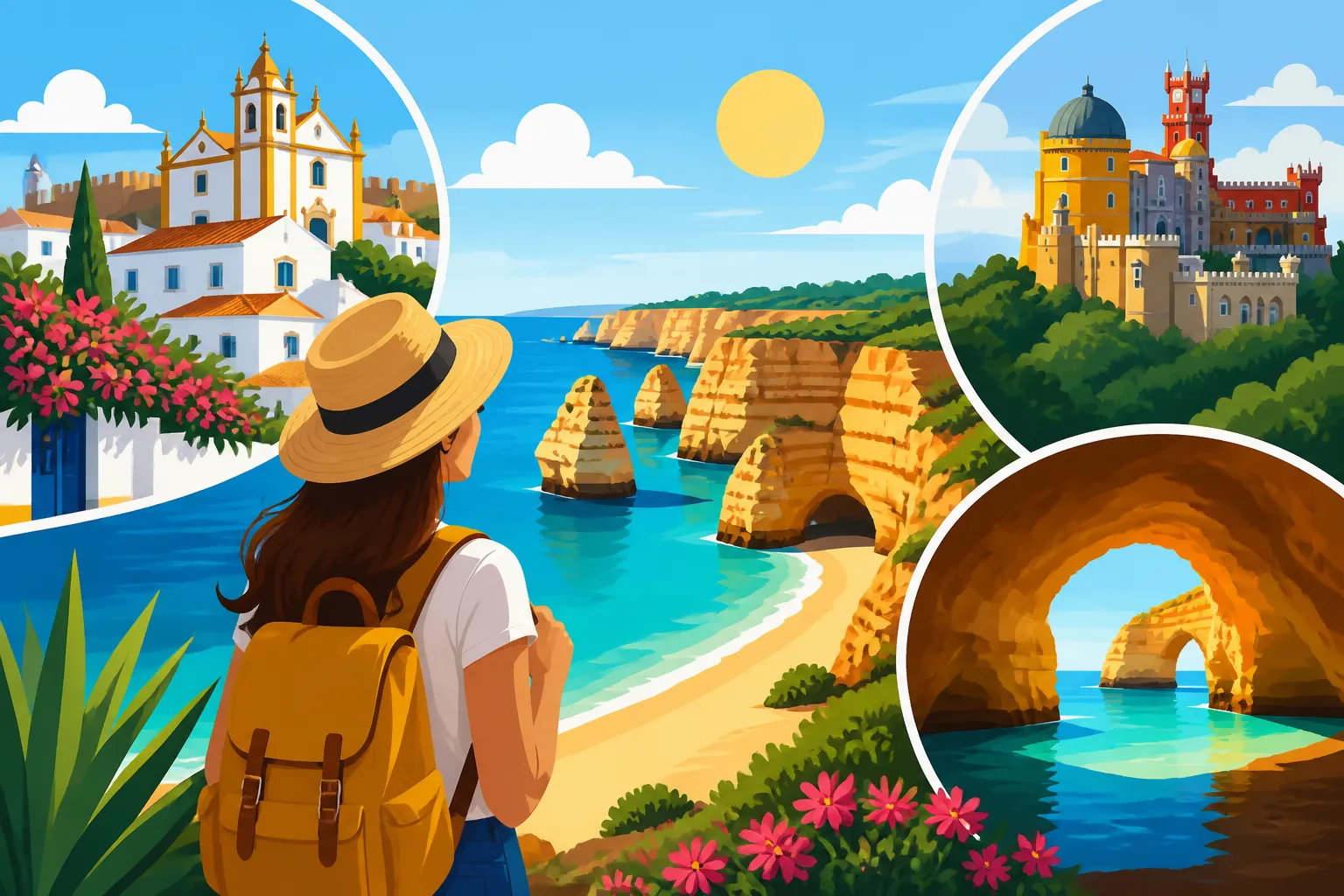
Heading west toward the wind-swept tip of Europe reveals the wilder, untamed side of the Atlantic coastline. Start your excursion near Lagos at Ponta da Piedade, a headland composed of sea arches, hidden grottos, and towering limestone pillars carved by sea waves over millions of years. You can navigate the wooden boardwalks along the cliff edge or descend the steep stone steps down to the water’s edge. To see the caves up close, booking a small-boat guided excursion or sea-kayaking trip via GetYourGuide is one of the most effective ways to navigate through the sea arches safely with local maritime captains.
Further west along the coast sits Sagres, a destination steeped in seafaring history. This is where Prince Henry the Navigator established his legendary navigation school during the 15th century, launching Portugal’s Age of Discovery. The Fortaleza de Sagres occupies a massive, windswept promontory where you can walk along the perimeter walls and listen to the ocean roar through natural blowholes (blowholes). Finish your day at Cabo de São Vicente (Cape St. Vincent), the southwesternmost point of mainland Europe. Watching the sun sink into the vast Atlantic ocean from these 60-meter high cliffs is an unforgettable highlight of visiting Portugal.
Ria Formosa Natural Park: Barrier Islands and Birdwatching Havens
Stretching over 60 kilometers along the eastern coast from Faro to Cacela Velha, the Ria Formosa Natural Park is a vast labyrinth of coastal lagoons, marshlands, salt pans, and barrier islands. It is one of the most important wetland habitats in Europe, serving as a critical stopover point for hundreds of species of migratory birds, including large flocks of greater flamingos and rare purple swamphens.
A day trip into the Ria Formosa usually begins at the waterfront in Olhão or Faro. From here, hop aboard a water taxi or traditional ferry to explore the barrier islands:
- Ilha da Culatra: A car-free island home to an authentic fishing community where paths are made of soft sand.
- Ilha do Farol: Named after its prominent lighthouse, offering wide Atlantic beaches and calm lagoon waters.
- Ilha de Tavira: Accessible by a brief ferry ride from Tavira, famous for its vast white sand dunes and calm swimming areas.
In addition to island hopping, take time to visit the traditional salt pans (salinas) near Tavira or Olhão, where natural sea salt and high-grade flor de sal are harvested manually using centuries-old techniques.
Venturing Beyond the Region: Day Trips to Alentejo and Seville
One of the great advantages of staying in southern Portugal is its strategic geographical location. Excellent road networks make it surprisingly easy to venture into neighboring regions like the Alentejo or cross the international border into Andalusia, Spain.
Mértola and the Guadiana Valley: A Journey into Alentejo History
Crossing north over the regional boundary into the lower Alentejo brings an immediate change in landscape. The bustling towns give way to vast, rolling plains, golden wheat fields, and ancient olive trees. Your destination is Mértola, a historic museum-town dramatically perched above the Guadiana River.
Mértola boasts a rich tapestry of Roman and Islamic heritage. It served as an important inland river port for Phoenicians, Romans, and later Visigoths and Moors. The crown jewel of the town is the Church of Nossa Senhora da Anunciação, which was originally built as a 12th-century mosque. It remains one of the best-preserved Islamic religious structures in Portugal, retaining its original horseshoe arches, interior columns, and mihrab prayer niche. Walking through Mértola feels like visiting an open-air museum, with several archaeological sites scattered throughout the historic center detailing ancient trade routes and daily life across millennia.
Crossing the Spanish Border: A Day Trip to Seville
For a quick taste of Spanish culture, a day trip to Seville, the vibrant capital of Andalusia, is entirely feasible from the eastern Algarve. Crossing the Guadiana International Bridge takes you directly into Spain. Remember to adjust your watch, as Spain operates one hour ahead of Portugal.
Seville is a city of stunning architectural grandiosity, passion, and flavor. Focus your day on three main sites located close together in the historic core:
- The Royal Alcázar: A breathtaking complex of Múdejar palaces, intricate tilework, and sprawling tropical gardens.
- Seville Cathedral and Giralda Tower: The largest Gothic cathedral in the world, home to the tomb of Christopher Columbus and a bell tower offering spectacular city views.
- Plaza de España: A massive, semicircular plaza featuring ornate bridges, tiled alcoves representing every Spanish province, and a small rowing canal.
If you prefer not to drive across international borders or deal with city parking, arranging regional express bus travel through Omio provides a stress-free alternative, dropping you directly near Seville’s city center so you can explore freely on foot.
Costa Vicentina: Wild Atlantic Beaches and Coastal Hiking Trails
Forming the western portion of the Parque Natural do Sudoeste Alentejano e Costa Vicentina, this coastal strip is markedly different from the sheltered southern beaches. Here, powerful Atlantic swells crash against towering dark slate cliffs, creating a haven for surfers, coastal hikers, and nature lovers seeking dramatic scenery.
A day spent driving along the Costa Vicentina should include stops at Aljezur, a quiet village overlooked by a hilltop Moorish castle, and the nearby beaches of Praia da Arrifana and Praia da Amoreira. Arrifana is tucked inside a sweeping crescent bay surrounded by sheer cliffs, while Amoreira sits at the mouth of a river estuary, offering calm freshwater wading on one side and crashing Atlantic waves on the other. Hikers can join sections of the Fishermen’s Trail (part of the larger Rota Vicentina trail network), which winds along sandy cliff paths used for generations by local fishermen accessing remote fishing spots.
Logistics and Transportation for Algarve Day Trips
Planning seamless day trips requires understanding regional transport options, seasonal patterns, and driving etiquette. Having a clear strategy ensures you spend less time navigating traffic and more time enjoying your destinations.
Driving vs Public Transit: Navigating Algarve Roads and Tolls
Renting a vehicle offers the ultimate flexibility for reaching remote mountain villages, hidden trailheads, and quiet inland sites. The main transport arteries are the A22 highway (Via do Infante), which runs east-west across the region, and the scenic N125 national road, which runs parallel closer to the coast.
Since 1 January 2025 the A22 highway has been toll-free, so you do not need a transponder or any toll payment to drive it. Some other motorways in Portugal still charge tolls, and a few collect them electronically only, so if your day trips take you further afield, a rental car fitted with a Via Verde transponder is still worth having. Navigating these systems smoothly is simple once you understand the mechanics, which are fully explained in Navigating the Portuguese Toll System: Via Verde and Electronic Tolls. Furthermore, if you are living in or visiting Portugal long-term, ensure your driver’s license status is fully compliant by reviewing Driving in Portugal: Exchanging Your Foreign License to a Portuguese One.
Public transit is available between major coastal cities, but options become sparse when traveling into rural inland areas. The regional train line operated by Comboios de Portugal (CP) connects towns like Lagos, Portimão, Faro, and Tavira efficiently. Understanding ticket options and schedules is easy with resources like Using Comboios de Portugal (CP) Trains and the Navegante Pass. However, for remote interior day trips like Monchique or Alte, local buses run on limited daily schedules, making a rental car or booked tour far more practical.
Guided Excursions vs Independent Travel
Deciding whether to travel independently or join an organized group depends heavily on your comfort level with navigation and your personal travel style:
- Independent Travel: Offers complete freedom over your itinerary, allowing you to stay longer at sites that interest you and skip those that do not. Ideal for visiting rural market towns, taking scenic drives, or spending full days hiking.
- Guided Excursions: Removes logistical stress entirely, providing door-to-door hotel transport and local historical context from experienced guides. Highly recommended for complex itineraries, boat trips into sea caves, or day excursions across the border into Spain. Browsing curated activities on GetYourGuide helps you compare user reviews, itinerary details, and cancellation policies before locking in your travel plans.
Seasonal Considerations and Avoiding Peak Summer Crowds
The experience of taking day trips varies considerably depending on the time of year. During peak summer months (July and August), coastal roads like the N125 experience heavy traffic congestion, and popular parking areas near headlands fill up rapidly before mid-morning. During this time, early morning starts are essential, and shifting your focus inland toward cool mountain forests or quiet historical towns like Silves provides a much more comfortable experience.
The shoulder seasons—spring (March to May) and autumn (September to November)—are arguably the optimal times for day tripping. Temperatures are pleasant for walking through historic centers, hillsides are covered in blooming wildflowers, and major sites are far less crowded. Even winter offers mild, sunny weather ideal for outdoor hiking and sightseeing, though winter travel brings distinct pricing dynamics for long-term stays, as detailed in Cost of Living in the Algarve: Winter vs Summer Price Differences for Expats.
Comparing Top Day Trip Options by Traveler Style
To help you match your personal preferences with the perfect excursion, consider how different destinations align with various travel goals, physical mobility levels, and dining opportunities.
Best Excursions for History Buffs and Culture Seekers
If your primary motivation is uncovering architecture, local stories, and traditional crafts, prioritizing Silves, Loulé, and Mértola will yield the richest experiences:
- Silves: Focus on Moorish military engineering, gothic ecclesiastical history, and riverside walks.
- Loulé: Focus on living artisan traditions, vibrant municipal market culture, and historic townhouses.
- Mértola: Focus on multi-layered archaeological history spanning Roman, Visigothic, and Islamic civilizations.
When spending a day exploring these cultural centers, taking time for a long, relaxed afternoon lunch at a local restaurante típico is an essential part of the experience. Understanding meal timing and basic table etiquette helps you feel right at home, a subject thoroughly detailed in Portuguese Coffee Culture and Restaurant Etiquette: Ordering Like a Local.
Ideal Destinations for Nature Enthusiasts and Outdoor Adventurers
For travelers who thrive outdoors, the region offers incredible biodiversity ranging from sub-tropical forests to dramatic ocean environments:
- Serra de Monchique: Best for altitude changes, thermal waters, dense forest canopy trails, and mountain summits.
- Ria Formosa: Best for tranquil water-based exploration, birdwatching, island hopping, and observing traditional salt harvesting.
- Costa Vicentina: Best for dramatic cliffside coastal hiking, observing powerful Atlantic wave action, and quiet, wild beaches.
Whether you are visiting southern Portugal for a few weeks or building a long-term lifestyle here as an expat, taking full advantage of the region’s diverse day trips transforms a simple beach trip into a deep, rewarding exploration of Iberian culture and natural beauty. For those laying the groundwork for a broader move to Portugal, ensuring all administrative and wellness checks are in order is crucial; review Health checklist for your first 30 days living in Portugal as an expat and consult the comprehensive Living in Portugal Guide 2027: The Complete Relocation Manual for Expats to plan your journey with total confidence.
Disclaimer
This article is for general informational purposes only and does not constitute professional advice. Laws, prices and regulations vary by location and change over time. Consult a qualified professional for guidance on your specific situation.