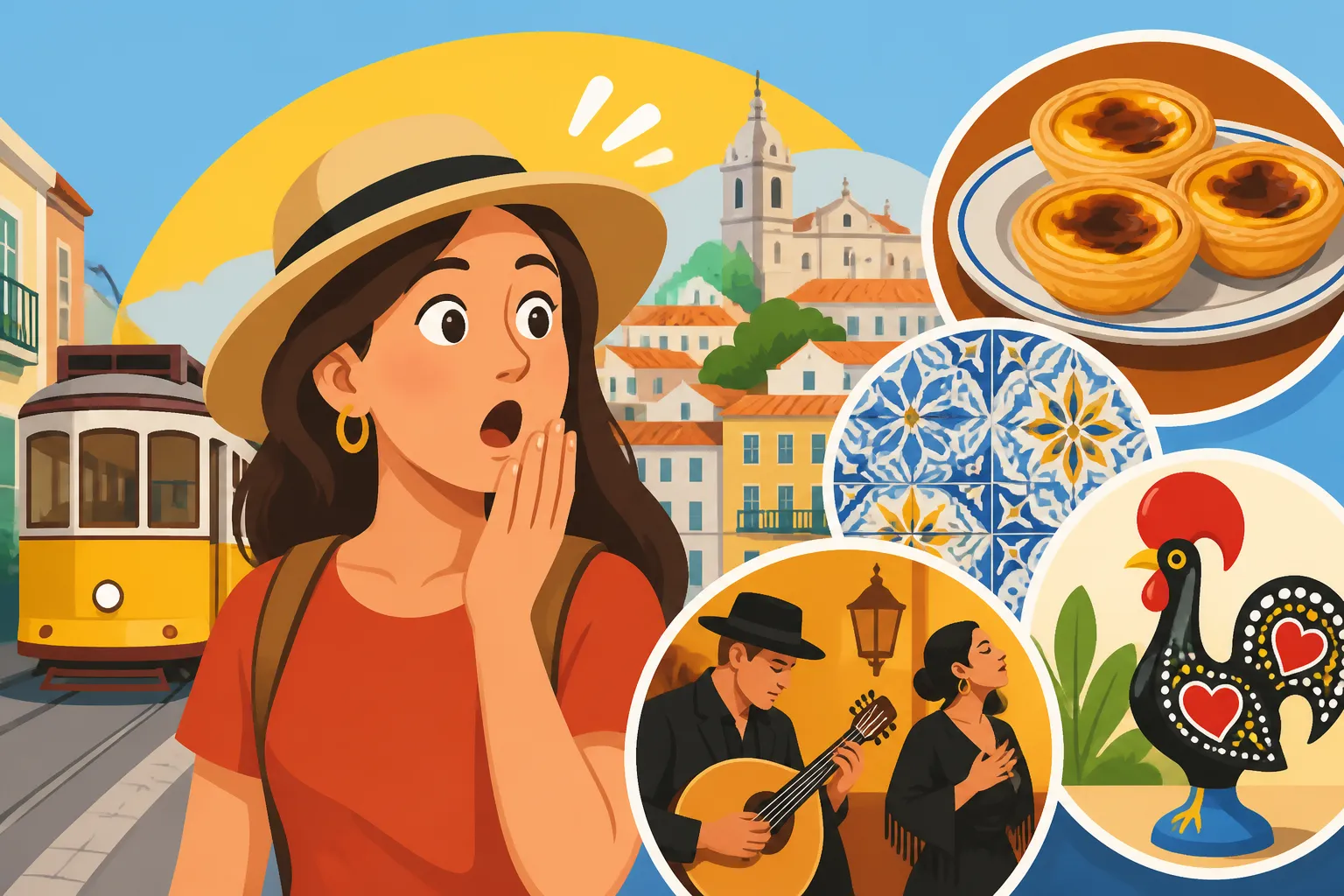
Common Cultural Surprises for First-Time Visitors to Portugal
Disclosure: This article contains affiliate links. If you buy through them, we may earn a commission at no extra cost to you. Read our full disclosure.
You land in Lisbon or Porto expecting a standard European vacation, only to find the shops are closed when you are hungry and the "free" bread on your table actually ends up on your bill. This guide explores the nuanced, often baffling cultural quirks of Portugal, helping you navigate everything from social etiquette to the daily rhythms that catch every first-time visitor off guard.
The Daily Rhythm and the Concept of Time
One of the first things that will hit you—likely right around 1:30 PM on your first day—is that the Portuguese rhythm of life is fundamentally different from the frantic pace of Northern Europe or North America. There is a specific cadence here that dictates when you can eat, when you can shop, and when you can actually expect someone to show up for a meeting. If you try to fight this rhythm, you will spend your first week frustrated and hungry.
The Sacred Two-Hour Lunch
In many countries, lunch is a sad sandwich consumed over a keyboard. In Portugal, lunch is a non-negotiable hour or two of sitting down, usually for a hot meal. Between 12:30 PM and 2:30 PM, the country effectively pauses. You might find smaller shops in residential areas closing their doors entirely during this window. If you are working here or visiting for business, you must understand The 2-hour lunch break: Navigating traditional Portuguese office schedules is not just a perk; it is a cultural pillar.
Restaurants will be packed, and the "Prato do Dia" (Plate of the Day) will be flying out of the kitchen. Do not expect quick service during this window. The staff isn't being slow; they are operating within a culture that values the meal as a social reset. If you have a 2:00 PM appointment, do not be surprised if your contact arrives at 2:15 PM still smelling faintly of espresso and grilled sardines.
Dinner Starts When You Are Usually Sleeping
If you show up at a restaurant at 6:30 PM, you will likely find the chairs still stacked on the tables or a very lonely waiter staring at his phone. The Portuguese do not eat dinner early. Most locals won't even think about heading out until 8:30 PM at the earliest. On weekends, 9:30 PM or 10:00 PM is the prime time for dining.
This can be a shock for families traveling with young children. While tourist-heavy areas might cater to earlier crowds, the authentic spots won't have any atmosphere—or sometimes even a hot stove—until much later. It is worth having a late afternoon "lanche" (snack) to bridge the gap. When booking your accommodation on Booking.com, try to find a place near a "taberna" so you can observe the late-night local crowd from your balcony.
The Elasticity of Amanhã
The word "amanhã" literally means tomorrow, but in the Portuguese administrative and service world, it is often a state of mind rather than a fixed date. Whether you are waiting for a plumber or a residency card, things in Portugal take as long as they take. There is a deep-seated cultural resistance to rushing, which is both the most charming and the most infuriating aspect of living here.
I remember waiting weeks for a simple internet installation, only to be told it would happen "amanhã" for five days straight. You have to learn to embrace the "paciência." It is part of the Expat life hacks: Never rush a coffee, and other daily cultural adjustments that will eventually make your life better, but as a first-time visitor, it can feel like the world is conspiring against your itinerary.
Gastronomy and the Rules of the Table
Portuguese food is soulful, heavy on olive oil, and incredibly fresh, but the way it is served involves a few "hidden" rules that often lead to the most common complaints among tourists. Understanding these will save you money and a lot of awkwardness at the end of your meal.
The Couvert Is Never Free
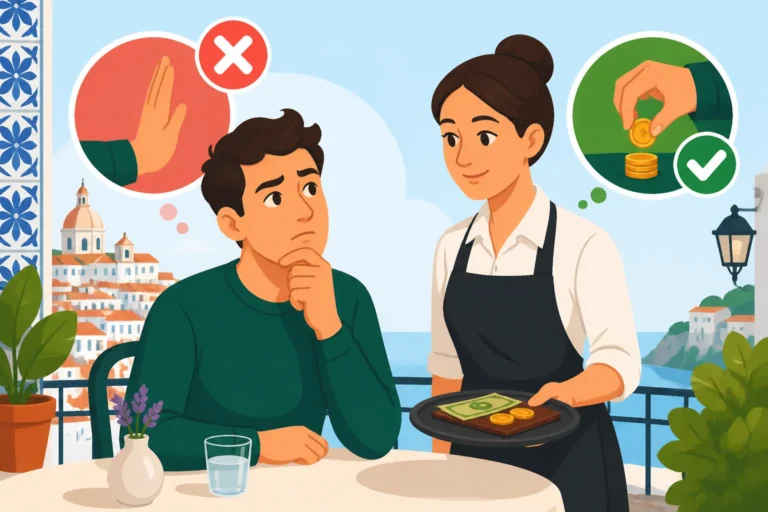
This is the number one "surprise" for visitors. As soon as you sit down, the waiter will bring out bread, butter, olives, maybe some cheese or a small plate of octopus salad. In many other countries, this is a complimentary gesture. In Portugal, it is called the "couvert," and if you eat it, you pay for it.
The prices are usually listed at the very top of the menu, but they are often small amounts—€1.50 for bread, €3.00 for cheese. If you don't want it, simply say "Não, obrigado" and ask them to take it away. Don't feel rude; it is a standard transaction. However, if you are hungry, the bread and local olives are often the best part of the meal. Tourists often get quite angry at the bill, but it’s just how the system works here.
Coffee Is a Ritual Not a Beverage
You will not find many people walking down the street with a giant plastic cup of lukewarm lattes. Coffee in Portugal is an event, usually taken standing at a counter or sitting in a sun-drenched praça. The variety can be confusing: a "bica" is your standard espresso, a "galão" is a milky coffee in a tall glass, and a "meia de leite" is more like a flat white.
Knowing How to order coffee in Portugal: Bica, Meia de Leite, Pingado, and Galão is essential if you want to avoid the "tourist coffee" (usually a watered-down Americano). Also, keep in mind that coffee is often used as a punctuation mark for the day. You have one after breakfast, one after lunch, one in the afternoon, and often one after dinner.
Tipping and the Bill
Tipping in Portugal is not the mandatory 20% surcharge seen in the US. In casual cafes, people might just leave the small change. In a sit-down restaurant, a tip of 5% to 10% is appreciated if the service was good, but it is not "required" in the sense that you’ll be chased down the street for omitting it.
You should also be aware that getting the bill ("a conta") requires a conscious effort. A waiter will almost never bring the bill to your table without being asked. In Portuguese culture, bringing the bill unsolicited is seen as "kicking the guest out," which is considered incredibly rude. You might have to wave your hand or make a "writing in the air" gesture to get their attention. For more nuances on this, check out Tipping culture in Portugal: Do you leave 10% or just round up the bill?.
| Item | Portuguese Term | Cultural Context |
|---|---|---|
| Espresso | Café / Bica | The standard; small, strong, and consumed quickly. |
| Appetizers | Couvert | Bread, olives, cheese; you pay for what you consume. |
| Water | Água da torneira | Generally safe, but usually ordered bottled in restaurants. |
| The Bill | A conta | Must be requested; will not be brought automatically. |
| Lunch Special | Prato do Dia | The best value meal, usually including soup and coffee. |
Social Etiquette and Physicality
The Portuguese are generally reserved but incredibly warm once the ice is broken. However, their social cues and the way they navigate public space can be surprising to those used to the more distant or hyper-polite cultures of the UK or Northern Europe.
The Art of the Beijinhos
When meeting friends or being introduced in a social setting, the standard greeting is two "beijinhos" (little kisses)—one on each cheek, starting with the right. This applies to women-to-women and women-to-men. Men-to-men usually stick to a handshake or a "braço" (a half-hug with a back-slap).
As a visitor, it can be confusing to know when this is appropriate. Generally, if you are being introduced by a mutual friend, the kisses are expected. If you are in a formal business meeting, stick to the handshake. Many expats awkwardly lean in for a kiss when the other person wanted a handshake, or vice versa. Learning Portuguese greeting etiquette: When to use Beijinhos vs Handshakes will help you avoid that "clash of the foreheads" moment.
Formal Titles Matter
Despite the relaxed pace of life, Portugal remains a hierarchical society in certain professional circles. It is still very common to address people by their titles. A person with a university degree might be called "Doutor" (Doctor) or "Engenheiro" (Engineer), even if they aren't a medical doctor or a bridge builder.
This is especially true in older generations and formal offices. If you find yourself navigating the local job market, understanding Boss-employee dynamics in Portugal: Navigating hierarchy and titles (Doutor/Engenheiro) is vital. Using "Senhor" or "Senhora" followed by the first name is a safe middle ground for general politeness when you are unsure.
The Directness of "No"
Portuguese people are incredibly helpful, but they can be very direct when something is not possible. If a shop is closed, it’s closed. If a kitchen has stopped serving, it has stopped serving. There is very little "let me see what I can do" culture in the service industry here compared to the UK or the US.
This isn't meant to be rude; it's a practical boundary. However, on the flip side, you’ll find that if you are in genuine trouble—lost in a village or struggling with a heavy suitcase—locals will often go ten miles out of their way to help you. The "povo" (the people) are the heartbeat of the country, and their kindness is legendary, provided you respect their rules.
Practical Infrastructure Surprises
There are things about the physical reality of living in Portugal that no travel brochure mentions, but they will affect your daily comfort levels significantly. From the ground under your feet to the air in your bedroom, here is what to expect.
The Treacherous Calçada Portuguesa
The beautiful, white-and-black patterned cobblestone streets (calçada) are a national treasure. They are also incredibly slippery when wet and absolute murder on high heels or thin-soled shoes. First-time visitors often spend their first day staring at the beautiful architecture, only to trip over a loose stone or slide down a 30-degree incline.
My best advice: leave the heels at home. Bring shoes with good grip. If it rains—and it does rain heavily in the winter—walk on the flat stones where possible. Also, watch out for the hills. Lisbon and Porto are essentially vertical. If you’re planning to explore, I recommend booking a tour via GetYourGuide to get your bearings before trying to hike the Alfama district on your own.
The Mystery of the Indoor Winter
Portugal is famous for its sun, but it is infamous among expats for its cold houses. Most traditional Portuguese homes were built to stay cool in the summer, which means they have thick stone walls and absolutely no central heating or insulation.
During the winter months (November to March), it is often colder inside a Portuguese house than it is outside. You will see locals wearing thick sweaters and scarves indoors. If you are visiting during the off-season, check if your accommodation has a "bomba de calor" (heat pump) or electric heaters. Otherwise, you’ll be searching for Why do Portuguese houses lack central heating? Practical winter solutions faster than you can say "frio."
Multibanco Is King
The banking system in Portugal, known as Multibanco, is lightyears ahead of most of the world, but it has its quirks. You can pay your taxes, top up your phone, buy train tickets, and even donate to charity at any ATM. However, many smaller "mom and pop" shops and restaurants do not accept international credit cards. They only accept "Cartão Português" (the local Multibanco debit cards).
Always carry some cash. You don't want to be the person who finishes a €50 dinner only to realize the restaurant doesn't take your Visa or Mastercard. While most major cities are becoming more card-friendly, the rural areas still rely heavily on physical Euros.
Safety and Public Conduct
Portugal is consistently ranked as one of the safest countries in the world, which is a major draw for families and solo travelers. However, "safe" doesn't mean "careless." There are specific cultural nuances regarding safety and public behavior you should know.
The "Drug" Sellers in Lisbon
If you walk down Rua Augusta in Lisbon, you will almost certainly be approached by men whispering "hashish" or "cocaine." This is a major surprise for first-time visitors. Here is the secret: they aren't actually selling drugs. They are selling pressed herbs or flour to unsuspecting tourists.
Since it isn't actually a drug, the police have a hard time arresting them for drug trafficking. They are annoying, but generally harmless if you just say "No" and keep walking. For a deeper dive into staying safe in the capital, read about Common tourist scams in Lisbon: Pickpockets on Tram 28 and fake hash sellers.
Public Holidays and "Pontes"
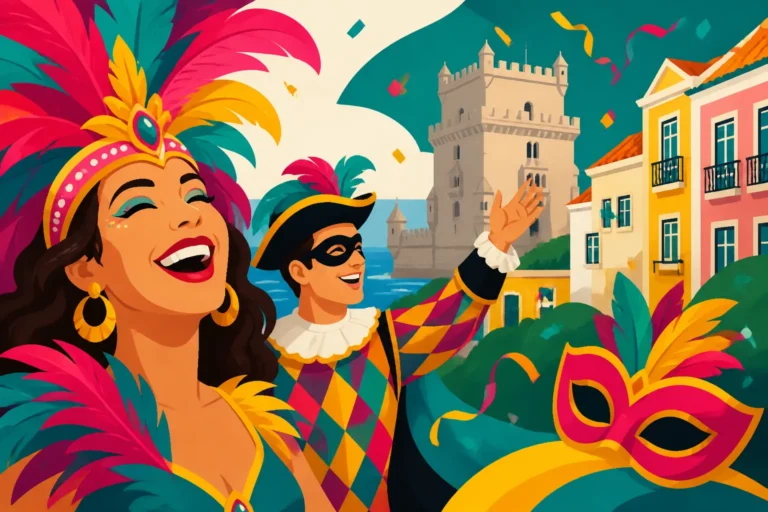
The Portuguese love a good holiday, and when a public holiday falls on a Tuesday or Thursday, they often "fazer a ponte" (make a bridge) by taking the Monday or Friday off as well. During these times, the country can shut down significantly.
If you are planning a trip, check the calendar for Portuguese public holidays 2026: When supermarkets and banks are closed. You don’t want to arrive in a small town on a Tuesday only to find every grocery store and pharmacy shuttered for a local saint's day. If you need to travel between cities during these times, book your tickets early through Omio to ensure you get a seat on the Alfa Pendular trains.
Tap Water and Environmental Awareness
A common question is: Is it safe to drink tap water in Portugal? Water quality by region. The answer is yes, absolutely. The water is treated to EU standards. However, in some older parts of Lisbon or the Algarve, the mineral content might give it a taste you aren't used to.
The Portuguese are also increasingly environmentally conscious. You will see "Ecopontos" (color-coded recycling bins) everywhere. Green is for glass, yellow for plastic/metal, and blue for paper. Using these correctly is a small way to show respect for the local community that is hosting you.
Language and Identity
Finally, there is the matter of communication. While many Portuguese speak excellent English, especially the younger generation, there are cultural "traps" regarding language that you should avoid.
It Is Not Spanish
Never, ever assume that because you speak a bit of Spanish, you can just "get by" with it in Portugal. While the languages are linguistically related, they are distinct. More importantly, there is a historical pride in the Portuguese language.
Starting a conversation in Spanish can be seen as an assumption that Portugal is just "small Spain," which is a major faux pas. Even a simple "Olá" (Hello) or "Obrigado" (Thank you) in Portuguese will get you a much warmer response than a fluent sentence in Spanish. Most locals would actually prefer you speak English than Spanish if you don't know any Portuguese.
The Volume of Conversation
You might be surprised by how loud a Portuguese restaurant can get. It’s not that people are angry; they are just passionate. The Portuguese are expressive, and "falar alto" (speaking loudly) is a sign of a good time. On the other hand, public transport is often surprisingly quiet. Speaking loudly on a mobile phone on a train is generally looked down upon.
In the end, the biggest surprise for most visitors is how quickly they fall in love with the pace. Once you stop checking your watch and start realizing that the world won't end if your coffee takes ten minutes to arrive, you’ll understand why so many of us moved here and never left.
Disclaimer
The information provided in this guide is for informational purposes only and reflects the cultural landscape of Portugal as of 2026. Cultural norms and administrative processes are subject to change, and personal experiences may vary depending on the region and specific circumstances. Always verify critical travel or legal information with official government sources.