Ordering Food and Drinks in Portuguese: A Practical Phrasebook
Disclosure: This article contains affiliate links. If you buy through them, we may earn a commission at no extra cost to you. Read our full disclosure.
You have probably stood in the middle of a bustling Lisbon square or a quiet Porto alleyway, stomach growling, only to feel a wave of anxiety as you approach a restaurant menu written entirely in Portuguese. The fear of accidentally ordering something you are allergic to, or worse, offending a busy waiter with the wrong etiquette, is a common hurdle for every newcomer. This guide is designed to bridge that gap, providing you with the linguistic tools and cultural context to navigate everything from a quick morning espresso to a lavish three-hour seafood dinner with total confidence.
The Cultural Rhythm of Portuguese Dining
In Portugal, food is not just sustenance; it is the primary social lubricant. Understanding the clock is just as important as understanding the menu. If you show up for dinner at 6:00 PM, you will likely find the staff eating their own meal or the lights half-dimmed. Conversely, showing up for lunch at 3:30 PM often means the kitchen has just closed. Learning the nuances of Portuguese Coffee Culture and Restaurant Etiquette: Ordering Like a Local will save you from the frustration of arriving at a closed door or feeling like an intruder during the staff’s downtime.
Understanding Breakfast vs. Lanche
Breakfast, or pequeno-almoço, is generally a modest affair in Portugal. Unlike the heavy English breakfast or the American pancake stack, the Portuguese start their day with a simple toast (torrada) or a pastry and a coffee. Most locals head to their neighborhood pastelaria rather than eating at home. It is a social ritual where you will see builders, lawyers, and students all standing at the counter, or balcão, quickly consuming a galão and a sandes de queijo (cheese sandwich).
The lanche, or afternoon snack, is arguably more important to the social fabric than breakfast. Occurring between 4:30 PM and 6:00 PM, this is when the pastelarias fill up again. It is a time for a sweet treat or a salgado (savory snack). If you are traveling between cities using Omio to catch a train from Lisbon to Coimbra, you will notice the station cafes are most crowded during these transition hours. It is perfectly acceptable to linger over a single pastry for forty minutes while chatting with a friend; the Portuguese never rush their leisure time.
The Importance of the Prato do Dia
The prato do dia, or plate of the day, is the expat’s best friend and the secret to eating well on a budget. Most traditional restaurants, especially the local tascas, offer a fixed-price lunch menu that includes a soup, a main course, a drink, and a coffee. These dishes are usually whatever was freshest at the market that morning. It is common to see a chalkboard outside with handwritten items like cozido à portuguesa or bacalhau à brás.
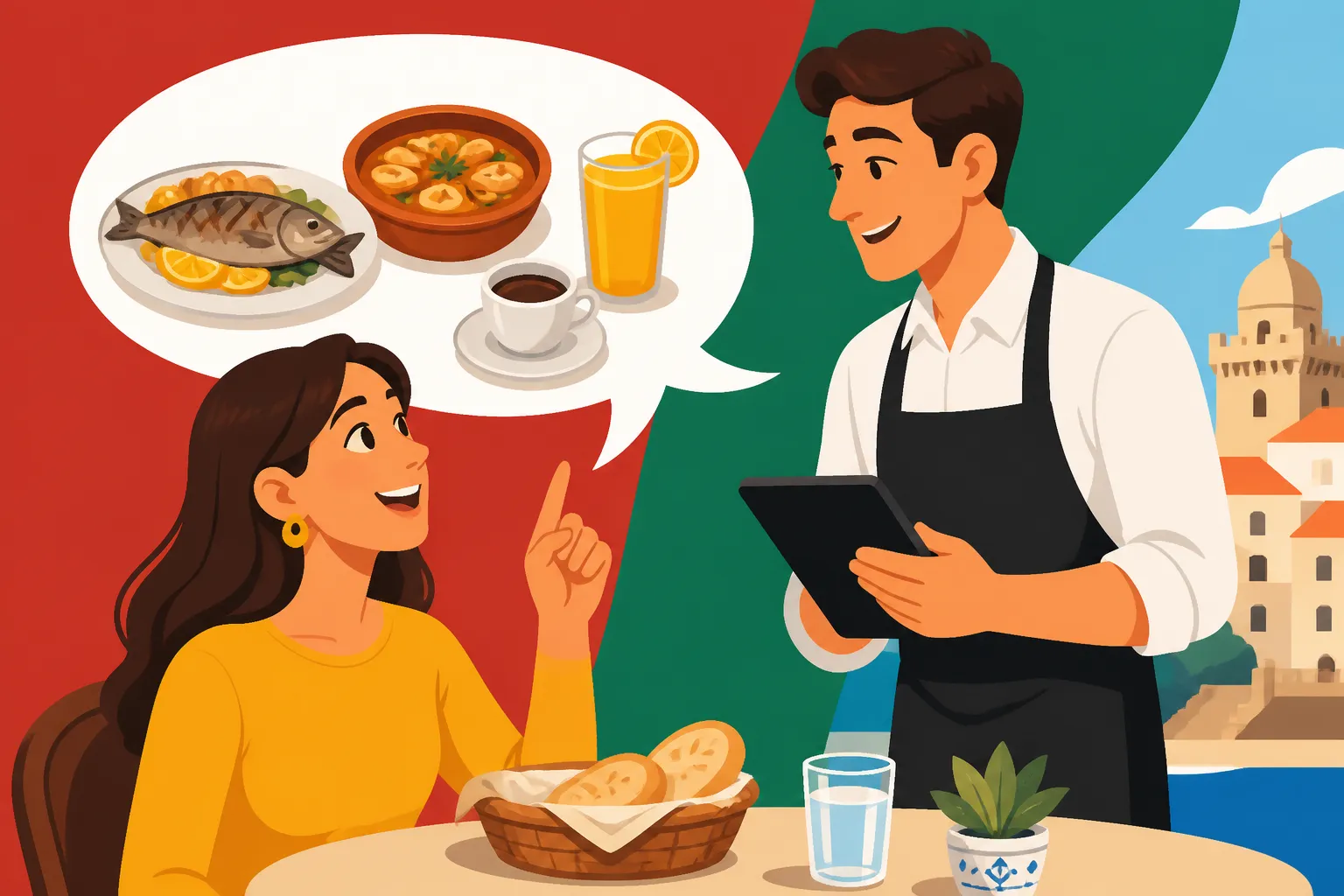
When you sit down for a prato do dia, the service is often fast and no-frills. You are expected to choose quickly. If you are unsure, asking "Qual é o prato do dia?" (What is the plate of the day?) is the most natural way to start. This is also where you will practice your Portuguese greeting etiquette: When to use Beijinhos vs Handshakes as you enter a neighborhood spot where everyone seems to know each other. The atmosphere is loud, friendly, and deeply authentic, providing a stark contrast to the more polished tourist-oriented spots you might find on Booking.com recommendations.
Coffee Culture: More Than Just a Caffeine Fix
Ordering coffee in Portugal is an art form with its own specific vocabulary. If you simply ask for "um café," you will receive a small, potent shot of espresso. For North Americans or Northern Europeans used to large mugs of drip coffee, this can be a shock. Understanding the variations is essential to getting what you actually want. I spent my first three months in Lisbon drinking espresso I didn't want simply because I was too intimidated to ask for milk.
Essential Coffee Terminology: From Bica to Galão
The terminology changes depending on where you are. In Lisbon, you ask for a bica, while in Porto, you ask for a cimbalino. However, "um café" works everywhere. If you want a bit of milk to cut the bitterness, you ask for a café pingado (espresso with a drop of cold milk). If you prefer a 50/50 mix of coffee and milk in a small glass, you order a meia de leite. For a large, milky coffee served in a tall glass—similar to a latte—you must ask for a galão.
There are even more specific requests. If you want your espresso cup filled to the brim (making it slightly weaker), ask for it cheio. If you want it short and extra strong, ask for it curto. You can find a deeper breakdown of these specificities in our guide on How to order coffee in Portugal: Bica, Meia de Leite, Pingado, and Galão. Mastering these minor variations signals to the staff that you aren't just a passing tourist, but someone who respects the local "rituals of the bean."
Pastries and the Art of the Pastelaria
You cannot talk about coffee without mentioning the pastries. The Pastel de Nata is the king, but the world of Portuguese sweets is vast and often conventual (originating from nunneries). You will see Travesseiros, Guardanapos, and Pão de Deus. When ordering at the counter, you don't always need the exact name; pointing and saying "Queria um destes, por favor" (I would like one of these, please) is perfectly acceptable.
The pastelaria also serves savory items known as salgados. These include rissóis de camarão (shrimp turnovers), pastéis de bacalhau (codfish cakes), and empadas de galinha (chicken pies). These are often sitting in a glass display case at room temperature. If you prefer them warm, you can ask "Pode aquecer, por favor?" (Can you heat it up, please?). These small interactions are the perfect way to build your confidence before tackling a full dinner service.
Navigating the Restaurant Experience
Walking into a Portuguese restaurant for dinner is a multi-stage process that involves specific social cues. Unlike in some cultures where you might seat yourself, in Portugal, you should always wait to be greeted. Even in a casual tasca, a quick "Boa noite, mesa para dois, por favor" (Good evening, a table for two, please) goes a long way.
Making a Reservation and the Arrival
For popular spots in Lisbon or the Algarve, reservations are increasingly necessary. You can often book through apps or platforms linked on Booking.com, but for the most authentic experience, calling ahead is best. If you find a food tour on GetYourGuide, your guide will likely handle this, but as an expat, you’ll want to do it yourself. When you arrive, don't be surprised if the staff seems incredibly busy; the Portuguese style of service is efficient but often lacks the "performative" friendliness found in the US.
When you sit down, the first thing that happens is the arrival of the couvert. This usually consists of bread, butter, olives, and sometimes cheese or sardines. It is a common point of frustration for foreigners because it is not free. If you eat it, you pay for it. If you don't want it, simply say "Não, obrigado" and move it to the side of the table.
Decoding the Menu: Meat, Fish, and Sides
Portuguese menus are usually divided into Peixe (Fish), Carne (Meat), and Entradas (Starters). Because Portugal has a massive coastline, the fish is often the star. You will see Dourada (Sea Bream), Robalo (Sea Bass), and of course, Bacalhau (Salted Cod). If the menu says "Preço por kg," be careful—this means the price is by weight, and a large fish can easily double your expected bill. Always ask "Quanto custa aproximadamente este peixe?" (How much does this fish cost approximately?) before committing.
Meat dishes are often hearty and accompanied by batatas fritas (fries) and arroz (rice). Yes, the Portuguese love double carbs. If you are shopping for ingredients to cook at home, you’ll become familiar with these terms at Grocery Shopping in Portugal: Continente, Pingo Doce, Auchan, and Mercados. In a restaurant, the sides are often included, but you can sometimes swap them. Asking "Posso trocar as batatas por salada?" (Can I swap the potatoes for salad?) is a common request for the health-conscious expat.
| Portuguese Phrase | English Translation | Context |
|---|---|---|
| Queria a conta, por favor | I would like the bill, please | Asking for the check |
| Pode trazer mais pão? | Can you bring more bread? | Requesting more couvert items |
| Qual é a especialidade? | What is the specialty? | Asking for a recommendation |
| É picante? | Is it spicy? | Checking for piri-piri levels |
| Onde é o lavatório? | Where is the bathroom? | Necessary navigation |
| Sou alérgico a… | I am allergic to… | Essential for safety |
Essential Phrases for Every Stage of the Meal
The difference between a "tourist" and a "resident" often comes down to the verb tense. Using "Queria" (I would like – conditional) instead of "Quero" (I want – present) is the hallmark of a polite guest. It softens the request and fits the more formal, respectful tone of the Portuguese language.
Ordering Drinks and Toasts
When ordering water, you must specify com gás (sparkling) or sem gás (still). If you are concerned about whether Is it safe to drink tap water in Portugal? Water quality by region, the answer is generally yes, but in restaurants, everyone orders bottled water or água da torneira (tap water). For beer, the terminology is vital. If you want a small draught beer, ask for an imperial in Lisbon or a fino in the North. If you want a large one, ask for a caneca.
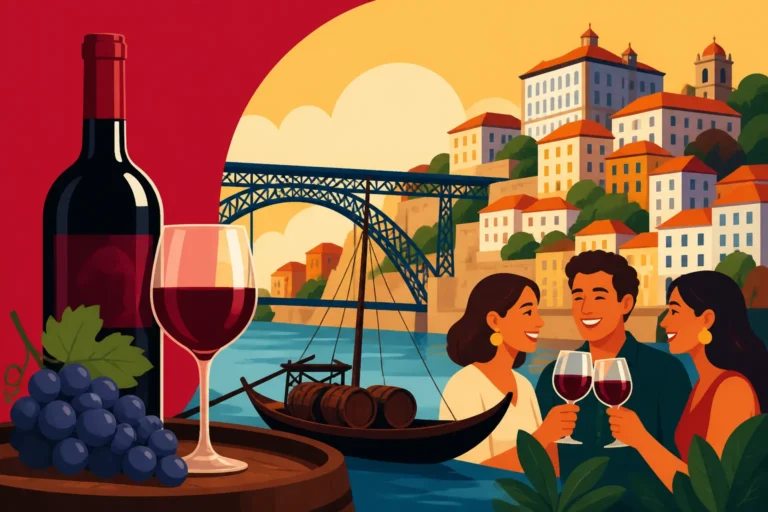
Wine is usually ordered by the glass (copo de vinho) or the carafe (jarro). The vinho da casa (house wine) is almost always excellent and significantly cheaper than bottled options. When your drinks arrive, it is tradition to clink glasses and say "Saúde!" (Health!). If you are on a wine tasting excursion booked via GetYourGuide, you’ll learn that eye contact during the toast is considered a sign of sincerity in Portugal.
Dietary Restrictions and Allergies
Portugal is a paradise for seafood and meat lovers, but it can be a challenge for vegetarians, vegans, or those with gluten sensitivities. Traditional dishes often use lard or small amounts of ham (presunto) for flavoring even in vegetable soups. It is crucial to be specific. Say "Eu não como carne nem peixe" (I don't eat meat or fish). Simply saying "Sou vegetariano" sometimes results in being offered a tuna salad, as "meat" often refers specifically to beef or pork in older traditions.
If you have a severe allergy, write it down. "Tenho uma alergia grave a frutos secos" (I have a severe allergy to nuts) or "Não posso comer glúten" (I cannot eat gluten). While major cities like Lisbon and Porto are very accommodating, rural areas may be less familiar with these requirements. For those living in the city and looking for specific dietary items, see our list for Finding Asian, Mexican, or specialty food ingredients in Lisbon and Porto to find international shops that stock gluten-free or vegan alternatives.
Asking for the Bill and Tipping Etiquette
When you are finished, the waiter will rarely bring the bill without being asked. In Portugal, it is considered rude to rush a customer out. You will need to catch their eye and say "A conta, por favor." This is also the time to decide on the tip. Unlike the rigid 20% rule in the US, tipping in Portugal is more relaxed. For a standard meal, rounding up to the nearest five or ten Euros is common. If the service was exceptional, 5-10% is generous.
You can read a more nuanced breakdown in our article on Tipping culture in Portugal: Do you leave 10% or just round up the bill?. Most places now accept "Multibanco" (debit cards), but small tascas may still be "Só dinheiro" (cash only). Always check for the Multibanco symbol or ask "Aceitam cartão?" before you sit down. If you run into issues with overcharging, remember that every establishment is legally required to have a What is the 'Livro de Reclamações' and how does it solve consumer disputes?, though it should always be a last resort after attempting a friendly conversation with the manager.
Beyond the Table: Practical Tips for Foodies
Living in Portugal means your kitchen will often be an extension of the local market. While dining out is affordable, the true joy of Portuguese life is often found in sourcing the freshest ingredients yourself. This requires a different set of vocabulary centered around weights and measures.
Using Apps and Online Reservations
While this guide focuses on the "human" interaction, technology is an inseparable part of the modern Portuguese dining scene. Apps like TheFork are widely used for reservations and often offer significant discounts (up to 50% off the food menu). If you are staying in a vacation rental found on Booking.com, you might also use delivery apps like Glovo or Bolt Food. Even when using an app, the delivery driver will appreciate a "Obrigado, bom apetite!" when they drop off your meal.
For those who want to explore deeper into the country's culinary roots, using Omio to plan trips to regions like the Alentejo or the Douro Valley is highly recommended. Each region has a distinct culinary identity. In the Alentejo, you’ll encounter açorda (bread soup), while in the north, the francesinha reigns supreme. These regional trips are often the highlight of an expat’s first year, providing a much-needed break from the more internationalized food scenes of the big cities.
Regional Differences in Dining
The "Portuguese menu" is not a monolith. In the Algarve, you will find more Mediterranean influences and a heavy reliance on cataplanas (seafood stews). In the mountainous Estrela region, the food is heavy, cheese-focused, and designed to withstand cold winters. Learning the names of regional cheeses, like Queijo da Serra, or specific sausages like Alheira, will significantly enhance your dining experience.
If you ever feel overwhelmed by the choices or the language, remember that most Portuguese people are incredibly proud of their food and are usually happy to help a foreigner who is making a genuine effort. A smile and a few basic words in Portuguese go much further than perfect grammar. You are not just ordering a meal; you are participating in a culture that has centered its life around the table for centuries.
Disclaimer
The information provided in this guide is for general informational purposes only and represents the personal experiences and observations of the author living as an expat in Portugal. Language usage, regional slang, and restaurant policies (including pricing and tipping customs) can vary significantly between different cities and establishments. While we strive to keep our content up to date, the culinary landscape in Portugal is evolving rapidly. We recommend verifying specific dietary needs or reservation policies directly with the establishment. This guide does not constitute legal or professional advice.