Carnival in Portugal: Where to Celebrate
Disclosure: This article contains affiliate links. If you buy through them, we may earn a commission at no extra cost to you. Read our full disclosure.
Finding the right place to celebrate Carnival in Portugal can feel like a chaotic guessing game for expats and tourists alike. With every town claiming the "best" party, it’s easy to end up at a lackluster parade or trapped in a logistical nightmare of traffic and sold-out hotels. This guide breaks down the country's most iconic celebrations, from pagan rituals in the north to satirical parades in the center, ensuring you navigate the festivities like a seasoned local.
The Cultural Roots of Portuguese Carnival: From Entrudo to Samba
For a long time, I made the mistake of thinking Carnival in Portugal was just a smaller, colder version of the Rio de Janeiro celebrations. I couldn't have been more wrong. While the glitz and the samba schools exist—especially in central Portugal—there is a much older, grittier tradition called Entrudo. This is the ancestral heart of the season, rooted in pagan end-of-winter rituals that are meant to cleanse the village and mock the social order. Understanding this distinction is the first step to enjoying the season because the experience you get in a remote village in Trás-os-Montes is worlds apart from the party in Torres Vedras.
The Entrudo tradition is characterized by spontaneity. In the old days, and still in some rural pockets, people would throw water, flour, and eggs at each other. It was a time of "anything goes" before the strict restrictions of Lent. Today, that spirit of subversion survives through satire. You’ll see giant papier-mâché floats poking fun at Portuguese politicians, the EU, and international celebrities. It’s not just a party; it’s a public venting of frustrations that is deeply embedded in the national psyche. If you want to understand what the locals are actually annoyed about, just look at the caricatures on the floats.
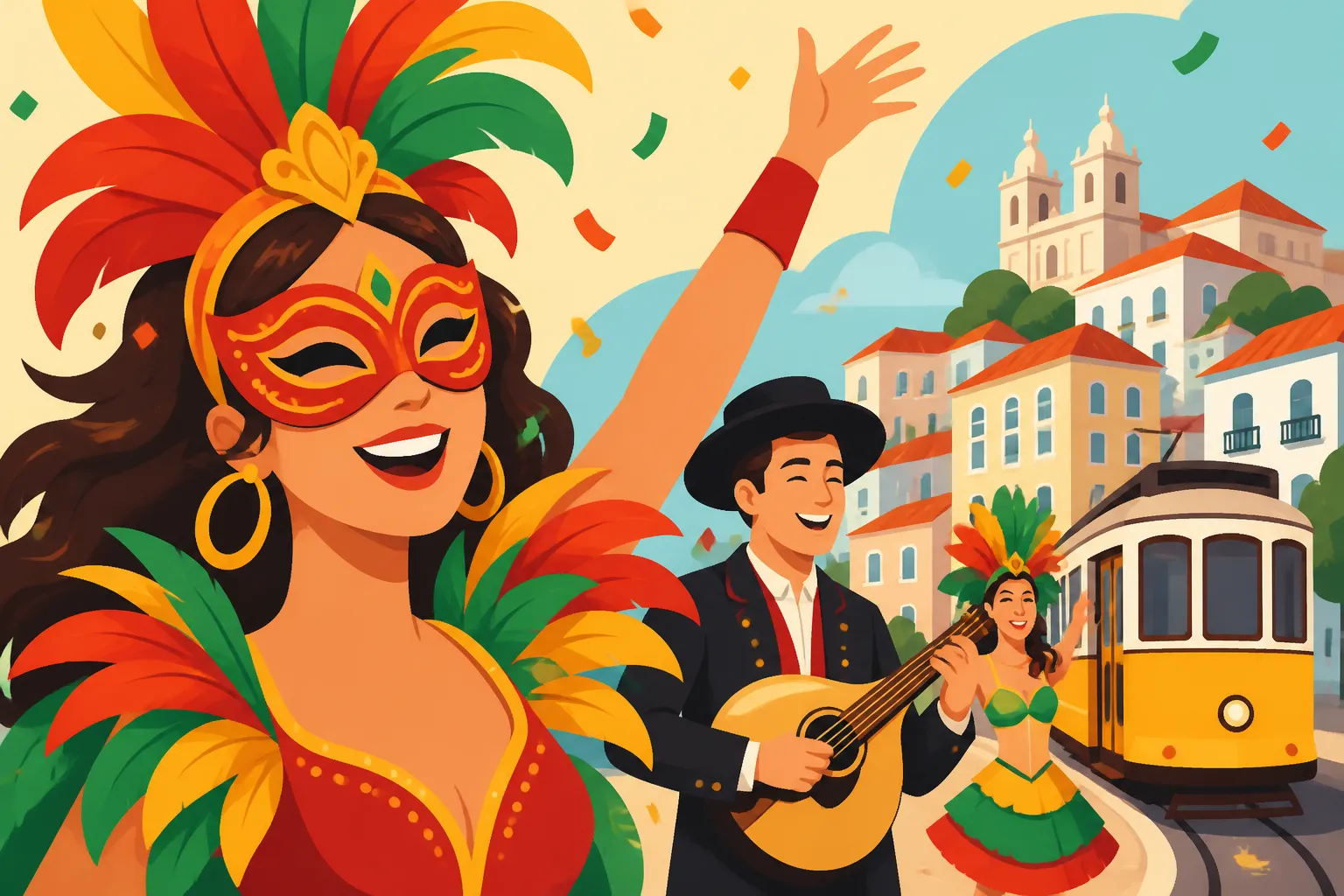
In the late 20th century, the Brazilian influence began to seep in, particularly in coastal towns like Ovar and Sesimbra. This created a fascinating hybrid. You might see a group of men dressed as "Matrafonas" (men in drag) followed immediately by a highly disciplined samba school with feathers and drums. This duality is part of the charm. If you are planning your first season here, you need to decide if you want the "traditional-satirical" vibe or the "glitzy-samba" vibe, as they rarely happen in the same place with the same intensity.
Torres Vedras: The Most Portuguese Carnival in the Country
If you ask a local in Lisbon where to go, they will almost certainly point you toward Torres Vedras. Located about an hour north of the capital, this town prides itself on having the "Most Portuguese Carnival in Portugal." What they mean by this is that they stubbornly refuse to let Brazilian samba take over. Here, the king and queen of the Carnival are always two local men, and the focus is entirely on social and political satire. It is crowded, loud, and incredibly irreverent.
The stars of Torres Vedras are the "Matrafonas." These are men dressed as women, but not in a polished drag-queen sense. It’s intentionally messy, with mismatched clothes, exaggerated makeup, and a healthy dose of facial hair. The goal is to look as ridiculous as possible. Accompanying them are the "Cabeçudos" (big-heads) and "Zés Pereiras" (drummers). The energy is infectious, but be warned: if you go, you aren't just a spectator. You are part of the madness. People will interact with you, tease you, and you are expected to be in costume.
Logistically, Torres Vedras requires some planning. The town’s population triples during these few days, and finding a place to park is a feat of strength. I highly recommend checking Public Transport and Driving in Portugal: Trains, Tolls, and Licenses before you set out, as road closures are extensive and strictly enforced. Many expats prefer to take the bus or train from Lisbon to avoid the headache of driving back at 4 AM. For accommodation, you really need to book months in advance on a platform like Booking.com if you want to stay in the center; otherwise, be prepared for a long trek to your car in the freezing February air.
Ovar and Mealhada: Samba and Suckling Pig
Moving to the center of the country, the vibe shifts significantly. Ovar, often called the "Vitaminized Carnival," is where you go if you want to see the highest level of production value. The parade in Ovar is a massive undertaking that involves the entire community for the whole year. They have dedicated samba schools that rival some of the middle-tier schools in Brazil. The costumes are intricate, the choreography is tight, and the "Escola de Samba" competition is a serious local affair.
Mealhada, located near Coimbra, offers a slightly different take. It is famous for its "Carnaval da Bairrada." Because this region is the capital of Leitão (suckling pig), the festivities often revolve around long, heavy lunches followed by a parade featuring Brazilian stars and local samba groups. It’s a very "foodie" way to experience Carnival. You spend the morning eating some of the best pork in the world and the afternoon watching a parade under the sun. It’s generally a bit more "family-friendly" than the debauchery of Torres Vedras, but no less vibrant.
Getting to Ovar or Mealhada is relatively easy via the northern train line. You can use Omio to compare train times and bus routes from Porto or Lisbon. Ovar, in particular, is a great day trip from Porto, but the last trains back can be incredibly packed. Make sure you check Using Comboios de Portugal (CP) Trains and the Navegante Pass to understand how to top up your cards in advance, so you aren't stuck in a massive queue at the ticket machine when you just want to get home and sleep off the excitement.
The Caretos of Podence: A UNESCO World Heritage Experience
For something truly wild and ancient, you must head to the northeast, to the village of Podence. This is the "Caretos de Podence" tradition, which was recognized by UNESCO as Intangible Cultural Heritage. The Caretos are young men dressed in fringe-covered suits of red, yellow, and green, wearing tin masks and carrying cowbells around their waists. They represent the "diabolical" spirit of the Entrudo, and their primary goal is to run through the village, jump on people, and "rattle" the women to symbolize fertility.
It sounds intimidating, and it is. The sound of the cowbells is deafening, and the Caretos move with a frantic, unpredictable energy. However, it is one of the most authentic cultural experiences you can have in Europe. There are no polished floats here; it’s all about the raw, visceral connection to the land and the season. The village of Podence is small, so the festivities feel intimate. You’ll see the "Burning of the Entrudo," a giant straw figure set on fire to mark the end of the winter and the start of the new agricultural cycle.
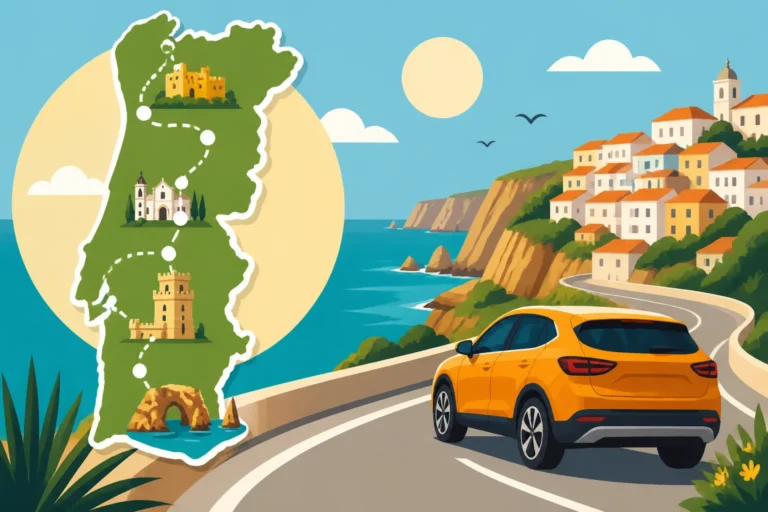
If you decide to make the trek to the interior, you need to be prepared for the cold. This isn't the Algarve; it’s the high mountains of Trás-os-Montes. You should look into Where to Live in Portugal: Lisbon, Porto, Algarve, and Silver Coast Compared to get a sense of the regional climate differences. Visiting Podence usually requires a car, and you’ll likely want to stay in nearby Bragança. It’s a long drive from Lisbon, but the sheer uniqueness of the Caretos makes it worth every kilometer. You can find guided cultural tours on GetYourGuide that include transportation and a deep dive into the history of these masks.
Carnival in the Big Cities: Lisbon and Porto
While the most famous celebrations are in the smaller towns, the big cities don't stay silent. In Lisbon, the main event isn't actually in the city center but in the suburb of Loures. The "Carnaval de Loures" is one of the largest in the Lisbon metropolitan area, featuring over 2,000 participants. It’s a great option if you don't want to travel far. Inside Lisbon itself, you’ll find smaller neighborhood parties, particularly in Graça and Arroios, where the expat and artistic communities often organize "Blocos" (street bands) inspired by the Brazilian style.
Porto’s celebration is more fragmented. The city itself doesn't have one massive parade, but the nightlife in the "Baixa" (downtown) goes into overdrive. People dress up and hit the bars around the Galeria de Paris. For a more traditional experience near Porto, many locals hop on the train to Ovar. If you are staying in the city, I recommend checking out Lisbon Neighborhood Guide: Best Areas for Expats and Tourists even though it’s about Lisbon, the concept of staying in a well-connected neighborhood applies to Porto as well for navigating late-night festivities.
One thing to keep in mind about city celebrations is that they are often a bit more "international." You’ll hear more English and see a wider variety of costumes. However, the downside is that they can feel a bit like a standard night out but with wigs. If you want the "soul" of Portuguese Carnival, I highly encourage you to leave the city limits and head to the towns where the traditions have been kept alive for centuries. The effort of the commute is rewarded with a much more meaningful experience.
Essential Logistics for Navigating Carnival Week
Carnival is a "floating" holiday, usually falling in February or early March, and while Shrove Tuesday is the official day, the parties start the Friday before. It is important to know that while it’s not technically a mandatory public holiday, most businesses and government offices treat it as one. For more on this, check Portuguese Public Holidays 2026: When supermarkets and banks are closed. Don't expect to get any administrative tasks done during this week; the country effectively pauses to party.
Transportation is your biggest hurdle. Trains and buses will be on holiday schedules, and "Portuguese time" becomes even more fluid than usual. Using apps like Omio to book your long-distance travel is essential. If you are driving, be aware that many towns close their entire centers to traffic. Parking on the outskirts and walking is often your only option. Also, keep an eye on your belongings. While Portugal is very safe, crowded festivals are a magnet for pickpockets. Review Safety and Emergency Preparedness in Portugal for Foreign Residents for tips on keeping your valuables secure in large crowds.
Lastly, the weather is the great "X-factor." It can be a beautiful 18-degree sunny day or a miserable, rainy Atlantic storm. The parades in Ovar and Torres Vedras are rarely canceled for rain, but the experience changes drastically. Always have a "Plan B" that involves a cozy Taberna where you can hide from the rain with a glass of wine and some Petiscos. This is where Portuguese Coffee Culture and Restaurant Etiquette: Ordering Like a Local comes in handy—knowing how to navigate a crowded cafe during a rainout is a vital expat skill.
| Destination | Style | Key Feature | Best For |
|---|---|---|---|
| Torres Vedras | Satirical / Traditional | Matrafonas & Big Floats | Party-goers and Satire Lovers |
| Ovar | Samba / Brazilian | Professional Samba Schools | Glitz and Choreography |
| Podence | Pagan / Ancient | UNESCO Caretos & Cowbells | Culture Seekers & Photographers |
| Lazarim | Traditional | Hand-carved Wooden Masks | Authentic Folk Tradition |
| Mealhada | Samba / Foodie | Suckling Pig & Samba | Families and Food Lovers |
| Funchal | Grand / Rio-style | Massive Flower/Glitter Parade | High-end Tourist Experience |
Planning Your Budget and Accommodations
Carnival can be surprisingly expensive if you aren't careful. Hotel prices in Ovar or Torres Vedras can triple during the festival weekend. If you are on a budget, consider staying in a larger nearby city (like Lisbon for Torres Vedras or Porto for Ovar) and commuting. We have a detailed breakdown of costs in our Cost of Living in Portugal 2026: Detailed Budgets for Singles and Families, which can help you understand how to allocate your fun money for the season. Expect to pay entrance fees for the "Sambadromes" in towns like Ovar—usually between 10 to 15 Euros.
Eating out during Carnival is also a challenge. Most restaurants in the festive zones will be packed, and many will switch to a limited, higher-priced "festival menu." My veteran advice is to eat a large meal before the parade starts and carry some snacks and water. If you want to experience the local gastronomy properly, maybe wait until the day after the main festivities when the crowds thin out and the service returns to normal. You don't want your first experience of Portuguese hospitality to be a harried waiter trying to serve 500 people at once.
If you are a digital nomad or remote worker, be aware that the "August Shutdown" mentality often applies to Carnival as well. You might find your local co-working space closed or the internet in your Airbnb struggling because the whole neighborhood is streaming the parade results. Check The "August Shutdown": Why getting things done in summer is impossible to understand the cultural context of why things just… stop… during big holidays in Portugal. Embrace it, put on a mask, and join the party.
Adapting to the Cultural Etiquette of the Season
One of the most common frustrations for foreigners is the "lack of personal space" during these events. In Torres Vedras, for example, people will bump into you, throw confetti in your hair, and perhaps even pull you into a dance. This isn't aggression; it's the spirit of the holiday. If you are someone who values a large "bubble," you might find the traditional festivals overwhelming. The key is to go with the flow. If a Careto in Podence comes at you with his cowbells, don't run away—stand your ground, laugh, and let the ritual happen.
There is also a specific etiquette to dressing up. While anything goes, there is a deep appreciation for costumes that show effort or humor. If you just show up in your everyday clothes, you'll feel like a spectator rather than a participant. Even a simple wig or a funny hat changes your status in the eyes of the locals. It shows you "get it." This is part of the broader Daily Life in Portugal: Supermarkets, Language, and Cultural Etiquette that helps you integrate into the community. Showing that you can laugh at yourself is the fastest way to make friends in a Portuguese crowd.
Finally, remember that while Carnival is a time of excess, the Portuguese still maintain a level of decorum. You’ll see plenty of drinking, but public belligerence is generally looked down upon. The goal is "Alegria" (joy), not just intoxication. Stay hydrated, keep an eye on your friends, and enjoy the fact that you are witnessing one of the most vibrant and ancient expressions of European culture. Whether you choose the masks of the north or the feathers of the center, Carnival in Portugal is an experience you won't soon forget.
Disclaimer
The information provided in this guide is for informational purposes only. While we strive to provide the most up-to-date details for 2026, festival schedules, transport routes, and local regulations are subject to change by municipal authorities. We recommend checking the official websites of the respective Camara Municipals (city halls) before making travel arrangements.