Ginjinha and Portuguese Spirits to Try
Disclosure: This article contains affiliate links. If you buy through them, we may earn a commission at no extra cost to you. Read our full disclosure.
Standing in the middle of Rossio Square with a tiny plastic cup in your hand, feeling the sticky residue of cherry liqueur on your fingers while the tram rattles past, is a rite of passage every newcomer to Portugal must face. But beyond the famous Ginjinha, the world of Portuguese spirits is a complex, often confusing landscape of "firewaters," bitter almond liqueurs, and regional moonshines that can baffle even the most seasoned traveler. This guide demystifies these traditional beverages, teaching you how to order them, where they come from, and how to avoid the common pitfalls that leave most foreigners with nothing but a headache and a tourist-trap bill.
The Soul of Lisbon: Ginjinha and the Art of the Cherry
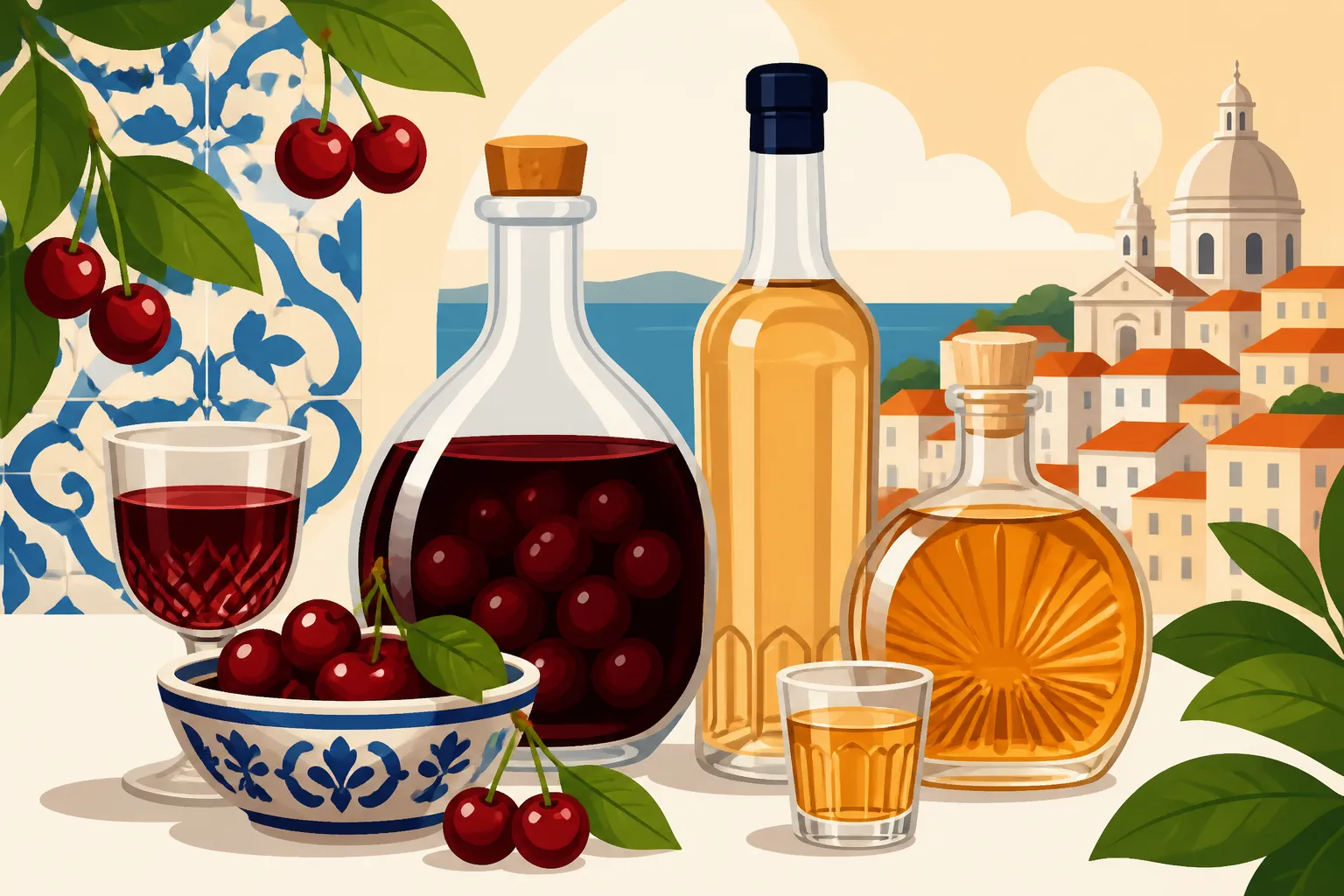
When you first arrive in Lisbon, you will notice tiny, standing-room-only bars with queues snaking out the door. These are Ginjinha holes-in-the-wall, and they are the heartbeat of the city’s social fabric. Ginjinha, or simply Ginja, is a liqueur made by infusing ginja berries (sour cherries) in alcohol, usually aguardente, and adding sugar and cinnamon. It is sweet, potent, and deeply nostalgic for the locals. Visitors to G_inja Espinheira_ will notice that there is a definite rhythm to this experience that goes beyond just gulping down a shot.
The Origins and Tradition of the Sour Cherry Liqueur
The history of Ginjinha is intertwined with the religious and social history of Portugal. Legend has it that a friar at the Church of Santo António, Francisco Espinheira, experimented with leaving ginja berries to soak in aguardente with a heavy dose of sugar. The result was a hit, and by the 1840s, the first commercial Ginjinha bar opened in Rossio. For generations, it was used as a "cure-all" for minor ailments, often given to children for a cough or to the elderly for "the nerves." While we certainly don't recommend it as a medical treatment today, that sense of it being a communal tonic remains.
When you are exploring the city, perhaps using a Lisbon Neighborhood Guide: Best Areas for Expats and Digital Nomads to find your way around, you will see that every neighborhood has its favorite spot. The berries themselves are quite sour and not particularly pleasant to eat raw, but the maceration process transforms them into something akin to a boozy candy. The production is still largely artisanal in many regions, especially in towns like Óbidos and Alcobaça, which take great pride in their specific recipes.
The Etiquette: Com Elas or Sem Elas
The most important phrase you need to learn before approaching the counter is "Com elas" (with them) or "Sem elas" (without them). This refers to the cherries at the bottom of the bottle. If you say "com elas," the server will expertly flick one or two booze-soaked cherries into your glass using a specialized long-stemmed spoon. Be warned: those cherries have been soaking in high-proof alcohol for months. They are delicious but carry a significant punch. If you prefer a smoother experience without the obstacle of a pit, "sem elas" is your go-to.
Many expats make the mistake of trying to swallow the cherry whole, pit and all. Do not do this. You are meant to nibble the fruit off the stone and then either hold the pit in your cheek or find a discreet way to dispose of it. In the older, more traditional spots, you might even see locals spitting the pits onto the sawdust-covered floor, though this is becoming less common in the more "sanitized" tourist areas. If you’ve been looking into Portuguese Coffee Culture and Restaurant Etiquette: Ordering Like a Local, you know that Portuguese social life is full of these small, unwritten rules.
Chocolate Cups vs. Traditional Glass
In the medieval town of Óbidos, a trend started a few decades ago that has now taken over the tourist centers: serving Ginjinha in a tiny edible chocolate cup. Purists will tell you this is a gimmick, and they aren't entirely wrong. In a traditional Lisbon bar, you will always get a small glass or a sturdy plastic cup. However, the combination of the tart cherry and the dark chocolate is undeniably tasty. It changes the flavor profile, making it more of a dessert than a midday aperitif.
If you are planning a day trip to Óbidos or Alcobaça, you can easily find transport options on Omio to get you there from Lisbon’s Sete Rios or Campo Grande stations. Once there, you will find that the "Ginja de Óbidos" often has a thicker, more syrupy consistency than the Lisbon version. Whether you choose the chocolate cup or the glass, remember that this is a drink meant to be sipped standing up, usually on the street, while chatting with friends or people-watching.
Northern Fire: Bagaceira and the Roots of Rural Spirits
If Ginjinha is the sweet, welcoming face of Portuguese spirits, Bagaceira is its rugged, uncompromising cousin. Often referred to simply as "Bagaço," this is a clear, high-alcohol spirit made from the leftovers of the winemaking process—the grape skins, seeds, and stalks (the pomace). It is Portugal’s answer to Italian Grappa or French Marc, and it is not for the faint of heart. For many expats living in the north or in rural villages, Bagaço is the ultimate sign of local hospitality.
The Science and Soul of Bagaceira
Bagaceira is produced by distilling the fermented pomace. The quality varies wildly depending on the grapes used and the skill of the distiller. In many rural areas, you will still find "moonshine" versions made in backyard stills, though the government has cracked down on this in recent years for tax and safety reasons. A good Bagaceira should have a clean, fruity aroma that reflects the grape variety—often Alvarinho in the Minho region—and a smooth, albeit fiery, finish.
When you are out grocery shopping, perhaps following tips from Grocery Shopping in Portugal: Continente, Pingo Doce, Auchan, and Mercados, you will see commercial brands like Aldeia Velha or Neto Costa on the shelves. These are aged in oak barrels, giving them a golden hue and a smoother, more brandy-like character. However, the "white" (clear) Bagaceira remains the standard in most local cafes. It is a drink of the people, associated with hard work in the fields and long lunches that stretch into the evening.
The Café com Cheirinho Ritual
One of the most authentic ways to experience Bagaceira is through a "Café com Cheirinho" (coffee with a little scent). This involves adding a splash of Bagaço directly into your espresso. In some parts of the north, it’s also called a "mata-bicho" (kill the bug), a traditional morning ritual intended to wake up the system and prepare the body for the day's labor. While I wouldn't recommend making this a daily habit if you're trying to keep your Cost of Living in Portugal 2026: Detailed Budgets for Singles and Families under control, it is a fascinating cultural experience.
The ritual often goes like this: you drink your espresso down to the last sugary sludge at the bottom, then pour a splash of Bagaço into the cup, swirl it around to pick up the coffee remains, and knock it back. It’s a sensory explosion of bitter coffee, sweet sugar, and the heat of the spirit. Be careful, though; some baristas have a heavy hand, and a "cheirinho" can quickly turn into a double shot. If you're sensitive to alcohol, always ask for the bottle to be brought to the table so you can pour it yourself.
High-End vs. Home-Brewed
As Portugal's gastronomic scene has evolved, so has Bagaceira. You can now find premium, aged Bagaceiras in upscale bars in Porto and Lisbon that rival the best French cognacs. These are meant to be sipped slowly from a tulip glass, allowing the aromas to develop. They are a world away from the "firewater" served in a plastic bottle under the counter at a village tasca. If you're interested in the higher end of Portuguese spirits, you can find many specialized tasting tours on GetYourGuide that focus on the distilled treasures of the Douro Valley.
The home-brewed version, however, still holds a special place in Portuguese culture. If a neighbor offers you a glass of their "own" Bagaço, it is a significant gesture of friendship. A word of caution from a veteran: these home-brews can sometimes hover around 50% or 60% alcohol. Approach with respect and perhaps have a glass of water nearby. It’s all part of the process of Making Friends and Networking in Portugal: Expat Groups and Meetups; showing appreciation for a local’s craft is the quickest way to integrate into a community.
The Algarve’s Hidden Stash: Medronho and Amarguinha
Moving south to the sun-drenched hills of the Algarve, the spirit landscape shifts toward the fruits of the Monchique mountains and the almond groves of the Barrocal. Here, you will encounter two of the most distinctive drinks in the country: Aguardente de Medronho and Amarguinha. Both reflect the landscape from which they spring and offer a glimpse into the southern soul that is quite different from the urbanity of Lisbon or the ruggedness of the North.
Aguardente de Medronho: The Strawberry Tree Fruit
Medronho is often called "firewater" by expats, and for good reason. It is a potent fruit brandy made from the berries of the Arbutus unedo, or the strawberry tree. These trees grow wild in the hills of the Algarve, particularly around Monchique. The berries are harvested in the autumn, fermented in wooden barrels, and then distilled in copper stills. The result is a clear spirit with a very high alcohol content and a distinct, slightly earthy, and floral flavor profile.
For a long time, Medronho production was largely unregulated and "underground." However, in recent years, several artisanal producers have gained legal status, ensuring higher quality and safety standards. When you visit the Algarve, perhaps staying in one of the beautiful coastal towns you found on Booking.com, a trip inland to Monchique is essential to see the "distillery route." Real Medronho should taste like the mountains—wild, slightly sweet, and very warm. It is traditionally served at room temperature, though some prefer it chilled.
Amarguinha: The Bitter Almond Secret
If Medronho is the fire, Amarguinha is the velvet. This is a liqueur made from bitter almonds, and it is a staple of southern Portuguese hospitality. Unlike the Italian Amaretto, which is often very sweet and heavy on the cherry-pit flavor, Amarguinha is lighter, with a more pronounced almond bitterness and a citrusy zest. It is incredibly refreshing, especially when served "com gelo e limão" (with ice and a squeeze of fresh lemon juice).
In many Algarve restaurants, you might be offered a glass of Amarguinha at the end of your meal as a "cortesia" (on the house). This is one of the lovely aspects of dining here, though you should check the Tipping culture in Portugal: Do you leave 10% or just round up the bill? to ensure you're returning the favor appropriately. It is also an excellent ingredient in cocktails, though most locals prefer it in its simplest form. It is the perfect drink for a warm evening after a day at the beach, providing a sweet but complex finish to a seafood feast.
The Monchique Connection and Cultural Heritage
The production of these spirits is deeply tied to the preservation of the Algarve's interior. As more people move to the coast for tourism jobs, the traditional knowledge of how to harvest medronho or process almonds is at risk. By seeking out legitimate, artisanal brands like Junior Joaquim or Arbun, you are helping to support these rural economies. Many of these producers offer small tours where you can see the copper stills (alambiques) in action and learn about the delicate fermentation process.
When navigating the winding roads of the Monchique mountains to find these producers, make sure you are comfortable with the local driving conditions. It might be worth reviewing the guide on Navigating the Portuguese Toll System: Via Verde and Electronic Tolls if you are renting a car for the journey. The drive is spectacular, but the roads are narrow, and the "firewater" tastings should be handled responsibly. Always have a designated driver or look for a tour operator who can handle the transport for you.
Comparison of Popular Portuguese Spirits
| Spirit | Region | Base Ingredient | Flavor Profile | Common Serving |
|---|---|---|---|---|
| Ginjinha | Lisbon / Óbidos | Sour Cherries | Sweet, fruity, cinnamon notes | Neat, with or without cherry |
| Bagaceira | North / National | Grape Pomace | Fiery, clean, grape-forward | In coffee (Cheirinho) |
| Medronho | Algarve | Arbutus Berries | Earthy, floral, very high proof | Neat at room temperature |
| Amarguinha | Algarve | Bitter Almonds | Sweet, nutty, citrus finish | On ice with lemon |
| Licor Beirão | National | 13 Herbs/Seeds | Herbal, spicy, sweet | On ice or in cocktails |
| Poncha | Madeira | Cane Sugar Spirit | Citrus, honey, potent | Freshly muddled with fruit |
Madeira and the Islands: Poncha and Beyond
Travel to the Atlantic islands of Madeira and the Azores, and you enter a completely different spirits dimension. Here, the influence of the sugar cane industry and the isolation of the islands have created a unique drinking culture centered around the legendary Poncha. If you haven't tried a freshly made Poncha in a small village bar in the Madeiran mountains, you haven't truly experienced the island.
The Punch of Poncha: A Sailor’s Legacy
Poncha is widely considered the predecessor to the Brazilian Caipirinha. It is made using Aguardente de Cana (sugar cane spirit), honey, and fresh juice—traditionally lemon, though orange and passion fruit are now equally popular. The secret to a real Poncha is the "caralhinho," a wooden muddler used to vigorously mix the ingredients until they are perfectly emulsified. It is strong, fresh, and surprisingly easy to drink, which makes it somewhat dangerous for the uninitiated.
As an expat living on the island, you quickly learn that Poncha is the universal social lubricant. Whether it’s a rainy day in the mountains or a sunny afternoon by the Funchal harbor, there is always a reason for a "Ponchinha." For those just arriving, checking out Safety and Emergency Preparedness in Portugal for Foreign Residents is a good idea, as the steep, winding roads of Madeira are no place to be if you've overindulged in this potent island punch. Always stick to one or two if you're the one behind the wheel.
Aguardente de Cana: The Base of the Island
The foundation of Poncha is the sugar cane aguardente, which is a type of agricultural rum. Madeira is one of the few places in Europe that still produces this specific type of spirit. Unlike industrial rum made from molasses, agricultural rum is made from fresh sugar cane juice, giving it a grassy, earthy, and more complex flavor. You can visit the historical steam-powered mill in Calheta to see how the cane is processed—a fascinating look at the island's industrial heritage.
While most people only consume the cane spirit as part of a Poncha, high-quality aged versions are becoming more popular as sipping rums. Brands like Engenhos do Norte produce exceptional spirits that have been aged in Madeira wine casks, resulting in a rich, amber liquid with notes of dried fruit and spice. If you are a rum enthusiast, this is a world worth exploring deeply. You can find these premium bottles in specialized shops or use Omio to book travel to the northern coast of the island where the main distilleries are located.
Tasting Experiences in Funchal and Beyond
In Funchal, you will find "Poncha bars" on almost every corner, but for the most authentic experience, you should head to the smaller villages like Câmara de Lobos or Serra de Água. These local spots often serve Poncha with a side of "amendoins" (peanuts) or "tremoços" (lupin beans), and the floor is usually covered in peanut shells—a sign of a good, lived-in bar. It’s a very different vibe from the sleek cocktail bars of Lisbon, and it’s where the true heart of Madeiran hospitality lies.
If you are planning a trip to the islands, Booking.com is a great resource for finding "quintas" (traditional manor houses) that offer a more local feel than the large resorts. Many of these quintas have their own small orchards and sometimes even their own family recipes for Poncha or other fruit liqueurs. Don't be afraid to ask the locals where they go for their "fix"; usually, the more unassuming the bar looks from the outside, the better the Poncha will be.
National Icons: Licor Beirão and Anis
While many spirits are regional, some have transcended their origins to become national icons. Licor Beirão is the most famous example of this. You will see its yellow label in every bar, restaurant, and supermarket from the Minho to the Algarve. It is the "national liqueur" of Portugal, and its story is one of clever marketing, secret recipes, and a flavor profile that seems to appeal to everyone.
Licor Beirão: The Universal Spirit
The recipe for Licor Beirão is a closely guarded secret, involving a double distillation of 13 different seeds and aromatic herbs from all over the world—including cinnamon, eucalyptus, rosemary, and lavender. It was originally created in the 19th century as a medicinal tonic (sensing a theme here?) in the town of Lousã. Today, it is owned by the Redondo family, who transformed it from a local curiosity into a massive brand.
It is sweet, herbal, and slightly spicy. The most common way to drink it is "simples" (neat) with ice and a slice of lemon, which cuts through the sweetness. However, it has also become a favorite for modern mixologists. The "Caipirão" is a popular twist on the Caipirinha, using Licor Beirão instead of Cachaça. It’s a bit sweeter and more aromatic, making it a great "gateway" drink for those who find straight spirits too harsh. You'll find it featured in many nightlife tours on GetYourGuide.
Anis Escarchado: The Sugary Nostalgia
Another curious national spirit you might encounter is Anis Escarchado. You can recognize the bottle instantly: it usually has a crystallized sugar branch inside that looks like it’s covered in frost. This is an anise-flavored liqueur that is extremely sweet and has a distinct licorice taste. It’s often considered a "grandma’s drink" in Portugal, something pulled out of the cupboard during the holidays or at the end of a big family Sunday lunch.
While it’s not as trendy as Ginjinha or Licor Beirão, it represents a certain nostalgic side of Portuguese life. The "branch" inside is actually a piece of dried pimpinella anisum that becomes coated in sugar crystals as the liqueur sits. It’s more of a curiosity for most expats, but it’s worth trying once for the sheer sugar rush. It’s the kind of thing you might find in the back of the shelf during a Grocery Shopping in Portugal: Continente, Pingo Doce, Auchan, and Mercados run, often in a very decorative bottle.
Modern Mixology and the Craft Scene
In recent years, a new generation of Portuguese bartenders has begun to reclaim these traditional spirits. In the trendy bars of Cais do Sodré in Lisbon or the Cedofeita district in Porto, you’ll find cocktails that use Medronho as a base instead of gin, or Ginjinha-infused vermouth. This "craft" movement is breathing new life into old bottles, making them relevant for a younger, international crowd.
If you are interested in this modern scene, keep an eye out for Portuguese gins as well. Brands like Sharish from the Alentejo, which uses local apples and herbs, or Gin Sul (distilled in Germany but inspired by the Algarve), are winning international awards. These pair beautifully with local tonics and garnishes like dried juniper or fresh rosemary. It’s a testament to how Portugal is looking both backward at its traditions and forward at global trends, creating something entirely unique in the process.
Seasonal and Fortified Delights
Finally, we cannot talk about Portuguese spirits without mentioning the seasonal drinks that appear only at certain times of the year, usually tied to harvests or religious festivals. These aren't always "spirits" in the distilled sense, but they occupy the same social space and are essential for anyone wanting to live like a local.
Jeropiga and Magusto: The Taste of Autumn
During the month of November, particularly around the Feast of Saint Martin (São Martinho), Portugal celebrates the "Magusto." This involves roasting chestnuts on open fires and drinking Jeropiga. Jeropiga is a traditional drink made by adding aguardente to grape must (unfermented grape juice). This stops the fermentation process, resulting in a drink that is sweeter and higher in alcohol than wine, but less potent than a full spirit.
Drinking Jeropiga while peeling hot, charred chestnuts on a chilly November evening is one of the most evocative Portuguese experiences. It’s a time of community and simple pleasures. If you've just moved and are still navigating Making Friends and Networking in Portugal: Expat Groups and Meetups, a village Magusto is the perfect place to start. People are generally in a festive mood, and the Jeropiga flows freely. Just be careful—the sweetness hides the alcohol content very well.
Vinho Abafado: The Muted Wine
Vinho Abafado is similar to Jeropiga but usually involves a slightly different balance of must and spirit. The term "abafado" means "smothered" or "muted," referring to how the fermentation is cut short. It is often served as a dessert wine, particularly in the Ribatejo and Alentejo regions. It has a rich, honeyed flavor and a deep golden color. It’s a wonderful accompaniment to traditional Portuguese sweets like Pudim Abade de Priscos or a simple plate of local cheeses.
Finding a good Abafado often requires going to the source. Small local producers in the Almeirim area are famous for it. You can use Omio to book a train or bus to these more rural areas, which offer a much more authentic glimpse into Portuguese agricultural life than the big cities. These drinks are a reminder that in Portugal, the line between wine and spirit is often beautifully blurred, reflecting a culture that values the whole of the grape and the craft of the harvest.
Disclaimer
The information provided in this guide is for educational and cultural purposes only. Alcohol consumption in Portugal is subject to local laws, and the legal drinking age is 18. Always drink responsibly and be aware that many traditional spirits have a significantly higher alcohol content than standard commercial beverages. This guide does not constitute medical or legal advice regarding alcohol use. Be sure to check local regulations and safety guidelines, especially when driving or participating in organized tours. All brand mentions are for contextual purposes and do not imply official endorsement.