Pastéis de Nata and Portuguese Pastries
Disclosure: This article contains affiliate links. If you buy through them, we may earn a commission at no extra cost to you. Read our full disclosure.
Walking into a Portuguese bakery for the first time is often an exercise in sensory overload and linguistic confusion. Most newcomers arrive with a singular goal—finding the legendary Pastel de Nata—only to be confronted by rows of yellow, egg-heavy concoctions with names that sound like religious relics. This guide deconstructs the complex world of Portuguese pastry culture, ensuring you never mistake a bean-based tart for a custard one again.
The Cultural Weight of the Pastel de Nata
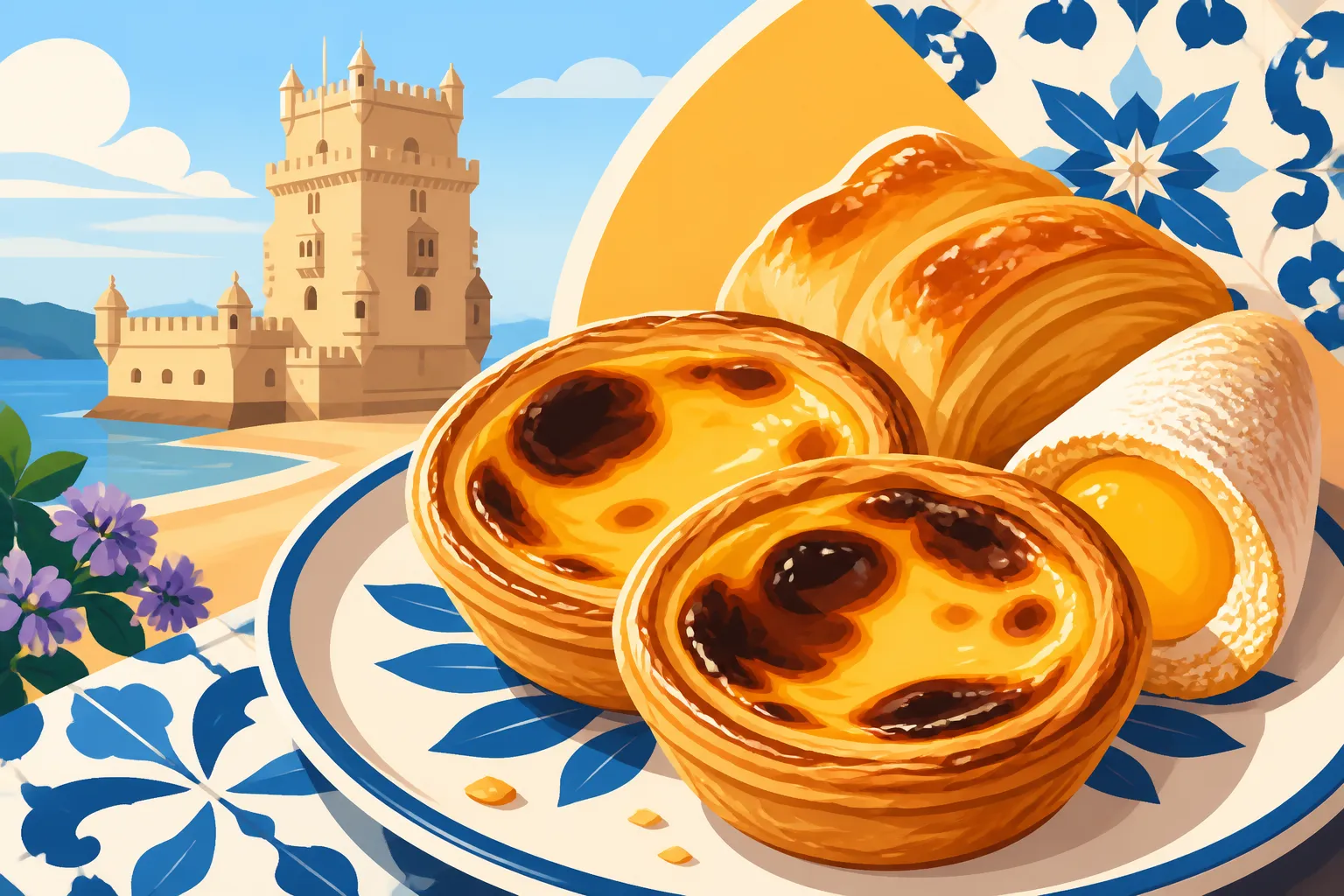
If you have spent any time in Lisbon, you have likely seen the massive queues snaking around the corner of the Jerónimos Monastery in Belém. Those lines are often the first hurdle in your integration into Portuguese life. The Pastel de Nata is not just a dessert; it is a national icon that carries the weight of centuries of history. Understanding the difference between a mass-produced tart and an artisanal one is the first step toward living like a local.
The History of Belém and the Secret Recipe
The origins of the Pastel de Nata are deeply rooted in the Catholic history of Portugal. In the 18th century, monks at the Jerónimos Monastery used large quantities of egg whites to starch their habits. This left them with a surplus of yolks, which they used to create a rich custard. When the Liberal Revolution of 1820 led to the closure of monasteries, the monks began selling these custard tarts to a sugar refinery next door to survive. Eventually, the recipe was sold to the refinery owners, who opened the Fábrica de Pastéis de Belém in 1837.
Today, only the tarts made at this specific location can legally be called "Pastéis de Belém." The recipe is kept in an "oficina secreta" (secret workshop) and is known by only a handful of master bakers. When you visit, you aren't just eating a tart; you are tasting a guarded secret. For expats settling in, exploring the Lisbon Neighborhood Guide: Best Areas for Expats and Digital Nomads will help you find the best transportation routes to get to Belém early in the morning before the tourist buses arrive.
How to Spot a High Quality Custard Tart
Outside of Belém, the pastry is known as a Pastel de Nata. However, not all natas are created equal. A high-quality tart must have a "massa folhada" (puff pastry) that is incredibly crisp and audible when you bite into it. The bottom should have a spiral pattern, indicating it was hand-rolled. If the pastry is soggy or tastes like shortcrust, you have been served a subpar version.
The custard itself should be creamy but not overly sweet, with a slightly charred, caramelized top. This charring is essential; it is not "burnt," but rather a sign that the tart was baked at a very high temperature, usually around 400 degrees Celsius. Many locals swear by Manteigaria, which has locations in Chiado and near the Time Out Market. If you are staying in the north, you will find similar debates among residents in the Porto Neighborhood Guide: Where to Live for Culture, Tech, and Family.
Etiquette: Cinnamon Sugar and Coffee Pairings
Eating a Pastel de Nata correctly is a ritual. When you receive your tart, it will often be served warm. On the table, you will find two shakers: one for powdered sugar and one for "canela" (cinnamon). It is customary to sprinkle both over the tart while it is still warm so the flavors meld with the custard. This ritual is usually performed at the counter of a crowded café, often while standing up.
You cannot have a nata without a "bica" (a short, strong espresso). The bitterness of the coffee perfectly offsets the sweetness of the custard. If you are still learning the ropes of local life, reviewing Portuguese Coffee Culture and Restaurant Etiquette: Ordering Like a Local is vital. Ordering a large milky latte with a nata is often seen as a tourist move; stick to the small coffee for the true experience.
Beyond the Nata: The World of Doces Conventuais
While the Pastel de Nata gets all the glory, the real heart of Portuguese baking lies in "Doces Conventuais" or conventual sweets. These are pastries that originated in convents and monasteries across the country. They are almost universally characterized by three main ingredients: egg yolks, massive amounts of sugar, and occasionally almonds or cinnamon. After the administrative hurdles of Daily Life in Portugal: Supermarkets, Language, and Cultural Etiquette, a trip to a local pastelaria to explore these treats is the best form of therapy.
Travesseiros and Queijadas from Sintra
If you take a day trip to Sintra, you will inevitably find yourself at Piriquita, a bakery that has been around since 1862. Here, the "Travesseiro" is king. Translated as "pillow," this is a long, rectangular puff pastry filled with an egg and almond cream, dusted with sugar. It is light, flaky, and addictive. Many people find the Travesseiro even more impressive than the Pastel de Nata because of its delicate texture.
The other Sintra staple is the Queijada. Unlike the custard-based nata, the Queijada is made with fresh cheese (queijo fresco), eggs, sugar, and flour. It is denser, smaller, and has a distinct, slightly earthy flavor. It is a favorite among those who find the egg-heavy conventual sweets a bit too intense. When planning your trip to Sintra, check Public Transport and Driving in Portugal: Trains, Tolls, and Licenses to decide if the train or a rental car is best for your schedule.
Ovos Moles de Aveiro: The Papal Treat
Traveling north to Aveiro, the "Venice of Portugal," you will encounter Ovos Moles. These are perhaps the purest expression of conventual sweets. The filling is simply egg yolks and sugar syrup, cooked to a specific consistency. This mixture is then encased in a thin wafer, similar to the host used in Catholic Mass, often shaped like shells or fish to honor Aveiro's maritime heritage.
Ovos Moles have a Protected Geographical Indication (PGI) status, meaning they can only be produced in Aveiro according to strict traditional methods. The texture is a surprise for many foreigners—the wafer is crisp and thin, while the center is intensely rich and liquid. If you are coming from Lisbon, you can use Omio to compare train and bus prices for the trip to Aveiro, making the journey much smoother than trying to navigate the complex toll systems on your own.
Pão de Deus: The Bread of God
Pão de Deus is a staple of every Portuguese breakfast. It is a soft, brioche-style bun topped with a thick layer of shredded coconut and sugar, which is then baked until golden. It is often served "misto," meaning sliced in half with ham and cheese. This combination of sweet coconut and salty ham is a classic Portuguese flavor profile that many expats grow to love.
You will find Pão de Deus in every neighborhood bakery, but A Padaria Portuguesa has made a name for itself by standardizing the recipe across their many locations. It is the perfect, filling snack to grab before a long day of paperwork. For those still in the early stages of their move, knowing how to find these shops while Registering with the Centro de Saúde: Getting Your SNS Número de Utente can make the long wait times much more bearable.
Regional Specialties You Cannot Miss
Portugal may be a small country, but its culinary map is incredibly diverse. Each region uses the ingredients available to them—almonds in the south, honey in the islands, and plums in the Alentejo—to create unique pastries that you won't necessarily find in Lisbon.
Algarve Almond and Fig Delights
In the south, the influence of the Moors is still visible in the ingredients used for sweets. The Algarve for Expats: Lagos, Faro, and Tavira Compared regions are famous for "Dom Rodrigo." This is a tangled mess of "fios de ovos" (egg threads), cinnamon, and almond paste, usually wrapped in colorful foil. It is incredibly sweet and moist, reflecting the hot climate of the region.
Another Algarve classic is the "Morgado," a cake made of almond flour and filled with "doce de gila" (squash jam). It is often decorated to look like a small work of art, with intricate sugar work and candied fruits. These regional specialties are a great way to connect with local culture if you have chosen to settle in the sunnier southern provinces.
Alentejo Sericaia with Elvas Plums
The Alentejo region is known for its slow pace of life and its hearty, rustic food. The standout dessert here is the Sericaia. It is a cross between a soufflé and a pudding, baked in a large clay dish. The top usually cracks during baking, and it is liberally dusted with cinnamon.
The essential accompaniment to Sericaia is the Ameixa d'Elvas (Elvas Plum). These are greengage plums that have been candied through a long, laborious process involving multiple soakings in sugar syrup. The syrup from the plum is drizzled over the Sericaia, creating a dessert that is rich, spiced, and uniquely Alentejo. If you are traveling through the interior, you will find these in the traditional "confeitarias" of Évora and Elvas.
Madeira Bolo de Mel: The Honey Cake
Madeira has a very different climate and history, which is reflected in its "Bolo de Mel." This is Madeira's oldest sweet, traditionally made for Christmas but available year-round. It is a dark, spicy, and dense cake made with sugarcane molasses (mel de cana), cloves, star anise, and nuts.
Tradition dictates that you should never cut a Bolo de Mel with a knife; you must break off pieces with your hands. It is also famous for its shelf life—a well-made cake can last for a year. If you are looking for a place to stay while exploring the islands, Booking.com offers a wide range of traditional quintas in Funchal that often serve these cakes as a welcoming gift.
| Pastry Name | Region of Origin | Primary Ingredients | Texture Profile |
|---|---|---|---|
| Pastel de Nata | Lisbon (Belém) | Eggs, Flour, Milk, Sugar | Flaky & Creamy |
| Travesseiro | Sintra | Puff Pastry, Eggs, Almonds | Light & Crispy |
| Ovos Moles | Aveiro | Egg Yolks, Sugar, Wafer | Liquid & Thin |
| Pão de Deus | National | Brioche, Coconut | Soft & Pillowy |
| Dom Rodrigo | Algarve | Egg Threads, Almonds, Cinnamon | Syrupy & Intricate |
| Sericaia | Alentejo | Eggs, Milk, Flour, Cinnamon | Spongy & Dense |
Navigating the Portuguese Pastelaria
To the uninitiated, the layout of a Portuguese café can be confusing. You see people standing at the bar, people sitting at tables, and a glass case filled with both sweet and savory items. Understanding the mechanics of the "pastelaria" is essential for your social integration.
The Difference Between a Café and a Pastelaria
In Portugal, a "Café" is usually a smaller establishment focused on coffee and simple snacks. A "Pastelaria," however, is a bakery that typically makes its own products on-site. When you see the sign "Fabrico Próprio," it means the pastries are baked in the building, which is always a sign of higher quality.
If you are looking for a place to work remotely, be aware that many traditional pastelarias do not have Wi-Fi or outlets. They are social hubs meant for quick turnover. For a more digital-nomad-friendly environment, you might need to consult the Lisbon Neighborhood Guide: Best Areas for Expats and Digital Nomads to find modern cafes that balance tradition with tech needs.
Morning vs. Afternoon Rituals
The Portuguese day is punctuated by visits to the pastelaria. The morning ritual (the "pequeno almoço") usually involves a coffee and a Pão de Deus or a simple "croissant brioche" (which is soft and sweet, unlike the flaky French version). Mid-afternoon, around 4:00 PM or 5:00 PM, is the "lanche." This is when locals take a break for another coffee and a sweet treat, like a Pastel de Nata or a slice of cake.
It is perfectly normal to visit the same pastelaria twice a day. The staff often get to know the residents of the "bairro" (neighborhood), and these interactions are a great way to practice your language skills. Don't be afraid to ask, "O que é que saiu agora do forno?" (What just came out of the oven?) to get the freshest possible pastry.
Understanding the Display Case: Salgados vs. Doces
The glass display case is usually split into two sections: "doces" (sweets) and "salgados" (savories). While you might be there for the sugar, do not overlook the salgados. These include "Pastéis de Bacalhau" (salt cod fritters), "Rissóis de Camarão" (shrimp turnovers), and "Empadas de Galinha" (chicken pies).
For many expats, a couple of salgados and a small beer (imperial) make for a quick and cheap lunch. If you are budget-conscious, especially after dealing with Taxas Moderadoras: Co-payments and Costs in the Public Health System, the pastelaria is the most affordable way to eat well in Portugal.
Planning Your Pastry Pilgrimage
If you are a true food lover, you might want to structure your travels around these bakeries. Using the right tools can make this "sugar pilgrimage" much easier to manage.
Best Pastry Shops in Lisbon and Porto
In Lisbon, beyond the famous Belém and Manteigaria, you should visit Confeitaria Nacional in Praça da Figueira. It is one of the oldest and most beautiful bakeries in the city, with a mirrored ceiling and wood-paneled walls. It is particularly famous for its "Bolo Rei" (King Cake) during the Christmas season.
In Porto, Confeitaria do Bolhão is a must-visit. Located across from the Bolhão Market, it has served the city since 1896. Their "Tíbias"—long eclairs filled with whipped cream or custard—are legendary. For those staying in Porto, Using the Andante card in Porto: Zones, top-ups, and ticket validation fines will help you navigate the city's metro system to reach these historic spots efficiently.
Logistics: Traveling Between Regions for Food
If you want to taste Ovos Moles in Aveiro or Dom Rodrigo in the Algarve, you will need to master the national rail system. Using Omio is the easiest way to book these trips, as the interface is much more user-friendly than the native Portuguese websites. You can easily compare the high-speed Alfa Pendular trains with the slower, cheaper Intercidades.
For those planning to spend more time on the rails, it is worth reading about Using Comboios de Portugal (CP) Trains and the Navegante Pass. If you book your tickets at least 5 to 8 days in advance via the Comboios de Portugal (CP) app, you can often get discounts of up to 50%, leaving you with more money to spend on sweets.
Booking Food Tours and Culinary Experiences
Sometimes, the best way to understand the complexity of Portuguese pastry is to have an expert show you. You can use GetYourGuide to book pastel de nata workshops where you can actually learn to roll the pastry and make the custard yourself. These classes are often held in traditional bakeries and provide a behind-the-scenes look that you won't get as a regular customer.
Food tours in neighborhoods like Mouraria or Graça are also excellent. They often include tastings of lesser-known conventual sweets paired with local Ginjinha (cherry liqueur). It is a fantastic way to meet other expats and locals while learning the stories behind the food.
Dietary Restrictions and Modern Twists
Traditionally, Portuguese pastries are a nightmare for those with dietary restrictions. They are built on a foundation of gluten, dairy, and eggs. However, the scene is changing, particularly in the major cities.
Finding Vegan and Gluten-Free Pastries
Ten years ago, finding a vegan Pastel de Nata was nearly impossible. Today, places like Zarzuela in Lisbon specialize in vegan, gluten-free, and sugar-free versions of traditional Portuguese sweets. They even offer a vegan Pastel de Nata that is surprisingly close to the original in texture and flavor.
In Porto, many modern cafes in the Cedofeita area are beginning to cater to the health-conscious expat community. While these "modern natas" might be seen as sacrilege by traditionalists, they are a welcome sight for those with allergies. If you are moving with children who have specific needs, you might want to look into Finding an English-Speaking Pediatrician (Médico de Família) to discuss local food safety and allergy management.
Innovative Fusion Pastries in the Big Cities
A new generation of Portuguese bakers is starting to experiment with traditional recipes. You might find Pastéis de Nata flavored with chocolate, lemon, or even port wine. While these aren't the "authentic" version, they represent a growing, dynamic food scene in Lisbon and Porto.
Bakeries like Gleba are also revolutionizing the bread scene in Portugal, focusing on sourdough and ancient grains. While not a "pastry" in the traditional sense, their versions of seasonal treats like Rabanadas (Portuguese French toast) are elevating the country's baking standards. Exploring these modern shops is a great way to see how Portugal is evolving while still holding onto its rich culinary heritage.
Disclaimer
The information provided in this guide is for informational purposes only. While every effort has been made to ensure the accuracy of historical facts and locations, the culinary scene in Portugal is subject to change. Always check the current opening hours and health requirements for establishments before visiting. This guide does not constitute professional health or travel advice.